
Subscribe to continue reading
Subscribe to get access to the rest of this post and other subscriber-only content.
Subscribe to get access to the rest of this post and other subscriber-only content.
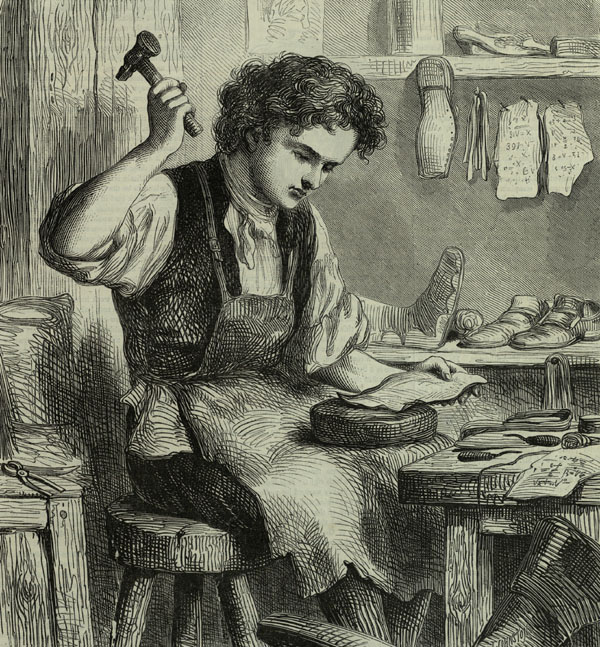
The answer’s more involved than my father working as a shoe repair man. When I watched my father stand over the last, his face less than a foot from his work, he concentrated deeply. The shoes he fixed were perfect. He sewed leather with thick thread, pounded soles, buffed and polished.
This perfectionism carried over to me. It’s what got me in trouble in preschool when a kid stuck a felt eyebrow upside on the face we were making in class and I yelled, “He did it wrong.” The teacher put a finger to her lips and frowned in my direction. I was four–already an editor. As I came of age, I loved the exactitude of words spelled correctly, coloring inside the lines and memorizing nursery rhymes.
He toiled Monday through Saturday, 9 to 9 for the first several years he owned his business. And when I was five, I got my first job peeling boiled eggs at the Gondola Restaurant for three dollars a day. I am a cobbler’s daughter for my work ethic. I’ve been a door-to-door greeting card saleswoman, papergirl, babysitter, fast-food employee, lifeguard, diet aide, retail sales clerk, navy data technician, video store clerk, teacher, tech writer, the list goes on.
My father taught me “Work will see you through.” For this gift, I am most grateful.
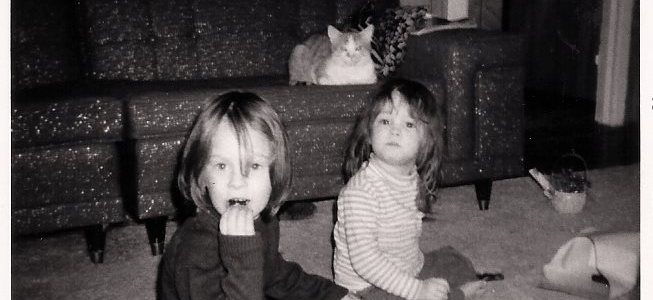
HAZEL STREET – From Chapter One of the memoir The Cobbler’s Daughter
Click. I wake to the sound of the light switch. I sit up, look out the hallway windows and see it’s still dark.
“Come on, kids,” my father says, standing by our bed. His black hair is combed back from his face. “We’re going bowling.”
“What time is it?” my brother Tony asks, rubbing his eyes.
My father smiles. “What are you, a cop?”
Tony and I crawl out of bed. We pull on T-shirts and jeans. I don’t remember if we brush our teeth or wash our faces. I doubt we brush our hair.
We drive across town to Brandywine Bowl where a bunch of my father’s friends are already waiting. Inside the walls are cream-colored, the lanes are wood, and everything else is harvest gold. The carpet is a vast ocean of blue.
Before my father joins his friends, he hands Tony a wad of dollar bills and says “Go get something to eat.” We run to the snack shop. It’s like a dream: Wise potato chips, Slim Jims, City Chicken (Turkey on a Stick), French fries, Cokes. We even have enough left over for the pinball machine.
High on soda, Tony and I chase each other back and forth through the nearly empty building. If we bother my father, he throws us more money. We eat and play to our hearts’ delight. We stay until the Pepsi clock reads 1:00 a.m. My father hands back his shoes. Drops his ball in his bag and we leave.
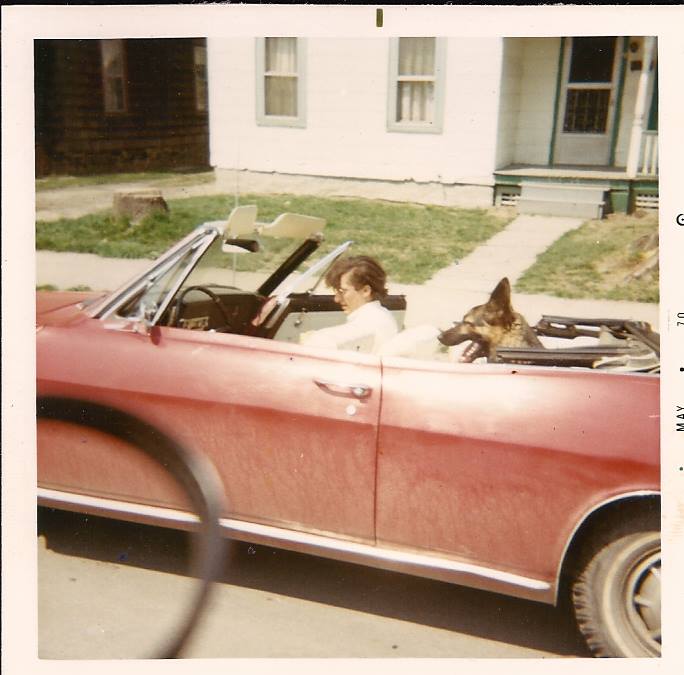
I squeeze in between him and Tony in the front seat of his 1965 red Chrysler Corvair convertible. My hair blows in the wind—free and loose.
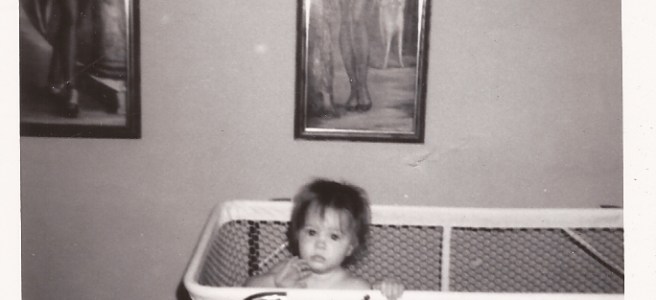
From ages four to nine I was sexually abused by my step-uncle “Reggie” who was seven years older. He paid me in quarters and record albums, including Cheech and Chong’s Big Bambu and Toys in the Attic by Aerosmith. I had no idea that the abuse was wrong and blocked the memory until I turned 18.
When I told my father and stepmother about the abuse, they said, “Why didn’t you tell us then?” I was four. And of course, my stepmother accused me of trying to get her brother Reggie in trouble and cause problems between her and my father.
(as if they didn’t have enough on their own) Now I know this response is typical of a family in denial.
I’ve spent decades in therapy working through the after effects of the abuse, which includes mistrust of men and authority figures, fear of commitment, control issues, and a penchant for the melodramatic. I have left good relationships for terrible ones, including my last marriage. I don’t want to be alone but keep making that happen. The truth is, I don’t know what the hell I’m doing.
In a poetry class years ago, I had a teacher who was a victim of childhood sexual abuse and not afraid to talk about it. He really understood the damage it causes to the human psyche. Through discussion, he helped me get my writing to a place where I could articulate what I wanted with the following poem. He read The Coin Collector and said, “You killed ‘im off, eh?” I didn’t mean to, but the poem took me there. And so be it.
The Coin Collector
You look tranquil in nickel-plate, uncle,
shark skin suit, black tie, eyeglasses.
They’ve done great work with your makeup,
brushed your hair back as you would
have worn for a wedding or wake. Your mother
offers kind words, says that as a child
you saved every penny you found. Your sister
talks about your thumbs, how they bent nearly
flat from the indent of so many coins.
I remember the Lincoln Cent collection book
you gave me, your taking me to antique shops
when I was thirteen, our private talks
of my high school lovers, all of which
you were dying to hear. These days, I carry
grief in my pockets like the coins you collected,
handled so often they’ve lost their brilliance.
I think of the young girl from a family
where no hands reached, how she welcomed
your affection year after year, afternoons
in your bedroom, a quarter a trip, your arms
linked through her legs, her fingers
tugging your blond hair, the pleasant ache
she felt between her legs then—and now—
when she hears them say your name, runs
her finger along the ribbed edge of a quarter,
sees the coffin close over your face.
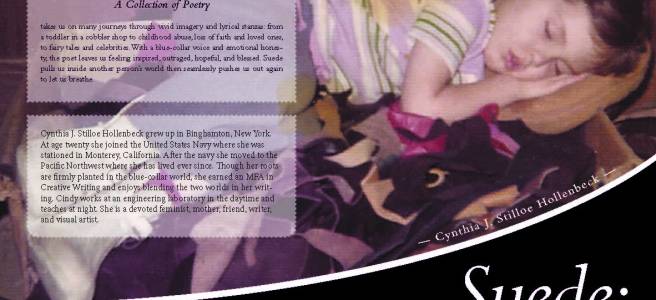
Nearly two years ago, my beloved father (and best friend) passed away from a severe lung infection. Had he not contracted TB from an employee in his early fifties, he might not be dead. This employee did not divulge her disease while she worked for him. He found out later. And my father’s TB stayed dormant for years. When it finally blew up, he almost died (but that’s another blog post). His entire life he’d battled asthma, and he used to joke, “These lungs are going to be the death of me.” It’s a shame that the careless act of an employee may have caused his death. Because of the scarring on his lungs caused by the TB, doctors said he could not survive the surgery needed to cure his lung infection. But I digress.
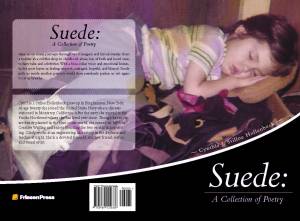
The book Suede: A Collection of Poetry is dedicated to my father because his death prompted me to dig out fifteen years’ worth of poems and finish the book. My older brother Tony, my father’s namesake, was killed in a motorcycle accident when I was eighteen. He is the subject of several poems. Loss has defined much of my life. And while many of the poems in Suede include loss, some talk about childhood, love, lust and sex, family, and some even discuss abuse. I write in simple, image-driven language, because that’s what I know. My father, with his high school education, read all my poetry and understood my poems. They are not lofty. I call myself a “blue-collar” poet. I published Suede for my father and my brother. Perhaps you or someone you know might like it. http://bit.ly/WE66YU
When you’ve had experiences such as mine–emotional, physical, and sexual abuse during childhood–you can choose to ignore the pain or zap its power through the written word. Yes, it’s scary.
I write to share my experiences with others to create a sense of community. Because when I read the work of others who have had experiences similar to mine, I feel less alienated and less “freakish.” In the words of John Lennon: “It’s not just me.”
Today I learned that my best friend, a therapist, lent my poetry book Suede to a client, who was able to use my poetry as inspiration to write her own healing poems. That, my friends is what it’s all about. Let’s continue to form a community of writers, readers and healers. Let’s make each other feel more connected.
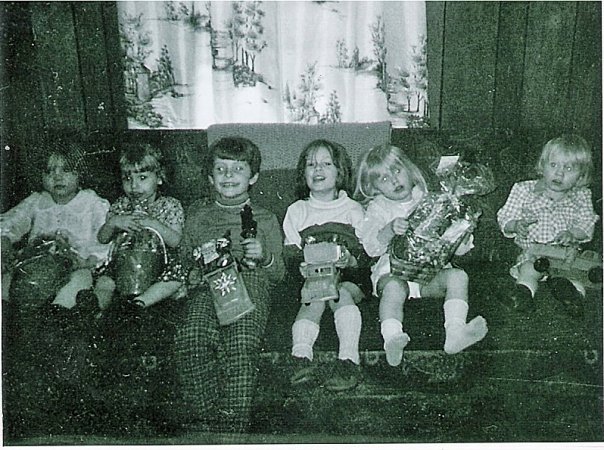
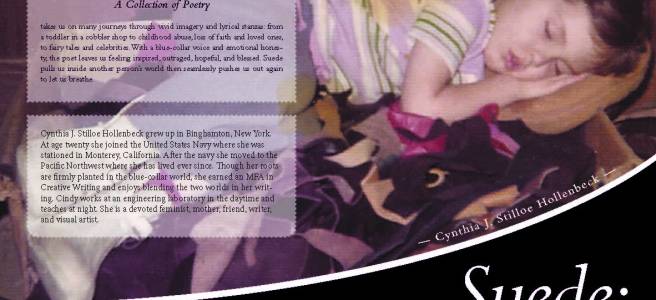
My first book, Suede, dedicated to my beloved older brother Tony, and my father, Anthony, who passed before me. And, how dare they? Why do we always lose the ones we love the most? It’s one of life’s shitty ironies, isn’t? I wrote many of the poems in this book for them. If so inclined, get yourself a copy. It cost less than a T-shirt.
Recently, I was asked to respond to a blog post by a fellow blogger. A fellow writer posed the question “which courses should I take if I want to learn how to write?” I simply shared the courses I took when I was a student at Lewis-Clark State College in Lewiston, Idaho.
Not long after my post, a young man posted a response to my response that I found a bit disconcerting. He came back with something similar to don’t waste your hard earned money on a degree when you could get the same in late fees at the library. Obviously, this is not a direct quote.
Let’s forget first of all that there was a typo in the quote he did post. He meant to say “writer,” but he wrote “write,” so instantly he lost credibility with me. It’s not that I haven’t made errors—big ones. But if you’re going to argue for or against a cause, double check your words.
Let’s also forget that he didn’t cite where he lifted the quote from. He took it from the movie Good Will Hunting, which I love. As a matter of fact, it happens to be one of my all time favorites. I’ve seen it numerous times, and I have shown it in the classes I teach.
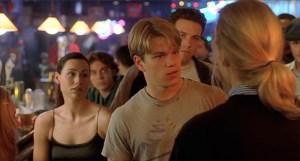
Basically, the quote is from the scene where Will takes the graduate student aside and chides him for his “overpriced degree” when all he really needs is to read a slew of books from the library. And, if the young man who responded to my post would have gotten the point of Good Will Hunting, the story, that is, it was that Will needed other people. That his reading all of those books in isolation didn’t allow him to grow.
In summation, the blog poster was either trying to be a complete smart ass or was just plain ill-informed. I am hoping for the latter.
If you want to be a writer, take any path you wish.
 The Cobbler's Daughter