The Truth Is Sometimes Painful

I grew up with a father who loathed dishonesty. I credit his Italian American pride, or perhaps growing up catholic, but nothing made my father angrier than learning he’d been lied to. He tended to be “brutally honest,” and the people who loved and admired him appreciated that. As his daughter, I feared his truth-telling when I was as a girl because I was extremely sensitive, but eventually I grew to admire the trait.

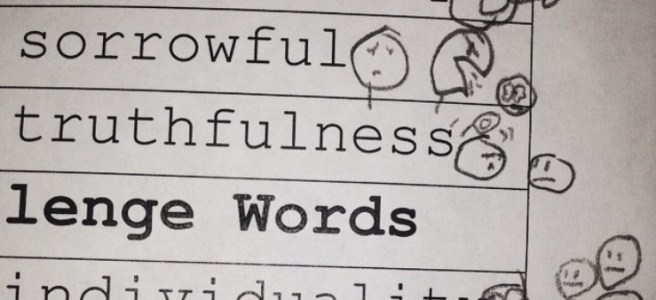
You have to be courageous, confident, and often live with regret when you are honest, because people rarely want to hear the truth. The image I’ve included in this post is a sketch from my son. In order to remember his spelling words, he sketched faces beside them expressing what he believed conveyed the word. When you look at the faces beside “truthfulness,” although one wears a halo, they both look anxious. Telling the truth is hard; hearing the truth is hard.

My father once told me, “You couldn’t be more like me if you tried.” Although I was sincerely flattered to hear that, I knew it meant I am also brutally honest, have a terrible poker face, and tend to alienate people because I struggle with being dishonest even in polite conversation when sometimes you should be. This is not to say I have never told a lie. I have. And some have caused irreparable damage in my life. It’s just that lying to people causes me great internal struggle, reddens my face, and fills me with crippling guilt.

Similar to most people, it’s also not easy for me to hear the truth. When people have told me I’m too analytical, sensitive, dramatic, or that I remember more negative details than positive, I stiffen with defensiveness. All of the preceding statements are true. I am also self-deprecating, affectionate, and loyal. The older I get the kinder I am to myself (and others), and I try to work with not against my human flaws.

One of my most irritating traits, I’m guessing because I’ve received a lot of flack for it, is my incurable need to discover the “why” behind just about everything. Why did my mother leave? Why did my stepmother beat me? Why do dishonest people seem to have more success than honest ones? Why did my brother get killed? Why did my husband die? Why do I have so much trouble sustaining a romantic relationship when others seem to just do it? Why are people mean? Why I did reject the man I believe is my true love?

On a positive note, once I process the Why in my head, through writing, art, or talking, I can usually let it go. In some cases, like with the death of my brother, I’ve had to make peace with not knowing why it happened. That has taken 30 years. I’m still struggling with the true love question. The other whys might be explained with psychology, self-help books, chats with friends, or talk therapy–of which I’m a huge advocate. But one important lesson I’ve learned is that in order to process these questions and heal, you have to be 100% truthful.

In the book, The Courage to Heal, which I highly recommend if you’ve suffered any personal trauma, the word courage is aptly used. It’s so much easier, and fun, to ignore our flawed humanness and not heal. For years, I was the party girl, loved getting drunk, being around people, being loud and obnoxious, all in an effort not to spend time alone and seek the truth within myself. I’d gone to therapy, but never engaged fully with the tenets. It took my loving someone other than myself to see how badly I needed help.

This person is still in my life, and because we’ve hurt each other, we have had to start rebuilding trust from the bottom up. Being honest takes courage, confidence, and working through regret to move forward when we hurt each other now. But, as you’ve probably heard or experienced, there is no greater reward than having an honest, open relationship with someone you love. And I want that.



Where Are You, Gen Xers?

My current job, working as the Senior Writer/Editor for a foundation at a land-grant university, involves sharing stories, Tweets, photos, and more on various social media. Most recently, on #GivingTuesday, I was checking out articles on LinkedIn, one of which mentioned “how to get Millennials to donate.” Since two of my children are Millennials in their early 20s, and I volunteer for another local foundation, I clicked on the link.

About 2/3 of the way into the article, I came across a paragraph that compared Millennial philanthropic trends with Baby Boomer trends. I kept reading, waiting to see how Gen Xers felt about philanthropy. Guess what? There was no mention of Gen Xers in the entire article. Zip. Zero. Zilch. So, I became curious. And like a Millennial, I went to Google and typed in Generation X.

Suddenly, a whole new world opened to me. I was born in 1968 and have always considered myself a Gen Xer. With a brother born in ’66 and one in ’75, I’m also the middle child. Coincidentally, Gen Xers are called the Neglected Middle Child, mostly because there are 70 million plus Boomers and 70 million plus Millennials, and there are only 50 million plus Gen Xers. Why the discrepancy? Well, lucky for us, even though the hippies were having a lot of sex, in the early 70s, birth control and legalized abortion helped them have fewer children.

After visiting a few more websites, I found conflicting information regarding the specific dates that designated a person as a Gen Xer. My theory holds at this: Gen Xers were born in between the early 60s and the early 80s. And, similar to astrology, if your birthdate straddles those years, you are said to be on the cusp, or a cusper. So, my uncle John, for instance, who was born in 1965, probably has Boomer and Gen Xer traits.

When I think about my being a Gen Xer, I think about being a child of divorced Boomer parents who needed to “find themselves,” walking everywhere by myself, and being raised on or by television. I often joke that my father (a single parent until I was six) used the TV as a babysitter. Through my research, I discovered I wasn’t alone. Many, if not most, Gen Xers were left home alone with little more than the TV and their siblings to keep them company. It’s probably why we love pop culture!

On a positive note, Gen Xers are independent, resilient, hard-working, and have a sardonic wit. I remember bristling, years ago, when I heard us called the “Slacker Generation.” WTF? When I was 12 I got a paper route. And from that moment on, my father gave me no more spending money. So then I worked as a babysitter. Then as a lifeguard. McDonald’s manager. Nursing home diet aid. Retail sales. Bakery cashier. Then, when I was 20, I joined the navy to get the G.I. Bill because my father wouldn’t help me pay for college.

I’m happy to report we are the generation responsible for creating Hip Hop and paving the way for ethnic diversity. When I think of my childhood, I think of Sesame Street, Captain Kangaroo, and the Electric Company, which we watched in second grade as part of our curriculum. Also, with my father, I watched shows like Good Times, What’s Happening, Laugh In, and the Sonny and Cher Show.

On a negative note, Gen Xers, because we were almost always left alone, referred to as the “latchkey” kids, and were often physically and sexually abused, have become the “most devoted parents in American history.” Some folks call us “helicopter parents.” Guilty as charged. Both of my adult daughters failed out of college, although they grew up watching me bust my butt to earn a BA, an MA, and an MFA, all in writing. I did that without parental support. My daughters have oodles of support. Have I killed their ability to stand on their own?

Anyway: this post is a plea. If you’re a Gen Xer, I want to hear from you! After all, peers are more important to us than parents. I plan to continue my research. If you want to share a story with me, please email me at cindyjoy68@gmail.com.

Yankee Swap Not for Everyone

Fifteen years ago at a family Christmas party, I played my first game of Yankee Swap, AKA, Dirty Santa, the White Elephant gift exchange, etc. You know, the game where you bring a gift already wrapped, pick a number, open a present and get your present stolen. This game has become a staple at holiday parties, and I’ll be darned if I can figure out how it embodies any type of holiday, generosity or giving spirit.

You may say, “Oh, it’s all in good fun,” or “Have a sense of humor,” but every time I’ve been to one of these parties, I’ve witnessed hurt feelings, under the breath comments, or out-right yelling. Now, that might be a regular ordeal at some holiday dinners with family, but family is crazy. We all know you can’t choose your relatives. But you can choose whether or not you wish to be involved in a game at Christmas time where you steal presents.

At my first Yankee Swap, I received an adorable Mikasa candy dish etched with snowmen. I was delighted, and I had no idea how the game worked. No poker face. My boyfriend’s mother “Lola” planned to steal my gift. When she reached for it, I held it tight and said, “Please don’t take this. I have so few nice things.” Lola laughed and made a remark about how she knew where my daughters got their whining from. Lola let me keep the Mikasa candy dish. I still have it, and I use it every Thanksgiving and Christmas to hold olives. I always think of Lola and her remark when I place the dish on my dinner table.

I married into a family where my sister-in-law, “Margie,” loved Yankee Swap, organized every Christmas gift exchange, with a $50 limit and a strict rule: no gag gifts. My last Yankee Swap with the family was a doozie. Of course, Margie ended up with number 1, which meant she got to inspect all the gifts at the end of the game and steal whichever one she wanted. I had received a beautiful wrought iron wall hanging. Margie stole it, which coincidentally meant I ended up with the gift I had brought. When I said that out loud, she leapt up in front of the crowded room and yelled, “I’m so tired of this bullshit!” She ran over to her husband and insisted he take her home. He refused. At the end of the long silent night, I left without the wall hanging. After the new year, when my husband’s grandmother called me to come get the wall hanging, I donated it to a silent auction for charity. That was last time I participated in Margie’s Magical Christmas gift exchange.

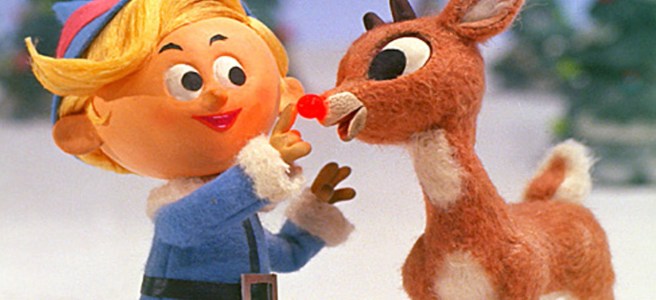
At my last Yankee Swap, there was a $20 max for the gifts. I brought a Rudolph the Red-Nosed Reindeer set of figurines: Hermie, the Bumble, even Cornelius, from the perennial show. The person who received it kept waving it in the air, saying, “Someone steal this, please.” I should have. One person brought in a bag full of used books that stunk like mildew. Every gift I received–wine, gift certificates, pewter trivet–was stolen. I tried desperately not to get attached. Incidentally, my best friend stole the trivet. All is fair during the war on Christmas I guess. Another friend asked me if I was the person who brought the hookah. Wow, I thought, what am I putting out there? I left the party with a note pad and water bottle.

When I looked up who invented Yankee Swap, I couldn’t find a particular person. But the rules emphasized that the game was light-hearted, just for fun, and whimsical. Isn’t stealing a bit greedy and mean-spirited? I see nothing wrong with the boring old Secret Santa, or making someone a gift just for them, or sending them a card that says I love you. But then again, I spend most of my money on books, vintage clothing and dog treats.