Writing About People Who Hurt Us

In 1997, I was a junior in Humanities at Lewis-Clark State College in Lewiston, Idaho. The journalism program was defunct, and since I had just become a 27-year-old widow with two young daughters, I switched to creative writing and enrolled in my first creative nonfiction class. I just wanted to learn how to write.

I wrote my first nonfiction piece when I was about five. It was a typed paragraph, and the paper I used ended up with a small coffee stain in the right corner. The text read something like, “I asked my father for money, but because we don’t have a lot, he said no. But at least I have a new mother, and I love her!!!!!” My father found and folded the letter, and hid it in his safe for years. In 1989, when I was in the navy, he sent me the letter with a sticky note that said, “I hope you still feel the same.”

At age 20, I did not feel the same. As a matter for fact, after my beloved older brother Tony was killed in a motorcycle accident in 1987, my father turned to his wife not me, to grieve. I blamed his wife for Tony’s death. She had been an abusive monster when we were growing up. My brother turned to drinking and drugs, I turned to men. The night my brother died, my grief trickled out into absolute hatred for my stepmother.

I mention the letter because it shows how long I’ve been in love with writing “the truth.” As I came of age, even when I wrote fiction, I used the first person “I” and described events from my actual life. Write what you know they say. As a teenager, I knew blackheads, bullying, and boys. If my stepmother had ever caught me writing negative things about her, she would have shown them to my father and I would have been punished. I was the “big mouth” who complained all the time.

When I was 13, a woman I babysat for gave me the memoir Mommie Dearest by Christina Crawford, actress Joan Crawford’s adopted daughter. My life was never the same. Mommie Dearest is an expose on child abuse. Christina’s biological mother had given her up (just as mine did) and she was being beaten, ridiculed, and shamed by her “new” mother. I had no idea that other kids suffered abuse. No one at school EVER talked about it, and when I told Tony our stepmother was mean,” he said, “Shut up. Dad doesn’t need to hear that shit.”

By the time I was in college, and had gone on to graduate school, writing my “truth” left some of my colleagues unsettled. “How can you write such nasty things about your family?” they asked. I wrote the truth, nasty or not. And since my father had divorced my stepmother in 1998 and she lived 3000 miles away, I felt somewhat safe. Writing about people who hurt us is no new debate. If you’ve read This Boy’s Life, The Liar’s Club, Hungry for the World, or Mommie Dearest, imagine the criticism those authors faced.

If anyone cares to know, writing nonfiction for me is telling the truth of my experience to the best of my memory. My father once paid me an enormous compliment after reading my work, and I keep that in mind when I write. He said, “I remember it differently, but those are your memories.” For a man with a high school education and shoe-repair man’s apprenticeship, I thought he sounded damned professorial.

And speaking of professors, my first writing teacher, who is also a dear friend and mentor, once said, “No one is all evil or all good. You have to show them as a rounded human being.” Believe it or not, rounding out my stepmother is not that difficult. Writing about my brother Tony, however, whom I worshipped until the day he died, that’s a whole other story. I was his patsy, his sidekick, Laurel to his Hardy. One day, I may sit down and write the truth of our story. But I’m still working on it —
 

Dump the Narc — Keep the Dogs

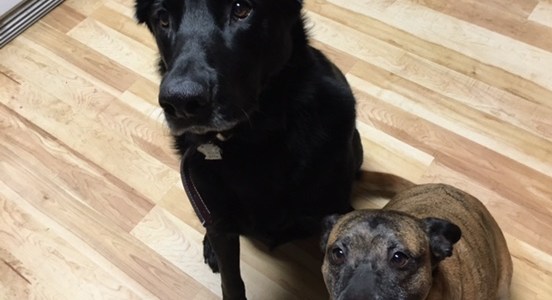
If you’ve ever dated a narcissist, you will identify with this post. If you haven’t ever dated a narcissist, you’re damn lucky. Few experiences make you question your self-worth, sanity, and reason to live more than being “loved” then dumped by a narcissist. I say dumped because they are people who dispose of things and people once they are used up. The first time the narc came to my house, my black lab chewed up his phone charger. Smart dog.

“Narcs” love vulnerable people. You know, widows, the broken-hearted, the poor bastard going through a mid life crisis. And the worst part is they are exactly whom you were looking for. The rescuer. The comedian. The princess. The prince. This is because they are chameleons, changing shades and personalities to be everything you had ever hoped for. Love live music? So do they. Love politics? So do they. And if you like hiding from the rest of the world, they love that best. You will find yourself saying “I can’t believe how alike we are.”

However, the moment you begin to show a sense of self outside the narc’s view, beware. The narc is king and you are merely a subject. Avoid telling truth to power if you want to stay in the narc’s good graces. Otherwise, you will be out on your can. And don’t ever criticize–you will be extracted from their life.

One narc I dated drew me in with promises of intimacy and closeness. We had a long distance relationship, consisting of FaceTime, text messages, and emails. When we did interact in person, we were electric. He was sarcastic and cute, and I really liked him. However, his decades long pot habit had given him the memory of an errant puppy, and when I called him on it he flew into a rage.

The narc often told me to wait in the car when he stopped by a friend’s house, or the store. I thought, What the hell? Is this the 50s? He once turned to me and said, “There’s stuff in the fridge. Go make us a couple of sandwiches.” I started laughing hysterically. He said, “What’s so funny?” I thought he was joking. And yes, I made the sandwiches.

One morning after breakfast in a diner, the narc introduced me to his friend who was thinking of joining the army. I talked to this young man about my stint in the navy and how I went to college and grad school. The narc interrupted and said, “She also sells crack to kids.” On the walk to the car, I said, “Why did you do that?” The narc went bananas! “Can’t you take a fucking joke?” The narc had never finished high school.

I knew we were over when the narc barked an order at me and I said, jokingly, “Quit telling me what to do.” Right there, mid vacation, (we had three days left) he said, “I think we’d be better off as friends.” This from the guy who said we belonged together forever. I walked to the bedroom and started crying.

Over the next three days, the narc and I acted like roommates. He went back to his town, and during a long phone conversation in which we truly broke up, the narc said “Tell everyone this break up was mutual. Don’t put that shit on FB. You will look like an immature drama queen.” Would you believe I listened to him?

Luckily, the narc and I only dated a few months, and yet, I was reeling. I started running long distances and imagined his lying face beneath my right foot every time it hit the pavement. Ahhhh. Ahhh. Ahhh. I spent a lot of time crying that December.

After our mutual friends learned about the break up, they told me, “He’s a huge loser. We couldn’t figure out why you were with him.” I rolled my eyes. I fell for him because I had lost my father and the narc came to his funeral. I was so tuuched. We started texting, he called me “Baby” (puke), and the rest is history.

The red flags were abundant and waving. I should have known the minute Gus chewed his phone cord that the narc was not accepted by my very smart dog. Looking back, I see this as a wonderful learning experience. My antenna are up, and I have taken a haitus from dating. Until then, I will hang with my dogs.

The Swap

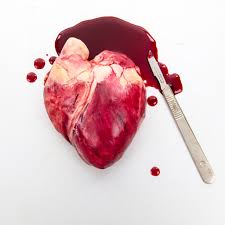
I lob my heart over to your side of the fence,
play five games of paddle-heart simultaneously,
try to keep busy, wait- wait- wait for you
to toss yours over. You catch the bloody mess
and try to hang on, crimson liquid trickling
down your arm. You observe the irregular
shape, study its pulsing blue veins, wonder,
perhaps, why I pitched it to you in the first place—
was it love? Or was I trying to fool you,
let the form fuse itself to your body, only to
snatch it away because your grip gave me
goose pimples. At one time, I might have said,
Hello-ooo. When the hell do you plan to finish
the swap? But I’ve learned that when I wait,
you surprise me, eventually climb over the fence,
deliver your heart in person, rest it in my hand,
remind me that wonderful things happen when I keep
quiet the beast clawing its way out of my chest.

Which Writer Are You?

Recently, I attended the Centrum Writing Workshop in Port Townsend, Washington. Two of my good friends and former graduate school colleagues were also there for the weekend. The three of us shared a cabin, stories, tons of wine, and we laughed so much my stomach hurt Monday morning.

Kami and I were in the same M.A. program at Western Washington University in Bellingham. She writes fiction and poetry, and we are soul sisters. Jordan, who writes poetry, and I were in the same M.F.A. program at University of Idaho, and we know the show Friends line for line and confounded everyone by speaking in quotes from Chandler and Phoebe instead of our own voices.

After spending time reminiscing with my friends, I kept thinking about all the writers we’ve interacted with in our programs and over the years. I threw together this list. It’s all in fun, and I encourage you to add to the list.

The Starstruck Stalker– this writer has met 100 famous writers and can’t wait to tell you when and where. He or she has copious signed books and experiences galore from conferences, dinners, readings and workshops that they will be happy to share regardless of your disinterest. This writer may or may not have one iota of talent.

The Cliche– this writer fulfills the stereotype of a writer as a hot mess. He or she drinks or drugs to excess, is melodramatic, destroys their personal and professional relationships, all the while publishing brilliant works. Everyone puts up with their bullshit because of their genius.

The Trickster– this writer creates obtuse, abstract pieces of work that only he or she understands. And then, when other writers (often in the workshop setting) offer useful feedback, the Trickster says, “Oh. You weren’t supposed to get that. I wanted to trick you.” That’s when this writer says, “Good for you, Trickster. Now go find another workshop.” You suck.

The Enigma– this writer creates interesting and odd pieces that you would never think to write yourself. He or she is flippant, couldn’t care less if their work gets published and so it gets published all the time! You sit at home tearing your hair out wondering why you have a stack of rejection letters lining your bird cage and the Enigma calls and says, “The New Yorker accepted my short story!” You say, “Oh my gosh, congratulations.” And then you turn on the gas stove and stick your head inside.

The Humble Pie Writer– this writer does not call himself or herself a writer. If they teach, they call themselves a teacher. If they work as a postal clerk, they call themselves a clerk. He or she may have a handful or a boatload of publications, even a book or 10, but they don’t buy into the bullshit that comes with being a “Writer.” They love writing, they love words, they love the creative process. They dislike going to high-profile writing events where they might be ignored by self-important writers who look behind them to find someone “more famous” to speak with. These writers are usually talented but down to earth, and love to talk to budding writers.

I know which writer I am. But I will never tell.