How I Met My Mother

My mother, Carla Bosch, was born in 1946 in a displaced persons’ camp in Bucholtz, West Germany. Her father was loving; her mother was cruel. After WWII they moved to Amsterdam, Holland, where they lived until my mother was 11. Then they moved to the states. The school district bumped her up two grades. I know little about her life during her teen years except that her mother constantly called her “ugly,” and if she showed signs of angst, her mother checked her into the psych ward at the local hospital.

In 1965, my father and mother met in a pizza parlor in Binghamton, New York. She said he looked like Woody Allen with black hair. They started dating and within several months, she became pregnant with my brother Tony. My parents married in Nov. 1965, spent their honeymoon in Cooperstown. Then they moved into a rented house on the south side of Binghamton. Tony Jr. was born in May 1966, and slept in a toy chest. My parents paid for diapers by hustling pool at local taverns.

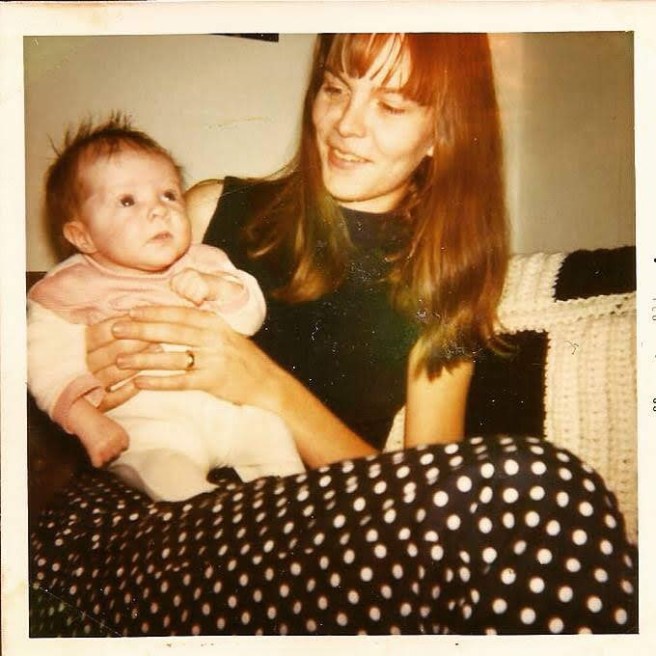
My father doted on my brother, however, he was not a man easily tamed. He believed women stayed home, and men went out partying. In an attempt to keep him out of the bars, my mother became pregnant with me. No matter how cute I was, and I was cute, her plan failed. She started leaving my brother and me with sitters, and according to gossip, sometimes alone. When I was six months old, my father kicked her out of our house, filed for divorce, and took full custody of my brother and me. He told her never to contact us again.
11179970_10153232158493187_7965051552348290763_n

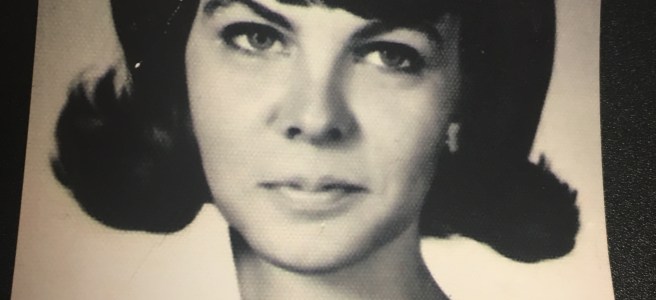
Growing up, Tony and I were not allowed to talk about “Carla” in front of my stepmother who insisted we call her “Mom.” And if I asked my father’s family about my birth mother, they said, “She left you. You don’t want to know her.” But I did. There were only about five photos of her in the entire house. I studied her high cheekbones, green eyes and square chin. Did she ever think about usWhere did she live? And when I walked around town, every woman I saw was a possibility. Is that her? Is that her?

As I came of age, I tried to make peace with not knowing my mother. Tony always said, “Don’t bug Dad with your questions.” But, Tony was three when she left! Surely he had some memory of her. He said he remembered her throwing a plate. And that she taught him to read. But I had zero. Not a voice. Not a scent. Not an image. I stored a few memories of the women my father dated before he married my stepmother.

After I graduated from high school, Tony was killed in a motorcycle accident. That cemented my dislike of my stepmother. In 1989, I joined the navy. Perhaps, I thought, if I “traveled the world,” I might eventually find our mother. In 1992, while stationed in Monterey, California, I became pregnant. The doctor asked, “Did your mother take drugs when she was pregnant with you?” I said I didn’t know. He said, “Can’t you ask her?” I shook my head and waited until I got into my car before I cried.

One night while I was nursing my daughter “Jessica” and watching the news, a segment called Finder on the Money explained “How to find a long-lost relative.” I took down the number. They put me in touch with a private investigator. And though I knew my mother’s name, birth date, and birth place, he said he needed her social security number.

I ordered my birth certificate, and my parents’ social security numbers were on it! Within a couple of days, the investigator called with my mother’s address in Newport, Rhode Island. I drafted a letter. “Hi, Mom. It’s me. Your daughter Cynthia. Do you want to know me?” Then I bought a pack of Marlboro Reds and chain-smoked while waiting for her response.

In her very first letter she asked me to imagine being a 21-year-old mother, pregnant with her second child, surrounded by the tumult of the late 1960s–the assassinations of Martin Luther King Jr. and Robert Kennedy. The Vietman War. And then she asked, “Does your brother want to know me?” I had to write back and tell her Tony was dead. She sent back a short note: “How tragic. I broke my glasses. More later.” I can’t imagine the guilt she must have felt — leaving us behind — knowing she would never see Tony again.

Several months later, my mother and I made plans to meet in Binghamton. I was 24. She had gotten remarried the year my brother was killed and was bringing her husband Bill. I had to keep the entire thing secret from family, because my father would not be happy. (A friend dropped the dime on me, and I got an earful from my dad. See earlier post–Secrets Cause Cancer.)

My mother and I met at a restaurant that no longer exists. It was encased in glass, and I saw her before she could see me. I looked in and waved, and she got up from the table to greet me. My mother is 5 foot 11, with salt and pepper hair cut in a bob. She wore a linen blazer and long skirt. She leaned over and gave me a half hug, then invited me to sit with her and Bill. He stood to shake my hand. He had black hair and glasses, and an inviting smile.

The dinner conversation was superficial. With Bill there, I was hardly interested in poking into my mother’s reasons for leaving. However, when he left the table, she said she was sorry she left. I didn’t quite know how to respond, except to say Thank you. One thing I did appreciate was that my mother wore silver jewelry, which was also my favorite. At the end of the dinner, I went to where I was staying. The next day, before they left town, my mother and Bill stopped by to meet Jessica. And then they were gone.

Now, my mother and I are pen pals. She does not have a computer. She does not have a cell phone. She will never travel to Idaho. I send her a birthday card every August, and an Enjoy Your Day card in May. At this point, we will never be best friends. However, I am glad I got to meet her. My father made his peace with it as well. I’m hoping someday we meet again, but I have no idea how that might happen.



The Truth Is Sometimes Painful

I grew up with a father who loathed dishonesty. I credit his Italian American pride, or perhaps growing up catholic, but nothing made my father angrier than learning he’d been lied to. He tended to be “brutally honest,” and the people who loved and admired him appreciated that. As his daughter, I feared his truth-telling when I was as a girl because I was extremely sensitive, but eventually I grew to admire the trait.

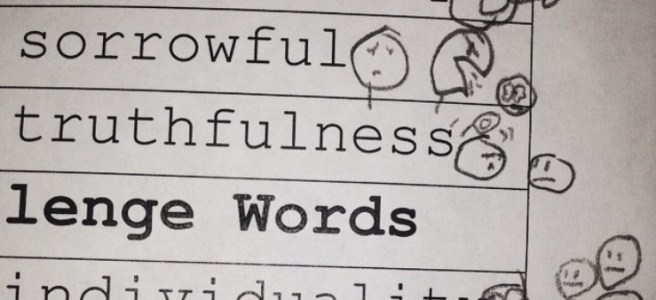
You have to be courageous, confident, and often live with regret when you are honest, because people rarely want to hear the truth. The image I’ve included in this post is a sketch from my son. In order to remember his spelling words, he sketched faces beside them expressing what he believed conveyed the word. When you look at the faces beside “truthfulness,” although one wears a halo, they both look anxious. Telling the truth is hard; hearing the truth is hard.

My father once told me, “You couldn’t be more like me if you tried.” Although I was sincerely flattered to hear that, I knew it meant I am also brutally honest, have a terrible poker face, and tend to alienate people because I struggle with being dishonest even in polite conversation when sometimes you should be. This is not to say I have never told a lie. I have. And some have caused irreparable damage in my life. It’s just that lying to people causes me great internal struggle, reddens my face, and fills me with crippling guilt.

Similar to most people, it’s also not easy for me to hear the truth. When people have told me I’m too analytical, sensitive, dramatic, or that I remember more negative details than positive, I stiffen with defensiveness. All of the preceding statements are true. I am also self-deprecating, affectionate, and loyal. The older I get the kinder I am to myself (and others), and I try to work with not against my human flaws.

One of my most irritating traits, I’m guessing because I’ve received a lot of flack for it, is my incurable need to discover the “why” behind just about everything. Why did my mother leave? Why did my stepmother beat me? Why do dishonest people seem to have more success than honest ones? Why did my brother get killed? Why did my husband die? Why do I have so much trouble sustaining a romantic relationship when others seem to just do it? Why are people mean? Why I did reject the man I believe is my true love?

On a positive note, once I process the Why in my head, through writing, art, or talking, I can usually let it go. In some cases, like with the death of my brother, I’ve had to make peace with not knowing why it happened. That has taken 30 years. I’m still struggling with the true love question. The other whys might be explained with psychology, self-help books, chats with friends, or talk therapy–of which I’m a huge advocate. But one important lesson I’ve learned is that in order to process these questions and heal, you have to be 100% truthful.

In the book, The Courage to Heal, which I highly recommend if you’ve suffered any personal trauma, the word courage is aptly used. It’s so much easier, and fun, to ignore our flawed humanness and not heal. For years, I was the party girl, loved getting drunk, being around people, being loud and obnoxious, all in an effort not to spend time alone and seek the truth within myself. I’d gone to therapy, but never engaged fully with the tenets. It took my loving someone other than myself to see how badly I needed help.

This person is still in my life, and because we’ve hurt each other, we have had to start rebuilding trust from the bottom up. Being honest takes courage, confidence, and working through regret to move forward when we hurt each other now. But, as you’ve probably heard or experienced, there is no greater reward than having an honest, open relationship with someone you love. And I want that.


Navigating Different Communication Styles

Over the past 18 months, I’ve been meeting with a behavioral therapist, as often as once a week. When I started, I had been sitting in a pit of despair after realizing too late what a special and rewarding relationship I had with my husband of nine years. I had turned 40 in 2008 and sort of lost my mind over the next two years. The collateral damage incurred by us and our sweet family post-split still nags at all of us. We are healing, albeit slowly.

Through my therapy I’ve learned that one of the issues “Eric” and I dealt with during our marriage and divorce involves our vastly different communication styles. We are similar in that we’re both passionate, quick-tempered and stubborn. However, I am a moving-toward quick-processing extrovert (MTQPE), and he is a moving-away slow-processing introvert (MASPI). Night and day. Black and white. Scorpio and Taurus.

Defining the styles. Moving-toward means I’m the woman who talks to strangers and wants to save the world even when it’s inconvenient for me. Moving-away Eric hangs in the background and observes the scene before he makes a move. The night we met, I walked up to his adorable self at Little Harry’s Airport Bar in Lewiston, Idaho, and said, “Hi. I’m Cindy. Wanna buy me a drink?”

Eric likes to listen and assess, and he’s good at both. I like to chat, on and on, and recharge when I’m around people. Eric recharges by spending time alone. Quick-processor me can call him on a Monday at 8:00 a.m. and say, “Wanna take the kids to the theme park this Friday? Do ya? Huh? I’ll drive. I’ll buy the tickets. What do you think? Huh?” Slow-processor Eric would probably take a minute to answer: “I don’t know. Let me check and get back to you.”

When you’re in love with someone, these differences seem minor. But after years of mistaken assumptions and misinterpreted silence, they can wear on a person, even destroy an unexamined relationship. And then, when you’re in the middle of a breakup, these differences cause real arguments.

Being aware and strategic. Eric lives in his head much of the time (he’s amazing at self-reflection) but I process my life out loud, through talking. If you are a MASPI, like Eric, I would drive you bonkers. If he has anything on his plate, work issues, personal stuff, bills, he would prefer to slide the theme park to the bottom of the stack until he was ready to tackle it simply to avoid feeling overwhelmed. Meanwhile, I’m doing aerobics, playing paddle ball with one hand and whirling a figdget spinner in the other.

Eric and I have been divorced six long years. In the past ten months, we have been scheduling monthly “conversations” where we talk about the kids, our lives, and manage our different communication styles. One of the most important things I’ve learned relies on the premise that my style is no better than his style. They are simply different. In this post-therapy stage we’re in, Eric and I work hard to treat each other with dignity, and examine and respect the styles.

Being versus foreseeing. Being an MTQPE, I would love to know exactly when I’m going to see and talk to Eric. I recharge when I’m around him. But, when a moving-toward person moves too quickly or too often, a moving-away person tends to get his energy zapped and needs more space. That is a style, not necessarily a strategy.

Eric is content just being. He doesn’t need to plan every movement of his day or his life. I, on the other hand, want to see into my future. When will we meet again? When we will talk again? Forward, forward, forward. One of the things my therapist helps with is my feeling comfortable in the not knowing. (Eric tries to meet me halfway by communicating more.)

We are less than a year into this process of trying to communicate effectively. We stumble. We piss each other off. We spend hours laughing. It’s an unpredictable way of living. But, I am slowly gaining comfort and working to make him feel safe in my presence. The closer we can come to meeting in the middle, the better off we’ll be.

Where Are You, Gen Xers?

My current job, working as the Senior Writer/Editor for a foundation at a land-grant university, involves sharing stories, Tweets, photos, and more on various social media. Most recently, on #GivingTuesday, I was checking out articles on LinkedIn, one of which mentioned “how to get Millennials to donate.” Since two of my children are Millennials in their early 20s, and I volunteer for another local foundation, I clicked on the link.

About 2/3 of the way into the article, I came across a paragraph that compared Millennial philanthropic trends with Baby Boomer trends. I kept reading, waiting to see how Gen Xers felt about philanthropy. Guess what? There was no mention of Gen Xers in the entire article. Zip. Zero. Zilch. So, I became curious. And like a Millennial, I went to Google and typed in Generation X.

Suddenly, a whole new world opened to me. I was born in 1968 and have always considered myself a Gen Xer. With a brother born in ’66 and one in ’75, I’m also the middle child. Coincidentally, Gen Xers are called the Neglected Middle Child, mostly because there are 70 million plus Boomers and 70 million plus Millennials, and there are only 50 million plus Gen Xers. Why the discrepancy? Well, lucky for us, even though the hippies were having a lot of sex, in the early 70s, birth control and legalized abortion helped them have fewer children.

After visiting a few more websites, I found conflicting information regarding the specific dates that designated a person as a Gen Xer. My theory holds at this: Gen Xers were born in between the early 60s and the early 80s. And, similar to astrology, if your birthdate straddles those years, you are said to be on the cusp, or a cusper. So, my uncle John, for instance, who was born in 1965, probably has Boomer and Gen Xer traits.

When I think about my being a Gen Xer, I think about being a child of divorced Boomer parents who needed to “find themselves,” walking everywhere by myself, and being raised on or by television. I often joke that my father (a single parent until I was six) used the TV as a babysitter. Through my research, I discovered I wasn’t alone. Many, if not most, Gen Xers were left home alone with little more than the TV and their siblings to keep them company. It’s probably why we love pop culture!

On a positive note, Gen Xers are independent, resilient, hard-working, and have a sardonic wit. I remember bristling, years ago, when I heard us called the “Slacker Generation.” WTF? When I was 12 I got a paper route. And from that moment on, my father gave me no more spending money. So then I worked as a babysitter. Then as a lifeguard. McDonald’s manager. Nursing home diet aid. Retail sales. Bakery cashier. Then, when I was 20, I joined the navy to get the G.I. Bill because my father wouldn’t help me pay for college.

I’m happy to report we are the generation responsible for creating Hip Hop and paving the way for ethnic diversity. When I think of my childhood, I think of Sesame Street, Captain Kangaroo, and the Electric Company, which we watched in second grade as part of our curriculum. Also, with my father, I watched shows like Good Times, What’s Happening, Laugh In, and the Sonny and Cher Show.

On a negative note, Gen Xers, because we were almost always left alone, referred to as the “latchkey” kids, and were often physically and sexually abused, have become the “most devoted parents in American history.” Some folks call us “helicopter parents.” Guilty as charged. Both of my adult daughters failed out of college, although they grew up watching me bust my butt to earn a BA, an MA, and an MFA, all in writing. I did that without parental support. My daughters have oodles of support. Have I killed their ability to stand on their own?

Anyway: this post is a plea. If you’re a Gen Xer, I want to hear from you! After all, peers are more important to us than parents. I plan to continue my research. If you want to share a story with me, please email me at cindyjoy68@gmail.com.

Why Psychotherapy is like Kale

Psychotherapy is not easy, or fun. It’s good for me, even necessary, but I don’t love it. Psychotherapy is like kale: not nearly as tasty or enjoyable as homemade macaroni and cheese, or pizza, but sometimes, I have to force it down.

One of the biggest issues about not seeking help from a psychotherapist is that we rarely know why we display negative behaviors. Often, we react to stimuli based on a complex process of unresolved issues (or trauma) from childhood. Some behaviors are good, like holding a door for someone or not cheating on a test. But others include slamming the door in someone’s face, tearing up your husband’s baseball card when he stays out all night, or yelling at some unsuspecting cashier. Consistently negative behaviors harm us and can destroy relationships with people we love.

Before I turned 18, my birth mother ran out on us; my father remarried a physically and emotionally abusive woman; my step-uncle sexually abused me; my stepmother slept with one of my boyfriends; my older brother was killed in a motorcycle wreck; my younger brother was kicked out of every elementary school in our town; and I moved in with an abusive, cheating, drug-dealing boyfriend.

Phew. I realize there are millions of people who’ve suffered far worse tragedies than I did. I’m not searching for pity, only understanding, a willingness to see another perspective. A family member once said, “In my day, we didn’t go to therapy. We solved problems by ourselves.” Hmmm. This family member drank a six pack every night just so he could fall asleep. And he stayed in a marriage with a cheating spouse for 20 plus years.

At 21, I eloped with a man we’ll call Jon. This was one week after I admitted to my parents that I’d been sexually abused as a child. My father said, “You must have liked it because you never told us.” My stepmother said, “You’re just trying to cause problems.” Um, no. But before you hang these folks out to dry, I can assure you these are typical responses. (After my father divorced the nightmare, he spent the last 15  years of his life apologizing to me for the earlier response).

In the wake of Donald Trump’s accusers coming forward about his sexual misconduct, many people ask, “Why didn’t they come forward when it happened?” I echo comedian Seth Meyers’s response. For reasons that seem absurd, our society tends to blame the victims of sexual abuse. I was four when my uncle started abusing me and nine when I screamed, which sent him running from the room never to touch me again. If anyone says a four year old girl is asking for it, he or she should be flogged.

Often times, people who’ve been sexually abused as children become hyper sexual, engaging in risky behaviors like having unprotected sex with numerous people largely because their personal boundaries were destroyed. In addition, subconsciously, they’re scared of getting too close because others might get to know them and judge them for their “shameful” past.

For two decades, I moved guy to guy, always dumping a good one who loved me for someone who treated me like the piece of shit I thought I was. It was as if I were saying, “Don’t get close. I don’t want you to know the real me because I’m no good. I deserve to be with a piece of shit.” In recent years, science has offered new theories on addiction, drugs, sex, food, shopping, alcohol, saying it might have more to do with attachment disorder than genetics.

A theory is a theory, but it makes sense to me that someone who has lingering feelings of being discarded, neglected, and abandoned, might have serious problems with interpersonal relationships (lack of trust, PTSD, fear of authority). I have a solid circle of male and female friends, people I’ve known for years who love and support me. They appreciate my unfiltered speech, openness and honesty. But if you asked the men from my past what it was like to love me, you’d get another story.

After years of pushing good men away when they got too close, I ran out of luck. The man I shared a deep love and even deeper friendship with, the man I grew closer to than anyone in my life, drew a line in the sand. “If you don’t want me,” he said, “I’ll go.” It was the exact opposite of what I wanted and needed, but I was used to my past coping skills, so I let him go and moved on to the next guy. I also went into therapy.

In the year that followed, something happened. Through long discussions with a psychiatrist, talks with friends, and reading self-help books, I stopped. Instead of pointing my finger outward, I turned it on myself. I needed to excavate my painful childhood memories, unearth them, and examine them to set them free.

Over the past several months, I’ve been attending therapy once a week, including doing EMDR, which tastes like kale but is so good for me! Sometimes I break down bawling. Sometimes I just want to run. My therapist challenges me. I’ve processed one old memory and am working on a second. There are plenty more. But I feel more confident in my ability to move around in the world, to forgive myself and others, to recognize that the man I loved and lost did me a favor. He forced me to take stock of myself and see I am not my past, I can be better, but I need to do more work. It’s a long, long road, and at the end, I hope they have pizza.

Complicated Co-parenting

This is a photo of my son Vinny crossing the finish line at the Down and Dirty Mud Run in Lewiston, Idaho. Vinny is 11, and I had accidentally signed him up for the 4.5 mile race that includes several obstacles, instead of the Mini Mud, which was a four-hour open event where he could simply participate in obstacles. Oops.

A few of my reasons for registering for the event were selfish: I love running, and I wanted to do the 4.5 miler. But mostly, Vinny’s father, whom I’ve been divorced from for five long years works for the group that sponsored the race. I knew Eric would be there, and I wanted to see him. I’m pretty sure he didn’t want to see me. It was Eric who filed for divorce after I admitted to having an affair, a mistake that made him feel tossed aside, insignificant.

Looking back, I thifinishednk I had the affair because I had been feeling tossed aside and insignificant in the marriage, but didn’t have the skills or faith in Eric to tell him. So, instead, I lit a fire underneath our relationship, which sent him running. I even dated the guy with whom I’d had the affair (it was a disaster), adding insult to Eric’s injury.


It’s only been in the last year that Eric and I have started talking about our breakup. He’s shown me his wounds, and I’ve acknowledged them. I’ve told him numerous times how much I regret the affair, the break up, and that I want him back. He won’t relent.


Eric has said although he’s not ready to be friends, that’s what we should be working toward. Friends. How strange that word sounds. We were friends. Best friends, for twelve years. And yet, we destroyed the foundation on which all good marriages are built. For, if you’re not friends, how can you expect to be lovers? Partners? Soul mates?

A few good sources tell me I should be grateful Eric wants to be friends. I know they’re right. But I feel anxious. Friends to me means no kissing. No intimate hugging. No love making. Ever. And Eric and I were great at those things. We were also great friends who shared secrets, gossip, and personal stories. Still, something in our dynamic made me unwilling to go to him when this guy at work started bugging me. And while I kept the guy at bay for weeks, he finally broke through to the vulnerable, overworked, underappreciated mother who devoured his attention, flirting, and dirty talk. After it was too late, I knew I was headed for disaster.

What keeps me sane right now is that adorable boy in the photo. He’s honest, funny, and cares deeply for everyone in his family, even his circle of friends. Eric and I conceived that boy when we were deeply in love. And though we may not be now, we work  hard to get along because we so love him.

I have no idea what the future holds, and it scares me to my core. My sources say I need to live one day at a time. Move the mountain one stone at a time. Breathe. Keep running, one foot in front of the other. Live in the present.

Love is Blind

Love is Blind

When my father met Vickie, a bleach blond
hourglass in a red plaid dress cut across her thighs
and red platform heels, my brother and I
were tucked away like out-of-style clothing.
Vickie was 16, my father 26, and she moved right in,
pranced around in halter-tops, bending to reveal
the quarter-moon of her breast. My father took Vickie
to fancy dinners and movies, while my brother and I
stayed home with babysitters in tie-dyed T-shirts,
who smoked pot, drank Budweiser, touched tongues.
We watched R-rated movies like The Great Texas Dynamite Chase:
heavily made-up women with silky hair, skinny
arms and legs, writhing under the covers on either
side of a spindly man with feathered hair and a mustache.
And Beyond the Door, where the devil impregnates
the woman from Nanny and the Professor. She eats garbage,
throws up green liquid, has a baby with no mouth—
if only that would have happened to Vickie,
whose every other word was “fuck,” insisted we call her Mom,
drove us to her ex-boyfriend’s house, had us wait
in the car while she vanished for an hour doing who
knows what. There was nothing my brother and I could do—
our father, in a leather vest and bell bottoms, zip-up
boots, had his ears turned off, brain shut down,
eyes pecked, sockets cleaned out, leaving two black holes.

10 Signs You Were/Are a Middle Child

1. When pouring drinks for friends, you still kneel to get eye level with the glasses to be sure the liquid amount is even for fear of getting jabbed in the arm by your older brother.
2. You wore hand me downs until you hit puberty, and it no longer looked “okay” to wear your brother’s shirts.
3. When riding in cars with friends you still instinctively head for the back seat, because the oldest always gets the front.
4. In home movies from your childhood, you were always trying to get in front of the camera, only to be pushed out of the way by your father.
5. Your baby book is two pages long, while you confuse your siblings’ baby books with the King James’ bible.
6. You don’t have an entire wall (or room) dedicated to your accomplishments.
7. In adulthood, you try to outshine your siblings only to have your parents pat you on the head, and say, “Keep trying, honey.”
8. As a kid, you didn’t mind being called weird if it meant you stood out from the siblings.
9. If you played sports, you wore your brother’s old equipment even when the cleats were worn flat and the sneakers stank.
10. Your parents call you to brag about your siblings, but they never call the siblings, and often forget your name.

The Deep End of the Pool

When talking to people, I’m not interested in staying in the shallow end of the pool. Blame it on the writer in me, but I am intensely curious–fascinated–by other people’s lives. I also am happy to share experiences from my own life as a way to connect with others. From time to time, however, I have found that sharing my experiences, especially the less than pleasant ones, leaves people feeling uncomfortable and not knowing quite what to say. Recently, I was reminded of some phrases that get under my skin.

1.”I must be lucky because…” As in, I am not in the crappy personal situation that you confided in me, which sounds way worse than my own, which I might even be hiding from you because I don’t want to be judged, so instead I’ll say how blessed I am and not share anything.

If you’re a parent, you probably recognize number one. You can’t sit near other parents without hearing about how unique, amazing and intelligent their kids are. And if you say, “Wow, I wish Janie got along better with her kindergarten teacher,” or “Thomas hasn’t been bringing home his homework,” more than likely you’ll get, “I must be lucky because Arthur and Amy love all their teachers and have straight As.” Back to the shallow end

2.”You must be really strong…” As in, I could never survive if I lost my brother, or husband, or father. I would just kill myself. Gosh. How do you even wake up every day and laugh and smile?

Losing a loved one is not a choice. Telling someone, “I would kill myself,” is insulting at best. Don’t say it. Just hug your friend. Ask them if there’s anything you can do. And please, please, don’t say, “I must be lucky. I have never lost anyone close to me.”

3.”I don’t know how you do it…” As in, I could never be a single parent. My husband is wonderful, and I just couldn’t get by without him.

This is a kiss through a veil, a back-handed compliment. It’s as though the person making the comment is waving their Happily Married banner right in my face. And, just to be clear: my ex-husband and I share custody of our son, and just like a couple who are still together, we talk, negotiate and sometimes argue. We live five-minutes from each other. We attend basketball games and parent conferences together. And when things get tense between us (since our divorce was less than friendly) we call a time-out and discuss things in private. We may be single-parents, but we collaborate as a unit, because we can. We have a choice.

I think kindness goes a long way. And if you don’t know what to say to someone who makes you uncomfortable, why not admit it?


What’s More Important Than to Love and Be Loved?

My ex-husband Eric and I met 17 years ago at an airport bar in Lewiston, Idaho. He was the cutest man I had ever seen in my life. He asked me to dance to “Summer Lovin'” from Grease, and I said “No,” three times before I finally gave in. While we danced he kept smiling, wide and earnest, with a gap between his front teeth. Later he told me he kept falling out of his flip-flops.
While we chatted later that evening, we learned that I was 29 and Eric was 19. His fake I.D. said his name was Steve Williams (AKA Stone Cold Steve Austin) and his address was 316 Austin Street in Clarkston, Washington. Even though we kissed, and I saw skyrockets, I refused to give Eric my phone number or let him take me home, because I was sure he was going to be some immature “dude” who would use me, toss me aside and break my heart.
Long story short for the sake of the blog, I called Eric ten days later because I couldn’t stop thinking about that smile. We started dating, fell in love and got married in 2001. I already had two daughters from two previous marriages–one ended in divorce, and the other in widowhood.
After seven years together, Eric and I had a son. I can say without hesitation Eric was born to be a “Dad.” He was a pretty good husband, too, although my being an extreme extrovert and his being an extreme introvert may have helped lead to our demise, along with my fear of getting too close to anyone.
We have been divorced for three years, and I still think he’s the only guy for me. The older I get, the more I learn, is there anything better in the world than L-O-V-E?