Finding a Mother’s Day Card

Every May I sift through the glut of greeting cards
with their glowing notes: Thank you for raising me,
You’ve always been there, and To my best friend.
I look for the one that says, Enjoy your day,
because Carla, as my mother signs letters to me,
was never a Mom. She and my father split up
when I was a baby, and Dad told her never to come back.
She went away to college, traveled the world,
let another woman feed me, bathe me, beat me
with leather belts. I see her in a black turtleneck and
blue jeans, svelte, five-ten, hair to her waist, bright green eyes,
cheek bones that could slice paper. She sips Scotch,
smokes Marlboro Reds, poses for art students, sketches
self-portraits. At 40, she walks down the aisle, again,
settles into a new life in New England, spends her days
in an art studio piecing magazine clippings into collage art,
teaching millionaires’ wives how to paint. We met once
in my hometown, hugged like strangers, dined on prime rib,
returned to our separate lives of sending letters
about the weather. Some friends say I owe her judgment,
others, respect. As every new spring brings
its buckets of rain, I wonder what we owe each other.

Exile — Poem from Suede: A Collection of Poetry

Exile

As soon as I showed signs of rebellion—

drinking, missing curfew, talking back—

my parents sequestered me to my

second story room where, in winter,

I could see my breath. It was an exile I came to love:

four windows, the moon peering like a voyeur

through pink floral curtains—so far—

yet close enough that I could steal its light to sketch.

In summer, a small window fan chopped my friends’

voices from the streets below, drew up that second flight,

a light breeze, so I could breathe.

When the smell of dinner wafted up the stairs,

I trudged to the kitchen where my stepmother,

sipping tea, said, No one wants you here.

Back in my room, I sketched John Lennon—

imagined that he’d written “Mother

just for me—and Marilyn Monroe,

another girl left by her mother who made me think,

someday, I might see my name across

a marquee. But at sixteen, freedom

and fame were as distant as the stars.

So, I stole a Valium—yellow and round—

from my stepmother’s jewel box, held my breath

and swallowed it down, then lay across

my bed spread, drawing the moon.

What Some People Think About People On Welfare

There have been a few times in my life I have received public assistance or “welfare.” When my father was a single parent taking care of my brother Tony and me, we were on food stamps, though I don’t remember.

In 1994, when I quit working a grueling grocery store job to attend community college full-time, I received public assistance, which was $400 a month, $300 in food stamps, a Pell Grant, and $600 a month from the U.S. Navy G.I. Bill for my four years of service. At the time, I was a single mother with one child.

I felt no guilt for receiving the government benefits. I’d had a paper route at age 12, babysat at 13, worked as a lifeguard at 15, McDonald’s from 16 – 18, nursing home from 18 – 20, then joined the navy. Those benefits were a way for me to move up from being a blue collar worker to a college instructor. My American Dream.

Imagine my dismay when I came out of the dentist in a small town in eastern WA, in some pain after having had a filling, and hearing what I am about to share. (It should be noted that I’d had a root canal in high school from chewing too much Big Red, but I learned my lesson. And in the navy, the dentists re-did my root canal–twice.) I was told I had to have a crown. So, on my way out of the office, I asked the admin assistant how much a crown cost. She scowled at me and said, “Welfare doesn’t cover crowns!” I never went to that dentist again.

Fast forward to three years later: my 27-year old husband Harly had a genetic liver disorder. He couldn’t work. I was a junior in college with a five-year-old daughter and brand new baby girl. We applied for food stamps and Medicaid, but because my car was worth $5K, we were denied. I asked the woman behind the desk, “Are we supposed to eat the tires?” Eventually, Harly was able to get disability.

Fast forward a few more years. I was talking to the sister of a friend. The sister’s name was Maggie. She worked as the gestapo at a low-income housing complex and boasted about how she never gave people who left their full deposit back. She said that when she walked into their homes, the places “smelled like welfare.” Maggie told me, “Only single moms get Pell Grants,” and that “She’d never been poor, so she just couldn’t identify with those kind of people.” It took all my strength not to slap her freckled face.

It’s a shame that welfare recipients as a whole get such a bad rap. Statistics show again and again that only a minority abuse the system. I have taught at my Alma mater, Walla Walla Community College, for eight years, and every time I teach a new class I tell the students my story. I was a welfare mother who went to college and eventually earned two graduate degrees. If I could it, so could they. As long as what they are doing is in good faith, there is no reason to be ashamed to ask for help.

My Father Wondered Why I Was Precocious

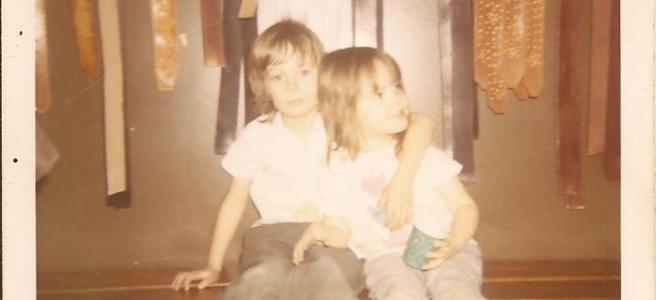
My father was single, and he owned a shoe repair and leather crafting business when I was a girl. Besides the leather pants, vests and belts that filled the store, he sold water pipes, rolling papers and roach clips. As a five year old, I was surrounded by psychedelic posters, tie-dyed T-shirts and peace signs. And in the workshop, my father tacked Playboy calendars and posters of nude women on the walls.

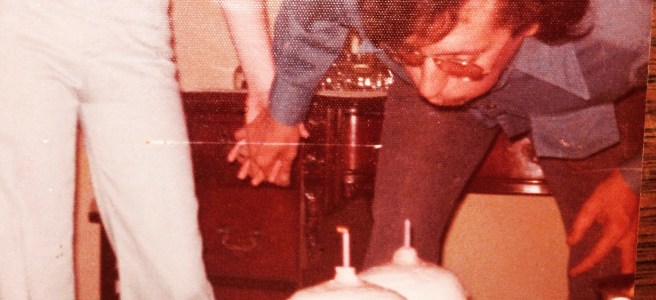
When my father turned 27, his very young girlfriend threw him a surprise party at our apartment. There were streamers, balloons and a cake made of breasts. I am grateful that photos exist from this party. I was too young to be invited, of course, and had been sent to bed. But when I look at the photos from the party, I see my father–his Tony Orlando hair, his denim work shirt, the thin beauty on his arm–personified.

I am happy my father was so young, 22, when I was born. Often he was more like an older brother than a father. He was patient and funny, and he wasn’t ashamed of anything. I asked tons of questions, which he always answered. When I asked questions about sex, he told me the truth–often with street slang. Anyone who wonders where I get my “to the point” method of communication can stop wondering. I am both grateful for this gift and have spent a lifetime trying to improve myself.

I miss my father. He was a great parent, mentor and friend.

A Glimpse Into Wilson’s Disease

The Assumption

My husband Harly thought he had the flu,
felt lethargic and never wanted to eat.
I just thought he was lazy. After hauling
bags of grass seed all day at the local plant,
he’d flop down on our couch, slather Vicks
on his chest, cuddle with our baby girl
and watch Barney. He stayed up late into
the night playing TechnoBowl, chest pains,
tingling in his joints, then fell asleep, TV
blaring, lamps aglow. He never left the house
except to work, and when he pressed his calves,
he left fingerprints. After his stools lost color,
we saw doctors who dosed him, told him eat less,
walk more. It was a nurse who noticed
the golden hue of his eyes and skin, insisted
on a blood test that showed a liver gone bad.

I drove us back to our modest home in our town
of a thousand. Harly sat in the passenger seat,
sniffing—a twenty-seven-year-old man
who would need a specialist, tests, a transplant.
But right then, all he needed was to hear
the radio play Tom Petty, to rest his head
on my chest. He smelled of sweat and soap.
I’d never seen him cry in the time we’d been
together, but over the next six months,
as he watched his baby girl scream through
her own blood tests, his brother lose his life
to the same disease, his own body wither
from broad-chested and strong to brittle
and thin, I’d wipe them away, one by one,
as they blended into his yellowed cheeks.

What Not to Say After a Funeral

Brother and sister

When I was a senior in high school, I took a class called On Death and Dying. During one particular class period, the teacher, Mr. Jones, asked, “Who in here has had someone close to them die?” A few people raised their hands. I was
not one of them. At 17, I still had both parents, grandparents, siblings, and had never lost anyone. Within a year, all that would change.

In May 1987, my 21 year old brother Tony was killed in a motorcycle accident. I was 18. Suddenly, all that abstract information about Elisabeth Kubler-Ross and the Five Stages of Grief came flooding back. Mr. Jones showed up at Tony’s funeral, and I remember thanking him for the class. I told him I would be a wreck (as if I weren’t) without having all that knowledge.

The aftermath of Tony’s death was far more painful. My father leaned on his wife for strength, and my younger brother was 11. So, I felt as though I had no one to turn to who understood the depth of my pain at losing my beloved brother. Tony would have been the person I leaned on had our father or grandfather or younger brother passed. I’d heard the word “Sorry” from hundreds of people, hundreds of times, so it became empty. And I became angry that everyone else was able to return to their everyday lives.

Over the next several years, when I talked about Tony’s death to people who had never experienced the loss of a loved one, I was stunned by some of the responses I heard. “You must be strong. If my sibling died, I’d kill myself,” or “Everyone dies. You need to get over it,” or “I know just how you feel. I once lost a cat.” I listened to these comments in silence, judging these ninnies in my head.

Exactly ten years after my brother was killed, I lost my young husband to a genetic liver disorder. I wrote “Harly’s” eulogy, and invited two of his cousins and one of his best friends to speak at the funeral. I played a couple of his favorite songs from the 80s. During the eulogy, I tried hard to keep from crying as I relayed the last six months of his life in his struggle against Wilson’s Disease. I did the best send off I could to honor my 27 year old husband. Tony’s death a decade earlier probably helped me emotionally when dealing with Harly’s death and the grieving that followed.

Once again, however, I was ill-prepared for the comments that would come after the funeral. “Wow. My husband and I have had our problems. But I’m so lucky to have him,” and “Your eulogy sure was negative,” and “Why did you have an open casket. We didn’t need to see him,” and “You must be strong. If I lost my husband, I would kill myself.”

Now, in the defense of these folks, no one knows what to say if they’ve never been through this, right? So, looking back, and it’s been 27 and 17 years, respectively, I can say, no one meant to come right out and pour Tabasco sauce into my open sore. At the same, I like to hold on to a statement said to me as I stood outside the funeral home talking to friends. Reed Herres, a long time friend of Harly’s, walked over to me, and said, “I don’t know what to say. So I’m not going to say anything.” And then he hugged me.

You might think because I’ve been through the death of a sibling, and a husband, and now my father, that when I attend a funeral I know just what to say to the grieving. Nope. I find myself at a loss for words just like so many others. Every person grieves differently, and every loss is a new experience. Depending on how well I know the person, I tend to follow Reed’s example and offer a hug. Then I lean forward and ask, “Is there anything I can do for you?”

My Kid’s Smarter Than Your Kid–Pondering Competition

My daughter Jessica was still crawling at 15 months. Because other toddlers I knew had already started taking their wobbly first steps, I called the pediatrician. He said, “If she doesn’t start walking by next month, bring her in. We’ll put braces on her legs.” Jessica started walking that week. And because I now know that she gets embarrassed over everything, I’m sure Jessica overheard the doctor and was afraid of looking like Forrest Gump.

In kindergarten, Jessica tested into a program called Enrichment–what some schools call “Gifted and Talented,” because she knew how to read. Jessica was not the type of student to push herself when she was bored, and I suspected this program would encourage that. I was feeling pretty good about myself and Jessica’s father–a meteorologist for the U.S. navy–that we had drawn the long straw. We had a smart kid.

When Jessica entered 4th grade, it was the first time I interacted with the parents of other “smart kids.” At the time, I was a 32-year-old grad student in English at the university in Bellingham, Washington. It was five p.m., and when I walked into the elementary school library for the parents’ meeting, Jessica holding one hand and my five-year-old daughter, Josie, the other, I felt like a kid. No other parents had brought their kids, and they all had gray hair and wrinkles. They were dressed in blazers and slacks. I was a grad student in a sweater and ripped jeans.

The atmosphere in the library bugged me–the sense of smugness in the air. Every couple sat with their noses held high, discussing the curriculum, talking about art programs their kids were involved in, or awards they’d received. They talked about math olympics, writing contests, music lessons, physics and future problem solvers of America. I kept quiet, thinking about how grateful I was simply to have Jessica in the program. These parents seemed to believe that their smart kids were a reflection of their own intelligence.

One of the reasons I was so pleased to see Jessica succeed academically was because I hadn’t. I wasn’t dumb, but education wasn’t valued in my childhood household. My father owned a shoe repair shop. He was funny, friendly and blessed with common sense. When I was in high school, my father told me: “Just get Cs, and I’ll be happy.” So I learned that I had to care about doing well for myself. I only put forth effort in the classes I liked: art, theatre and English. And I didn’t start college until I was 24.

Jessica quit the Gifted and Talented program in 7th grade–when it was no longer mandatory. I begged her to stay in. “I don’t want people to think I’m a geek,” she said. She wouldn’t believe me when I told her: “You can’t control what people think.” Within a year, her grades tanked. Boys and parties became much more important than solving America’s problems, writing poetry or competing in math. By this time, I had finished my graduate degree and was working as a writer. When Jessica failed freshman English, I figured she was rebelling against me.

My smart kid graduated from high school with a 1.67 GPA. Her father gave her his G.I. bill money so she could attend community college. She loved it, but failed out after a bad breakup during her third quarter. Jessica took a year off and is back in college, working part time as a waitress. Like a lot of us, she regrets not trying harder when she had the chance. She even says, “Mom, you should have pushed me harder. But when I was in those classes, I felt like the dumbest kid there.”

As a parent, you never know how well you are doing. At best, raising kids ebbs and flows as continuously as the tide. Jessica crawled for 15 months and I never worried until I noticed other kids “beating” her. Competition makes us crazy. A poetry teacher told me once: “Comparing yourself to others is deadly.” I say it’s also inevitable. Perhaps it keeps us ambitious. Aware. After all, competition made me call the doctor.

1973-The Year My Brother and I Ruined Christmas

Christmas Eve finally arrives. Tony is seven, and I am five. We beg my father and stepmother Vickie to let us open just one gift before going to bed, but they won’t relent. My father sits on the couch with his arm around Vickie. “The quicker you get to bed,” he says, “the quicker Santa will get here.” So we shuffle to our bedroom, my stomach tight.

I have just barely closed my eyes when Tony shakes me awake. For a moment I forget where I am, searching the blue walls for clues. I rub my eyes.

“Come on,” Tony says. “Let’s see what Santa brought.”

It’s still dark outside. I ask Tony again whether it’s really time to get up. “Yes,” he says, “Let’s go.” I hold tight to his hand as he drags me down the hall, tiptoeing past the room where my father and Vickie sleep.

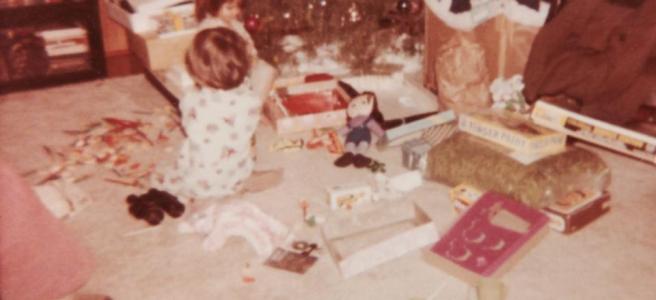
When we step inside the living room, presents—rectangles, squares, lumpy spheres—form a pile around the tree. I have never seen so many gifts in my life. Tony clicks on the light and for a few moments, I stand there, ogling the shiny foil bows, white and crimson wrapping paper, the overfilled stockings hanging from the cardboard fireplace. This is Christmas!

Tony kneels in front of the tree and starts to pick through the gifts. “This is for me!” he says, shaking the box.

“I want one!” I say, snatching the first present I see. I tear open the wrapping to find a pair of women’s bedroom slippers. I slide my small foot inside the giant slipper. “These don’t fit.” I toss the pair behind me. I open a box with a sweater that’s way too big.

“No way,” Tony says. His light brown hair sticks up in front like devil’s horns. “It’s the Evel Knievel stunt cycle!” He squeezes the box. “I got it!”

“Where’s my presents?” I huff, crossing my arms over my chest.

“Right here, dummy,” Tony says, dropping a rectangular box in my lap.

I open it to find a Tiffany Taylor doll, which looks even more beautiful than on the TV commercial. Tiffany is two feet tall and wears a glittery gold bodysuit beneath a lime green skirt that attaches at her abdomen with Velcro. Her slip-on mules match the skirt. Tiffany has blond hair parted down the middle, but when you grab the top of her head and rotate, she has brown hair and bangs.

The next gift I open is a personal grooming kit with a white plastic hairbrush, comb, and mirror made of pearly plastic. I hold the mirror in front of my face. “Yes, dah-ling,” I say. “I vill be right wid you.”

There’s a really big gift. It’s the Sunshine Family Dolls. It comes with a camper and a surrey cycle. The baby is so cute.

“What the hell are you doing?” My father booms, standing above us in nothing but tighty-whities. His hair sticks up like the bride of Frankenstein. “Get your asses back in bed.”

Tony and I sprint past our father, guarding our hind-ends from spankings. My father slips into his bedroom with Vickie and slams the door. I throw myself on the bed and bury my head in the pillow. Tony sits on his bed.

“We ruined Christmas,” I wail.

Tony lays back on the bed and folds his hands behind his head. I pull the covers over me and hide. We both fall asleep.

We are lying still when Vickie walks into our bedroom. She is wearing her ever-present light blue bathrobe. Her hair is messy and she wears no makeup. “Your father and I are disappointed because we wanted to watch you open your presents,” she says. “And some of those weren’t even for you.”

I start crying again. Tony sits up.

“Now, go wash up,” she says, “Your dad and I will meet you in the kitchen.”

Usually, Vickie flew off the handle over something as small as spilled milk. But, neither she nor my father scolded us that day. We played with our new toys, had dinner. Even today, I’m surprised they were so kind about the whole thing. My kids never tried anything so subversive with me, and I wonder how I would have handled it. . . I know I would have made them re-wrap the presents not for them.
Just One Bite–Pondering Serious Food Allergies

With my father, just one bite of fresh fish, and he said he felt his throat closing. With my younger brother, just one bite of a walnut cookie, and he said he felt like he had worms on his tongue. And now, with my son Vinny, just one bite of some nutty bread, and he said, “My mouth started burning.”

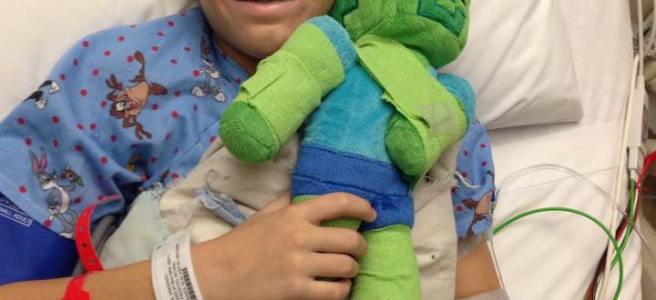
Within twenty minutes, Vinny was covered in hives. The babysitter called Vinny’s father Eric who rushed to the house and read the bread’s ingredients: walnuts, almonds, pecans. He injected Vinny with the Epi-Pen and drove him to the ER, calling me on the way. When I showed up, Vinny was still awake, high on the epinephrine, playing with the hospital’s Ipad. I called the babysitter’s parents, who are Vinny’s godparents. They came right over.

The doctor gave Vinny an IV of Benadryl, also put him on oxygen, because he’s a mouth breather, and gave him the nebulizer. Soon Vinny passed out. His entire body, even his head, was covered in hives. For us, it was two-plus hours of hand wringing before he woke back up, looked better, and was “out of the woods.” His godparents stayed with Eric and me the entire day, their eyes wide, their repeated phrase, “We never knew it was this serious.”

Vinny was admitted over night just in case. He is nine, and this was his fourth trip to the ER.

1. At one year old, Vinny’s grandmother fed him a chocolate chip cookie with walnuts. He threw up, broke out into hives, and Eric rushed him to the ER. That’s when we learned he was allergic to tree nuts.

2. In kindergarten, even though we told the teacher Vinny couldn’t eat food brought from other peoples’ homes, during a holiday party, he ate a chocolate chip cookie. It was right before Eric came to get him. Vinny threw up and broke out into hives. Eric gave him the Epi-Pen on the way to the ER. The next day I went to the school and raised a little hell with the teacher.

3. For Christmas when Vinny was 7, a friend bought me a basket full of candy, nuts and other treats. I threw just about everything away, save two pieces of toffee, which I had no idea contained almonds. Vinny ate a piece of toffee. He almost died that time, and Eric said it was all my fault. I suppose it was.

Each time Vinny goes into anaphylactic shock, the reaction becomes quicker and more severe. This last time I started thinking about his future. Eric and I can’t hover around our son his entire life. The doctor recommended that Vinny learn to give himself the Epi-Pen shot. He knows how. But would you want to stick a needle in your leg and hold it for ten seconds?

Only 1 percent of the population is allergic to tree nuts. My father, my brother, my son. Not me, Eric, my daughters. Being a parent is stressful enough without the added worry of a life-threatening allergy. Vinny’s godparents now understand the gravity of his nut allergy. They are kind and intelligent people. They even offered to pay part of the hospital bill.

Eric and I will continue to watch over our son as long as we can and encourage him to be an active participant in his own health. We keep telling him to read the labels, only eat food that comes from a package with legible ingredients, and no strange bread. Not even one bite.

Ever wonder how I got my title The Cobbler’s Daughter?

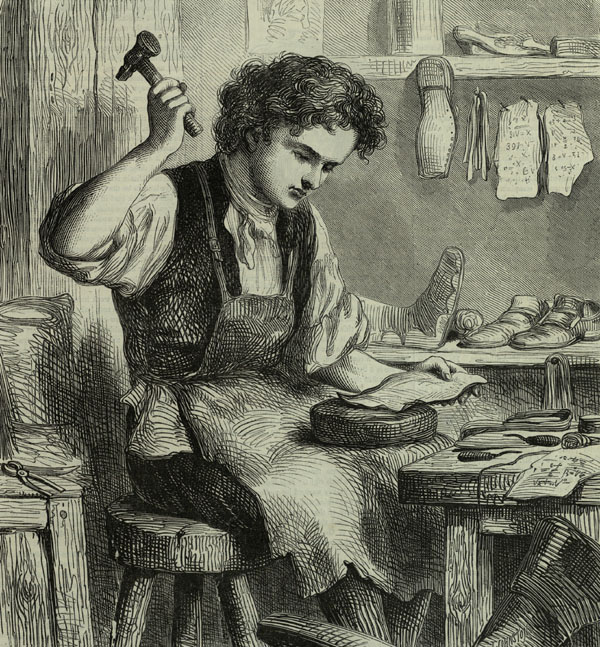
The answer’s more involved than my father working as a shoe repair man. When I watched my father stand over the last, his face less than a foot from his work, he concentrated deeply. The shoes he fixed were perfect. He sewed leather with thick thread, pounded soles, buffed and polished.

This perfectionism carried over to me. It’s what got me in trouble in preschool when a kid stuck a felt eyebrow upside on the face we were making in class and I yelled, “He did it wrong.” The teacher put a finger to her lips and frowned in my direction. I was four–already an editor. As I came of age, I loved the exactitude of words spelled correctly, coloring inside the lines and memorizing nursery rhymes.

He toiled Monday through Saturday, 9 to 9 for the first several years he owned his business. And when I was five, I got my first job peeling boiled eggs at the Gondola Restaurant for three dollars a day. I am a cobbler’s daughter for my work ethic. I’ve been a door-to-door greeting card saleswoman, papergirl, babysitter, fast-food employee, lifeguard, diet aide, retail sales clerk, navy data technician, video store clerk, teacher, tech writer, the list goes on.

My father taught me “Work will see you through.” For this gift, I am most grateful.

How a small boy became a great man, illustration