I’ve Been Away Too Long–So, Here’s a Poem

Barbie Dolls on Drugs

I was twelve and you were six, and we spent
every Tuesday night together for a year.
Your mother at Weight Watchers, your
father driving truck, we watched the Wizard of Oz
so often we knew the script by heart, and when
we tired of TV, we invented games. You had
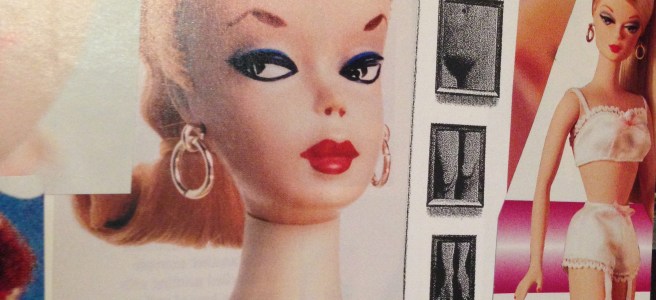
a huge playroom with the Barbie Townhouse,
and a whole town of Barbies. One was the mother,
and one the daughter who stayed out all night,
came home naked, platinum blond hair
a tangled wreck. Mama Barbie screamed,
“Where have you been?” Daughter said,
“I don’t even know what’s going on.”
They slapped faces with right-angled arms,
and Daughter pulled on a sparkly gown
and hopped away with her plastic suitcase.

Days later, your mother asked to talk
to me, said, “No more Barbies on Drugs,
please.” If she would have been nosier, she
might have discovered I got the idea from
the live show I watched at home, starring
my teenage brother and young stepmother,
sparring, yelling, my brother’s frequent
vanishing acts. But I know now your mother
was trying to keep your dad from disappearing.

All these years later, you and I are still
best friends, and I’m both sad and grateful
for my youthful ignorance–your house was an escape
from my own, where I dropped in a video tape,
air-popped some popcorn, and sat with you
to watch a young girl find her way back home.

My Father Wondered Why I Was Precocious

My father was single, and he owned a shoe repair and leather crafting business when I was a girl. Besides the leather pants, vests and belts that filled the store, he sold water pipes, rolling papers and roach clips. As a five year old, I was surrounded by psychedelic posters, tie-dyed T-shirts and peace signs. And in the workshop, my father tacked Playboy calendars and posters of nude women on the walls.

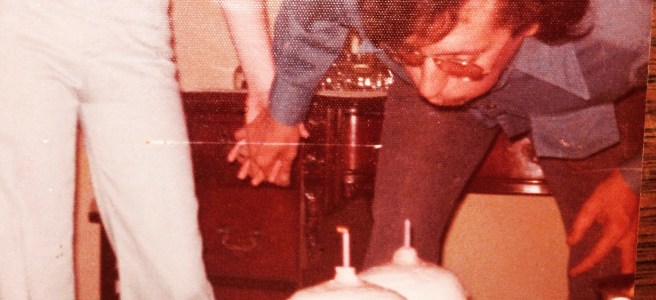
When my father turned 27, his very young girlfriend threw him a surprise party at our apartment. There were streamers, balloons and a cake made of breasts. I am grateful that photos exist from this party. I was too young to be invited, of course, and had been sent to bed. But when I look at the photos from the party, I see my father–his Tony Orlando hair, his denim work shirt, the thin beauty on his arm–personified.

I am happy my father was so young, 22, when I was born. Often he was more like an older brother than a father. He was patient and funny, and he wasn’t ashamed of anything. I asked tons of questions, which he always answered. When I asked questions about sex, he told me the truth–often with street slang. Anyone who wonders where I get my “to the point” method of communication can stop wondering. I am both grateful for this gift and have spent a lifetime trying to improve myself.

I miss my father. He was a great parent, mentor and friend.

My Kid’s Smarter Than Your Kid–Pondering Competition

My daughter Jessica was still crawling at 15 months. Because other toddlers I knew had already started taking their wobbly first steps, I called the pediatrician. He said, “If she doesn’t start walking by next month, bring her in. We’ll put braces on her legs.” Jessica started walking that week. And because I now know that she gets embarrassed over everything, I’m sure Jessica overheard the doctor and was afraid of looking like Forrest Gump.

In kindergarten, Jessica tested into a program called Enrichment–what some schools call “Gifted and Talented,” because she knew how to read. Jessica was not the type of student to push herself when she was bored, and I suspected this program would encourage that. I was feeling pretty good about myself and Jessica’s father–a meteorologist for the U.S. navy–that we had drawn the long straw. We had a smart kid.

When Jessica entered 4th grade, it was the first time I interacted with the parents of other “smart kids.” At the time, I was a 32-year-old grad student in English at the university in Bellingham, Washington. It was five p.m., and when I walked into the elementary school library for the parents’ meeting, Jessica holding one hand and my five-year-old daughter, Josie, the other, I felt like a kid. No other parents had brought their kids, and they all had gray hair and wrinkles. They were dressed in blazers and slacks. I was a grad student in a sweater and ripped jeans.

The atmosphere in the library bugged me–the sense of smugness in the air. Every couple sat with their noses held high, discussing the curriculum, talking about art programs their kids were involved in, or awards they’d received. They talked about math olympics, writing contests, music lessons, physics and future problem solvers of America. I kept quiet, thinking about how grateful I was simply to have Jessica in the program. These parents seemed to believe that their smart kids were a reflection of their own intelligence.

One of the reasons I was so pleased to see Jessica succeed academically was because I hadn’t. I wasn’t dumb, but education wasn’t valued in my childhood household. My father owned a shoe repair shop. He was funny, friendly and blessed with common sense. When I was in high school, my father told me: “Just get Cs, and I’ll be happy.” So I learned that I had to care about doing well for myself. I only put forth effort in the classes I liked: art, theatre and English. And I didn’t start college until I was 24.

Jessica quit the Gifted and Talented program in 7th grade–when it was no longer mandatory. I begged her to stay in. “I don’t want people to think I’m a geek,” she said. She wouldn’t believe me when I told her: “You can’t control what people think.” Within a year, her grades tanked. Boys and parties became much more important than solving America’s problems, writing poetry or competing in math. By this time, I had finished my graduate degree and was working as a writer. When Jessica failed freshman English, I figured she was rebelling against me.

My smart kid graduated from high school with a 1.67 GPA. Her father gave her his G.I. bill money so she could attend community college. She loved it, but failed out after a bad breakup during her third quarter. Jessica took a year off and is back in college, working part time as a waitress. Like a lot of us, she regrets not trying harder when she had the chance. She even says, “Mom, you should have pushed me harder. But when I was in those classes, I felt like the dumbest kid there.”

As a parent, you never know how well you are doing. At best, raising kids ebbs and flows as continuously as the tide. Jessica crawled for 15 months and I never worried until I noticed other kids “beating” her. Competition makes us crazy. A poetry teacher told me once: “Comparing yourself to others is deadly.” I say it’s also inevitable. Perhaps it keeps us ambitious. Aware. After all, competition made me call the doctor.

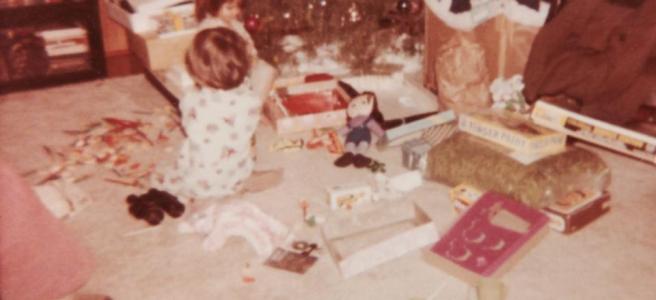
1973-The Year My Brother and I Ruined Christmas

Christmas Eve finally arrives. Tony is seven, and I am five. We beg my father and stepmother Vickie to let us open just one gift before going to bed, but they won’t relent. My father sits on the couch with his arm around Vickie. “The quicker you get to bed,” he says, “the quicker Santa will get here.” So we shuffle to our bedroom, my stomach tight.

I have just barely closed my eyes when Tony shakes me awake. For a moment I forget where I am, searching the blue walls for clues. I rub my eyes.

“Come on,” Tony says. “Let’s see what Santa brought.”

It’s still dark outside. I ask Tony again whether it’s really time to get up. “Yes,” he says, “Let’s go.” I hold tight to his hand as he drags me down the hall, tiptoeing past the room where my father and Vickie sleep.

When we step inside the living room, presents—rectangles, squares, lumpy spheres—form a pile around the tree. I have never seen so many gifts in my life. Tony clicks on the light and for a few moments, I stand there, ogling the shiny foil bows, white and crimson wrapping paper, the overfilled stockings hanging from the cardboard fireplace. This is Christmas!

Tony kneels in front of the tree and starts to pick through the gifts. “This is for me!” he says, shaking the box.

“I want one!” I say, snatching the first present I see. I tear open the wrapping to find a pair of women’s bedroom slippers. I slide my small foot inside the giant slipper. “These don’t fit.” I toss the pair behind me. I open a box with a sweater that’s way too big.

“No way,” Tony says. His light brown hair sticks up in front like devil’s horns. “It’s the Evel Knievel stunt cycle!” He squeezes the box. “I got it!”

“Where’s my presents?” I huff, crossing my arms over my chest.

“Right here, dummy,” Tony says, dropping a rectangular box in my lap.

I open it to find a Tiffany Taylor doll, which looks even more beautiful than on the TV commercial. Tiffany is two feet tall and wears a glittery gold bodysuit beneath a lime green skirt that attaches at her abdomen with Velcro. Her slip-on mules match the skirt. Tiffany has blond hair parted down the middle, but when you grab the top of her head and rotate, she has brown hair and bangs.

The next gift I open is a personal grooming kit with a white plastic hairbrush, comb, and mirror made of pearly plastic. I hold the mirror in front of my face. “Yes, dah-ling,” I say. “I vill be right wid you.”

There’s a really big gift. It’s the Sunshine Family Dolls. It comes with a camper and a surrey cycle. The baby is so cute.

“What the hell are you doing?” My father booms, standing above us in nothing but tighty-whities. His hair sticks up like the bride of Frankenstein. “Get your asses back in bed.”

Tony and I sprint past our father, guarding our hind-ends from spankings. My father slips into his bedroom with Vickie and slams the door. I throw myself on the bed and bury my head in the pillow. Tony sits on his bed.

“We ruined Christmas,” I wail.

Tony lays back on the bed and folds his hands behind his head. I pull the covers over me and hide. We both fall asleep.

We are lying still when Vickie walks into our bedroom. She is wearing her ever-present light blue bathrobe. Her hair is messy and she wears no makeup. “Your father and I are disappointed because we wanted to watch you open your presents,” she says. “And some of those weren’t even for you.”

I start crying again. Tony sits up.

“Now, go wash up,” she says, “Your dad and I will meet you in the kitchen.”

Usually, Vickie flew off the handle over something as small as spilled milk. But, neither she nor my father scolded us that day. We played with our new toys, had dinner. Even today, I’m surprised they were so kind about the whole thing. My kids never tried anything so subversive with me, and I wonder how I would have handled it. . . I know I would have made them re-wrap the presents not for them.
Just One Bite–Pondering Serious Food Allergies

With my father, just one bite of fresh fish, and he said he felt his throat closing. With my younger brother, just one bite of a walnut cookie, and he said he felt like he had worms on his tongue. And now, with my son Vinny, just one bite of some nutty bread, and he said, “My mouth started burning.”

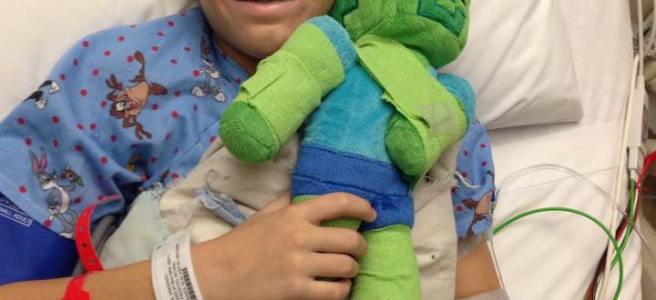
Within twenty minutes, Vinny was covered in hives. The babysitter called Vinny’s father Eric who rushed to the house and read the bread’s ingredients: walnuts, almonds, pecans. He injected Vinny with the Epi-Pen and drove him to the ER, calling me on the way. When I showed up, Vinny was still awake, high on the epinephrine, playing with the hospital’s Ipad. I called the babysitter’s parents, who are Vinny’s godparents. They came right over.

The doctor gave Vinny an IV of Benadryl, also put him on oxygen, because he’s a mouth breather, and gave him the nebulizer. Soon Vinny passed out. His entire body, even his head, was covered in hives. For us, it was two-plus hours of hand wringing before he woke back up, looked better, and was “out of the woods.” His godparents stayed with Eric and me the entire day, their eyes wide, their repeated phrase, “We never knew it was this serious.”

Vinny was admitted over night just in case. He is nine, and this was his fourth trip to the ER.

1. At one year old, Vinny’s grandmother fed him a chocolate chip cookie with walnuts. He threw up, broke out into hives, and Eric rushed him to the ER. That’s when we learned he was allergic to tree nuts.

2. In kindergarten, even though we told the teacher Vinny couldn’t eat food brought from other peoples’ homes, during a holiday party, he ate a chocolate chip cookie. It was right before Eric came to get him. Vinny threw up and broke out into hives. Eric gave him the Epi-Pen on the way to the ER. The next day I went to the school and raised a little hell with the teacher.

3. For Christmas when Vinny was 7, a friend bought me a basket full of candy, nuts and other treats. I threw just about everything away, save two pieces of toffee, which I had no idea contained almonds. Vinny ate a piece of toffee. He almost died that time, and Eric said it was all my fault. I suppose it was.

Each time Vinny goes into anaphylactic shock, the reaction becomes quicker and more severe. This last time I started thinking about his future. Eric and I can’t hover around our son his entire life. The doctor recommended that Vinny learn to give himself the Epi-Pen shot. He knows how. But would you want to stick a needle in your leg and hold it for ten seconds?

Only 1 percent of the population is allergic to tree nuts. My father, my brother, my son. Not me, Eric, my daughters. Being a parent is stressful enough without the added worry of a life-threatening allergy. Vinny’s godparents now understand the gravity of his nut allergy. They are kind and intelligent people. They even offered to pay part of the hospital bill.

Eric and I will continue to watch over our son as long as we can and encourage him to be an active participant in his own health. We keep telling him to read the labels, only eat food that comes from a package with legible ingredients, and no strange bread. Not even one bite.

A Torn Raincheck and Definition of Love

Last night, after working a thirteen-hour day, I tucked myself in bed between my lab/newfie and lab/pitbull. My 22-year-old daughter had been kind enough to look after my nine-year-old son for the evening and had just gone home. “Vinny” was showered and in his pajamas, but was suffering from a meltdown because I wouldn’t let him bring his computer game to bed. It was past his bed time.

“You said we could read a bedtime story,” he yelled.

“But you were playing Minecraft,” I said. “And now it’s time for bed. How about a raincheck?”

“What’s a raincheck?”

“It means I’ll make good on the deal tomorrow night.”

He came in my room and gave me a big hug. “OK.”

I started playing Words with Friends, so happy to see the day come to an end. Then I heard Vinny crying from his bedroom.

“What’s the matter?” I asked.

“I’m sad.”

“Why?”

“Because I really want a bedtime story tonight.”

I sighed and thought of my father. Not once during my childhood did I ever get a bedtime story. My brother and I were told “go to bed.” We tucked our selves in. My father blared music, threw parties, had women over. Our childhood was chaotic at best. But how can I listen to those sniffles and not be moved?

“Pick out a book!”

Vinny brings in The Five Chinese Brothers, one of my all-time favorites.

I am not happy. But I tear up the raincheck and read him the book. After we finish, he kisses me. He says, Thank You. He tells me Good Night. I am too tired to play Words with Friends. I tell myself this is Love.

My House is Haunted and I Have to Sell It

Eight years ago, my husband Eric and I bought a house. He wanted the perfect place in the package, already put together. I wanted the old place with potential that we could create. Because he was too busy finishing college, I looked at homes with the Realtor. When I walked into the harvest gold living room with hard wood floors on 870 Orchard Ave, I attempted my best poker face. This would be our house. There was no garage, and it had an itty, bitty tiny kitchen, but we had off-street parking and a pantry in a great neighborhood.

Our son turned one in this house, and we had a huge party with family and friends. Eric and I painted the rooms the way we wanted, fixed up the basement room, put a compost barrel in the backyard, and even got TP’d one year. We took gorgeous photos of our three kids backdropped by trees, held Easter egg hunts and trick-or-treated in our neighborhood. I found a great job, and Eric started graduate school. We were well on our way to living what many call the American Dream.

Eric and I had been together nine years, and he had seen me through my bouts of depression stemming from childhood abuse: emotional, physical and sexual. Talk therapy was a huge part of my life. I believe Eric didn’t understand what I went through daily, but he listened and hugged me. After I had our son, my postpartum depression lasted more than a year, and I went on antidepressants, which helped enormously. A few years later, when I turned the big 4-0, I thought, I had never felt happier. But danger loomed on the horizon.

By our son’s fifth birthday, I confessed to Eric that I’d had a three-week affair with a coworker months earlier. It took me five months to confess. Some friends say it was a selfish choice to tell him, but I assure you, no marriage counselor would see me unless I did. I wanted to work things out, not split up. And I guessed the affair was a symptom of my past abuse rearing its ugliness into my wonderful present as it had done before. Never with Eric, but in other healthy relationships. Eric saw my explanation as an excuse for me to “have fun” with my coworker “Leif.”

Eric called Leif’s wife and told her about the affair. Then in a drunken rant, he told our daughters. And the next thing I knew, my life spiraled into complete pandemonium. A state of disarray that my therapists warned I was a master at creating. People who grow up in chaotic environments need to learn to like the quiet.

Within six months, I asked Eric to leave our house because he was drinking and being abusive. He filed for divorce on the grounds of infidelity. He destroyed me financially. I quit my job. I tried to seek comfort from Leif, but realized he was only interested in the forbidden wife. My elder daughter lost respect for me. My middle daughter, who was going through puberty, started cutting. And my son said he wished Mommy and Daddy would stop fighting.

My daughters are grown. I am living alone in this huge house, my son coming half time. Leif is a dirty word. I am so guilt ridden about the affair that I cannot have a normal conversation with Eric. He is still angry, and it’s been five years. Our divorce has been final for two and neither one of us can move on. Me, because no one holds a candle to my ex-husband, whom I am still in love with. And him, because he’s bitter. He has a new home, a job he likes. We live blocks from each other. Our son is nine and is well adjusted and tender-hearted.

Tonight, I am signing papers to put our house on the market. I cried for the first two weeks after I realized I had to sell it. I can’t look anywhere without seeing Eric and the kids. Eric playing X-box in the living room. The girls playing Rock Band. All of us having dinner in the sun room. Drinking coffee in the itty, bitty tiny little kitchen. Raking leaves in the back yard. Tearing down the toilet paper in the front yard.

Many of my friends ask, Why are you and Eric not back together? It all depends on how you look at it.

How Young Do Kids Learn Empathy?

Salt dough

My daddy died, says the four-year-old girl—
squishing and smashing lilac salt dough
into sea stars and snowmen at the daycare
craft table. She licks her fingers. Don’t eat the dough,
the caregiver says. A boy in a blue and green
striped shirt stacks blocks. The girl eyes
other kids’ paintings of mommies, daddies,
kids and dogs. My daddy died, she repeats,
looking around. The boy turns his stringy-haired
head her way, eyes her from her wavy bangs
to her purple fingers. I don’t have a dad, he offers.
Never met him. The caregiver tilts her head,
half-smiles. The boy rests the last block on the stack,
watches the tower weave before it falls to the table
with a boom and clack. He runs to the boy’s room.

The girl lifts a rounded mound of salt dough,
makes sure no one is watching, takes a bite.

Why I Killed My Step-Uncle In a Poem

From ages four to nine I was sexually abused by my step-uncle “Reggie” who was seven years older. He paid me in quarters and record albums, including Cheech and Chong’s Big Bambu and Toys in the Attic by Aerosmith. I had no idea that the abuse was wrong and blocked the memory until I turned 18.

When I told my father and stepmother about the abuse, they said, “Why didn’t you tell us then?” I was four. And of course, my stepmother accused me of trying to get her brother Reggie in trouble and cause problems between her and my father.
(as if they didn’t have enough on their own) Now I know this response is typical of a family in denial.

I’ve spent decades in therapy working through the after effects of the abuse, which includes mistrust of men and authority figures, fear of commitment, control issues, and a penchant for the melodramatic. I have left good relationships for terrible ones, including my last marriage. I don’t want to be alone but keep making that happen. The truth is, I don’t know what the hell I’m doing.

In a poetry class years ago, I had a teacher who was a victim of childhood sexual abuse and not afraid to talk about it. He really understood the damage it causes to the human psyche. Through discussion, he helped me get my writing to a place where I could articulate what I wanted with the following poem. He read The Coin Collector and said, “You killed ‘im off, eh?” I didn’t mean to, but the poem took me there. And so be it.

The Coin Collector

You look tranquil in nickel-plate, uncle,
shark skin suit, black tie, eyeglasses.
They’ve done great work with your makeup,
brushed your hair back as you would
have worn for a wedding or wake. Your mother
offers kind words, says that as a child
you saved every penny you found. Your sister
talks about your thumbs, how they bent nearly
flat from the indent of so many coins.

I remember the Lincoln Cent collection book
you gave me, your taking me to antique shops
when I was thirteen, our private talks
of my high school lovers, all of which
you were dying to hear. These days, I carry
grief in my pockets like the coins you collected,
handled so often they’ve lost their brilliance.

I think of the young girl from a family
where no hands reached, how she welcomed
your affection year after year, afternoons
in your bedroom, a quarter a trip, your arms
linked through her legs, her fingers
tugging your blond hair, the pleasant ache
she felt between her legs then—and now—
when she hears them say your name, runs
her finger along the ribbed edge of a quarter,
sees the coffin close over your face.