
Subscribe to continue reading
Subscribe to get access to the rest of this post and other subscriber-only content.
Subscribe to get access to the rest of this post and other subscriber-only content.

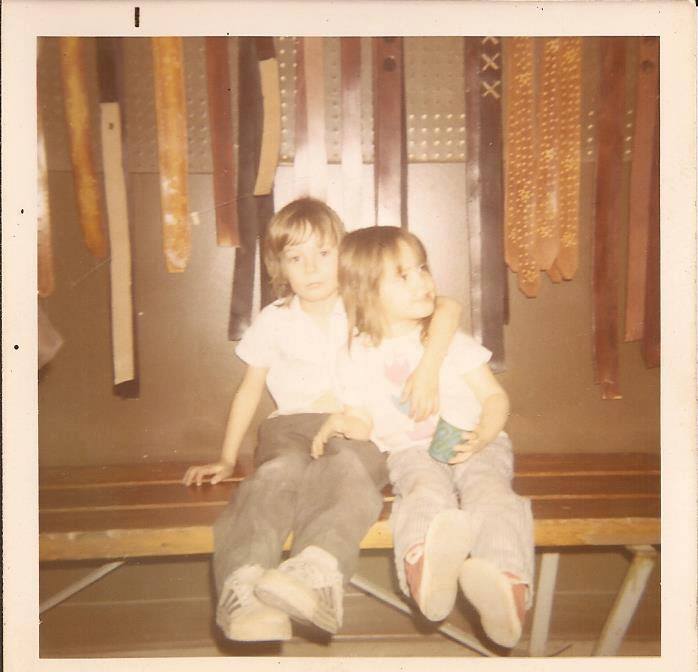
It was May of 1987. I was 18, and my brother Tony had just turned 21. We were hanging out with a few friends at my apartment. In my white stretch jeans and loose hanging sweatshirt, I stood in front of the small group telling them stories about my and Tony’s childhood in our father’s shoe repair shop. After 16 years, our father was preparing to retire and Tony was going to take over the family business. He said I could work at the shop with him.
 During my make-shift stand-up routine, I talked about the time Tony and I got lost in the woods on a day-camp hike. We were both bawling and eventually found our way back because I remembered the InchWorm toy smiling in front of a run-off valve. I talked about the massive Easter egg hunts with our 12 cousins at our grandparents’ house. And, how we took scraps of leather, wet them under the tap, and stamped our names in the hide with brass tools.
I started to walk toward the kitchen to get another beer. In this particular apartment, you had to walk through the bedroom to get to the kitchen. Imagine! I hadn’t noticed my brother followed me. Tony had silky brown hair, bright green eyes, and freckles. He was wearing a brown leather jacket. “Hey,” he said, “you made me cry when you told those stories.”
I smiled. That made me so happy. Usually my main goal was to make him laugh, but if I moved him that much. Wow!
“You’re the most important woman in my life,” he said. “I love you.”
Gulp. I looked at my white leather elf boots. I felt so embarrassed. My brother had called me ugly the first nine years of my life. We used to fist fight in earnest during middle school. And, since he had been in the army for two years, we hadn’t been around each other that much. I barely eked out an “I love you too.”
“We are going to have so much fun working together in the shop,” he said. “We’ll be party buddies for the rest of our lives.”
* * *
Two days later, Tony and I had brunch at Friendly’s restaurant. We hung out for most of the day at his place, and then he drove me back to my apartment on his motorcycle. We had a couple beers and listened to Run DMC’s Raisin’ Hell. At around 8 p.m., Tony left on his motorcycle to go to the store. I fell asleep on the couch. Three hours later, I was awakened by the phone, and the soft voice of my uncle Joe saying, “Tony was killed on his motorcycle tonight.”
As you might imagine, my life was forever changed throught that experience. I went from being a carefree 18-year-old party girl to a full-on grieving woman. A woman who cried every time someone said the name Tony. A woman who threw up when she ate. A woman who jumped at the slightest noise. A woman who was certain the ghost of her dead brother would visit to tie up loose ends.
Why had I been so afraid to tell Tony I love you? He was my brother. My rock. My shield. The first boy I ever loved. And, he had invited me to work with him at our father’s shop!
So, today, if I love you, I tell you. Tony’s death was a precious lesson. He was 21. He would never grow old. That taught me how short life is. In 1987, I started to tell my family, my friends, and even acquaintances “I love you!” And you don’t even have to say it back.
Back in the summer of 2009 I started seeing a therapist because my childhood haunts were interfering in my eight-year marriage in a very real way. I was blissfully married, and I was afraid I was about to destroy everything. But why?
My therapist “Bruce” was (and is) one of the coolest people I’ve ever met. His face is careworn, and his hair hangs to his shoulders in thin white strands. He looked sort of like Bill Murray, and we joked about how much we loved the movie What About Bob?
Bruce was old enough to have been in practice during the I’m OK; You’re OK phenomenom of the 1970s. However, Bruce developed his own version of the mantra: “I’m fucked up; you’re fucked up.” That saying felt so much more real and relatable. And, after I left my sessions with Bruce, I felt sane and normal.
Bruce and I discussed childhood abuse of all types, and the lingering effects. I was sure those “effects” were leading me to think Eric was going to dump me. Other than his being extemely introverted and pensive, there were no real signs. And with the gift of hindsight, it may have been better to talk to Eric instead of the therapist.
Regardless, another topic Bruce and I talked about was breaking the cycle of abuse. He said the statistics show only about 1 in 5 people is able to succeed. I wondered about myself. By this time, I had a 17-year-old daughter, a 13-year-old daughter, and 4-year-old son. I had given them spankings on occasion, and did my fair share of yelling. But abuse?
When I had my first baby, Jessica, she was so beautiful and precious with the most perfect little fingers, I could NEVER imagine hurting her. Her father and I agreed there would be no spankings. Then he left to serve on a navy meteorological team in Japan, and I stayed state-side with his parents and Jessica.
After Jessica learned to walk, like most toddlers, she ventured around and got into things she shouldn’t touch. One day, I tried repeatedly to keep her from sticking her hand into the kitchen garbage. After numerous unsuccessful attempts, I took her right hand and lightly slapped it. She started crying. My chest ached, but she never touched the garbage again.
When compared to the “spankings” I received as a kid, I would say my kids got off easy. I never used any weapons, like leather belts, wooden spoons, or knuckles or diamond rings to the head. Slaps across the face were also a no-no. I’m aware people have strong opinions about physically punishing children, and as for me, because of the severity of the beatings my brothers and I endured, I dislike anyone hurting someone smaller and weaker than they are.
Now that my daughters are grown, they blast me for being a fiery-tempered smart mouth when they were young more than inflicting physical punishments. I was 23 when Jessica was born. I divorced her father when she was two. I remarried when Jessica was four. Nine months after that wedding Josie was born. Then her father died when she was 18 months old. That’s a lot of chaos for two young girls and one woman to endure.
Although I’m resilient and loving, I am also brutally honest–like my father. He wasn’t always tactful, and he sometimes called me names like “goddamned dummy” or “nutcase.” At the same time, he was slow to anger. So, if he punished me physically, I had to have done something really wrong, like when I accidentally set a fire behind the Vestal Plaza in New York and got the belt. That only happened once.
There are definitely times I have snapped at the girls, yelled, or made a huge deal out of nothing. And, when I catch myself sounding like the icy voice of my former stepmother, I clam up. Fortunately, I apologize to my daughters when I’ve done something wrong. With my son, it’s so different. I was 36 when he was born, and although I’d like to say I have mellowed, to be honest, I was just plain tired.
My son was wild as a toddler. He had blond curly hair and a crooked smile. When he ran out onto the volleyball court midgame, then turned and grinned at me I wanted to thrash him. But he was so freaking cute, how could I? When his father and I eventually separated (my prediction of wrecking the marriage came true), Vinny was five.
Now, Vinny is a chill teenager. I couldn’t tell you the last time I spanked him or yelled at him. And over the past 18 months, with his sisters out of the house, and his father extremely busy with his new life, my son and I have spent an enormous amount of time together. We spent 8 days in New York, took two roads trips to Portland, OR, and many road trips to Coeur d’Alene, Idaho. In the car, we don’t listen to music; we talk. We talk about anything and everything. No subject is forbidden.
In my childhood home, there was no talking about feelings, no apologizing. There was no, “How was your day?” or “Do you want to talk about something?” When I watched the Brady Bunch, I was so envious when the mom or dad knocked on the kids’ door and asked to talk. Especially since there was a character named “Cindy.” If only my parents had come into my room with a soft voice, and said, “Cindy. Are you okay?”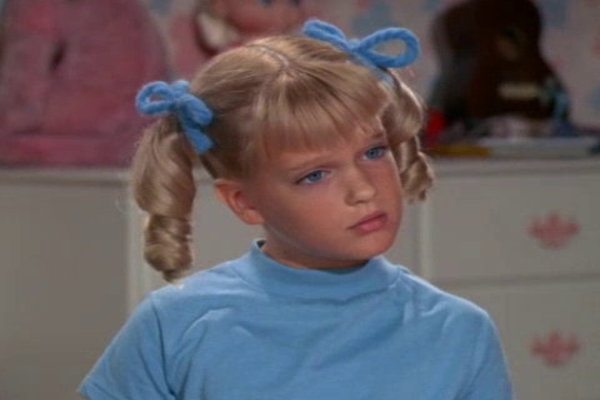
One of my favorite things about my relationship with my kids is our inability to keep secrets. I have always talked to them as if they were adults in training (because they are). And, as much as I loathe when they gang up on me, make fun of me for mispronouncing current band names or rappers, or pointedly argue with me — that is how their father(s) and I raised them. They need to advocate for themselves even if it pisses someone off.
My oldest daughter once said I was too easy on her growing up. My middle daughter says I was abusive. My son may be too young to look at me reflectively, but right now, we are as close as siblings. There are three things I have taken away from my father’s parenting: 1. Never be afraid to act silly in front of and with your kids. The humility will go a long way. 2. Tell the truth. 3. Don’t be afraid to apologize for your bad behavior. In that way, you teach forgiveness. I had to learn that one in spite of my father. I’m fucked up; he’s fucked up. We’re all works in progress, eh?
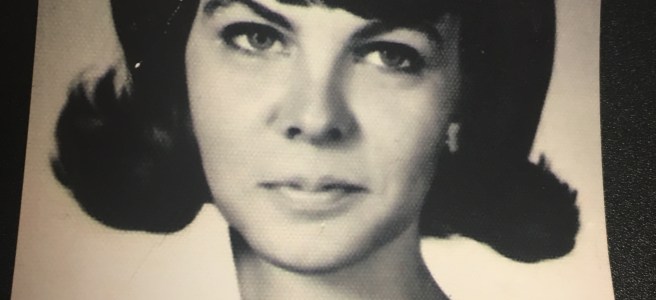
My mother, Carla Bosch, was born in 1946 in a displaced persons’ camp in Bucholtz, West Germany. Her father was loving; her mother was cruel. After WWII they moved to Amsterdam, Holland, where they lived until my mother was 11. Then they moved to the states. The school district bumped her up two grades. I know little about her life during her teen years except that her mother constantly called her “ugly,” and if she showed signs of angst, her mother checked her into the psych ward at the local hospital.
In 1965, my father and mother met in a pizza parlor in Binghamton, New York. She said he looked like Woody Allen with black hair. They started dating and within several months, she became pregnant with my brother Tony. My parents married in Nov. 1965, spent their honeymoon in Cooperstown. Then they moved into a rented house on the south side of Binghamton. Tony Jr. was born in May 1966, and slept in a toy chest. My parents paid for diapers by hustling pool at local taverns.
My father doted on my brother, however, he was not a man easily tamed. He believed women stayed home, and men went out partying. In an attempt to keep him out of the bars, my mother became pregnant with me. No matter how cute I was, and I was cute, her plan failed. She started leaving my brother and me with sitters, and according to gossip, sometimes alone. When I was six months old, my father kicked her out of our house, filed for divorce, and took full custody of my brother and me. He told her never to contact us again.
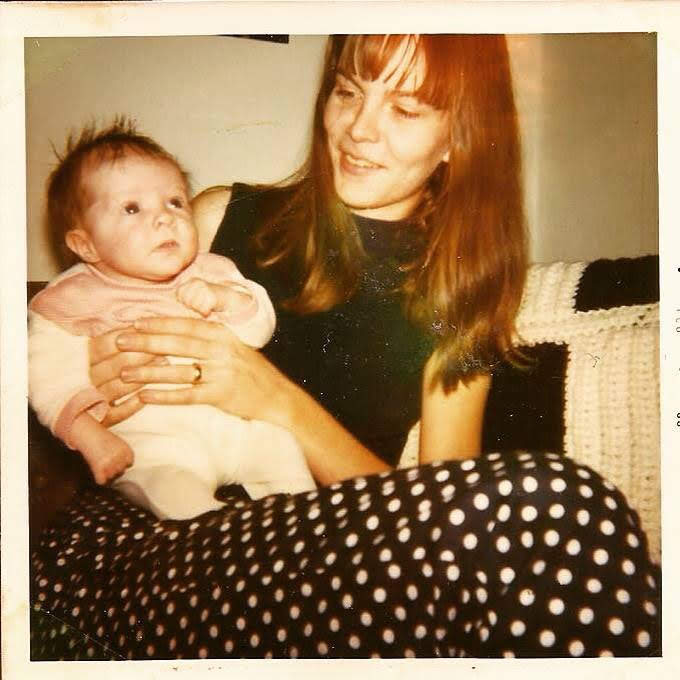
Growing up, Tony and I were not allowed to talk about “Carla” in front of my stepmother who insisted we call her “Mom.” And if I asked my father’s family about my birth mother, they said, “She left you. You don’t want to know her.” But I did. There were only about five photos of her in the entire house. I studied her high cheekbones, green eyes and square chin. Did she ever think about us? Where did she live? And when I walked around town, every woman I saw was a possibility. Is that her? Is that her?
As I came of age, I tried to make peace with not knowing my mother. Tony always said, “Don’t bug Dad with your questions.” But, Tony was three when she left! Surely he had some memory of her. He said he remembered her throwing a plate. And that she taught him to read. But I had zero. Not a voice. Not a scent. Not an image. I stored a few memories of the women my father dated before he married my stepmother.
After I graduated from high school, Tony was killed in a motorcycle accident. That cemented my dislike of my stepmother. In 1989, I joined the navy. Perhaps, I thought, if I “traveled the world,” I might eventually find our mother. In 1992, while stationed in Monterey, California, I became pregnant. The doctor asked, “Did your mother take drugs when she was pregnant with you?” I said I didn’t know. He said, “Can’t you ask her?” I shook my head and waited until I got into my car before I cried.
One night while I was nursing my daughter “Jessica” and watching the news, a segment called Finder on the Money explained “How to find a long-lost relative.” I took down the number. They put me in touch with a private investigator. And though I knew my mother’s name, birth date, and birth place, he said he needed her social security number.
I ordered my birth certificate, and my parents’ social security numbers were on it! Within a couple of days, the investigator called with my mother’s address in Newport, Rhode Island. I drafted a letter. “Hi, Mom. It’s me. Your daughter Cynthia. Do you want to know me?” Then I bought a pack of Marlboro Reds and chain-smoked while waiting for her response.
In her very first letter she asked me to imagine being a 21-year-old mother, pregnant with her second child, surrounded by the tumult of the late 1960s–the assassinations of Martin Luther King Jr. and Robert Kennedy. The Vietman War. And then she asked, “Does your brother want to know me?” I had to write back and tell her Tony was dead. She sent back a short note: “How tragic. I broke my glasses. More later.” I can’t imagine the guilt she must have felt — leaving us behind — knowing she would never see Tony again.
Several months later, my mother and I made plans to meet in Binghamton. I was 24. She had gotten remarried the year my brother was killed and was bringing her husband Bill. I had to keep the entire thing secret from family, because my father would not be happy. (A friend dropped the dime on me, and I got an earful from my dad. See earlier post–Secrets Cause Cancer.)
My mother and I met at a restaurant that no longer exists. It was encased in glass, and I saw her before she could see me. I looked in and waved, and she got up from the table to greet me. My mother is 5 foot 11, with salt and pepper hair cut in a bob. She wore a linen blazer and long skirt. She leaned over and gave me a half hug, then invited me to sit with her and Bill. He stood to shake my hand. He had black hair and glasses, and an inviting smile.
The dinner conversation was superficial. With Bill there, I was hardly interested in poking into my mother’s reasons for leaving. However, when he left the table, she said she was sorry she left. I didn’t quite know how to respond, except to say Thank you. One thing I did appreciate was that my mother wore silver jewelry, which was also my favorite. At the end of the dinner, I went to where I was staying. The next day, before they left town, my mother and Bill stopped by to meet Jessica. And then they were gone.
Now, my mother and I are pen pals. She does not have a computer. She does not have a cell phone. She will never travel to Idaho. I send her a birthday card every August, and an Enjoy Your Day card in May. At this point, we will never be best friends. However, I am glad I got to meet her. My father made his peace with it as well. I’m hoping someday we meet again, but I have no idea how that might happen.
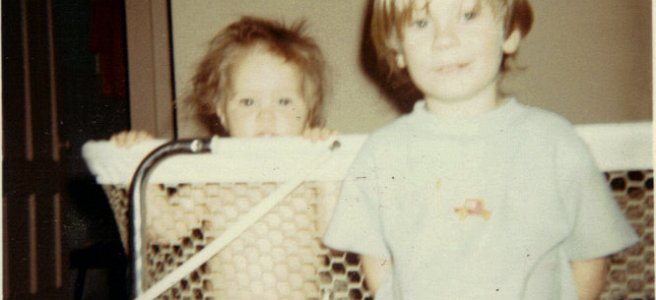
My mother and father split up when I was six months old, so my experience with the broken family started early. My first memories include my father, my older brother Tony, and many members of my large extended family. We are Italian-Americans from upstate New York, and except for mafia ties, we live up to the copious stereotypes: loud, romantic, passionate, beautiful, dramatic.
In 1975, my father remarried. I was six and Tony was eight. It was a different time, and we were not invited to the wedding or reception. In fact, Tony stayed with a friend, and I stayed with a friend of my stepmother’s. And although I don’t remember the woman’s name, I do remember playing the piano, and incorporating “turd” into an impromptu song. She yelled, “Hey! We don’t use that kind of language in this house.”
Six months after the wedding, my father bought us a house on the west side of Binghamton. My stepmother was 19, Tony was 9, and I was 7. My baby brother was 9 months old. We were told he was a “preemie” — but he weighed six pounds, six ounces at birth. You do the math.
Tony and I started at a new school. Although I wasn’t sure how we were different from other families, I knew we were different. My father was a shoe-repair man who owned a cobbler shop. Instead of wearing a suit to work, he wore denim and leather. My stepmother was a stay-at-home mother who wore no bra beneath her T-shirts, had Farrah Fawcett hair, and marble blue eyes. One of the young men in our neighborhood asked her out.
Mine was not a peaceful childhood. There was a lot of fighting between my father and stepmother about Tony and me. She was intensely jealous of anyone stealing attention from her. She was a screamer. My father was slow to anger, but once he broke, look out. And while he was not quick with the belt, she was. Any small thing could set her off–pots and pans “shoved half-assed in the cupboards,” food splattered on the floor, a crass remark. And she hit in public.
Tony started running away from home at age 14. I hid in my bedroom with books, TeenBeat, and sketchpads. My younger brother was beaten so often that when I reached to touch him, he ducked. When my father was home, my stepmother never yelled or hit us, and spoke with a sickeningly sweet voice. When my father was gone, she was a ticking bomb ready to go off at the occurrence of spilt milk. To this day, when I meet a person who reminds me of my stepmother, my antennae lift in response. And I have a sincere distrust of people who bully children. A therapist I saw for a while told me, “You have strong feelers for a reason. Trust them.”
In 1998, my father divorced this wife, after two decades of her infidelity, fighting, and confession that she stuck around for the money. One day I asked him, “Why did you stay so long?” He shook his head. “Ah. When you and Tony were small, whenever I saw your messy hair and dirty faces, it broke my heart. I wanted you to have a mother.”
The decisions we make out of love, or what we think is love, are often ill-fated. Self-delusion has to be one of the most powerful tools of the mind. Think here of the spouse of the serial killer who says, “I never knew.”
My first pregnancy and marriage was at age 23. It took me less than two years to rip that apart and create what I loathed–a broken family–all because some guy said I was his true love. Luckily, my ex-husband Jeremy is not a grudge holder, and we are still friends. God bless that guy.
Something about turning 50 has made my brain go wonky. I keep having dreams about my two ex-husbands, and my late husband, and I spend a lot of time wishing I had done things differently. Perhaps made decisions based on logic instead of “love.” Regret, coulda, shoulda, woulda, etc. Because of childhood abuse, I have been in therapy most of my adult life, and I am still working through a lot of the muck.
The therapist I’m seeing now is helping me connect the pain of my current heartbreak over losing Eric and the chance to rebuild our family with the lingering issues from my childhood. It’s a scary process, however, I’m determined to reach a place of peace and happiness. It’s easier to run away–drink, have sex, ignore your kids, and pretend everything is great. But at this point, I’m way more interested in doing the hard work if that’s what it takes to become unbroken.
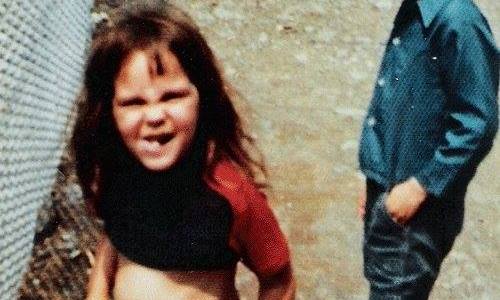
David Spade once said that when you grow up poor you don’t know it until someone else tells you. For the first few years of my life, my father, my brother Tony, and I lived in a couple of rented houses before being evicted because my father was in his 20s and liked to party. We finally settled in an apartment and were on food stamps, although my father never told me until I was in my 20s.
My brother and I went to work with my father almost every day (he owned a shoe-repair business) until we started school. Sometimes we had babysitters, and sometimes my father dated women so there would be someone to take care of us. Unfortunately, some of these women stole his record albums and never came back.
When I was four, my father met a 16 year-old-girl named Vickie who was happy to quit high school and move in with us. (that is another blog by the way) Vickie kept my brother and me clean, fed, and had us in bed every night by nine. She also beat us when my father wasn’t around and insisted we call her Mom.
My father married Vickie two years later and bought us a house. The place was crap brown with a wrap-around porch, a rotting roof, and black windows. My brother and I cried the day we moved in. Over the next two years, although my father spent a lot of money and time to have our “haunted house” remodeled, I still sensed it was shoddy compared to the other houses on the street with their Ionic pillars, manicured shrubs, and intact families. When friends visited, they said, “Oh, your house is nice on the inside.”
When I was nine, my father moved my brother and me out of public school and into Catholic school. We had not been baptized and I only heard “god” when my stepmother said, “You goddamned kids.” Because we wore uniforms, it was easy to blend in. And I was never the kind of girl who could look at people’s shoes and know how much money their parents made.
In middle school, we no longer wore uniforms, and my stepmother bought my clothes (polyester pants, blouses) at J.C. Penney and Sears, which felt normal. One day, the Queen Bee walked over to me, felt the material of my blouse, and said, “Where did you get this?” I said, “Sears.” She smirked, and said, “Ohhh.” I think it was then that I knew. Some of my friends wore Aignier and L.L. Bean. I had never heard of either.
Over the next year, after I noticed the Queen Bee and her cohort wore Izod Lacoste polos, which I saw as a symbol of wealth and status, I became obsessed with getting a shirt of my own. So, my stepgrandmother took me to the outlet mall and bought me two Izod polos. I couldn’t wait to show the rich kids I was not a loser.
Of course, now I know those Izods were like me–slightly irregular. And even though my stepgrandmother bought me designer jeans and name brand clothes, I never really fit in with the Queen Bee and her friends. They played tennis and golf, and I ran track. Their parents had cocktail parties, my father went bowling.
Growing up poor taught me humility. Sometimes I think my life has been one “character building” event after another. I know the value of a dollar and love to do hard work. The things I hold dear, after family, dogs, and friends, are the sentimental gifts I have received over the years–books, toys from my childhood, love letters. I have no idea what it’s like to grow up rich, or be rich, however, I imagine it feels as though you can never have enough.
 Recently I heard about the kerfuffle regarding Rudolph the Red-Nosed Reindeer, the stop motion animation movie from 1964. In case you’re unaware, the movie has been criticized very recently for being pro-bully. (And just to be clear, this movie came out a few years before I was born, and I’m here to tell you, it’s been critiqued for decades).
My kids grew up watching this movie, just as I did with my parents, and it has been a source of laughter around the dinner table and a conversation starter. We love the scene, for example, when the elves call “lunch break” and Hermey’s angry boss looks at him and says, “Not for you!”
Is there yelling and teasing in the movie? Yes. My kids and I find humor in the erratic behavior. Not because we are cold-blooded or evil, but because we can relate to Rudolph and Hermey. It isn’t just bullies who tease people who are “different.” In his awesome book Behave, Robert Sapolsky tells us it’s an innate human quality to malign difference, and we have to learn not do it. It’s also a innate animal behavior (which, if I am correct, humans are animals.) Think here: chickens pecking each other.
One aspect of meanness no one mentioned is when Hermey and Rudolph ask to stay at the Island of Misfit Toys and the lion says “No. But you can do something for me.” It is so outrageously rude that my kids and I have to laugh, whether out of sheer disbelief of discomfort. How dare he deny them a place to stay and then ask for a favor.
Frankly, I have bullied and I have been bullied. I am not proud to admit bullying a girl from Lebanon in third grade. Two years later I received my comeuppance from a boy I loved who called me Ugly, Monkey Face, and Grape Ape from fifth grade to twelfth. Also, very recently I’ve been ghosted, snubbed, and triangulated by a couple of bullies.
I am not pro-bully. I am pro “let’s talk about the bullying in this movie.” Can you believe Santa was so mean to Donner and Rudolph? Can you believe the whole town shunned Rudolph until he became useful? Can you believe characters in the movie apologized to Hermey and Rudolph for being mean to them?
Bullies are never going away. Look at our President! And, if you don’t believe that, I’ll show you reindeer who can fly. I don’t have a solid answer for how to deal with a bully, because they are all different. But the ones I am dealing with now — I avoid them like last year’s fruitcake.
Four years ago, I started seeing an excellent therapist. I had been divorced for three years, and after two unsuccessful attempts at dating, and my ex-husband’s flat refusal to work things out, I said, “Okay. It’s time for you to get over Eric.”
Eric and I had met in 1998, fell in love, got married, and built an amazing family and friendship over the next 12 years. We both earned degrees, went to grad school, worked, and shared the responsibility of my two daughters. Eric wanted a baby of his own, so we had a son together.
While Eric was finishing grad school, I started to feel like he was turning away. I was overwhelmed with work and the kids, and I’m sure he felt the same–except he internalizes his problems and I externalize mine. So, while he was in his own world and a male coworker tempted me with a “free-wheeling affair with no responsibilities,” I took the bait.
Three weeks later, said coworker dumped me. I fell into a pit of despair. I had betrayed my best friend, and he was the one person I couldn’t tell. Surely, Eric would leave me. He would freak out. Was there anyway he could forgive me?
The short answer is no. Six months after I confessed, he filed for divorce. I gained fifty pounds over the next year, and when my dad died in 2012, I realized what an idiot I was for letting Eric go. He and I talked here and there, shared custody of our son, and even attempted a few reconciliations up until 2013, when he cut that off.
Over the next year, I only saw Eric when something went awry with the kids. He was a great dad. Very involved. We attended school events together and kept things cordial. I started seeing a grief therapist, who recommended a woman who did EMDR–a technique that helps patients process painful memories. I was doing well.
In 2016, Eric said he wanted to try to become friends again. I was so happy. We were talking openly about my affair and the divorce. We started hanging out together, having beers, and spending time as a family with the kids. Eric initiated an intimate relationship with me, and I was thrilled. My therapist encouraged us to talk about our break up and continue communicating honestly. Our friendship was fragile at best.
August 2017, Eric attended his high school reunion. The next day, when I asked if he had fun, he offered NO details about his hanging out until dawn with the cheerleader who had rebuffed his advances back in the day. We still hung out, but there was nothing physical.
In late September, Eric told me he was “dating” said cheerleader who lived six hours away, had three kids under 10, and was in the midst of an ugly divorce from her husband of 17 years, who was a millionaire. (I learned later it was because of her cheating, pathological lying, and abusive behavior.) She told Eric “you’re the love of my life.”
What happened next? Stay tuned for my next post, where I will share how I reacted to all of this. It’s not pretty.

Stop me if you’ve heard this. Ten years ago, I was a happily married woman with three kids. On my 40th birthday, I looked out of the picture window of my living room and thought, “I’ve never been so happy.” My husband was an introvert, and I’m an extrovert, and we complemented each other just about perfectly. We really dug each other physically, spiritually, and intellectually. We’d been together 11 years.
Over the next several months, while my husband was earning his graduate degree, I felt overwhelmed with work and the kids, and I perceived my husband’s turning inward as turning away. I also thought he loved the one child we had together more than he loved me. For whatever reason, I was afraid to confront him with this information and figured things would simply work out as they always had before.
A guy at work with whom I’d been collaborating closely started inviting me to coffee, talking about his miserable marriage, and started flirting with me via text message. I was so in love with my husband, I didn’t think twice about any of this until it was too late. The guy chased me until I relented. We had a three week affair and then he dumped me. To say I was devastated barely covers it–for the next several months, I hid in my room, drank alone, and dreaded seeing my husband’s family.
When I finally came clean about the affair, my husband was sad. He had to see the guy at work. My husband and I went to marriage counseling. We took weekend trips to try and reconnect. But because the “guy” was still around, it became too much for my husband. He put a GPS tracker on my phone, looked up the number of text messages through ATT, and insisted I quit my job. I put up with all of this until he turned violent. I had to kick him out of the house. He filed for divorce almost immediately.
My soon to be ex husband and I kept a cordial coparenting relationship for the kids. We sat together at Christmas concerts, sporting events, and graduations. He never really forgave me for the affair, but at least we could be in the same room. Then, in November 2016, five years after our divorce was final, my ex husband and I started hanging out together as friends. He said, “I’d like to rebuild the deep friendship we had when we were married.” We had monthly conversations, went out for beers, watched TV, and hung out with our son.
From February 2017 to July 2017, my ex husband and I casually dated. He kept saying he didn’t want a commitment with anyone, and we would see where this would go. I thought it was the least I could do since he had convinced me I single handedly ruined our marriage. Aug 12, 2017. My ex husband went to his high school reunion. The next afternoon, he shared funny stories with me.
He had been becoming more distant since July, and I figured he was still gun shy. We still went on a few dates, however, he made no moves beyond a platonic relationship. One time, he even asked me for recommendations on bed sheets. Sep 22, I told my ex I wanted to spend more time with him. He said, “I reconnected with someone at the reunion, and we’ve been seeing each other.” I said, “When you said you didn’t want a commitment, you just meant with me.”
Do you think the woman was unfettered? Nothing like me? A fresh start for my ex hubby? Think again. “Jill” was in the midst of an acrimonious divorce, had three kids, and had been dumped by her husband for …wait for it… having a 15 month affair with a man who lived in Europe, several fake FB accounts, drunken violence, and a secret trip abroad.”
Jill was a mean girl in high school who wouldn’t give my ex the time of day back then, when he was chubby and obnoxious. He adored her, however, and felt all “those feelings come flooding back.” When they reconnected at the reunion, my ex was the ONLY single guy there. Jill, depressed and rejected, somehow convinced him that they were “star crossed lovers” who were destined to be together. Then the love bombing began. Letters. Cards. Photos. Collages. All in the first few weeks of dating, proclaiming ever lasting love.
Although Jill lived seven hours away with her husband and kids in a million dollar home, she drove to our hometown about ten times over a month and a half to put her hooks into my ex. When he told me who it was, I said, “Ew. The girl with the fake eyelashes who gave me the dead fish handshake when we met? She’s such a bitch.” Her husband finally kicked her out of the family house in October.
Today: my ex and I no longer have a relationship. Jill has made sure of that. I have no idea what lies she has told him, but I’m guessing they are about her millionare husband who always took care of the kids, and didn’t make her work outside the home more than 15 hours a week. They guy who bought her three cars and took her back after the first affair. What an asshole.
My ex defends her to the death. He has spent weeks away from our son, doesn’t care about anything but her, and when he got fired from his job, instead of looking for another one, he drove to her new place (3200 dollars a month and funded by the estranged husband) and stayed for days at a time, sometimes without telling me or our son. It’s the perfect fantasy. For them.
When I asked my ex how he could be dating someone who cheated on her husband twice, he said, “She didn’t cheat on me.” Everyone keeps telling me what a jerk he is and what losers they both are, and to put them out of my mind. However, when you come so close to rebuilding your family and watch it get ripped apart because of two people in a mid life crisis, it’s hard to watch it disappear without feeling a huge sense of loss.
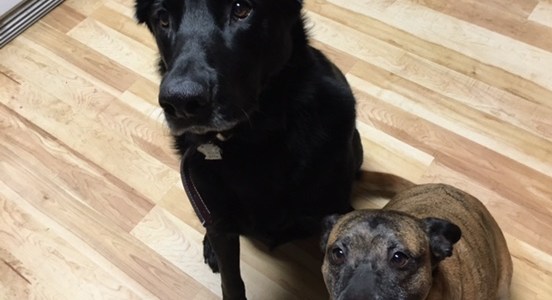
If you’ve ever dated a narcissist, you will identify with this post. If you haven’t ever dated a narcissist, you’re damn lucky. Few experiences make you question your self-worth, sanity, and reason to live more than being “loved” then dumped by a narcissist. I say dumped because they are people who dispose of things and people once they are used up. The first time the narc came to my house, my black lab chewed up his phone charger. Smart dog.
“Narcs” love vulnerable people. You know, widows, the broken-hearted, the poor bastard going through a mid life crisis. And the worst part is they are exactly whom you were looking for. The rescuer. The comedian. The princess. The prince. This is because they are chameleons, changing shades and personalities to be everything you had ever hoped for. Love live music? So do they. Love politics? So do they. And if you like hiding from the rest of the world, they love that best. You will find yourself saying “I can’t believe how alike we are.”
However, the moment you begin to show a sense of self outside the narc’s view, beware. The narc is king and you are merely a subject. Avoid telling truth to power if you want to stay in the narc’s good graces. Otherwise, you will be out on your can. And don’t ever criticize–you will be extracted from their life.
One narc I dated drew me in with promises of intimacy and closeness. We had a long distance relationship, consisting of FaceTime, text messages, and emails. When we did interact in person, we were electric. He was sarcastic and cute, and I really liked him. However, his decades long pot habit had given him the memory of an errant puppy, and when I called him on it he flew into a rage.
The narc often told me to wait in the car when he stopped by a friend’s house, or the store. I thought, What the hell? Is this the 50s? He once turned to me and said, “There’s stuff in the fridge. Go make us a couple of sandwiches.” I started laughing hysterically. He said, “What’s so funny?” I thought he was joking. And yes, I made the sandwiches.
One morning after breakfast in a diner, the narc introduced me to his friend who was thinking of joining the army. I talked to this young man about my stint in the navy and how I went to college and grad school. The narc interrupted and said, “She also sells crack to kids.” On the walk to the car, I said, “Why did you do that?” The narc went bananas! “Can’t you take a fucking joke?” The narc had never finished high school.
I knew we were over when the narc barked an order at me and I said, jokingly, “Quit telling me what to do.” Right there, mid vacation, (we had three days left) he said, “I think we’d be better off as friends.” This from the guy who said we belonged together forever. I walked to the bedroom and started crying.
Over the next three days, the narc and I acted like roommates. He went back to his town, and during a long phone conversation in which we truly broke up, the narc said “Tell everyone this break up was mutual. Don’t put that shit on FB. You will look like an immature drama queen.” Would you believe I listened to him?
Luckily, the narc and I only dated a few months, and yet, I was reeling. I started running long distances and imagined his lying face beneath my right foot every time it hit the pavement. Ahhhh. Ahhh. Ahhh. I spent a lot of time crying that December.
After our mutual friends learned about the break up, they told me, “He’s a huge loser. We couldn’t figure out why you were with him.” I rolled my eyes. I fell for him because I had lost my father and the narc came to his funeral. I was so tuuched. We started texting, he called me “Baby” (puke), and the rest is history.
The red flags were abundant and waving. I should have known the minute Gus chewed his phone cord that the narc was not accepted by my very smart dog. Looking back, I see this as a wonderful learning experience. My antenna are up, and I have taken a haitus from dating. Until then, I will hang with my dogs.
 The Cobbler's Daughter