Do as I Say and Not as I Do

Years ago, I promised myself that when I became a parent, I would never use the phrase “Do as I say and not as I do.” It’s hard to believe I actually heard this phrase from my stepmother all the time when I was a kid. My parents smoked cigarettes and pot, and got drunk as all get out, then told my brother and me not to smoke or drink. My stepmother used the word “fuck” as a convenient adjective, but my brothers and I were scolded for saying “freaking” or “sucks.”

While I never used the phrase with my kids, I know I’ve implied it. Nothing turns a person into a hyprocrite faster than being the parent of a tween. “Mom? We learned about drugs in school. Have you ever done drugs?” “Mom? Is Dad the only man you’ve had sex with?” “Mom? How old were you when you first drank alcohol?” You see my point. Unless you plan to divulge every naughty thing you’ve ever done in your entire life to your maleable child, you will be forced into being a hyprocrite. At least my heart is in the right place.

When I reflect on the barrage of mistakes I’ve made throughout my life, things like spreading gossip to falling for a guy who said he loved me and didn’t to dumping a guy who really did love me, telling and/or believing lies, and getting married when I should have run for the exit, I hope to protect my kids and loved ones from making the same mistakes, suffering the same hurts, and enduring the same humiliations. Of course, that’s not how it works. Everyone needs to learn for themselves.

For instance, my first serious boyfriend, “Randy,” and I started dating three weeks before my older brother Tony was killed in a motorcycle accident. I was 18, a grieving mess in need of love, and fresh prey for the malignant narcissist that Randy was. He charmed his way right into my life: I moved him into my apartment, never charged him rent, and never had a job (except the occasional drug deal). Randy cheated on me incessantly, stole money from me, and somehow I believed I loved him.

After a year of catching Randy in lies, being evicted from numerous apartments because of fights, and seeing him come home with hickies from other women, I finally dumped him. He started bawling and slapped me across the face. “This is why I’m leaving,” I said. And while I thought I was free, over the next several months before I left my hometown for the U.S. Navy, Randy slithered in and out of my life. Today, friends say he’s an incurable heroin addict still living in our hometown.

What surprises me is that during that 18 months, my father never said a negative word about Randy to me. How difficult it must have been for him to see his only daughter crying hysterically when Randy stood me up, the crappy apartment I shared with Randy, and the long-haired bum in tattered jeans and concert T-shirts holding his daughter’s hand at family functions. Although my father knew this relationship was a disaster that would blow up in my face, he never said a word.

If you’ve never had a Randy in your life, consider yourself lucky and unlucky. Lucky because you haven’t suffered the hell of loving a malignant narcissist. Unlucky because you’re still innocent enough not to recognize a malignant narcissist when one oozes into your life. You may fall head over heels in love with him or her and be blindsided when their house of cards drops on your head.

My friends and family members who have been burned by a malignant narcissist and I have so much to talk about when we get together: the endless love letters at the beginning of the relationship, the speedy pleas for commitment, the soul-mate and “us against the world” bullshit, and of course, the frequent hot sex. (Distraction!) If you’re at a vulnerable point in your life, it’s very easy to get seduced by a Cheshire Cat–they are charming, good looking, and unbelievably skilled at lying. The worst part is NO ONE can convince you this person is a lying, cheating, despicable waste of your time.

Once the narc has earned your trust and loyalty, just like a cat with a dead mouse, they toss you aside. But you have already fallen in love. So, now you’re sunk. They start criticizing you, are probably already cheating, find excuses to see you less, and when you share your feelings, they call you needy, weak, and crazy.

All I can say is trust your gut! If something smells fishy, gives you a stirring in the belly, or just feels wrong, get out. Better to miss out on a lying, cheating, asshole who may be fun to hang with than be dumped by a lying, cheating, asshole who will never leave you alone. And the narcs favorite line is … refer to the title.

Can I Get a Witness?

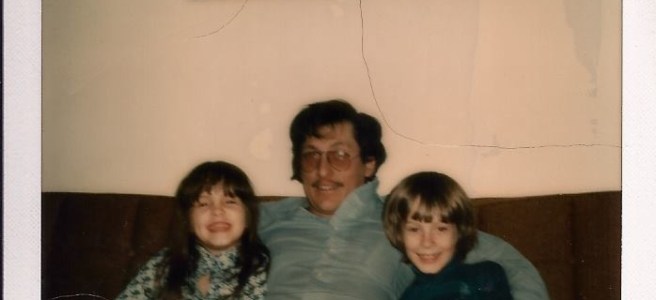
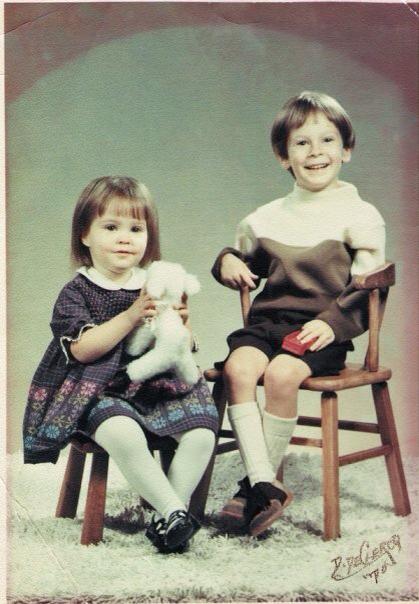
My older brother Tony turned 21 on May 1, 1987. He came to my apartment, and my roommate and I threw him a small party. We drank Michelobs, and I told stories about Tony and me from the old days when my father owned The Leather Shoe Shop.

One memory is of Tony and me, holding hands, watching a fight between our father and his girlfriend Cathy. She slaps Dad’s eyeglasses off his face. In another, Tony and I walk along the sidewalk at the Vestal Plaza amid a frighteningly loud thunderstorm. I’m bawling. Tony has his arm around me, and repeatedly pats my shoulder, saying, “It’s okay, Cindy.” And in another, I’m on my tricycle, and he nudges me down a steep hill. I remember nothing after the crash, but for a week, I had one hell of a shiner.

When I was four, Tony talked me into stealing a Planet of the Apes squirt gun from Grand Way department store. planet-apes-galen-water-gun-pistol_1_88852e60c2be6a48e133f52a290bfd7eOf course he didn’t say, “Steal.” He said, “Take.” We walked back to the shop where my father’s new girlfriend interrogated me and promptly dragged me back to the store to admit what I had done. The next time we visited Grand Way, Tony handed me a Magic 8 Ball, and said, “Slip this in your sleeve.” Without hesitating, I said, No.
The stories made him laugh. Sometime during the party, he pulled me aside and said, “I love you. I’m looking forward to spending a lot of years hanging out together.”

As kids, Tony was timid; I was hyper. When my father brought out the video camera, Tony hid and I danced around. When I complained to Tony about our stepmother’s abuse, he said, “Just keep quiet.” He never complained. Instead, he started smoking cigarettes and pot, and drinking at 12. When our stepmother slapped him, he stared her in the face and took her abuse. I screamed when she hit me, hoping the neighbors would hear and call the cops.

Tony and I rarely fought with each other, but when we did, it was about the dumbest things. I hid the remote so he couldn’t change the channel, and he punched me until I gave it back. I called him a “Buck-Toothed Beaver.” I punched him in the arm as hard as I could, and he stood motionless, then said, “Did a fly land on me?” But, if I wanted to send him into a rage, I sang “opera” at the top of my voice. I laughed so hard his punches were painless.

By the time Tony and I were in high school, there were no more fights. We became allies fighting against a common enemy. “If you don’t tell Dad you saw me smoking, I won’t tell him you were with a boy, and not at the movies.” Deal.

In 1983, after coming home drunk too many times, running away from home too many times, and getting kicked out of high school, Tony joined the army at the urging of my father and his wife. Tony earned his GED in the military and was relegated to being a cook. After two years, he was done. He moved to California, fell in love with an awesome young woman named Erika and came back to New York.

I was delighted. Tony planned to take over my father’s shoe-repair business, and he told me I could work there too. I could quit my job at McDonald’s and have a career. Tony and I were going to be together again! For the first time in years, our family spent Christmas together.

Two nights after Tony’s 21 birthday, my uncle Joe called and told me Tony was killed on his motorcycle. He’d been riding to the Great American grocery store on Main Street in Binghamton, our hometown, and was struck by a red Dodge Demon. Tony died instantly. My father and his wife were on an emergency flight back from Florida where they had been looking for a house.

Because I was 18, I had zero coping skills to manage my grief. All I could think was How could he do this to me? He was abandoning me. I would have to live without him and deal with my stepmother alone for the rest of my life. How would I get through this? I took a cab to my paternal grandparents’ house, so I could be with my family while we waited for everyone to get the news.

That night was a blur–falling asleep on my grandparents’ couch, crying, listening to the grief-stricken wails of my relatives, watching the EMTs fail at giving Tony CPR on the TV news. My father called from an airport and asked how I was feeling. All I could say was “What are we going to do?” He said, “It’s gonna be all right.” When he and his wife returned to Binghamton, I stayed at their house, and slept in the extra bed in my 11-year-old brother Jack’s room.

There was the wake, the funeral, and the burial. It was raining like hell that afternoon, and the cemetery was all mud. Beneath the sagging tent, my entire family gathered in folding chairs. I sat beside my father and held his hand. When they lowered Tony’s coffin into the ground, I started sobbing. He was my only witness to our abusive childhood. The truth about Dad’s wife and how she treated us was buried with him.10339581_10152373663143187_8140426827575809783_n

When I interact with people who have an acrimonious relationship with their sibling or siblings, I’m often surprised and sad. Tony was my best friend, and for 18 years I worshipped him. He’s been dead for almost 32 years, and I’d give anything for five more minutes with him. They say the strongest bonds are forged in fire. Our chaotic childhood bonded us for life. His impact on me was profound and lasting, and I still think about him every day.


Breaking Bad (Behavior)

Back in the summer of 2009 I started seeing a therapist because my childhood haunts were interfering in my eight-year marriage in a very real way. I was blissfully married, and I was afraid I was about to destroy everything. But why?

My therapist “Bruce” was (and is) one of the coolest people I’ve ever met. His face is careworn, and his hair hangs to his shoulders in thin white strands. He looked sort of like Bill Murray, and we joked about how much we loved the movie What About Bob?

Bruce was old enough to have been in practice during the I’m OK; You’re OK phenomenom of the 1970s. However, Bruce developed his own version of the mantra: “I’m fucked up; you’re fucked up.” That saying felt so much more real and relatable. And, after I left my sessions with Bruce, I felt sane and normal.

Bruce and I discussed childhood abuse of all types, and the lingering effects. I was sure those “effects” were leading me to think Eric was going to dump me. Other than his being extemely introverted and pensive, there were no real signs. And with the gift of hindsight, it may have been better to talk to Eric instead of the therapist.

Regardless, another topic Bruce and I talked about was breaking the cycle of abuse. He said the statistics show only about 1 in 5 people is able to succeed. I wondered about myself. By this time, I had a 17-year-old daughter, a 13-year-old daughter, and 4-year-old son. I had given them spankings on occasion, and did my fair share of yelling. But abuse?

When I had my first baby, Jessica, she was so beautiful and precious with the most perfect little fingers, I could NEVER imagine hurting her. Her father and I agreed there would be no spankings. Then he left to serve on a navy meteorological team in Japan, and I stayed state-side with his parents and Jessica.

After Jessica learned to walk, like most toddlers, she ventured around and got into things she shouldn’t touch. One day, I tried repeatedly to keep her from sticking her hand into the kitchen garbage. After numerous unsuccessful attempts, I took her right hand and lightly slapped it. She started crying. My chest ached, but she never touched the garbage again.

When compared to the “spankings” I received as a kid, I would say my kids got off easy. I never used any weapons, like leather belts, wooden spoons, or knuckles or diamond rings to the head. Slaps across the face were also a no-no. I’m aware people have strong opinions about physically punishing children, and as for me, because of the severity of the beatings my brothers and I endured, I dislike anyone hurting someone smaller and weaker than they are.

Now that my daughters are grown, they blast me for being a fiery-tempered smart mouth when they were young more than inflicting physical punishments. I was 23 when Jessica was born. I divorced her father when she was two. I remarried when Jessica was four. Nine months after that wedding Josie was born. Then her father died when she was 18 months old. That’s a lot of chaos for two young girls and one woman to endure.

Although I’m resilient and loving, I am also brutally honest–like my father. He wasn’t always tactful, and he sometimes called me names like “goddamned dummy” or “nutcase.” At the same time, he was slow to anger. So, if he punished me physically, I had to have done something really wrong, like when I accidentally set a fire behind the Vestal Plaza in New York and got the belt. That only happened once.

There are definitely times I have snapped at the girls, yelled, or made a huge deal out of nothing. And, when I catch myself sounding like the icy voice of my former stepmother, I clam up. Fortunately, I apologize to my daughters when I’ve done something wrong. With my son, it’s so different. I was 36 when he was born, and although I’d like to say I have mellowed, to be honest, I was just plain tired.

My son was wild as a toddler. He had blond curly hair and a crooked smile. When he ran out onto the volleyball court midgame, then turned and grinned at me I wanted to thrash him. But he was so freaking cute, how could I? When his father and I eventually separated (my prediction of wrecking the marriage came true), Vinny was five.

Now, Vinny is a chill teenager. I couldn’t tell you the last time I spanked him or yelled at him. And over the past 18 months, with his sisters out of the house, and his father extremely busy with his new life, my son and I have spent an enormous amount of time together. We spent 8 days in New York, took two roads trips to Portland, OR, and many road trips to Coeur d’Alene, Idaho. In the car, we don’t listen to music; we talk. We talk about anything and everything. No subject is forbidden.

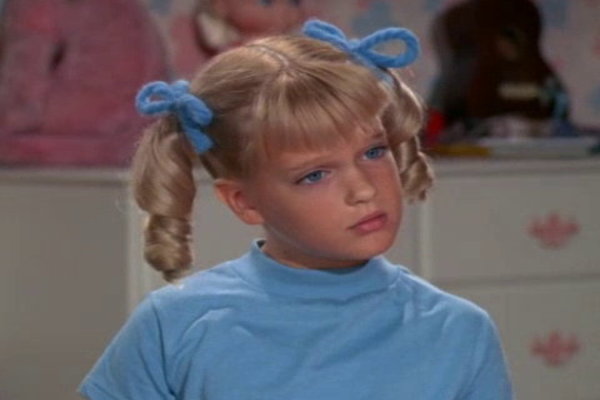
In my childhood home, there was no talking about feelings, no apologizing. There was no, “How was your day?” or “Do you want to talk about something?” When I watched the Brady Bunch, I was so envious when the mom or dad knocked on the kids’ door and asked to talk. Especially since there was a character named “Cindy.” If only my parents had come into my room with a soft voice, and said, “Cindy. Are you okay?”60354929

One of my favorite things about my relationship with my kids is our inability to keep secrets. I have always talked to them as if they were adults in training (because they are). And, as much as I loathe when they gang up on me, make fun of me for mispronouncing current band names or rappers, or pointedly argue with me — that is how their father(s) and I raised them. They need to advocate for themselves even if it pisses someone off.

My oldest daughter once said I was too easy on her growing up. My middle daughter says I was abusive. My son may be too young to look at me reflectively, but right now, we are as close as siblings. There are three things I have taken away from my father’s parenting: 1. Never be afraid to act silly in front of and with your kids. The humility will go a long way. 2. Tell the truth. 3. Don’t be afraid to apologize for your bad behavior. In that way, you teach forgiveness. I had to learn that one in spite of my father. I’m fucked up; he’s fucked up. We’re all works in progress, eh?

The Nerd in Disguise

In the ’80s, when I was coming of age, MTV was everything–I loved the thrift-store fashions of Cyndi Lauper, the fluffy skirts, zip up boots, and torn stockings. She looked so cool. But I went to a catholic school where we had to follow a dress code: blouses, slacks and/or skirts (not too far above the knee), no stirrup pants, and dress shoes. The most rebellious I could get was popping my collar.

I had grown up as a tomboy, two years younger than my brother, and because we were not rich, my father dressed me in “Tony’s” hand-me-downs. Until I was about five, I believed I was a boy. My father let me walk around the house with no shirt on, Tony and I had fist-fights with kids on the playground, and I only wore pants.

My father remarried when I was six, and my stepmother introduced me to a hairbrush, ruffled panties, dresses, tights, and patent leather shoes. It was not a smooth transition. When she brushed my knotted hair, I wailed and she yelled. And when I hung upside down from a tree limb while wearing a dress, consequently showing my flowered underwear, she told me to get down.

Looking back, I realize my stepmother was a trend follower. She wore T-shirts with sayings on them, high-priced designer jeans, and used top-of-the-line makeup and hair products. She bought school clothes for my brother and me at the very uncool Sears store in the mall and sneakers from a place called Philadelphia Sales. Cheap!

Of course, in high school, I was desperate to fit in and begged my stepmother to buy me Izod polos, designer jeans, and elf boots. She took me to outlet malls where they had “slightly damaged” Izod clothing and I got my polos. I borrowed elf boots from my friend, and was grateful for being a cheerleader who got to look cool in my uniform on game days.

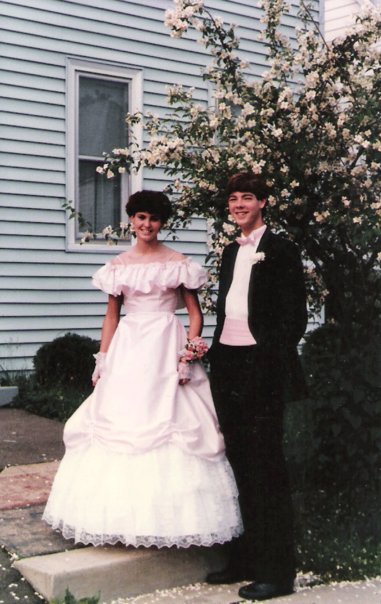
Luckily, my stepgrandmother bought me Forenza sweaters and wide wale corduroys from the Limited, and Gloria Vanderbilt designer jeans. And for my senior prom, my father gave me an unlimited price tag to buy any dress I wanted–a mauve Southern Belle dress and finger-less gloves.

10400218_46458813186_3064_n

One of the things I liked about 80s fashions were they were influenced by the late 50s and early 60s fashions–saddle shoes, penny loafers, poodle skirts and angora sweaters worn over a blouse with a Peter Pan collar. When the GoGos appeared on MTV with their short hair styles and blouses, my father thought they were a 50s band.

As a woman who will turn 50 this year (yay!) I wear what I like to call “classic” fashions. Collared blouses, slacks, and shoes that don’t go out of style. This is not necessarily to make a statement; I think it’s because growing up poor taught me to be thrifty. I want my clothes and shoes to last. I shop at Goodwill and second-hand stores. I visit Nordstrom Rack, not Nordstrom. And if I think a piece of clothing I buy won’t last at least a decade, I usually put it back on the rack.

Some people always seem to know which trends are coming. The messy bun, big sunglasses, eyelash extensions, yoga pants. If it weren’t for my grown daughters, I might never know what was “in style.” I work in a professional office, so I wear dress clothes, but I feel like a nerd in disguise. I’ll leave the trends to the people who have the time and energy to follow them.

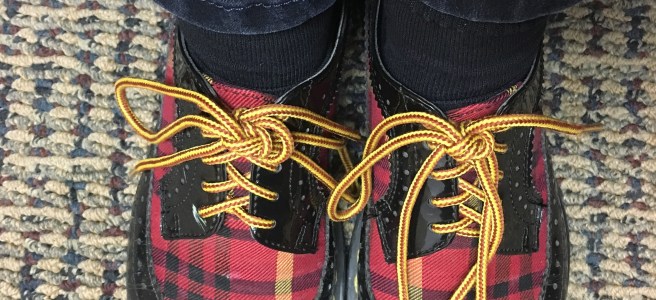
I’m deeply grateful that my father dressed me in boys’ clothes. I know I will never be a princess. Today I’m wearing a pair of Doc Marten saddle shoes I bought at a second-hand store for $35. I love telling people how inexpensive they were. I get many compliments on them. I once got a snide comment, but that woman and I hardly talk anymore.


Loose Lips Can Float Ships

For the first two days of 7th grade, my friends (with whom I’d been thick for three years) ignored me. They literally did not speak to or interact with me for two school days. Confused by the treatment, but afraid to ask why they were snubbing me, I pretended not to care and sat with others in the cafeteria, while my former friends looked on.

During lunch on the third day of 7th grade, my friends invited me to their table. One said, “We weren’t going to talk to you this year.” I nodded as though I understood but wondered how they might ignore me for an entire year. Studies on human behavior show that being shunned is a universal fear. We all want to be accepted by our peers. Middle school seems to be the place where we experience both.

Over the next two years, I shunned and was shunned, bullied and was bullied, made some friends for life, and gossiped incessantly. (Perhaps that’s why my friends shunned me.) Looking back, I see my gossiping as a way to get attention and gain friends. Instead, it made people avoid me or want to kick my ass. As I came of age, even into my 20s, my loose lips continued to get me into trouble. I had to take a good look at myself and see my fingers were pointing in the wrong direction.

As I got into writing, and made friends with other writers, I discovered we are a gossiping bunch. We love to get to “the truth,” find out what goes on behind-the-scenes, and tell stories, which are good things. What I’ve learned, however, is that it’s safer and often more powerful to tell stories about myself and the dumb things I do. Some of my favorite comedic writers, Margaret Cho, Dave Chapelle, John Mulaney, and Conan O’Brien, make fun of themselves. Laughing at our humanity brings us together.

The older I get, the more I want to preserve my friendships. I try to share positive gossip. Who got a job? Who got married? What’s going on in town? I also try to think before I start yammering on. I’m far from perfect but am commited to working on this part of my personality. If we can’t invite others to our table and make connections, why are we even here?