The Nerd in Disguise

In the ’80s, when I was coming of age, MTV was everything–I loved the thrift-store fashions of Cyndi Lauper, the fluffy skirts, zip up boots, and torn stockings. She looked so cool. But I went to a catholic school where we had to follow a dress code: blouses, slacks and/or skirts (not too far above the knee), no stirrup pants, and dress shoes. The most rebellious I could get was popping my collar.

I had grown up as a tomboy, two years younger than my brother, and because we were not rich, my father dressed me in “Tony’s” hand-me-downs. Until I was about five, I believed I was a boy. My father let me walk around the house with no shirt on, Tony and I had fist-fights with kids on the playground, and I only wore pants.

My father remarried when I was six, and my stepmother introduced me to a hairbrush, ruffled panties, dresses, tights, and patent leather shoes. It was not a smooth transition. When she brushed my knotted hair, I wailed and she yelled. And when I hung upside down from a tree limb while wearing a dress, consequently showing my flowered underwear, she told me to get down.

Looking back, I realize my stepmother was a trend follower. She wore T-shirts with sayings on them, high-priced designer jeans, and used top-of-the-line makeup and hair products. She bought school clothes for my brother and me at the very uncool Sears store in the mall and sneakers from a place called Philadelphia Sales. Cheap!

Of course, in high school, I was desperate to fit in and begged my stepmother to buy me Izod polos, designer jeans, and elf boots. She took me to outlet malls where they had “slightly damaged” Izod clothing and I got my polos. I borrowed elf boots from my friend, and was grateful for being a cheerleader who got to look cool in my uniform on game days.

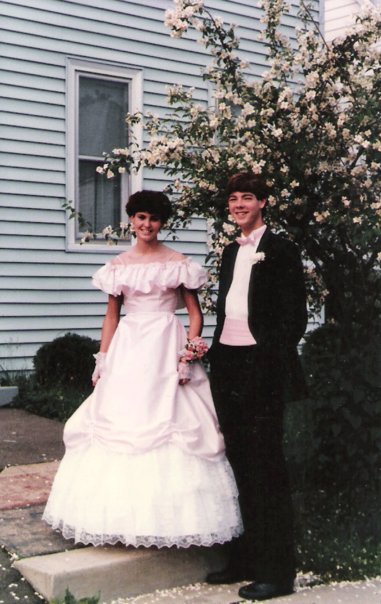
Luckily, my stepgrandmother bought me Forenza sweaters and wide wale corduroys from the Limited, and Gloria Vanderbilt designer jeans. And for my senior prom, my father gave me an unlimited price tag to buy any dress I wanted–a mauve Southern Belle dress and finger-less gloves.
10400218_46458813186_3064_n

One of the things I liked about 80s fashions were they were influenced by the late 50s and early 60s fashions–saddle shoes, penny loafers, poodle skirts and angora sweaters worn over a blouse with a Peter Pan collar. When the GoGos appeared on MTV with their short hair styles and blouses, my father thought they were a 50s band.

As a woman who will turn 50 this year (yay!) I wear what I like to call “classic” fashions. Collared blouses, slacks, and shoes that don’t go out of style. This is not necessarily to make a statement; I think it’s because growing up poor taught me to be thrifty. I want my clothes and shoes to last. I shop at Goodwill and second-hand stores. I visit Nordstrom Rack, not Nordstrom. And if I think a piece of clothing I buy won’t last at least a decade, I usually put it back on the rack.

Some people always seem to know which trends are coming. The messy bun, big sunglasses, eyelash extensions, yoga pants. If it weren’t for my grown daughters, I might never know what was “in style.” I work in a professional office, so I wear dress clothes, but I feel like a nerd in disguise. I’ll leave the trends to the people who have the time and energy to follow them.

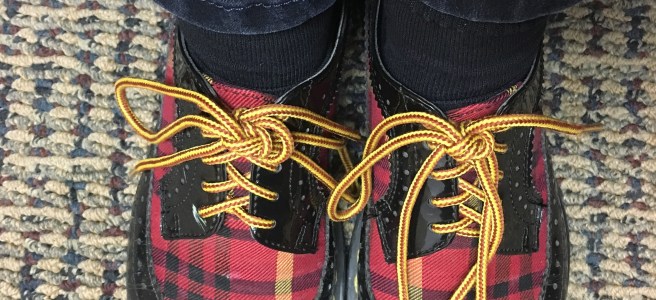
I’m deeply grateful that my father dressed me in boys’ clothes. I know I will never be a princess. Today I’m wearing a pair of Doc Marten saddle shoes I bought at a second-hand store for $35. I love telling people how inexpensive they were. I get many compliments on them. I once got a snide comment, but that woman and I hardly talk anymore.
 

Lust Kills Your B.S. Detector.

My father opened a shoe-repair business when I was two, and I spent a lot of time around adults. There was Joyce, the woman who made tie-dyes and sewed leather; Bob, my father’s buddy who fixed shoes; and the array of business men (it was the 70s and they were mostly men) who wore fedoras and suit jackets, and called me Chooch. Spending time around adults helped me cultivate a decent b.s. detector.

My memories from this period, before age four, are idyllic. My father had divorced my and my brother’s mother, and the three of us lived in a modest apartment. We were poor in money but rich in love, and we went everywhere together–the shoe-repair shop, the bowling alley, the bar. We ate TV dinners in front of the black and white console, mostly Laugh-In and The Sonny and Cher Show, or scarfed fried clam strips down the street at Sharkey’s Tavern.

After my father started dating “Vickie,” a high-school dropout with wavy bleached hair and freckles, my life changed. Although Vickie dressed my brother and me in nice clothes, and kept us clean, she also whipped us with leather belts and called us names. Her brother molested me when I was four. And, Vickie was a serial cheater. My father married her in 1975, and six months later my younger brother was born. He caught Vickie the first time when my brother was less than one.

My father and Vickie stayed together for 23 years. Living with her until I was 18 (I moved out on my birthday) taught me injustice, to keep silent, and to cower in the presence of a bully. Her brother had said to me, “Don’t tell your daddy what we did. He’ll think you’re nasty.” Vickie said to me, “If you tell your father I hit you, you’ll get it worse.” And when I told other family members or adults about what was happening in our home, I got a pat on the head, and a, “Oh, you’re just being dramatic.”

It may not surprise you that when I married, I fell for a male version of Vickie and left my relationship. More than once. Several people waved warning flags in my face, which I ignored. It wasn’t until the love of my life divorced me that I saw I was the problem. It took ten months for me to see through my male Vickie’s bullshit. Now, I’m single and am trying to make up for my mistakes through reading, self-reflection and therapy.

My father divorced Vickie in 1998, and he passed away in 2012. Vickie remarried and from what I hear, is cheating. I wish she would have sought help for whatever childhood haunts keep her in that self-destructive cycle. To make matters worse, I now have a good friend who’s been hoodwinked by his own version of Vickie. Did I warn him? Yup. Did he yell at me and cast me aside? Yup. It’s as if I’m reliving my childhood, watching my friend instead of my father, heading for a fall.

My hope for my friend, who usually has a keen bullshit dectector, is that he will wake up before too much damage has been done. But, similar to Vickie, his enchantress is pretty, fit, and an amazing liar. Friends tell me, “Don’t worry. She’ll hang herself. And then you can say, ‘I told you so.'” Problem is, I’m not going to say I told you so. I’m going to be there for my friend if he feels had can confide in me. Keep your fingers crossed.


The Truth Is Sometimes Painful

I grew up with a father who loathed dishonesty. I credit his Italian American pride, or perhaps growing up catholic, but nothing made my father angrier than learning he’d been lied to. He tended to be “brutally honest,” and the people who loved and admired him appreciated that. As his daughter, I feared his truth-telling when I was as a girl because I was extremely sensitive, but eventually I grew to admire the trait.

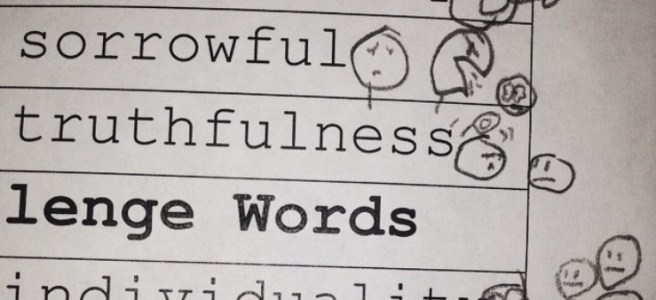
You have to be courageous, confident, and often live with regret when you are honest, because people rarely want to hear the truth. The image I’ve included in this post is a sketch from my son. In order to remember his spelling words, he sketched faces beside them expressing what he believed conveyed the word. When you look at the faces beside “truthfulness,” although one wears a halo, they both look anxious. Telling the truth is hard; hearing the truth is hard.

My father once told me, “You couldn’t be more like me if you tried.” Although I was sincerely flattered to hear that, I knew it meant I am also brutally honest, have a terrible poker face, and tend to alienate people because I struggle with being dishonest even in polite conversation when sometimes you should be. This is not to say I have never told a lie. I have. And some have caused irreparable damage in my life. It’s just that lying to people causes me great internal struggle, reddens my face, and fills me with crippling guilt.

Similar to most people, it’s also not easy for me to hear the truth. When people have told me I’m too analytical, sensitive, dramatic, or that I remember more negative details than positive, I stiffen with defensiveness. All of the preceding statements are true. I am also self-deprecating, affectionate, and loyal. The older I get the kinder I am to myself (and others), and I try to work with not against my human flaws.

One of my most irritating traits, I’m guessing because I’ve received a lot of flack for it, is my incurable need to discover the “why” behind just about everything. Why did my mother leave? Why did my stepmother beat me? Why do dishonest people seem to have more success than honest ones? Why did my brother get killed? Why did my husband die? Why do I have so much trouble sustaining a romantic relationship when others seem to just do it? Why are people mean? Why I did reject the man I believe is my true love?

On a positive note, once I process the Why in my head, through writing, art, or talking, I can usually let it go. In some cases, like with the death of my brother, I’ve had to make peace with not knowing why it happened. That has taken 30 years. I’m still struggling with the true love question. The other whys might be explained with psychology, self-help books, chats with friends, or talk therapy–of which I’m a huge advocate. But one important lesson I’ve learned is that in order to process these questions and heal, you have to be 100% truthful.

In the book, The Courage to Heal, which I highly recommend if you’ve suffered any personal trauma, the word courage is aptly used. It’s so much easier, and fun, to ignore our flawed humanness and not heal. For years, I was the party girl, loved getting drunk, being around people, being loud and obnoxious, all in an effort not to spend time alone and seek the truth within myself. I’d gone to therapy, but never engaged fully with the tenets. It took my loving someone other than myself to see how badly I needed help.

This person is still in my life, and because we’ve hurt each other, we have had to start rebuilding trust from the bottom up. Being honest takes courage, confidence, and working through regret to move forward when we hurt each other now. But, as you’ve probably heard or experienced, there is no greater reward than having an honest, open relationship with someone you love. And I want that.


Why Psychotherapy is like Kale

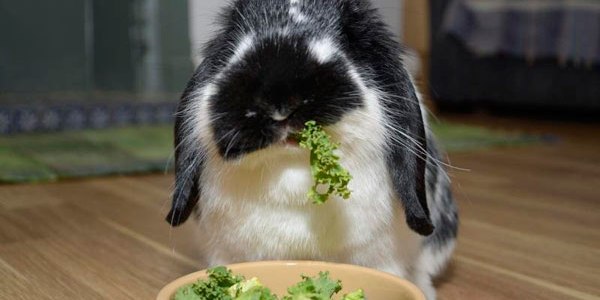
Psychotherapy is not easy, or fun. It’s good for me, even necessary, but I don’t love it. Psychotherapy is like kale: not nearly as tasty or enjoyable as homemade macaroni and cheese, or pizza, but sometimes, I have to force it down.

One of the biggest issues about not seeking help from a psychotherapist is that we rarely know why we display negative behaviors. Often, we react to stimuli based on a complex process of unresolved issues (or trauma) from childhood. Some behaviors are good, like holding a door for someone or not cheating on a test. But others include slamming the door in someone’s face, tearing up your husband’s baseball card when he stays out all night, or yelling at some unsuspecting cashier. Consistently negative behaviors harm us and can destroy relationships with people we love.

Before I turned 18, my birth mother ran out on us; my father remarried a physically and emotionally abusive woman; my step-uncle sexually abused me; my stepmother slept with one of my boyfriends; my older brother was killed in a motorcycle wreck; my younger brother was kicked out of every elementary school in our town; and I moved in with an abusive, cheating, drug-dealing boyfriend.

Phew. I realize there are millions of people who’ve suffered far worse tragedies than I did. I’m not searching for pity, only understanding, a willingness to see another perspective. A family member once said, “In my day, we didn’t go to therapy. We solved problems by ourselves.” Hmmm. This family member drank a six pack every night just so he could fall asleep. And he stayed in a marriage with a cheating spouse for 20 plus years.

At 21, I eloped with a man we’ll call Jon. This was one week after I admitted to my parents that I’d been sexually abused as a child. My father said, “You must have liked it because you never told us.” My stepmother said, “You’re just trying to cause problems.” Um, no. But before you hang these folks out to dry, I can assure you these are typical responses. (After my father divorced the nightmare, he spent the last 15  years of his life apologizing to me for the earlier response).

In the wake of Donald Trump’s accusers coming forward about his sexual misconduct, many people ask, “Why didn’t they come forward when it happened?” I echo comedian Seth Meyers’s response. For reasons that seem absurd, our society tends to blame the victims of sexual abuse. I was four when my uncle started abusing me and nine when I screamed, which sent him running from the room never to touch me again. If anyone says a four year old girl is asking for it, he or she should be flogged.

Often times, people who’ve been sexually abused as children become hyper sexual, engaging in risky behaviors like having unprotected sex with numerous people largely because their personal boundaries were destroyed. In addition, subconsciously, they’re scared of getting too close because others might get to know them and judge them for their “shameful” past.

For two decades, I moved guy to guy, always dumping a good one who loved me for someone who treated me like the piece of shit I thought I was. It was as if I were saying, “Don’t get close. I don’t want you to know the real me because I’m no good. I deserve to be with a piece of shit.” In recent years, science has offered new theories on addiction, drugs, sex, food, shopping, alcohol, saying it might have more to do with attachment disorder than genetics.

A theory is a theory, but it makes sense to me that someone who has lingering feelings of being discarded, neglected, and abandoned, might have serious problems with interpersonal relationships (lack of trust, PTSD, fear of authority). I have a solid circle of male and female friends, people I’ve known for years who love and support me. They appreciate my unfiltered speech, openness and honesty. But if you asked the men from my past what it was like to love me, you’d get another story.

After years of pushing good men away when they got too close, I ran out of luck. The man I shared a deep love and even deeper friendship with, the man I grew closer to than anyone in my life, drew a line in the sand. “If you don’t want me,” he said, “I’ll go.” It was the exact opposite of what I wanted and needed, but I was used to my past coping skills, so I let him go and moved on to the next guy. I also went into therapy.

In the year that followed, something happened. Through long discussions with a psychiatrist, talks with friends, and reading self-help books, I stopped. Instead of pointing my finger outward, I turned it on myself. I needed to excavate my painful childhood memories, unearth them, and examine them to set them free.

Over the past several months, I’ve been attending therapy once a week, including doing EMDR, which tastes like kale but is so good for me! Sometimes I break down bawling. Sometimes I just want to run. My therapist challenges me. I’ve processed one old memory and am working on a second. There are plenty more. But I feel more confident in my ability to move around in the world, to forgive myself and others, to recognize that the man I loved and lost did me a favor. He forced me to take stock of myself and see I am not my past, I can be better, but I need to do more work. It’s a long, long road, and at the end, I hope they have pizza.

On Marilyn Monroe and Childhood Sexual Abuse

Fifty four years ago today, Marilyn Monroe was found dead in her bedroom from an overdose of pills meant to treat her depression. (Her death was ruled a suicide, as you may know.) I remember the first time I saw an image of Marilyn Monroe: it was on the Child of the 50s comedy album by Robert Klein. At the time, I spent many afternoons in the bedroom with my step uncle “Reggie.” We’ll get to that in a minute.

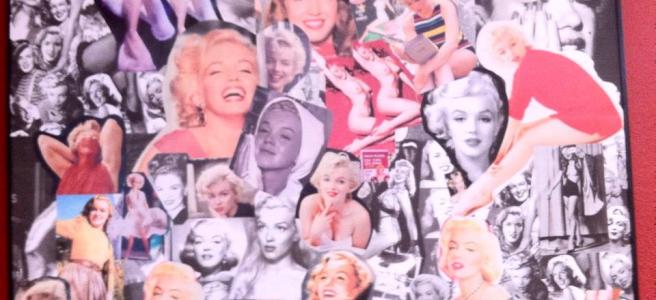
Reggie introduced me to Cheech and Chong, Robert Klein, Aerosmith, and Rush. During one afternoon while listening to Klein, I studied the album cover as he talked about putting a coin in a vending machine and getting a button with the now famous nude image of Marilyn Monroe. (If you look at my featured image, I’m talking about the two identical pictures just off center to the right in the collage.)

After I was made aware of Marilyn Monroe, I started to hear her name all the time and see images of her in cartoons, advertisements, magazines. There was even a pictorial of her in one of my father’s Playboys, which since I’m a child of the free-wheeling 70s, lay right on the coffee table in our living room.

I was struck dumb by the beauty Marilyn possessed. Sure, her hair was bleached and straightened, nose fixed, but even now, looking at the photos of her when she was simply Norma Jean, I found her breathtaking. My favorite film with her, Niagara, is worth a watch.

Fast forward to my early 20s. I had joined the navy after the death of my beloved older brother, left my hometown Binghamton, New York, and was lucky to get stationed at a weather center in Monterey, California. (Not far from Watsonville where Marilyn had once been named Miss Artichoke.) I visited Hollywood, saw Marilyn’s wax figure, and got the chills when I placed both hands in her hand-prints at Mann’s Chinese Theatre. I loved her.

I started reading books about Marilyn, biographies, anthologies, even an autobiography. She’d been abandoned by her birth mother, just like me. I’d never lived in an orphanage, but had a severely abusive stepmother. Marilyn was raped and sexually abused numerous times during her childhood. I’d never been raped, but Reggie started performing oral sex on me when I was four. His sister also molested me. The more I read about Marilyn and her problems with men, I started to wonder about myself–a woman terrified of commitment who eloped at 21 and dumped the guy three months later. In one book, Marilyn is said to have done the same thing in Mexico. (Some folks says it’s not true, but I believe it.)

Marilyn was unfaithful to every husband and lover. I’ve had many struggles with infidelity as well. The current psychology on childhood  sexual abuse tells us this type of behavior is not uncommon–the adult often tries to “work out” or repair what happened to them in the past, and that can lead to repeatedly looking for love in all the wrong places. A very smart writer I met once said, “A kid who’s been sexually abused is the world’s sex object.” The statement is both astute and heartbreaking.

If you’re lucky enough never to have endured sex abuse as a child, it might be difficult to have empathy for people who have. In my life this has been true. I’ve had family members say, “It was experimentation, get over it.” “That’s just an excuse because you were unfaithful.” One callous soul said, “You must have enjoyed it, because you never told your parents.”

Indulge me for a moment if you will. Imagine yourself at four. Or your child at four. (My uncle was 11 when he molested me. Chances are he was molested too, or at the very least exposed to inappropriate behavior.) Reggie bribed me with quarters so I would let him have his way in the bedroom. As I grew older, he gave me record albums or other presents. He said, “Don’t tell your Daddy because he’ll think you’re nasty.” Thank goodness, at age nine, I told him to stop. But the damage had been done.

Over the years, as I learned more about childhood abuse, I grew to feel empathy for Marilyn Monroe. She married for the first time at 16. Although marrying young was not uncommon at the time, I still see it as her getting the hell out of her current situation. In many of the books I’ve read about her, authors describe her as sexually frigid and a woman-child. When I hear “She slept her way to the top,” I prefer to see her not as a soulless woman using sex to get her way, but as a wounded child who believed the promises of men who offered her a better life.

Although I am in my late forties, I am still a hopeful child. Not long ago, I believed the promises of a man, even left my happy marriage. Now, I’m alone and missing my ex-husband and the amazing life we had. I’m grateful for the therapists I’ve had who’ve tried to help me heal from my past. I have a fabulous one now and we’re doing EMDR. It’s not over; and it’s not easy. Today, I wish to say, Rest in peace, Norma Jean. I’ll always be a fan. ❤


Love is Blind

Love is Blind

When my father met Vickie, a bleach blond
hourglass in a red plaid dress cut across her thighs
and red platform heels, my brother and I
were tucked away like out-of-style clothing.
Vickie was 16, my father 26, and she moved right in,
pranced around in halter-tops, bending to reveal
the quarter-moon of her breast. My father took Vickie
to fancy dinners and movies, while my brother and I
stayed home with babysitters in tie-dyed T-shirts,
who smoked pot, drank Budweiser, touched tongues.
We watched R-rated movies like The Great Texas Dynamite Chase:
heavily made-up women with silky hair, skinny
arms and legs, writhing under the covers on either
side of a spindly man with feathered hair and a mustache.
And Beyond the Door, where the devil impregnates
the woman from Nanny and the Professor. She eats garbage,
throws up green liquid, has a baby with no mouth—
if only that would have happened to Vickie,
whose every other word was “fuck,” insisted we call her Mom,
drove us to her ex-boyfriend’s house, had us wait
in the car while she vanished for an hour doing who
knows what. There was nothing my brother and I could do—
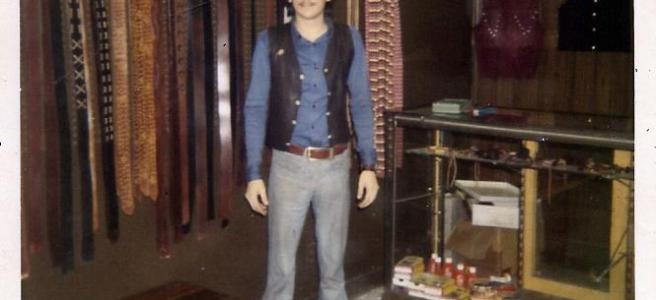
our father, in a leather vest and bell bottoms, zip-up
boots, had his ears turned off, brain shut down,
eyes pecked, sockets cleaned out, leaving two black holes.

Poem for my Brother, 1966-1987

The Prankster

You’d just turned 21, bought us the Beck’s Beer
we sipped while we waited for the drop-off

at my place, listened to the Stones. You had
silky hair like Mick Jagger, wore a leather jacket

from Dad’s shoe repair shop, dingy white Pumas.
We laughed about our childhood, how you played

tricks on me, like saying you were adopted or
that the shell tasted better than the egg.

We planned to run Dad’s business until we died.
You left to buy one more six-pack, Ruby Tuesday

playing on the stereo, and I was happy to wait
for you. You patted my shoulder, said, I’ll be back,

three words that became a broken promise—
Hours later, after I guessed you’d caught up

with a buddy, forgot to call, our uncle phoned
to say they found you one block from the store,

motorcycle mangled, brain stem snapped in two,
you never felt a thing. Eighteen years old, grief

dropped over me like a veil. I took a cab to our
grandparents, thought of when we were kids:

you made a noose out of plastic, tied it around
your neck, pretended to hang yourself–head slumped,

eyes bugged–from the top bunk. When Dad came
in, he popped you on the head with his knuckle.

I sit at our grandparents, watching the door,
waiting for you to waltz in like so many other
times to tell me that this was all a joke.

Missing My Father

Since You’ve Been Gone

I stand in the kitchen, pour olive oil
into a warm pan on the stove, then garlic,
the aroma rising like yeast, making me
want to call you—as I did during
the decades we lived apart—me
in the navy in California, you at your
hotdog stand in Florida. If you answered
drunk, I’d make an excuse, “Someone’s
at the door,” so I could hang up quick.
But if you were sober, you might tell me
a story: like when you were a kid, riding
beside your buddy in the back of
DiRienzo’s Bakery truck, bringing
bread to the neighborhood folks, your
spaghetti-thin frame, the inhaler
in your jeans pocket, all those loaves
still warm from the oven on the shelves,
you took one and packed it like a snow ball,
and as the driver skidded around
corners, you took bites from the dough.

You’re not there anymore to answer
my call, but I have your recipes, and
your grandchildren, each with your skinny
arms, they sit at my table, pasta filling
their plates, fresh bread in their hands,
they bring the red sauce to their mouths.

When You Know It’s Love

Part of being creative for me means having an overactive imagination. When I was a child I was terrified of the dark. I hated horror movies, because the images stuck with me, and I believed Michael Meyers would spring from the bushes to kill me or that Jaws would erupt from the drain in the local swimming pool. As an adult, I watched the Blair Witch Project and was chilled to the core. Part of my overactive imagination also involves having vivid dreams, in color, where I can feel textures and smell odors.

Recently my best friend and I were at a scrap-booking retreat sharing stories about people who’d pissed us off, especially during pregnancy and post-partum depression, and how we’d contemplated murder. While we laughed, “Stacy” sorted the piles of photos of her pale-haired, hazel-eyed son who was born prematurely. I was embellishing a page on my scrapbook of my father the cobbler, who had thick brown hair and a large nose, like an Italian Dustin Hoffman.

That evening, I dreamt I was a serial killer. There was no rhyme or reason to my killing, and each murder was clean and quick. I propped the dead body in a wheelchair and hid them in a bathroom stall. (The retreat was at an old ski lodge). My last kill was none other than Dustin Hoffman. (For argument’s sake, let’s ignore the Freudian implications.)

So far, I had not been caught, and I was trying to pin the murders on a squeaky clean friend. In the dream, I was suddenly back at my house with the friend and no evidence to convict him. Cops were on their way, and I knew I was going to jail.

My two daughters were in the other room. My son was at his father’s house. My lab/pit bull was nowhere to be found. I turned to my Black lab/newfie Gus and said, “Momma has to go away for a long time, Gussy.” I patted down his ears. “I love you.”

When I woke at the lodge the next morning, I told Stacy about my dream. Then I told her sister and her mother and our friends. Everyone shook their heads. I said, “It has to be all that talk about murder and the barrage of photos of my father.” But what got me was my going to Gus–the first dog I’ve ever owned. Not my two daughters. It must be love.

The Deep End of the Pool

When talking to people, I’m not interested in staying in the shallow end of the pool. Blame it on the writer in me, but I am intensely curious–fascinated–by other people’s lives. I also am happy to share experiences from my own life as a way to connect with others. From time to time, however, I have found that sharing my experiences, especially the less than pleasant ones, leaves people feeling uncomfortable and not knowing quite what to say. Recently, I was reminded of some phrases that get under my skin.

1.”I must be lucky because…” As in, I am not in the crappy personal situation that you confided in me, which sounds way worse than my own, which I might even be hiding from you because I don’t want to be judged, so instead I’ll say how blessed I am and not share anything.

If you’re a parent, you probably recognize number one. You can’t sit near other parents without hearing about how unique, amazing and intelligent their kids are. And if you say, “Wow, I wish Janie got along better with her kindergarten teacher,” or “Thomas hasn’t been bringing home his homework,” more than likely you’ll get, “I must be lucky because Arthur and Amy love all their teachers and have straight As.” Back to the shallow end

2.”You must be really strong…” As in, I could never survive if I lost my brother, or husband, or father. I would just kill myself. Gosh. How do you even wake up every day and laugh and smile?

Losing a loved one is not a choice. Telling someone, “I would kill myself,” is insulting at best. Don’t say it. Just hug your friend. Ask them if there’s anything you can do. And please, please, don’t say, “I must be lucky. I have never lost anyone close to me.”

3.”I don’t know how you do it…” As in, I could never be a single parent. My husband is wonderful, and I just couldn’t get by without him.

This is a kiss through a veil, a back-handed compliment. It’s as though the person making the comment is waving their Happily Married banner right in my face. And, just to be clear: my ex-husband and I share custody of our son, and just like a couple who are still together, we talk, negotiate and sometimes argue. We live five-minutes from each other. We attend basketball games and parent conferences together. And when things get tense between us (since our divorce was less than friendly) we call a time-out and discuss things in private. We may be single-parents, but we collaborate as a unit, because we can. We have a choice.

I think kindness goes a long way. And if you don’t know what to say to someone who makes you uncomfortable, why not admit it?