On Marilyn Monroe and Childhood Sexual Abuse

Fifty four years ago today, Marilyn Monroe was found dead in her bedroom from an overdose of pills meant to treat her depression. (Her death was ruled a suicide, as you may know.) I remember the first time I saw an image of Marilyn Monroe: it was on the Child of the 50s comedy album by Robert Klein. At the time, I spent many afternoons in the bedroom with my step uncle “Reggie.” We’ll get to that in a minute.

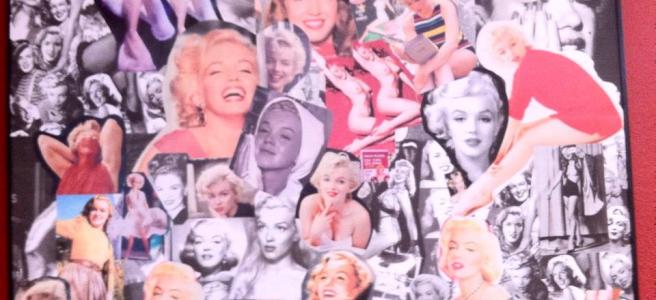
Reggie introduced me to Cheech and Chong, Robert Klein, Aerosmith, and Rush. During one afternoon while listening to Klein, I studied the album cover as he talked about putting a coin in a vending machine and getting a button with the now famous nude image of Marilyn Monroe. (If you look at my featured image, I’m talking about the two identical pictures just off center to the right in the collage.)

After I was made aware of Marilyn Monroe, I started to hear her name all the time and see images of her in cartoons, advertisements, magazines. There was even a pictorial of her in one of my father’s Playboys, which since I’m a child of the free-wheeling 70s, lay right on the coffee table in our living room.

I was struck dumb by the beauty Marilyn possessed. Sure, her hair was bleached and straightened, nose fixed, but even now, looking at the photos of her when she was simply Norma Jean, I found her breathtaking. My favorite film with her, Niagara, is worth a watch.

Fast forward to my early 20s. I had joined the navy after the death of my beloved older brother, left my hometown Binghamton, New York, and was lucky to get stationed at a weather center in Monterey, California. (Not far from Watsonville where Marilyn had once been named Miss Artichoke.) I visited Hollywood, saw Marilyn’s wax figure, and got the chills when I placed both hands in her hand-prints at Mann’s Chinese Theatre. I loved her.

I started reading books about Marilyn, biographies, anthologies, even an autobiography. She’d been abandoned by her birth mother, just like me. I’d never lived in an orphanage, but had a severely abusive stepmother. Marilyn was raped and sexually abused numerous times during her childhood. I’d never been raped, but Reggie started performing oral sex on me when I was four. His sister also molested me. The more I read about Marilyn and her problems with men, I started to wonder about myself–a woman terrified of commitment who eloped at 21 and dumped the guy three months later. In one book, Marilyn is said to have done the same thing in Mexico. (Some folks says it’s not true, but I believe it.)

Marilyn was unfaithful to every husband and lover. I’ve had many struggles with infidelity as well. The current psychology on childhood  sexual abuse tells us this type of behavior is not uncommon–the adult often tries to “work out” or repair what happened to them in the past, and that can lead to repeatedly looking for love in all the wrong places. A very smart writer I met once said, “A kid who’s been sexually abused is the world’s sex object.” The statement is both astute and heartbreaking.

If you’re lucky enough never to have endured sex abuse as a child, it might be difficult to have empathy for people who have. In my life this has been true. I’ve had family members say, “It was experimentation, get over it.” “That’s just an excuse because you were unfaithful.” One callous soul said, “You must have enjoyed it, because you never told your parents.”

Indulge me for a moment if you will. Imagine yourself at four. Or your child at four. (My uncle was 11 when he molested me. Chances are he was molested too, or at the very least exposed to inappropriate behavior.) Reggie bribed me with quarters so I would let him have his way in the bedroom. As I grew older, he gave me record albums or other presents. He said, “Don’t tell your Daddy because he’ll think you’re nasty.” Thank goodness, at age nine, I told him to stop. But the damage had been done.

Over the years, as I learned more about childhood abuse, I grew to feel empathy for Marilyn Monroe. She married for the first time at 16. Although marrying young was not uncommon at the time, I still see it as her getting the hell out of her current situation. In many of the books I’ve read about her, authors describe her as sexually frigid and a woman-child. When I hear “She slept her way to the top,” I prefer to see her not as a soulless woman using sex to get her way, but as a wounded child who believed the promises of men who offered her a better life.

Although I am in my late forties, I am still a hopeful child. Not long ago, I believed the promises of a man, even left my happy marriage. Now, I’m alone and missing my ex-husband and the amazing life we had. I’m grateful for the therapists I’ve had who’ve tried to help me heal from my past. I have a fabulous one now and we’re doing EMDR. It’s not over; and it’s not easy. Today, I wish to say, Rest in peace, Norma Jean. I’ll always be a fan. ❤



I Miss My Best Friend

Four years ago I was dealt two devastating blows. In April 2012, my divorce became final. Eric, my best friend of 11 years and I could not get over my affair. His anger and my guilt had made communicating nothing but shouting matches. We tried counseling, but whenever the counselor called my cheating partner a “predator,” I got upset. When the counselor asked what I’d gotten from said predator, I answered, “He talked to me. He flirted with me.” Eric said, “If he did it, I won’t.” We were at an impasse.

The worst part was that I never wanted to lose Eric. Some ridiculous part of me believed I could tell him about the affair, he would understand that something had been missing from our marriage, and we would talk it out and fix it together. How arrogant and naive! Eric’s deep hurt came out in anger, and because I couldn’t deal with his emotions or even empathize I turned to the Predator. Big surprise: the union did not last.

Later that year, in October, my father passed away after a sudden illness. I traveled back and forth from my home in Idaho to his in New York to settle his estate. After I returned home for good, Eric came to my house and gave me a hug. (My dad loved him too.) But, it was too late. I’d lost two best friends within six months. 2012 was a bad year.

Here we are in 2016 and guess where I am? Right in the middle of the 5 stages of grief. But it’s not for my father. Of course, I miss him. I loved his angry, sensitive and complicated self. But I’m stuck in the bargaining phase over my other best friend–the one I thought I’d be with forever. “If you take me back, I will never hurt you again.” “You’re the only man I ever loved.” “If we could just work it out, our love will be stronger.”

Big surprise: none of these tactics work. Eric says he’s moved on. I stabbed him in the back. He owes me nothing. He’d rather be alone for the rest of his life than endure that much pain again. Sigh. So, I’m in therapy–trying to stay sane and navigate my life without the love of my life, my best friend. To further complicate matters, Eric and I share an 11 year old son who’s gorgeous, witty, and sensitive. So, there’s no moving away, not seeing Eric, or hiding in my house.

What have I learned? Plenty. But probably the most important lesson is to be honest. Instead of going outside the marriage, I should have turned to Eric and said, “We have some issues. Can we talk about them?” But that would have taken courage. What if he rejected me? Ironic. Perhaps, only perhaps, if I would have taken a leap of faith six years ago and told Eric what I needed. . . Who knows?


Love is Blind

Love is Blind

When my father met Vickie, a bleach blond
hourglass in a red plaid dress cut across her thighs
and red platform heels, my brother and I
were tucked away like out-of-style clothing.
Vickie was 16, my father 26, and she moved right in,
pranced around in halter-tops, bending to reveal
the quarter-moon of her breast. My father took Vickie
to fancy dinners and movies, while my brother and I
stayed home with babysitters in tie-dyed T-shirts,
who smoked pot, drank Budweiser, touched tongues.
We watched R-rated movies like The Great Texas Dynamite Chase:
heavily made-up women with silky hair, skinny
arms and legs, writhing under the covers on either
side of a spindly man with feathered hair and a mustache.
And Beyond the Door, where the devil impregnates
the woman from Nanny and the Professor. She eats garbage,
throws up green liquid, has a baby with no mouth—
if only that would have happened to Vickie,
whose every other word was “fuck,” insisted we call her Mom,
drove us to her ex-boyfriend’s house, had us wait
in the car while she vanished for an hour doing who
knows what. There was nothing my brother and I could do—
our father, in a leather vest and bell bottoms, zip-up
boots, had his ears turned off, brain shut down,
eyes pecked, sockets cleaned out, leaving two black holes.

10 Signs You Were/Are a Middle Child

1. When pouring drinks for friends, you still kneel to get eye level with the glasses to be sure the liquid amount is even for fear of getting jabbed in the arm by your older brother.
2. You wore hand me downs until you hit puberty, and it no longer looked “okay” to wear your brother’s shirts.
3. When riding in cars with friends you still instinctively head for the back seat, because the oldest always gets the front.
4. In home movies from your childhood, you were always trying to get in front of the camera, only to be pushed out of the way by your father.
5. Your baby book is two pages long, while you confuse your siblings’ baby books with the King James’ bible.
6. You don’t have an entire wall (or room) dedicated to your accomplishments.
7. In adulthood, you try to outshine your siblings only to have your parents pat you on the head, and say, “Keep trying, honey.”
8. As a kid, you didn’t mind being called weird if it meant you stood out from the siblings.
9. If you played sports, you wore your brother’s old equipment even when the cleats were worn flat and the sneakers stank.
10. Your parents call you to brag about your siblings, but they never call the siblings, and often forget your name.

Poem for my Brother, 1966-1987

The Prankster

You’d just turned 21, bought us the Beck’s Beer
we sipped while we waited for the drop-off

at my place, listened to the Stones. You had
silky hair like Mick Jagger, wore a leather jacket

from Dad’s shoe repair shop, dingy white Pumas.
We laughed about our childhood, how you played

tricks on me, like saying you were adopted or
that the shell tasted better than the egg.

We planned to run Dad’s business until we died.
You left to buy one more six-pack, Ruby Tuesday

playing on the stereo, and I was happy to wait
for you. You patted my shoulder, said, I’ll be back,

three words that became a broken promise—
Hours later, after I guessed you’d caught up

with a buddy, forgot to call, our uncle phoned
to say they found you one block from the store,

motorcycle mangled, brain stem snapped in two,
you never felt a thing. Eighteen years old, grief

dropped over me like a veil. I took a cab to our
grandparents, thought of when we were kids:

you made a noose out of plastic, tied it around
your neck, pretended to hang yourself–head slumped,

eyes bugged–from the top bunk. When Dad came
in, he popped you on the head with his knuckle.

I sit at our grandparents, watching the door,
waiting for you to waltz in like so many other
times to tell me that this was all a joke.

Childhood Injuries: Who Hurts More?

When I was 13, while skipping stones before a lake with a dozen of my classmates, I bent over to pick up a rock when someone accidentally hit me in the face with a boulder. My left front tooth broke in half, which hurt like the dickens. I started bawling and ran back to the cabin where we were all hanging out for the afternoon. The dentist fixed my tooth, and many years later my father told me, “When I saw your fat lip and tooth hanging, I started crying.”

When my daughter Jessie was four, she was bitten by a white German Shepherd. I rushed her to the E/R where she had to get four stitches on her lip. That night, I pored over the pages of her baby book. As I stared at her beautiful photos, all chubby cheeked and pig tailed, I cried. What a terrible mother I was–leaving Jessie alone with my mother-in-law and that crazy untrained dog. Of course it bit her! I didn’t deserve such a beautiful daughter.

My second daughter, Josie, is a bit more self-destructive. My husband, daughters, and I were all living in Bellingham, Washington, when Josie ran into our duplex and said, “I just stepped on a nail.” I’m a Gen Xer, okay. So, all I could think was, tetanus shot!!! One of my grad school buddies said “calling the fire fighters was cheaper than calling 9-1-1-” so we called the fire station. Turns out it’s not the rusty nail that causes infection, it’s the bacteria from the bottom of the shoe going into the skin. But later Josie told us, “I wanted to see what it would do.”

Nothing comes close to Kid #3, my son, whom I love to the moon. He’s allergic to tree nuts. In the last ten years of his life, he’s been to the E/R five times.

1: Age one- Grandma makes cookies with walnuts. Vinny eats one and then pukes. Breaks out into hives. Left side of his face swells. Dad gives epi-pen because of peanut allergy. Takes Vinny to the E/R.
2. Age five- Teacher gives Vinny cookie from grandma of classmate. Vinny pukes. Breaks out into hives. Dad gives epi-pen. Takes him to E/R.
3. Age six- Vinny eats toffee with almonds. Lies to family and says allergy was caused from COOP bread. Mother throws fit at the COOP and threatens to notify the local media. Gets them to install allergy signs on all foods. (yay)
4. Age eight- Vinny’s best friend makes him a sandwich with “nutty bread” containing “almonds, hazelnuts, walnuts and Brazil nuts.” After Vinny complains of a burning sensation on his tongue, Eric comes and injects Vinny with epi-pen, but Vinny spends the night in ICU and needs a ventilator. His entire body is covered with hives.
5. Age ten- Vinny’s home from school because of a cough. He makes a frozen dinner with vegetarian ravioli, not knowing it contains walnuts. He takes one bite, says, “I have that nut feeling.” After we read the ingredients, mother gives him epi-pen and rushes him to the E/R.

I called in at work, spent most of the day in the E/R and ICU watching Vinny get poked and injected full of Benedryl. He says his vision is blurry and that he feels weird. All I can think of is what his life will be like as an adult–when his father and I am not around. When he’s negotiating his own life–no mother or father policing his decisions, looking for dangerous foods. I start to cry.

When You Know It’s Love

Part of being creative for me means having an overactive imagination. When I was a child I was terrified of the dark. I hated horror movies, because the images stuck with me, and I believed Michael Meyers would spring from the bushes to kill me or that Jaws would erupt from the drain in the local swimming pool. As an adult, I watched the Blair Witch Project and was chilled to the core. Part of my overactive imagination also involves having vivid dreams, in color, where I can feel textures and smell odors.

Recently my best friend and I were at a scrap-booking retreat sharing stories about people who’d pissed us off, especially during pregnancy and post-partum depression, and how we’d contemplated murder. While we laughed, “Stacy” sorted the piles of photos of her pale-haired, hazel-eyed son who was born prematurely. I was embellishing a page on my scrapbook of my father the cobbler, who had thick brown hair and a large nose, like an Italian Dustin Hoffman.

That evening, I dreamt I was a serial killer. There was no rhyme or reason to my killing, and each murder was clean and quick. I propped the dead body in a wheelchair and hid them in a bathroom stall. (The retreat was at an old ski lodge). My last kill was none other than Dustin Hoffman. (For argument’s sake, let’s ignore the Freudian implications.)

So far, I had not been caught, and I was trying to pin the murders on a squeaky clean friend. In the dream, I was suddenly back at my house with the friend and no evidence to convict him. Cops were on their way, and I knew I was going to jail.

My two daughters were in the other room. My son was at his father’s house. My lab/pit bull was nowhere to be found. I turned to my Black lab/newfie Gus and said, “Momma has to go away for a long time, Gussy.” I patted down his ears. “I love you.”

When I woke at the lodge the next morning, I told Stacy about my dream. Then I told her sister and her mother and our friends. Everyone shook their heads. I said, “It has to be all that talk about murder and the barrage of photos of my father.” But what got me was my going to Gus–the first dog I’ve ever owned. Not my two daughters. It must be love.

What I Learned From My Hippie/Business Owner Father

My father was 22 when I was born. Soon after he opened The Leather Shoe Shop, a shoe and leather repair store in a plaza in upstate New York. My older brother Tony and I went to work with my father Monday through Saturday nine to nine. My mother had left us, and my father sought full custody. (Tony Danza has nothing on this guy.)

My father had shoulder-length black hair, and wore denim shirts, leather vests, flared pants, and leather zip-up boots. He smiled and laughed a lot, and was well-liked by his customers for his honesty and kindness. The Leather Shoe Shop stood among businesses, owned by 1st and 2nd generation immigrants like my father, places like Mario’s Pizza, Kaplan’s kosher deli, Haim’s barber shop, and the Gondola Restaurant, where food and services were traded for shoe repair, and deals were sealed with a handshake.

A set of wind chimes hung on the door to the shop, so my father always knew when a customer entered. He told me that was so he could worry less about shoplifters. When he sat in the workshop to take a bite of pizza, or toast dipped in coffee, or went to use the bathroom, the chimes went “brrrrring,” and he’d go running into the storefront. I tried to wait on customers for him, but I was a tomboy with ratty brown hair, and no adults took me seriously.

Mostly my brother and I hung out in the back, stamping wet hides with brass tools to make key chains and name plates. At the end of the night, my father took us to Sharkey’s Tavern where we ate fried clams or turkey on a stick, and drank Cokes to our hearts’ delight. Then, in our dingy apartment, my brother and I crawled into the bed we shared without bathing or brushing our teeth. In the morning, our father woke us up to do it all over again.

In those early days of the business, we were broke. We had a gas stove, and one month when my father couldn’t pay the bill, the company shut off the gas. My father called and told them he had two small kids at home, but they refused to turn it back on. So, he took a hibachi into our front yard, threw in some charcoal briquettes and started a small fire. Right there in the yard he put up a large sign that read, “Gas Strike.” My father cooked bacon and eggs on the hibachi. After a while, a rep from the gas company showed up in a work truck. “Take the sign down,” he said. My father told him to turn on the gas. The rep said, “No.” My father smiled and kept cooking. “Come on, buddy,” the rep said. “You can’t have that sign in the yard.” My father ignored him. By the end of the day, the gas company relented.

What I learned from my father was this: Family comes first. You work to support your family. Handshakes are as binding as legal documents. The written word can make change. Never be afraid to question authority.


Good Grief-What a Month I’m Having!

I don’t know about you, but I couldn’t wait to say buh-bye to 2015. It was another year of being single, working my butt off in production more so than writing, and selling the home I had lived in for almost a decade with my former husband and our kids. I spent some time free-lance writing and even submitted work to journals. In April I participated in the poem-a-day movement, and in November, I spent a wonderful weekend with two of my best friends at a writing workshop in Port Townsend. But as Christmas songs played in the dentist office, gas stations and department stores, my optimism fell like a snowflake.

New Year’s Eve was spent with my ten-year-old son Vinny and another best friend, my sister from another mister, Aimee. I’d had a daughter disappointment right before the New Year, which I’d rather not disclose, but believed that 2016 would be a better year! But not long after my holiday vacation ended, I had a personal disappointment. Normally I don’t let life get me down; but when it rains, it pours, and I have lost my umbrella.

Suffice it to say, a blog is a safe space to share. But part of me thinks no one wants to hear my problems. And others tell me that I am the only person who can control my life. I need to make changes. I need to read self-help books. I need to let things go. I need to be honest about my needs. Saying those things and doing them are as different as heat and cold.

And I don’t want to be negative. I want to offer life-affirming tips for dealing with everyday disappointments. But right now, all I have is advice from others. I write to understand my life, so I’ve been working on an “after the divorce” essay and several poems. I’ve been talking to every friend who will listen. I’m sure I’m a real treat.

Last week, after hearing of my so-called disappointments, I turned into a Peanuts character, walking along the street with my head down. While kicking a stone, the toe of my boot stuck to the sidewalk and I fell face-first on the concrete. I cracked the glass on the front of my iPhone and my ego. It was the perfect end to a perfect week.

On a bright note, I finished a book called What Shamu Taught Me About Life, Love and Marriage by Amy Sutherland. What a pleasure it was to read. Sutherland talks about positive reinforcement and rewarding behavior–stuff from psych 101, but with real life examples. She observed aspiring animal trainers that work with predators, ones that can tear arms off or kill people with a bite to the neck.

Basically I learned to ignore bad behavior, a daughter screaming in my face, or a client criticizing my brochure, and reward good behavior: Thank you for picking up your dirty socks, Daughter, and Thank you, Client, for your feedback. I’m writing this in its simplest form, but feel free to check it out yourself. I’m going to reread the book.

My plan moving ahead, and you know I have one, is to dress for success, support, not enable, my daughters, and build character in my son. I will breathe deeply before walking into a difficult situation, smile when I don’t feel like smiling, and write as much as possible. Let’s hope February is a better month.


Ever Play A Scary Childhood Game?

Food Contest

It was more of a game that you half-invented–
half-stole from a show called Wonderama.
You blind-folded me, told me to hold my nose
at the breakfast bar in the kitchen, and guess
which food you’d shoved into my mouth. You were my
older brother, my first friend, and I would have
followed you right over a bluff into murky water
infested with piranha. . . I still played after the hot
pepper brought me to tears, the spoonful of baking
soda left me gagging over the kitchen sink,
the cucumber slice so thick with salt that my lips
puckered like an ass. But even I had to quit
after you laid the used match from dad’s ashtray
full of cigarette butts right on my tongue.