A Glimpse Into Wilson’s Disease

The Assumption

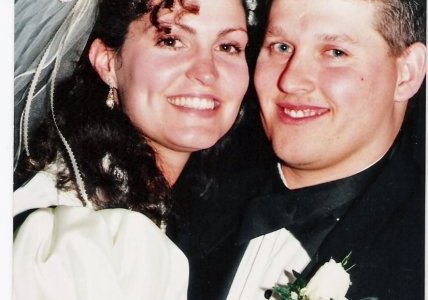
My husband Harly thought he had the flu,
felt lethargic and never wanted to eat.
I just thought he was lazy. After hauling
bags of grass seed all day at the local plant,
he’d flop down on our couch, slather Vicks
on his chest, cuddle with our baby girl
and watch Barney. He stayed up late into
the night playing TechnoBowl, chest pains,
tingling in his joints, then fell asleep, TV
blaring, lamps aglow. He never left the house
except to work, and when he pressed his calves,
he left fingerprints. After his stools lost color,
we saw doctors who dosed him, told him eat less,
walk more. It was a nurse who noticed
the golden hue of his eyes and skin, insisted
on a blood test that showed a liver gone bad.

I drove us back to our modest home in our town
of a thousand. Harly sat in the passenger seat,
sniffing—a twenty-seven-year-old man
who would need a specialist, tests, a transplant.
But right then, all he needed was to hear
the radio play Tom Petty, to rest his head
on my chest. He smelled of sweat and soap.
I’d never seen him cry in the time we’d been
together, but over the next six months,
as he watched his baby girl scream through
her own blood tests, his brother lose his life
to the same disease, his own body wither
from broad-chested and strong to brittle
and thin, I’d wipe them away, one by one,
as they blended into his yellowed cheeks.
Sneak Peek Into My Work in Progress

HAZEL STREET – From Chapter One of the memoir The Cobbler’s Daughter

Click. I wake to the sound of the light switch. I sit up, look out the hallway windows and see it’s still dark.

“Come on, kids,” my father says, standing by our bed. His black hair is combed back from his face. “We’re going bowling.”

“What time is it?” my brother Tony asks, rubbing his eyes.

My father smiles. “What are you, a cop?”

Tony and I crawl out of bed. We pull on T-shirts and jeans. I don’t remember if we brush our teeth or wash our faces. I doubt we brush our hair.

We drive across town to Brandywine Bowl where a bunch of my father’s friends are already waiting. Inside the walls are cream-colored, the lanes are wood, and everything else is harvest gold. The carpet is a vast ocean of blue.

Before my father joins his friends, he hands Tony a wad of dollar bills and says “Go get something to eat.” We run to the snack shop. It’s like a dream: Wise potato chips, Slim Jims, City Chicken (Turkey on a Stick), French fries, Cokes. We even have enough left over for the pinball machine.

High on soda, Tony and I chase each other back and forth through the nearly empty building. If we bother my father, he throws us more money. We eat and play to our hearts’ delight. We stay until the Pepsi clock reads 1:00 a.m. My father hands back his shoes. Drops his ball in his bag and we leave.

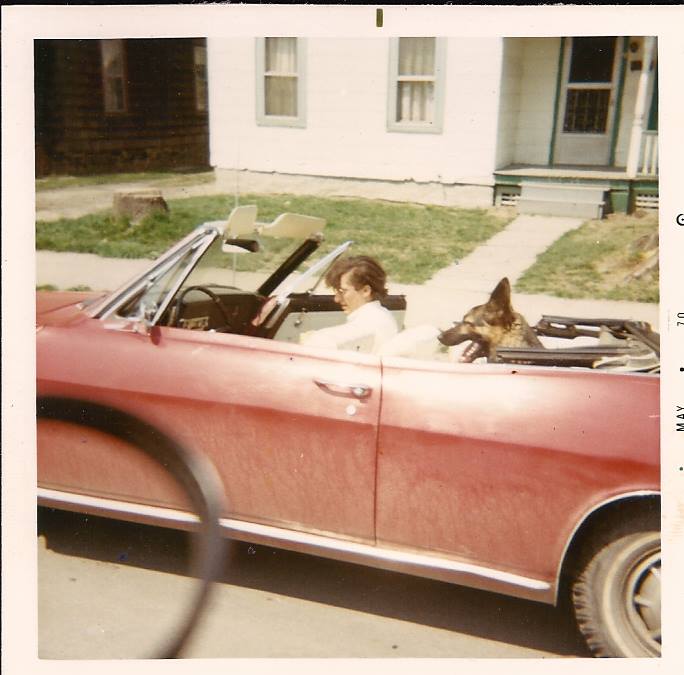
I squeeze in between him and Tony in the front seat of his 1965 red Chrysler Corvair convertible. My hair blows in the wind—free and loose.

995618_10152561361193187_3692029579514295638_n