10 Signs You Were/Are a Middle Child

1. When pouring drinks for friends, you still kneel to get eye level with the glasses to be sure the liquid amount is even for fear of getting jabbed in the arm by your older brother.
2. You wore hand me downs until you hit puberty, and it no longer looked “okay” to wear your brother’s shirts.
3. When riding in cars with friends you still instinctively head for the back seat, because the oldest always gets the front.
4. In home movies from your childhood, you were always trying to get in front of the camera, only to be pushed out of the way by your father.
5. Your baby book is two pages long, while you confuse your siblings’ baby books with the King James’ bible.
6. You don’t have an entire wall (or room) dedicated to your accomplishments.
7. In adulthood, you try to outshine your siblings only to have your parents pat you on the head, and say, “Keep trying, honey.”
8. As a kid, you didn’t mind being called weird if it meant you stood out from the siblings.
9. If you played sports, you wore your brother’s old equipment even when the cleats were worn flat and the sneakers stank.
10. Your parents call you to brag about your siblings, but they never call the siblings, and often forget your name.

Missing My Father

Since You’ve Been Gone

I stand in the kitchen, pour olive oil
into a warm pan on the stove, then garlic,
the aroma rising like yeast, making me
want to call you—as I did during
the decades we lived apart—me
in the navy in California, you at your
hotdog stand in Florida. If you answered
drunk, I’d make an excuse, “Someone’s
at the door,” so I could hang up quick.
But if you were sober, you might tell me
a story: like when you were a kid, riding
beside your buddy in the back of
DiRienzo’s Bakery truck, bringing
bread to the neighborhood folks, your
spaghetti-thin frame, the inhaler
in your jeans pocket, all those loaves
still warm from the oven on the shelves,
you took one and packed it like a snow ball,
and as the driver skidded around
corners, you took bites from the dough.

You’re not there anymore to answer
my call, but I have your recipes, and
your grandchildren, each with your skinny
arms, they sit at my table, pasta filling
their plates, fresh bread in their hands,
they bring the red sauce to their mouths.

Good Grief-What a Month I’m Having!

I don’t know about you, but I couldn’t wait to say buh-bye to 2015. It was another year of being single, working my butt off in production more so than writing, and selling the home I had lived in for almost a decade with my former husband and our kids. I spent some time free-lance writing and even submitted work to journals. In April I participated in the poem-a-day movement, and in November, I spent a wonderful weekend with two of my best friends at a writing workshop in Port Townsend. But as Christmas songs played in the dentist office, gas stations and department stores, my optimism fell like a snowflake.

New Year’s Eve was spent with my ten-year-old son Vinny and another best friend, my sister from another mister, Aimee. I’d had a daughter disappointment right before the New Year, which I’d rather not disclose, but believed that 2016 would be a better year! But not long after my holiday vacation ended, I had a personal disappointment. Normally I don’t let life get me down; but when it rains, it pours, and I have lost my umbrella.

Suffice it to say, a blog is a safe space to share. But part of me thinks no one wants to hear my problems. And others tell me that I am the only person who can control my life. I need to make changes. I need to read self-help books. I need to let things go. I need to be honest about my needs. Saying those things and doing them are as different as heat and cold.

And I don’t want to be negative. I want to offer life-affirming tips for dealing with everyday disappointments. But right now, all I have is advice from others. I write to understand my life, so I’ve been working on an “after the divorce” essay and several poems. I’ve been talking to every friend who will listen. I’m sure I’m a real treat.

Last week, after hearing of my so-called disappointments, I turned into a Peanuts character, walking along the street with my head down. While kicking a stone, the toe of my boot stuck to the sidewalk and I fell face-first on the concrete. I cracked the glass on the front of my iPhone and my ego. It was the perfect end to a perfect week.

On a bright note, I finished a book called What Shamu Taught Me About Life, Love and Marriage by Amy Sutherland. What a pleasure it was to read. Sutherland talks about positive reinforcement and rewarding behavior–stuff from psych 101, but with real life examples. She observed aspiring animal trainers that work with predators, ones that can tear arms off or kill people with a bite to the neck.

Basically I learned to ignore bad behavior, a daughter screaming in my face, or a client criticizing my brochure, and reward good behavior: Thank you for picking up your dirty socks, Daughter, and Thank you, Client, for your feedback. I’m writing this in its simplest form, but feel free to check it out yourself. I’m going to reread the book.

My plan moving ahead, and you know I have one, is to dress for success, support, not enable, my daughters, and build character in my son. I will breathe deeply before walking into a difficult situation, smile when I don’t feel like smiling, and write as much as possible. Let’s hope February is a better month.


One Way to Negotiate When You Lose a Dream

Dear readers: I have not fallen off the edge of the earth. I have been so busy at my day job, that I have not been able to work at what I love–creative writing. At least I can say I have a job in my field. But, I’d like to share why I work in marketing and communications instead of teaching, which was my dream.

When I received my MFA in creative writing 11 years ago, I was sure I would get a teaching job “just like that” mostly because I’d wanted to be a teacher since I was nine, and wasn’t that enough? I taught through my graduate programs, and took every teaching class that I could. And I was so passionate. I loved my students.

I did land a teaching job for a year, and I loved it. It was at a university, with 24 first-year students in English Composition and Rhetoric and Persuasive Writing. For one 17-week course, I designed the curriculum around gun control (pro or con) so the students could really delve into one issue. We watched Bowling for Columbine; they wrote annotated bibliographies; they presented their thesis statements before their classmates for critique; and we also watched Heathers.

One of my students vanished before the annotated bibs were due. “Missing Student” didn’t send me an email, she missed more than the allowed five classes, and I figured like so many others before her while I was a teaching assistant, she would simply fail. Let me interject: I hate to fail students. My heart is bigger than my red pen. When I first started teaching in 2000, I called students at home when they missed class. (Feel free to laugh.) By 2005, I’d learned that you can’t save every student, and you have to let them make their own decisions.

Fast forward to week 15. The rough draft of the term paper was due–an analysis of Bowling for Columbine in which each student took a stance for or against gun control and used scenes from the movie and other research as evidence. We were about to get started when in walked Missing Student. I shook my head and wanted to say, “I’m sorry. Why are you here?”

She asked to speak with me. She handed me a rough draft of her term paper: Stem Cell Research. Forget she’d missed the limit of classes, the annotated bib, and the thesis statement presentation. Missing Student started crying in front of the entire class, told me she’d been having a rough time and couldn’t I just let her come back. In 2000, I might have said yes. But in 2005, with the university policy hovering above my head, and my new convictions, I said no. And I gave her an F.

Weeks after the semester ended, my boss called me at home and said Missing Student’s mother phoned him, saying, “Why can’t my daughter receive a No Pass instead of an F?” My boss asked me to change the grade. I said no. I was following the university’s policy–any student with more than five absences and a zero in any other section of the course received an F. He said, “Come on.” I said, no.

The following fall, I walked into the bookstore to see what courses I was teaching. Zero. My knees buckled, and I almost started crying. I was told that “Enrollment was down.” But my peers from grad school still had their sections. And they also still teach at that same university now.

After working as a secretary for a year, I landed a job as a copy writer at another university. The pay was more than what I had been making as an adjunct, and I received full benefits. For nine years now, I’ve been working as a marketing and communications specialist. I write creative nonfiction and poetry in my spare time, and I’ve had a few teaching gigs at a community college. (Which I love!)

My father’s dream was to be an astronaut. But he had poor eyesight, asthma, allergies, and sought full custody of my brother and me after a bitter divorce. He apprenticed in shoe-repair and made a good living fixing shoes and crafting leather. Did he love it? No. But he smiled a lot, had a great sense of humor and was one hell of a good father. He’s often my inspiration to keep plugging along.
Funeral Dinner

For my brother Tony: May 1, 1966 to May 3, 1987

Dad and I sat next to each other at the cemetery,
folding chairs cold and hard on that spring
afternoon. He and I were holding hands, but
his wife slid her chilly fingers in between and
how quickly I pulled away, watched the men
lower your body into the mud-soaked ground.

At the funeral dinner, Dad heard me mouthing off,
“I’m never calling her Mom again.” He grabbed
my hand, dragged me upstairs and locked us
in a tiny bathroom. “Your real mother was
an egg donor,” he said. “That woman downstairs
is your mother.” He wiped his nose on his white
handkerchief, stuffed it back in his pocket.

He left me to stare at my reflection, black rivulets
down my cheeks, hazel eyes like his, curly hair.
You looked just like our mother: light skin, bright
green eyes, full lips. And now, just like her,
you had betrayed me: here one day, then gone.

Finding a Mother’s Day Card

Every May I sift through the glut of greeting cards
with their glowing notes: Thank you for raising me,
You’ve always been there, and To my best friend.
I look for the one that says, Enjoy your day,
because Carla, as my mother signs letters to me,
was never a Mom. She and my father split up
when I was a baby, and Dad told her never to come back.
She went away to college, traveled the world,
let another woman feed me, bathe me, beat me
with leather belts. I see her in a black turtleneck and
blue jeans, svelte, five-ten, hair to her waist, bright green eyes,
cheek bones that could slice paper. She sips Scotch,
smokes Marlboro Reds, poses for art students, sketches
self-portraits. At 40, she walks down the aisle, again,
settles into a new life in New England, spends her days
in an art studio piecing magazine clippings into collage art,
teaching millionaires’ wives how to paint. We met once
in my hometown, hugged like strangers, dined on prime rib,
returned to our separate lives of sending letters
about the weather. Some friends say I owe her judgment,
others, respect. As every new spring brings
its buckets of rain, I wonder what we owe each other.

I’ve Been Away Too Long–So, Here’s a Poem

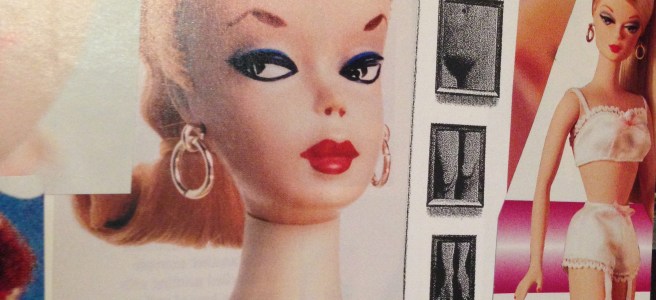
Barbie Dolls on Drugs

I was twelve and you were six, and we spent
every Tuesday night together for a year.
Your mother at Weight Watchers, your
father driving truck, we watched the Wizard of Oz
so often we knew the script by heart, and when
we tired of TV, we invented games. You had
a huge playroom with the Barbie Townhouse,
and a whole town of Barbies. One was the mother,
and one the daughter who stayed out all night,
came home naked, platinum blond hair
a tangled wreck. Mama Barbie screamed,
“Where have you been?” Daughter said,
“I don’t even know what’s going on.”
They slapped faces with right-angled arms,
and Daughter pulled on a sparkly gown
and hopped away with her plastic suitcase.

Days later, your mother asked to talk
to me, said, “No more Barbies on Drugs,
please.” If she would have been nosier, she
might have discovered I got the idea from
the live show I watched at home, starring
my teenage brother and young stepmother,
sparring, yelling, my brother’s frequent
vanishing acts. But I know now your mother
was trying to keep your dad from disappearing.

All these years later, you and I are still
best friends, and I’m both sad and grateful
for my youthful ignorance–your house was an escape
from my own, where I dropped in a video tape,
air-popped some popcorn, and sat with you
to watch a young girl find her way back home.

Exile — Poem from Suede: A Collection of Poetry

Exile

As soon as I showed signs of rebellion—

drinking, missing curfew, talking back—

my parents sequestered me to my

second story room where, in winter,

I could see my breath. It was an exile I came to love:

four windows, the moon peering like a voyeur

through pink floral curtains—so far—

yet close enough that I could steal its light to sketch.

In summer, a small window fan chopped my friends’

voices from the streets below, drew up that second flight,

a light breeze, so I could breathe.

When the smell of dinner wafted up the stairs,

I trudged to the kitchen where my stepmother,

sipping tea, said, No one wants you here.

Back in my room, I sketched John Lennon—

imagined that he’d written “Mother

just for me—and Marilyn Monroe,

another girl left by her mother who made me think,

someday, I might see my name across

a marquee. But at sixteen, freedom

and fame were as distant as the stars.

So, I stole a Valium—yellow and round—

from my stepmother’s jewel box, held my breath

and swallowed it down, then lay across

my bed spread, drawing the moon.

What Some People Think About People On Welfare

There have been a few times in my life I have received public assistance or “welfare.” When my father was a single parent taking care of my brother Tony and me, we were on food stamps, though I don’t remember.

In 1994, when I quit working a grueling grocery store job to attend community college full-time, I received public assistance, which was $400 a month, $300 in food stamps, a Pell Grant, and $600 a month from the U.S. Navy G.I. Bill for my four years of service. At the time, I was a single mother with one child.

I felt no guilt for receiving the government benefits. I’d had a paper route at age 12, babysat at 13, worked as a lifeguard at 15, McDonald’s from 16 – 18, nursing home from 18 – 20, then joined the navy. Those benefits were a way for me to move up from being a blue collar worker to a college instructor. My American Dream.

Imagine my dismay when I came out of the dentist in a small town in eastern WA, in some pain after having had a filling, and hearing what I am about to share. (It should be noted that I’d had a root canal in high school from chewing too much Big Red, but I learned my lesson. And in the navy, the dentists re-did my root canal–twice.) I was told I had to have a crown. So, on my way out of the office, I asked the admin assistant how much a crown cost. She scowled at me and said, “Welfare doesn’t cover crowns!” I never went to that dentist again.

Fast forward to three years later: my 27-year old husband Harly had a genetic liver disorder. He couldn’t work. I was a junior in college with a five-year-old daughter and brand new baby girl. We applied for food stamps and Medicaid, but because my car was worth $5K, we were denied. I asked the woman behind the desk, “Are we supposed to eat the tires?” Eventually, Harly was able to get disability.

Fast forward a few more years. I was talking to the sister of a friend. The sister’s name was Maggie. She worked as the gestapo at a low-income housing complex and boasted about how she never gave people who left their full deposit back. She said that when she walked into their homes, the places “smelled like welfare.” Maggie told me, “Only single moms get Pell Grants,” and that “She’d never been poor, so she just couldn’t identify with those kind of people.” It took all my strength not to slap her freckled face.

It’s a shame that welfare recipients as a whole get such a bad rap. Statistics show again and again that only a minority abuse the system. I have taught at my Alma mater, Walla Walla Community College, for eight years, and every time I teach a new class I tell the students my story. I was a welfare mother who went to college and eventually earned two graduate degrees. If I could it, so could they. As long as what they are doing is in good faith, there is no reason to be ashamed to ask for help.

My Father Wondered Why I Was Precocious

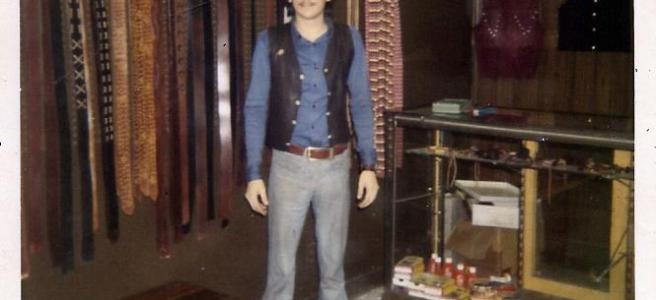
My father was single, and he owned a shoe repair and leather crafting business when I was a girl. Besides the leather pants, vests and belts that filled the store, he sold water pipes, rolling papers and roach clips. As a five year old, I was surrounded by psychedelic posters, tie-dyed T-shirts and peace signs. And in the workshop, my father tacked Playboy calendars and posters of nude women on the walls.

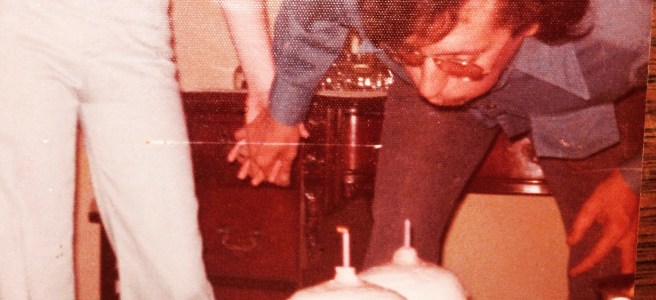
When my father turned 27, his very young girlfriend threw him a surprise party at our apartment. There were streamers, balloons and a cake made of breasts. I am grateful that photos exist from this party. I was too young to be invited, of course, and had been sent to bed. But when I look at the photos from the party, I see my father–his Tony Orlando hair, his denim work shirt, the thin beauty on his arm–personified.

I am happy my father was so young, 22, when I was born. Often he was more like an older brother than a father. He was patient and funny, and he wasn’t ashamed of anything. I asked tons of questions, which he always answered. When I asked questions about sex, he told me the truth–often with street slang. Anyone who wonders where I get my “to the point” method of communication can stop wondering. I am both grateful for this gift and have spent a lifetime trying to improve myself.

I miss my father. He was a great parent, mentor and friend.