Ever Play A Scary Childhood Game?

Food Contest

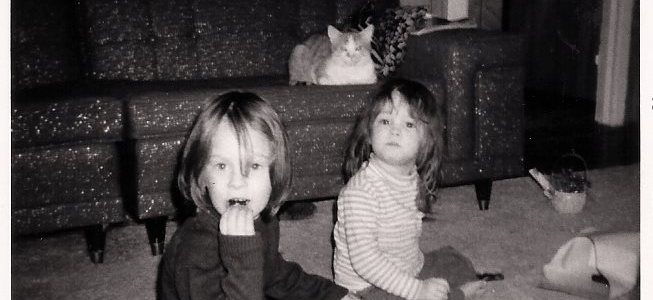
It was more of a game that you half-invented–
half-stole from a show called Wonderama.
You blind-folded me, told me to hold my nose
at the breakfast bar in the kitchen, and guess
which food you’d shoved into my mouth. You were my
older brother, my first friend, and I would have
followed you right over a bluff into murky water
infested with piranha. . . I still played after the hot
pepper brought me to tears, the spoonful of baking
soda left me gagging over the kitchen sink,
the cucumber slice so thick with salt that my lips
puckered like an ass. But even I had to quit
after you laid the used match from dad’s ashtray
full of cigarette butts right on my tongue.

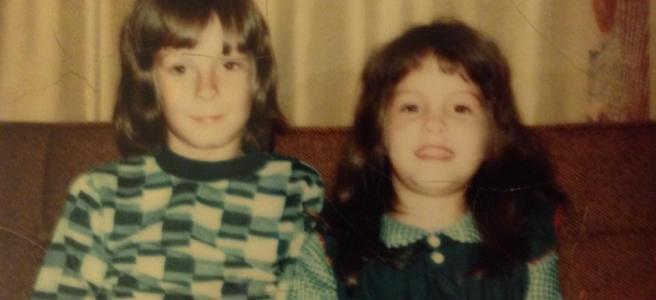
What’s More Important Than to Love and Be Loved?

My ex-husband Eric and I met 17 years ago at an airport bar in Lewiston, Idaho. He was the cutest man I had ever seen in my life. He asked me to dance to “Summer Lovin'” from Grease, and I said “No,” three times before I finally gave in. While we danced he kept smiling, wide and earnest, with a gap between his front teeth. Later he told me he kept falling out of his flip-flops.
While we chatted later that evening, we learned that I was 29 and Eric was 19. His fake I.D. said his name was Steve Williams (AKA Stone Cold Steve Austin) and his address was 316 Austin Street in Clarkston, Washington. Even though we kissed, and I saw skyrockets, I refused to give Eric my phone number or let him take me home, because I was sure he was going to be some immature “dude” who would use me, toss me aside and break my heart.
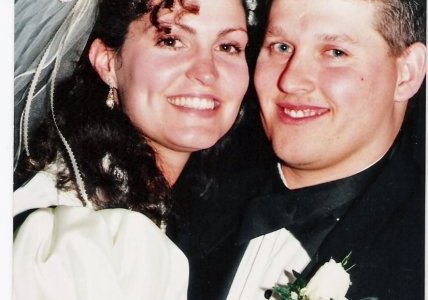
Long story short for the sake of the blog, I called Eric ten days later because I couldn’t stop thinking about that smile. We started dating, fell in love and got married in 2001. I already had two daughters from two previous marriages–one ended in divorce, and the other in widowhood.
After seven years together, Eric and I had a son. I can say without hesitation Eric was born to be a “Dad.” He was a pretty good husband, too, although my being an extreme extrovert and his being an extreme introvert may have helped lead to our demise, along with my fear of getting too close to anyone.
We have been divorced for three years, and I still think he’s the only guy for me. The older I get, the more I learn, is there anything better in the world than L-O-V-E?

Funeral Dinner

For my brother Tony: May 1, 1966 to May 3, 1987

Dad and I sat next to each other at the cemetery,
folding chairs cold and hard on that spring
afternoon. He and I were holding hands, but
his wife slid her chilly fingers in between and
how quickly I pulled away, watched the men
lower your body into the mud-soaked ground.

At the funeral dinner, Dad heard me mouthing off,
“I’m never calling her Mom again.” He grabbed
my hand, dragged me upstairs and locked us
in a tiny bathroom. “Your real mother was
an egg donor,” he said. “That woman downstairs
is your mother.” He wiped his nose on his white
handkerchief, stuffed it back in his pocket.

He left me to stare at my reflection, black rivulets
down my cheeks, hazel eyes like his, curly hair.
You looked just like our mother: light skin, bright
green eyes, full lips. And now, just like her,
you had betrayed me: here one day, then gone.

Finding a Mother’s Day Card

Every May I sift through the glut of greeting cards
with their glowing notes: Thank you for raising me,
You’ve always been there, and To my best friend.
I look for the one that says, Enjoy your day,
because Carla, as my mother signs letters to me,
was never a Mom. She and my father split up
when I was a baby, and Dad told her never to come back.
She went away to college, traveled the world,
let another woman feed me, bathe me, beat me
with leather belts. I see her in a black turtleneck and
blue jeans, svelte, five-ten, hair to her waist, bright green eyes,
cheek bones that could slice paper. She sips Scotch,
smokes Marlboro Reds, poses for art students, sketches
self-portraits. At 40, she walks down the aisle, again,
settles into a new life in New England, spends her days
in an art studio piecing magazine clippings into collage art,
teaching millionaires’ wives how to paint. We met once
in my hometown, hugged like strangers, dined on prime rib,
returned to our separate lives of sending letters
about the weather. Some friends say I owe her judgment,
others, respect. As every new spring brings
its buckets of rain, I wonder what we owe each other.

I’ve Been Away Too Long–So, Here’s a Poem

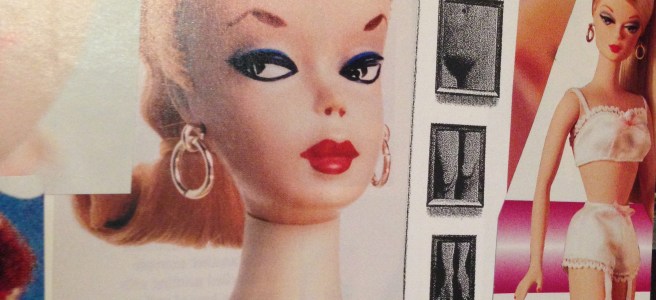
Barbie Dolls on Drugs

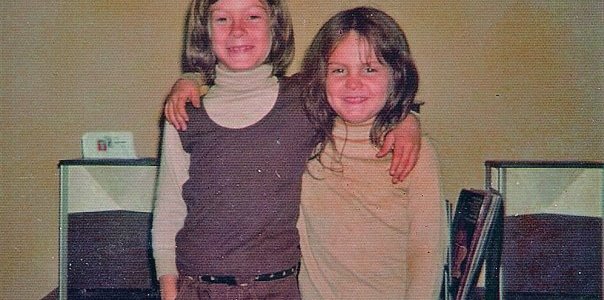
I was twelve and you were six, and we spent
every Tuesday night together for a year.
Your mother at Weight Watchers, your
father driving truck, we watched the Wizard of Oz
so often we knew the script by heart, and when
we tired of TV, we invented games. You had
a huge playroom with the Barbie Townhouse,
and a whole town of Barbies. One was the mother,
and one the daughter who stayed out all night,
came home naked, platinum blond hair
a tangled wreck. Mama Barbie screamed,
“Where have you been?” Daughter said,
“I don’t even know what’s going on.”
They slapped faces with right-angled arms,
and Daughter pulled on a sparkly gown
and hopped away with her plastic suitcase.

Days later, your mother asked to talk
to me, said, “No more Barbies on Drugs,
please.” If she would have been nosier, she
might have discovered I got the idea from
the live show I watched at home, starring
my teenage brother and young stepmother,
sparring, yelling, my brother’s frequent
vanishing acts. But I know now your mother
was trying to keep your dad from disappearing.

All these years later, you and I are still
best friends, and I’m both sad and grateful
for my youthful ignorance–your house was an escape
from my own, where I dropped in a video tape,
air-popped some popcorn, and sat with you
to watch a young girl find her way back home.

Exile — Poem from Suede: A Collection of Poetry

Exile

As soon as I showed signs of rebellion—

drinking, missing curfew, talking back—

my parents sequestered me to my

second story room where, in winter,

I could see my breath. It was an exile I came to love:

four windows, the moon peering like a voyeur

through pink floral curtains—so far—

yet close enough that I could steal its light to sketch.

In summer, a small window fan chopped my friends’

voices from the streets below, drew up that second flight,

a light breeze, so I could breathe.

When the smell of dinner wafted up the stairs,

I trudged to the kitchen where my stepmother,

sipping tea, said, No one wants you here.

Back in my room, I sketched John Lennon—

imagined that he’d written “Mother

just for me—and Marilyn Monroe,

another girl left by her mother who made me think,

someday, I might see my name across

a marquee. But at sixteen, freedom

and fame were as distant as the stars.

So, I stole a Valium—yellow and round—

from my stepmother’s jewel box, held my breath

and swallowed it down, then lay across

my bed spread, drawing the moon.

A Glimpse Into Wilson’s Disease

The Assumption

My husband Harly thought he had the flu,
felt lethargic and never wanted to eat.
I just thought he was lazy. After hauling
bags of grass seed all day at the local plant,
he’d flop down on our couch, slather Vicks
on his chest, cuddle with our baby girl
and watch Barney. He stayed up late into
the night playing TechnoBowl, chest pains,
tingling in his joints, then fell asleep, TV
blaring, lamps aglow. He never left the house
except to work, and when he pressed his calves,
he left fingerprints. After his stools lost color,
we saw doctors who dosed him, told him eat less,
walk more. It was a nurse who noticed
the golden hue of his eyes and skin, insisted
on a blood test that showed a liver gone bad.

I drove us back to our modest home in our town
of a thousand. Harly sat in the passenger seat,
sniffing—a twenty-seven-year-old man
who would need a specialist, tests, a transplant.
But right then, all he needed was to hear
the radio play Tom Petty, to rest his head
on my chest. He smelled of sweat and soap.
I’d never seen him cry in the time we’d been
together, but over the next six months,
as he watched his baby girl scream through
her own blood tests, his brother lose his life
to the same disease, his own body wither
from broad-chested and strong to brittle
and thin, I’d wipe them away, one by one,
as they blended into his yellowed cheeks.

My Kid’s Smarter Than Your Kid–Pondering Competition

My daughter Jessica was still crawling at 15 months. Because other toddlers I knew had already started taking their wobbly first steps, I called the pediatrician. He said, “If she doesn’t start walking by next month, bring her in. We’ll put braces on her legs.” Jessica started walking that week. And because I now know that she gets embarrassed over everything, I’m sure Jessica overheard the doctor and was afraid of looking like Forrest Gump.

In kindergarten, Jessica tested into a program called Enrichment–what some schools call “Gifted and Talented,” because she knew how to read. Jessica was not the type of student to push herself when she was bored, and I suspected this program would encourage that. I was feeling pretty good about myself and Jessica’s father–a meteorologist for the U.S. navy–that we had drawn the long straw. We had a smart kid.

When Jessica entered 4th grade, it was the first time I interacted with the parents of other “smart kids.” At the time, I was a 32-year-old grad student in English at the university in Bellingham, Washington. It was five p.m., and when I walked into the elementary school library for the parents’ meeting, Jessica holding one hand and my five-year-old daughter, Josie, the other, I felt like a kid. No other parents had brought their kids, and they all had gray hair and wrinkles. They were dressed in blazers and slacks. I was a grad student in a sweater and ripped jeans.

The atmosphere in the library bugged me–the sense of smugness in the air. Every couple sat with their noses held high, discussing the curriculum, talking about art programs their kids were involved in, or awards they’d received. They talked about math olympics, writing contests, music lessons, physics and future problem solvers of America. I kept quiet, thinking about how grateful I was simply to have Jessica in the program. These parents seemed to believe that their smart kids were a reflection of their own intelligence.

One of the reasons I was so pleased to see Jessica succeed academically was because I hadn’t. I wasn’t dumb, but education wasn’t valued in my childhood household. My father owned a shoe repair shop. He was funny, friendly and blessed with common sense. When I was in high school, my father told me: “Just get Cs, and I’ll be happy.” So I learned that I had to care about doing well for myself. I only put forth effort in the classes I liked: art, theatre and English. And I didn’t start college until I was 24.

Jessica quit the Gifted and Talented program in 7th grade–when it was no longer mandatory. I begged her to stay in. “I don’t want people to think I’m a geek,” she said. She wouldn’t believe me when I told her: “You can’t control what people think.” Within a year, her grades tanked. Boys and parties became much more important than solving America’s problems, writing poetry or competing in math. By this time, I had finished my graduate degree and was working as a writer. When Jessica failed freshman English, I figured she was rebelling against me.

My smart kid graduated from high school with a 1.67 GPA. Her father gave her his G.I. bill money so she could attend community college. She loved it, but failed out after a bad breakup during her third quarter. Jessica took a year off and is back in college, working part time as a waitress. Like a lot of us, she regrets not trying harder when she had the chance. She even says, “Mom, you should have pushed me harder. But when I was in those classes, I felt like the dumbest kid there.”

As a parent, you never know how well you are doing. At best, raising kids ebbs and flows as continuously as the tide. Jessica crawled for 15 months and I never worried until I noticed other kids “beating” her. Competition makes us crazy. A poetry teacher told me once: “Comparing yourself to others is deadly.” I say it’s also inevitable. Perhaps it keeps us ambitious. Aware. After all, competition made me call the doctor.

Sneak Peek Into My Work in Progress

HAZEL STREET – From Chapter One of the memoir The Cobbler’s Daughter

Click. I wake to the sound of the light switch. I sit up, look out the hallway windows and see it’s still dark.

“Come on, kids,” my father says, standing by our bed. His black hair is combed back from his face. “We’re going bowling.”

“What time is it?” my brother Tony asks, rubbing his eyes.

My father smiles. “What are you, a cop?”

Tony and I crawl out of bed. We pull on T-shirts and jeans. I don’t remember if we brush our teeth or wash our faces. I doubt we brush our hair.

We drive across town to Brandywine Bowl where a bunch of my father’s friends are already waiting. Inside the walls are cream-colored, the lanes are wood, and everything else is harvest gold. The carpet is a vast ocean of blue.

Before my father joins his friends, he hands Tony a wad of dollar bills and says “Go get something to eat.” We run to the snack shop. It’s like a dream: Wise potato chips, Slim Jims, City Chicken (Turkey on a Stick), French fries, Cokes. We even have enough left over for the pinball machine.

High on soda, Tony and I chase each other back and forth through the nearly empty building. If we bother my father, he throws us more money. We eat and play to our hearts’ delight. We stay until the Pepsi clock reads 1:00 a.m. My father hands back his shoes. Drops his ball in his bag and we leave.

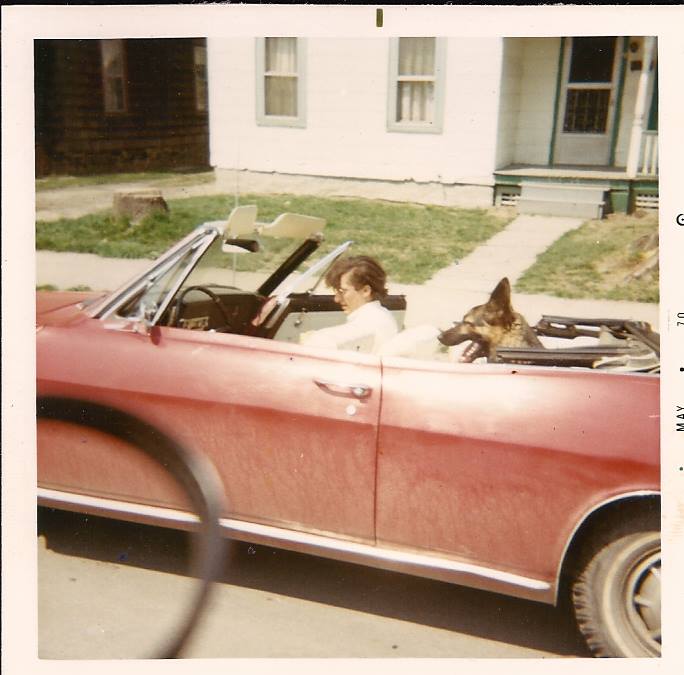
I squeeze in between him and Tony in the front seat of his 1965 red Chrysler Corvair convertible. My hair blows in the wind—free and loose.

995618_10152561361193187_3692029579514295638_n

How Young Do Kids Learn Empathy?

Salt dough

My daddy died, says the four-year-old girl—
squishing and smashing lilac salt dough
into sea stars and snowmen at the daycare
craft table. She licks her fingers. Don’t eat the dough,
the caregiver says. A boy in a blue and green
striped shirt stacks blocks. The girl eyes
other kids’ paintings of mommies, daddies,
kids and dogs. My daddy died, she repeats,
looking around. The boy turns his stringy-haired
head her way, eyes her from her wavy bangs
to her purple fingers. I don’t have a dad, he offers.
Never met him. The caregiver tilts her head,
half-smiles. The boy rests the last block on the stack,
watches the tower weave before it falls to the table
with a boom and clack. He runs to the boy’s room.

The girl lifts a rounded mound of salt dough,
makes sure no one is watching, takes a bite.