In Defense of Rudolph

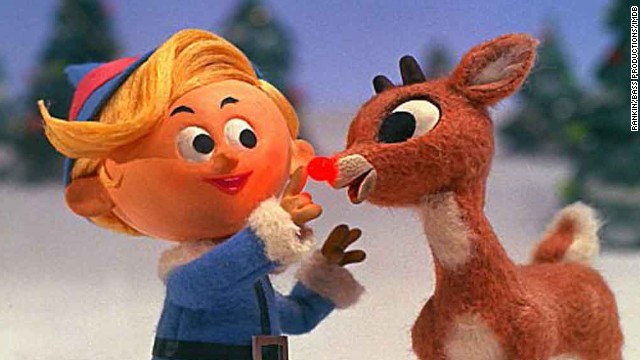
141204135426-01-holiday-tv-and-movies-story-topRecently I heard about the kerfuffle regarding Rudolph the Red-Nosed Reindeer, the stop motion animation movie from 1964. In case you’re unaware, the movie has been criticized very recently for being pro-bully. (And just to be clear, this movie came out a few years before I was born, and I’m here to tell you, it’s been critiqued for decades).

My kids grew up watching this movie, just as I did with my parents, and it has been a source of laughter around the dinner table and a conversation starter. We love the scene, for example, when the elves call “lunch break” and Hermey’s angry boss looks at him and says, “Not for you!”

Is there yelling and teasing in the movie? Yes. My kids and I find humor in the erratic behavior. Not because we are cold-blooded or evil, but because we can relate to Rudolph and Hermey. It isn’t just bullies who tease people who are “different.” In his awesome book Behave, Robert Sapolsky tells us it’s an innate human quality to malign difference, and we have to learn not do it.  It’s also a innate animal behavior (which, if I am correct, humans are animals.) Think here: chickens pecking each other.

One aspect of meanness no one mentioned is when Hermey and Rudolph ask to stay at the Island of Misfit Toys and the lion says “No. But you can do something for me.” It is so outrageously rude that my kids and I have to laugh, whether out of sheer disbelief of discomfort. How dare he deny them a place to stay and then ask for a favor.

Frankly, I have bullied and I have been bullied. I am not proud to admit bullying a girl from Lebanon in third grade. Two years later I received my comeuppance from a boy I loved who called me Ugly, Monkey Face, and Grape Ape from fifth grade to twelfth. Also, very recently I’ve been ghosted, snubbed, and triangulated by a couple of bullies.

I am not pro-bully. I am pro “let’s talk about the bullying in this movie.” Can you believe Santa was so mean to Donner and Rudolph? Can you believe the whole town shunned Rudolph until he became useful? Can you believe characters in the movie apologized to Hermey and Rudolph for being mean to them?

Bullies are never going away. Look at our President! And, if you don’t believe that, I’ll show you reindeer who can fly. I don’t have a solid answer for how to deal with a bully, because they are all different. But the ones I am dealing with now — I avoid them like last year’s fruitcake.

This is not about you.

Sometimes it feels so good to be pissed off. When I’m angry, I feel powerful, eager to blast whoever offended me, cut me off in traffic, or amputated me out of his life. And yet, sometimes the anger makes me feel out of control. What did I say? What did I do? Why did I react that way? It’s exhausting. While the screaming and sarcasm feels cathartic at the time, afterward I’m left feeling downtrodden.

They say all arguments begin and end with ourselves. I believe it, and yet, I have relationships with people who can ignite me and burn me to ash in a moment. Sometimes it’s hard for me to remember I must control my behavior, especially when I’m highly emotional. How I feel and act is about me. And, your feelings and your behavior is about you.

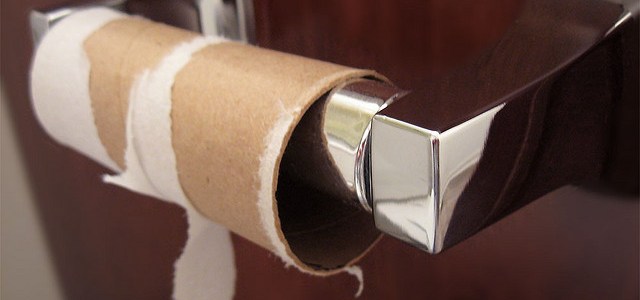
Think about a day when you woke in a bad mood. You stubbed your toe on the door to the bathroom. There’s a nearly bare toilet paper left on the roll, which you didn’t notice before you went. Someone used most of the hot water, so your shower was about luke warm. And when you poured milk into your coffee, curdles floated to the top.

So, you drive to your favorite coffee place and order breakfast. The server asks, “How’s your morning?” and you answer “Fine,” when you want to say, “It has sucked so far.” She gives you the right coffee order but the wrong breakfast sandwich. Sausage? I wanted bacon. The world is your enemy.

Think about a day when you woke feeling light. Your dog rolled over in bed and invited you to rub his belly. Your shower was just the right temperature. Your son told you he loved you three times before you left for work. You did food prep over the weekend, so you have overnight oats for breakfast and lunches for the week. When you drive to your favorite coffee place, the person ahead of you pays for your beverage. The world is your oyster. (If you like oysters, and I do.)

It’s important to hang onto those good days, relish them. Smile as often as you can. Realize that the friend who ignores you is mad at himself. The person who cut you off while driving is oblivious. Everyone is living in their own little world, stubbing their toes and running out of toilet paper. That has nothing to do with you.


Where Are You, Gen Xers?

My current job, working as the Senior Writer/Editor for a foundation at a land-grant university, involves sharing stories, Tweets, photos, and more on various social media. Most recently, on #GivingTuesday, I was checking out articles on LinkedIn, one of which mentioned “how to get Millennials to donate.” Since two of my children are Millennials in their early 20s, and I volunteer for another local foundation, I clicked on the link.

About 2/3 of the way into the article, I came across a paragraph that compared Millennial philanthropic trends with Baby Boomer trends. I kept reading, waiting to see how Gen Xers felt about philanthropy. Guess what? There was no mention of Gen Xers in the entire article. Zip. Zero. Zilch. So, I became curious. And like a Millennial, I went to Google and typed in Generation X.

Suddenly, a whole new world opened to me. I was born in 1968 and have always considered myself a Gen Xer. With a brother born in ’66 and one in ’75, I’m also the middle child. Coincidentally, Gen Xers are called the Neglected Middle Child, mostly because there are 70 million plus Boomers and 70 million plus Millennials, and there are only 50 million plus Gen Xers. Why the discrepancy? Well, lucky for us, even though the hippies were having a lot of sex, in the early 70s, birth control and legalized abortion helped them have fewer children.

After visiting a few more websites, I found conflicting information regarding the specific dates that designated a person as a Gen Xer. My theory holds at this: Gen Xers were born in between the early 60s and the early 80s. And, similar to astrology, if your birthdate straddles those years, you are said to be on the cusp, or a cusper. So, my uncle John, for instance, who was born in 1965, probably has Boomer and Gen Xer traits.

When I think about my being a Gen Xer, I think about being a child of divorced Boomer parents who needed to “find themselves,” walking everywhere by myself, and being raised on or by television. I often joke that my father (a single parent until I was six) used the TV as a babysitter. Through my research, I discovered I wasn’t alone. Many, if not most, Gen Xers were left home alone with little more than the TV and their siblings to keep them company. It’s probably why we love pop culture!

On a positive note, Gen Xers are independent, resilient, hard-working, and have a sardonic wit. I remember bristling, years ago, when I heard us called the “Slacker Generation.” WTF? When I was 12 I got a paper route. And from that moment on, my father gave me no more spending money. So then I worked as a babysitter. Then as a lifeguard. McDonald’s manager. Nursing home diet aid. Retail sales. Bakery cashier. Then, when I was 20, I joined the navy to get the G.I. Bill because my father wouldn’t help me pay for college.

I’m happy to report we are the generation responsible for creating Hip Hop and paving the way for ethnic diversity. When I think of my childhood, I think of Sesame Street, Captain Kangaroo, and the Electric Company, which we watched in second grade as part of our curriculum. Also, with my father, I watched shows like Good Times, What’s Happening, Laugh In, and the Sonny and Cher Show.

On a negative note, Gen Xers, because we were almost always left alone, referred to as the “latchkey” kids, and were often physically and sexually abused, have become the “most devoted parents in American history.” Some folks call us “helicopter parents.” Guilty as charged. Both of my adult daughters failed out of college, although they grew up watching me bust my butt to earn a BA, an MA, and an MFA, all in writing. I did that without parental support. My daughters have oodles of support. Have I killed their ability to stand on their own?

Anyway: this post is a plea. If you’re a Gen Xer, I want to hear from you! After all, peers are more important to us than parents. I plan to continue my research. If you want to share a story with me, please email me at cindyjoy68@gmail.com.

On Marilyn Monroe and Childhood Sexual Abuse

Fifty four years ago today, Marilyn Monroe was found dead in her bedroom from an overdose of pills meant to treat her depression. (Her death was ruled a suicide, as you may know.) I remember the first time I saw an image of Marilyn Monroe: it was on the Child of the 50s comedy album by Robert Klein. At the time, I spent many afternoons in the bedroom with my step uncle “Reggie.” We’ll get to that in a minute.

Reggie introduced me to Cheech and Chong, Robert Klein, Aerosmith, and Rush. During one afternoon while listening to Klein, I studied the album cover as he talked about putting a coin in a vending machine and getting a button with the now famous nude image of Marilyn Monroe. (If you look at my featured image, I’m talking about the two identical pictures just off center to the right in the collage.)

After I was made aware of Marilyn Monroe, I started to hear her name all the time and see images of her in cartoons, advertisements, magazines. There was even a pictorial of her in one of my father’s Playboys, which since I’m a child of the free-wheeling 70s, lay right on the coffee table in our living room.

I was struck dumb by the beauty Marilyn possessed. Sure, her hair was bleached and straightened, nose fixed, but even now, looking at the photos of her when she was simply Norma Jean, I found her breathtaking. My favorite film with her, Niagara, is worth a watch.

Fast forward to my early 20s. I had joined the navy after the death of my beloved older brother, left my hometown Binghamton, New York, and was lucky to get stationed at a weather center in Monterey, California. (Not far from Watsonville where Marilyn had once been named Miss Artichoke.) I visited Hollywood, saw Marilyn’s wax figure, and got the chills when I placed both hands in her hand-prints at Mann’s Chinese Theatre. I loved her.

I started reading books about Marilyn, biographies, anthologies, even an autobiography. She’d been abandoned by her birth mother, just like me. I’d never lived in an orphanage, but had a severely abusive stepmother. Marilyn was raped and sexually abused numerous times during her childhood. I’d never been raped, but Reggie started performing oral sex on me when I was four. His sister also molested me. The more I read about Marilyn and her problems with men, I started to wonder about myself–a woman terrified of commitment who eloped at 21 and dumped the guy three months later. In one book, Marilyn is said to have done the same thing in Mexico. (Some folks says it’s not true, but I believe it.)

Marilyn was unfaithful to every husband and lover. I’ve had many struggles with infidelity as well. The current psychology on childhood  sexual abuse tells us this type of behavior is not uncommon–the adult often tries to “work out” or repair what happened to them in the past, and that can lead to repeatedly looking for love in all the wrong places. A very smart writer I met once said, “A kid who’s been sexually abused is the world’s sex object.” The statement is both astute and heartbreaking.

If you’re lucky enough never to have endured sex abuse as a child, it might be difficult to have empathy for people who have. In my life this has been true. I’ve had family members say, “It was experimentation, get over it.” “That’s just an excuse because you were unfaithful.” One callous soul said, “You must have enjoyed it, because you never told your parents.”

Indulge me for a moment if you will. Imagine yourself at four. Or your child at four. (My uncle was 11 when he molested me. Chances are he was molested too, or at the very least exposed to inappropriate behavior.) Reggie bribed me with quarters so I would let him have his way in the bedroom. As I grew older, he gave me record albums or other presents. He said, “Don’t tell your Daddy because he’ll think you’re nasty.” Thank goodness, at age nine, I told him to stop. But the damage had been done.

Over the years, as I learned more about childhood abuse, I grew to feel empathy for Marilyn Monroe. She married for the first time at 16. Although marrying young was not uncommon at the time, I still see it as her getting the hell out of her current situation. In many of the books I’ve read about her, authors describe her as sexually frigid and a woman-child. When I hear “She slept her way to the top,” I prefer to see her not as a soulless woman using sex to get her way, but as a wounded child who believed the promises of men who offered her a better life.

Although I am in my late forties, I am still a hopeful child. Not long ago, I believed the promises of a man, even left my happy marriage. Now, I’m alone and missing my ex-husband and the amazing life we had. I’m grateful for the therapists I’ve had who’ve tried to help me heal from my past. I have a fabulous one now and we’re doing EMDR. It’s not over; and it’s not easy. Today, I wish to say, Rest in peace, Norma Jean. I’ll always be a fan. ❤


Yankee Swap Not for Everyone

Fifteen years ago at a family Christmas party, I played my first game of Yankee Swap, AKA, Dirty Santa, the White Elephant gift exchange, etc. You know, the game where you bring a gift already wrapped, pick a number, open a present and get your present stolen. This game has become a staple at holiday parties, and I’ll be darned if I can figure out how it embodies any type of holiday, generosity or giving spirit.

You may say, “Oh, it’s all in good fun,” or “Have a sense of humor,” but every time I’ve been to one of these parties, I’ve witnessed hurt feelings, under the breath comments, or out-right yelling. Now, that might be a regular ordeal at some holiday dinners with family, but family is crazy. We all know you can’t choose your relatives. But you can choose whether or not you wish to be involved in a game at Christmas time where you steal presents.

At my first Yankee Swap, I received an adorable Mikasa candy dish etched with snowmen. I was delighted, and I had no idea how the game worked. No poker face. My boyfriend’s mother “Lola” planned to steal my gift. When she reached for it, I held it tight and said, “Please don’t take this. I have so few nice things.” Lola laughed and made a remark about how she knew where my daughters got their whining from. Lola let me keep the Mikasa candy dish. I still have it, and I use it every Thanksgiving and Christmas to hold olives. I always think of Lola and her remark when I place the dish on my dinner table.

I married into a family where my sister-in-law, “Margie,” loved Yankee Swap, organized every Christmas gift exchange, with a $50 limit and a strict rule: no gag gifts. My last Yankee Swap with the family was a doozie. Of course, Margie ended up with number 1, which meant she got to inspect all the gifts at the end of the game and steal whichever one she wanted. I had received a beautiful wrought iron wall hanging. Margie stole it, which coincidentally meant I ended up with the gift I had brought. When I said that out loud, she leapt up in front of the crowded room and yelled, “I’m so tired of this bullshit!” She ran over to her husband and insisted he take her home. He refused. At the end of the long silent night, I left without the wall hanging. After the new year, when my husband’s grandmother called me to come get the wall hanging, I donated it to a silent auction for charity. That was last time I participated in Margie’s Magical Christmas gift exchange.

At my last Yankee Swap, there was a $20 max for the gifts. I brought a Rudolph the Red-Nosed Reindeer set of figurines: Hermie, the Bumble, even Cornelius, from the perennial show. The person who received it kept waving it in the air, saying, “Someone steal this, please.” I should have. One person brought in a bag full of used books that stunk like mildew. Every gift I received–wine, gift certificates, pewter trivet–was stolen. I tried desperately not to get attached. Incidentally, my best friend stole the trivet. All is fair during the war on Christmas I guess. Another friend asked me if I was the person who brought the hookah. Wow, I thought, what am I putting out there? I left the party with a note pad and water bottle.

When I looked up who invented Yankee Swap, I couldn’t find a particular person. But the rules emphasized that the game was light-hearted, just for fun, and whimsical. Isn’t stealing a bit greedy and mean-spirited? I see nothing wrong with the boring old Secret Santa, or making someone a gift just for them, or sending them a card that says I love you. But then again, I spend most of my money on books, vintage clothing and dog treats.

One Way to Negotiate When You Lose a Dream

Dear readers: I have not fallen off the edge of the earth. I have been so busy at my day job, that I have not been able to work at what I love–creative writing. At least I can say I have a job in my field. But, I’d like to share why I work in marketing and communications instead of teaching, which was my dream.

When I received my MFA in creative writing 11 years ago, I was sure I would get a teaching job “just like that” mostly because I’d wanted to be a teacher since I was nine, and wasn’t that enough? I taught through my graduate programs, and took every teaching class that I could. And I was so passionate. I loved my students.

I did land a teaching job for a year, and I loved it. It was at a university, with 24 first-year students in English Composition and Rhetoric and Persuasive Writing. For one 17-week course, I designed the curriculum around gun control (pro or con) so the students could really delve into one issue. We watched Bowling for Columbine; they wrote annotated bibliographies; they presented their thesis statements before their classmates for critique; and we also watched Heathers.

One of my students vanished before the annotated bibs were due. “Missing Student” didn’t send me an email, she missed more than the allowed five classes, and I figured like so many others before her while I was a teaching assistant, she would simply fail. Let me interject: I hate to fail students. My heart is bigger than my red pen. When I first started teaching in 2000, I called students at home when they missed class. (Feel free to laugh.) By 2005, I’d learned that you can’t save every student, and you have to let them make their own decisions.

Fast forward to week 15. The rough draft of the term paper was due–an analysis of Bowling for Columbine in which each student took a stance for or against gun control and used scenes from the movie and other research as evidence. We were about to get started when in walked Missing Student. I shook my head and wanted to say, “I’m sorry. Why are you here?”

She asked to speak with me. She handed me a rough draft of her term paper: Stem Cell Research. Forget she’d missed the limit of classes, the annotated bib, and the thesis statement presentation. Missing Student started crying in front of the entire class, told me she’d been having a rough time and couldn’t I just let her come back. In 2000, I might have said yes. But in 2005, with the university policy hovering above my head, and my new convictions, I said no. And I gave her an F.

Weeks after the semester ended, my boss called me at home and said Missing Student’s mother phoned him, saying, “Why can’t my daughter receive a No Pass instead of an F?” My boss asked me to change the grade. I said no. I was following the university’s policy–any student with more than five absences and a zero in any other section of the course received an F. He said, “Come on.” I said, no.

The following fall, I walked into the bookstore to see what courses I was teaching. Zero. My knees buckled, and I almost started crying. I was told that “Enrollment was down.” But my peers from grad school still had their sections. And they also still teach at that same university now.

After working as a secretary for a year, I landed a job as a copy writer at another university. The pay was more than what I had been making as an adjunct, and I received full benefits. For nine years now, I’ve been working as a marketing and communications specialist. I write creative nonfiction and poetry in my spare time, and I’ve had a few teaching gigs at a community college. (Which I love!)

My father’s dream was to be an astronaut. But he had poor eyesight, asthma, allergies, and sought full custody of my brother and me after a bitter divorce. He apprenticed in shoe-repair and made a good living fixing shoes and crafting leather. Did he love it? No. But he smiled a lot, had a great sense of humor and was one hell of a good father. He’s often my inspiration to keep plugging along.

What Some People Think About People On Welfare

There have been a few times in my life I have received public assistance or “welfare.” When my father was a single parent taking care of my brother Tony and me, we were on food stamps, though I don’t remember.

In 1994, when I quit working a grueling grocery store job to attend community college full-time, I received public assistance, which was $400 a month, $300 in food stamps, a Pell Grant, and $600 a month from the U.S. Navy G.I. Bill for my four years of service. At the time, I was a single mother with one child.

I felt no guilt for receiving the government benefits. I’d had a paper route at age 12, babysat at 13, worked as a lifeguard at 15, McDonald’s from 16 – 18, nursing home from 18 – 20, then joined the navy. Those benefits were a way for me to move up from being a blue collar worker to a college instructor. My American Dream.

Imagine my dismay when I came out of the dentist in a small town in eastern WA, in some pain after having had a filling, and hearing what I am about to share. (It should be noted that I’d had a root canal in high school from chewing too much Big Red, but I learned my lesson. And in the navy, the dentists re-did my root canal–twice.) I was told I had to have a crown. So, on my way out of the office, I asked the admin assistant how much a crown cost. She scowled at me and said, “Welfare doesn’t cover crowns!” I never went to that dentist again.

Fast forward to three years later: my 27-year old husband Harly had a genetic liver disorder. He couldn’t work. I was a junior in college with a five-year-old daughter and brand new baby girl. We applied for food stamps and Medicaid, but because my car was worth $5K, we were denied. I asked the woman behind the desk, “Are we supposed to eat the tires?” Eventually, Harly was able to get disability.

Fast forward a few more years. I was talking to the sister of a friend. The sister’s name was Maggie. She worked as the gestapo at a low-income housing complex and boasted about how she never gave people who left their full deposit back. She said that when she walked into their homes, the places “smelled like welfare.” Maggie told me, “Only single moms get Pell Grants,” and that “She’d never been poor, so she just couldn’t identify with those kind of people.” It took all my strength not to slap her freckled face.

It’s a shame that welfare recipients as a whole get such a bad rap. Statistics show again and again that only a minority abuse the system. I have taught at my Alma mater, Walla Walla Community College, for eight years, and every time I teach a new class I tell the students my story. I was a welfare mother who went to college and eventually earned two graduate degrees. If I could it, so could they. As long as what they are doing is in good faith, there is no reason to be ashamed to ask for help.

My Kid’s Smarter Than Your Kid–Pondering Competition

My daughter Jessica was still crawling at 15 months. Because other toddlers I knew had already started taking their wobbly first steps, I called the pediatrician. He said, “If she doesn’t start walking by next month, bring her in. We’ll put braces on her legs.” Jessica started walking that week. And because I now know that she gets embarrassed over everything, I’m sure Jessica overheard the doctor and was afraid of looking like Forrest Gump.

In kindergarten, Jessica tested into a program called Enrichment–what some schools call “Gifted and Talented,” because she knew how to read. Jessica was not the type of student to push herself when she was bored, and I suspected this program would encourage that. I was feeling pretty good about myself and Jessica’s father–a meteorologist for the U.S. navy–that we had drawn the long straw. We had a smart kid.

When Jessica entered 4th grade, it was the first time I interacted with the parents of other “smart kids.” At the time, I was a 32-year-old grad student in English at the university in Bellingham, Washington. It was five p.m., and when I walked into the elementary school library for the parents’ meeting, Jessica holding one hand and my five-year-old daughter, Josie, the other, I felt like a kid. No other parents had brought their kids, and they all had gray hair and wrinkles. They were dressed in blazers and slacks. I was a grad student in a sweater and ripped jeans.

The atmosphere in the library bugged me–the sense of smugness in the air. Every couple sat with their noses held high, discussing the curriculum, talking about art programs their kids were involved in, or awards they’d received. They talked about math olympics, writing contests, music lessons, physics and future problem solvers of America. I kept quiet, thinking about how grateful I was simply to have Jessica in the program. These parents seemed to believe that their smart kids were a reflection of their own intelligence.

One of the reasons I was so pleased to see Jessica succeed academically was because I hadn’t. I wasn’t dumb, but education wasn’t valued in my childhood household. My father owned a shoe repair shop. He was funny, friendly and blessed with common sense. When I was in high school, my father told me: “Just get Cs, and I’ll be happy.” So I learned that I had to care about doing well for myself. I only put forth effort in the classes I liked: art, theatre and English. And I didn’t start college until I was 24.

Jessica quit the Gifted and Talented program in 7th grade–when it was no longer mandatory. I begged her to stay in. “I don’t want people to think I’m a geek,” she said. She wouldn’t believe me when I told her: “You can’t control what people think.” Within a year, her grades tanked. Boys and parties became much more important than solving America’s problems, writing poetry or competing in math. By this time, I had finished my graduate degree and was working as a writer. When Jessica failed freshman English, I figured she was rebelling against me.

My smart kid graduated from high school with a 1.67 GPA. Her father gave her his G.I. bill money so she could attend community college. She loved it, but failed out after a bad breakup during her third quarter. Jessica took a year off and is back in college, working part time as a waitress. Like a lot of us, she regrets not trying harder when she had the chance. She even says, “Mom, you should have pushed me harder. But when I was in those classes, I felt like the dumbest kid there.”

As a parent, you never know how well you are doing. At best, raising kids ebbs and flows as continuously as the tide. Jessica crawled for 15 months and I never worried until I noticed other kids “beating” her. Competition makes us crazy. A poetry teacher told me once: “Comparing yourself to others is deadly.” I say it’s also inevitable. Perhaps it keeps us ambitious. Aware. After all, competition made me call the doctor.

Just One Bite–Pondering Serious Food Allergies

With my father, just one bite of fresh fish, and he said he felt his throat closing. With my younger brother, just one bite of a walnut cookie, and he said he felt like he had worms on his tongue. And now, with my son Vinny, just one bite of some nutty bread, and he said, “My mouth started burning.”

Within twenty minutes, Vinny was covered in hives. The babysitter called Vinny’s father Eric who rushed to the house and read the bread’s ingredients: walnuts, almonds, pecans. He injected Vinny with the Epi-Pen and drove him to the ER, calling me on the way. When I showed up, Vinny was still awake, high on the epinephrine, playing with the hospital’s Ipad. I called the babysitter’s parents, who are Vinny’s godparents. They came right over.

The doctor gave Vinny an IV of Benadryl, also put him on oxygen, because he’s a mouth breather, and gave him the nebulizer. Soon Vinny passed out. His entire body, even his head, was covered in hives. For us, it was two-plus hours of hand wringing before he woke back up, looked better, and was “out of the woods.” His godparents stayed with Eric and me the entire day, their eyes wide, their repeated phrase, “We never knew it was this serious.”

Vinny was admitted over night just in case. He is nine, and this was his fourth trip to the ER.

1. At one year old, Vinny’s grandmother fed him a chocolate chip cookie with walnuts. He threw up, broke out into hives, and Eric rushed him to the ER. That’s when we learned he was allergic to tree nuts.

2. In kindergarten, even though we told the teacher Vinny couldn’t eat food brought from other peoples’ homes, during a holiday party, he ate a chocolate chip cookie. It was right before Eric came to get him. Vinny threw up and broke out into hives. Eric gave him the Epi-Pen on the way to the ER. The next day I went to the school and raised a little hell with the teacher.

3. For Christmas when Vinny was 7, a friend bought me a basket full of candy, nuts and other treats. I threw just about everything away, save two pieces of toffee, which I had no idea contained almonds. Vinny ate a piece of toffee. He almost died that time, and Eric said it was all my fault. I suppose it was.

Each time Vinny goes into anaphylactic shock, the reaction becomes quicker and more severe. This last time I started thinking about his future. Eric and I can’t hover around our son his entire life. The doctor recommended that Vinny learn to give himself the Epi-Pen shot. He knows how. But would you want to stick a needle in your leg and hold it for ten seconds?

Only 1 percent of the population is allergic to tree nuts. My father, my brother, my son. Not me, Eric, my daughters. Being a parent is stressful enough without the added worry of a life-threatening allergy. Vinny’s godparents now understand the gravity of his nut allergy. They are kind and intelligent people. They even offered to pay part of the hospital bill.

Eric and I will continue to watch over our son as long as we can and encourage him to be an active participant in his own health. We keep telling him to read the labels, only eat food that comes from a package with legible ingredients, and no strange bread. Not even one bite.