Red Flags Schmed Flags

When I was 32, I attended graduate school in Bellingham, Washington, at Western Washington University. Go Vikings! Part of my graduate program included working as an English Composition Instructor. It was one of the best jobs I have ever had, and I truly enjoyed interacting with first year college students. Part of my responsibilities included meeting with students one-on-one to talk about their assignments, college, and the writing process.

By this time in my life, I’d been married, divorced and widowed, and had two daughters. I still believed in love and everything, however, sometimes I had to check myself when I met with students who were 18 and had unbridled hope regarding the world that awaited them. One young woman I’ll never forget was talking to me about her plans after college. “I’m going to marry my boyfriend, and we’re going to live happily ever after.” My gut told me to say, “Gimme a break! Whatever!” but luckily, my best self butted in and warned me to, “Shut up and smile.”

The benefit of youth is having ignorance of what could go wrong. The benefit of experience is having insight into what could go wrong. They are both liabilities as well. However, whether we are young and naive or old and weathered, we still fall for people who will hurt us no matter how many red flags wave in our faces. With as many episodes of Forensic Files, true crime documentaries, and murder mysteries I watch, I feel adept at sniffing out scary people. But in real life, I’m just as hopeful and romantic as my former college student.

Since it is not my goal to out any specific people from my past that turned out to be a dud, I’m simply going to provide a list red flags I ignored (at first) because I believed in the hope of a budding relationship. I hope you find these humorous and relatable. Also, try to remember that I’m in a good place now and share these because I have learned, and gained distance, from them. Enjoy!

  1. On a date, my boyfriend kept staring at the door and repeatedly hiding his face behind his menu.
  2. My boyfriend told a mutual friend, “Cindy’s not very pretty, but I’m going out with her anyway.”
  3. While driving through Seattle, my boyfriend was unable to find the tattoo parlor where he planned to get a belly button wring (yes, I know) and threw a frightening temper tantrum.
  4. My “sober for two decades” boyfriend smoked weed all day long.
  5. My live-in boyfriend “had” to stay at his mother’s house every time he got sick because I did not take good care of him.
  6. Although I was married, a young man kept telling me that “we were soul mates,” “we were destined to be together,” “I was too good for my husband,” “that I deserved better,” and that “he was my true love.” Barf.
  7. My boyfriend’s sister pulled me aside a few weeks into our relationship and said, “I don’t know what kind of show he’s putting on. He’s not a nice person.”
  8. My boyfriend said my son was weird. (you’re outta here!)
  9. Last but not least, my boyfriend freaked out when I asked why he was on Tinder.

I hope you laughed at these as much I as did while writing them. No doubt there is a guy or two out there talking about the red flags he ignored at first when he was dating me. Best wishes to all.

Where Are You, Gen Xers?

My current job, working as the Senior Writer/Editor for a foundation at a land-grant university, involves sharing stories, Tweets, photos, and more on various social media. Most recently, on #GivingTuesday, I was checking out articles on LinkedIn, one of which mentioned “how to get Millennials to donate.” Since two of my children are Millennials in their early 20s, and I volunteer for another local foundation, I clicked on the link.

About 2/3 of the way into the article, I came across a paragraph that compared Millennial philanthropic trends with Baby Boomer trends. I kept reading, waiting to see how Gen Xers felt about philanthropy. Guess what? There was no mention of Gen Xers in the entire article. Zip. Zero. Zilch. So, I became curious. And like a Millennial, I went to Google and typed in Generation X.

Suddenly, a whole new world opened to me. I was born in 1968 and have always considered myself a Gen Xer. With a brother born in ’66 and one in ’75, I’m also the middle child. Coincidentally, Gen Xers are called the Neglected Middle Child, mostly because there are 70 million plus Boomers and 70 million plus Millennials, and there are only 50 million plus Gen Xers. Why the discrepancy? Well, lucky for us, even though the hippies were having a lot of sex, in the early 70s, birth control and legalized abortion helped them have fewer children.

After visiting a few more websites, I found conflicting information regarding the specific dates that designated a person as a Gen Xer. My theory holds at this: Gen Xers were born in between the early 60s and the early 80s. And, similar to astrology, if your birthdate straddles those years, you are said to be on the cusp, or a cusper. So, my uncle John, for instance, who was born in 1965, probably has Boomer and Gen Xer traits.

When I think about my being a Gen Xer, I think about being a child of divorced Boomer parents who needed to “find themselves,” walking everywhere by myself, and being raised on or by television. I often joke that my father (a single parent until I was six) used the TV as a babysitter. Through my research, I discovered I wasn’t alone. Many, if not most, Gen Xers were left home alone with little more than the TV and their siblings to keep them company. It’s probably why we love pop culture!

On a positive note, Gen Xers are independent, resilient, hard-working, and have a sardonic wit. I remember bristling, years ago, when I heard us called the “Slacker Generation.” WTF? When I was 12 I got a paper route. And from that moment on, my father gave me no more spending money. So then I worked as a babysitter. Then as a lifeguard. McDonald’s manager. Nursing home diet aid. Retail sales. Bakery cashier. Then, when I was 20, I joined the navy to get the G.I. Bill because my father wouldn’t help me pay for college.

I’m happy to report we are the generation responsible for creating Hip Hop and paving the way for ethnic diversity. When I think of my childhood, I think of Sesame Street, Captain Kangaroo, and the Electric Company, which we watched in second grade as part of our curriculum. Also, with my father, I watched shows like Good Times, What’s Happening, Laugh In, and the Sonny and Cher Show.

On a negative note, Gen Xers, because we were almost always left alone, referred to as the “latchkey” kids, and were often physically and sexually abused, have become the “most devoted parents in American history.” Some folks call us “helicopter parents.” Guilty as charged. Both of my adult daughters failed out of college, although they grew up watching me bust my butt to earn a BA, an MA, and an MFA, all in writing. I did that without parental support. My daughters have oodles of support. Have I killed their ability to stand on their own?

Anyway: this post is a plea. If you’re a Gen Xer, I want to hear from you! After all, peers are more important to us than parents. I plan to continue my research. If you want to share a story with me, please email me at cindyjoy68@gmail.com.

Happy Veterans Day from Nancy Navy

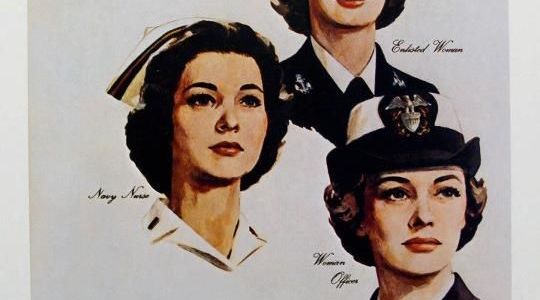
Yes, I served in the U.S. Navy from 1989 to 1993. It was one of the best decisions I ever made. The chance to go to college and leave my town of little opportunity was too great to pass up. I went to boot camp in Orlando, Florida, Apprenticeship School in San Diego, California, and worked as a data processor at a weather center in Monterey,  California for four years. I also attended Monterey Peninsula College, tutored elementary school children in reading, and participated in fund raisers.

After the navy, I moved to the Pacific Northwest. I attended Walla Walla Community College in Clarkston, Washington, and Lewis-Clark State College in Lewiston, Idaho. The G.I. Bill helped fund my bachelor’s degree. After earning my B.A. in English and Creative Writing, I went on to earn an M.A. in English from Western Washington University in Bellingham, Washington, and an M.F.A. in creative writing from University of Idaho in Moscow, Idaho.

I have lived in Moscow, Idaho for 14 years. My career post navy has consisted of food service, bank teller, writing tutor, and then writing (technical, creative, speeches), editing, and teaching writing and other courses. My current position as Senior Development Writer/Editor for the Washington State University Foundation is my dream job. I know the navy made all of this possible.

I feel incredibly grateful for making the decision to join the navy. Thank you to everyone who served in the military, especially overseas and during wartime. We are blessed.

15056457_10154653988028187_2336432202794438476_n

10 Signs You Were/Are a Middle Child

1. When pouring drinks for friends, you still kneel to get eye level with the glasses to be sure the liquid amount is even for fear of getting jabbed in the arm by your older brother.
2. You wore hand me downs until you hit puberty, and it no longer looked “okay” to wear your brother’s shirts.
3. When riding in cars with friends you still instinctively head for the back seat, because the oldest always gets the front.
4. In home movies from your childhood, you were always trying to get in front of the camera, only to be pushed out of the way by your father.
5. Your baby book is two pages long, while you confuse your siblings’ baby books with the King James’ bible.
6. You don’t have an entire wall (or room) dedicated to your accomplishments.
7. In adulthood, you try to outshine your siblings only to have your parents pat you on the head, and say, “Keep trying, honey.”
8. As a kid, you didn’t mind being called weird if it meant you stood out from the siblings.
9. If you played sports, you wore your brother’s old equipment even when the cleats were worn flat and the sneakers stank.
10. Your parents call you to brag about your siblings, but they never call the siblings, and often forget your name.

One Way to Negotiate When You Lose a Dream

Dear readers: I have not fallen off the edge of the earth. I have been so busy at my day job, that I have not been able to work at what I love–creative writing. At least I can say I have a job in my field. But, I’d like to share why I work in marketing and communications instead of teaching, which was my dream.

When I received my MFA in creative writing 11 years ago, I was sure I would get a teaching job “just like that” mostly because I’d wanted to be a teacher since I was nine, and wasn’t that enough? I taught through my graduate programs, and took every teaching class that I could. And I was so passionate. I loved my students.

I did land a teaching job for a year, and I loved it. It was at a university, with 24 first-year students in English Composition and Rhetoric and Persuasive Writing. For one 17-week course, I designed the curriculum around gun control (pro or con) so the students could really delve into one issue. We watched Bowling for Columbine; they wrote annotated bibliographies; they presented their thesis statements before their classmates for critique; and we also watched Heathers.

One of my students vanished before the annotated bibs were due. “Missing Student” didn’t send me an email, she missed more than the allowed five classes, and I figured like so many others before her while I was a teaching assistant, she would simply fail. Let me interject: I hate to fail students. My heart is bigger than my red pen. When I first started teaching in 2000, I called students at home when they missed class. (Feel free to laugh.) By 2005, I’d learned that you can’t save every student, and you have to let them make their own decisions.

Fast forward to week 15. The rough draft of the term paper was due–an analysis of Bowling for Columbine in which each student took a stance for or against gun control and used scenes from the movie and other research as evidence. We were about to get started when in walked Missing Student. I shook my head and wanted to say, “I’m sorry. Why are you here?”

She asked to speak with me. She handed me a rough draft of her term paper: Stem Cell Research. Forget she’d missed the limit of classes, the annotated bib, and the thesis statement presentation. Missing Student started crying in front of the entire class, told me she’d been having a rough time and couldn’t I just let her come back. In 2000, I might have said yes. But in 2005, with the university policy hovering above my head, and my new convictions, I said no. And I gave her an F.

Weeks after the semester ended, my boss called me at home and said Missing Student’s mother phoned him, saying, “Why can’t my daughter receive a No Pass instead of an F?” My boss asked me to change the grade. I said no. I was following the university’s policy–any student with more than five absences and a zero in any other section of the course received an F. He said, “Come on.” I said, no.

The following fall, I walked into the bookstore to see what courses I was teaching. Zero. My knees buckled, and I almost started crying. I was told that “Enrollment was down.” But my peers from grad school still had their sections. And they also still teach at that same university now.

After working as a secretary for a year, I landed a job as a copy writer at another university. The pay was more than what I had been making as an adjunct, and I received full benefits. For nine years now, I’ve been working as a marketing and communications specialist. I write creative nonfiction and poetry in my spare time, and I’ve had a few teaching gigs at a community college. (Which I love!)

My father’s dream was to be an astronaut. But he had poor eyesight, asthma, allergies, and sought full custody of my brother and me after a bitter divorce. He apprenticed in shoe-repair and made a good living fixing shoes and crafting leather. Did he love it? No. But he smiled a lot, had a great sense of humor and was one hell of a good father. He’s often my inspiration to keep plugging along.

Finding a Mother’s Day Card

Every May I sift through the glut of greeting cards
with their glowing notes: Thank you for raising me,
You’ve always been there, and To my best friend.
I look for the one that says, Enjoy your day,
because Carla, as my mother signs letters to me,
was never a Mom. She and my father split up
when I was a baby, and Dad told her never to come back.
She went away to college, traveled the world,
let another woman feed me, bathe me, beat me
with leather belts. I see her in a black turtleneck and
blue jeans, svelte, five-ten, hair to her waist, bright green eyes,
cheek bones that could slice paper. She sips Scotch,
smokes Marlboro Reds, poses for art students, sketches
self-portraits. At 40, she walks down the aisle, again,
settles into a new life in New England, spends her days
in an art studio piecing magazine clippings into collage art,
teaching millionaires’ wives how to paint. We met once
in my hometown, hugged like strangers, dined on prime rib,
returned to our separate lives of sending letters
about the weather. Some friends say I owe her judgment,
others, respect. As every new spring brings
its buckets of rain, I wonder what we owe each other.

My Kid’s Smarter Than Your Kid–Pondering Competition

My daughter Jessica was still crawling at 15 months. Because other toddlers I knew had already started taking their wobbly first steps, I called the pediatrician. He said, “If she doesn’t start walking by next month, bring her in. We’ll put braces on her legs.” Jessica started walking that week. And because I now know that she gets embarrassed over everything, I’m sure Jessica overheard the doctor and was afraid of looking like Forrest Gump.

In kindergarten, Jessica tested into a program called Enrichment–what some schools call “Gifted and Talented,” because she knew how to read. Jessica was not the type of student to push herself when she was bored, and I suspected this program would encourage that. I was feeling pretty good about myself and Jessica’s father–a meteorologist for the U.S. navy–that we had drawn the long straw. We had a smart kid.

When Jessica entered 4th grade, it was the first time I interacted with the parents of other “smart kids.” At the time, I was a 32-year-old grad student in English at the university in Bellingham, Washington. It was five p.m., and when I walked into the elementary school library for the parents’ meeting, Jessica holding one hand and my five-year-old daughter, Josie, the other, I felt like a kid. No other parents had brought their kids, and they all had gray hair and wrinkles. They were dressed in blazers and slacks. I was a grad student in a sweater and ripped jeans.

The atmosphere in the library bugged me–the sense of smugness in the air. Every couple sat with their noses held high, discussing the curriculum, talking about art programs their kids were involved in, or awards they’d received. They talked about math olympics, writing contests, music lessons, physics and future problem solvers of America. I kept quiet, thinking about how grateful I was simply to have Jessica in the program. These parents seemed to believe that their smart kids were a reflection of their own intelligence.

One of the reasons I was so pleased to see Jessica succeed academically was because I hadn’t. I wasn’t dumb, but education wasn’t valued in my childhood household. My father owned a shoe repair shop. He was funny, friendly and blessed with common sense. When I was in high school, my father told me: “Just get Cs, and I’ll be happy.” So I learned that I had to care about doing well for myself. I only put forth effort in the classes I liked: art, theatre and English. And I didn’t start college until I was 24.

Jessica quit the Gifted and Talented program in 7th grade–when it was no longer mandatory. I begged her to stay in. “I don’t want people to think I’m a geek,” she said. She wouldn’t believe me when I told her: “You can’t control what people think.” Within a year, her grades tanked. Boys and parties became much more important than solving America’s problems, writing poetry or competing in math. By this time, I had finished my graduate degree and was working as a writer. When Jessica failed freshman English, I figured she was rebelling against me.

My smart kid graduated from high school with a 1.67 GPA. Her father gave her his G.I. bill money so she could attend community college. She loved it, but failed out after a bad breakup during her third quarter. Jessica took a year off and is back in college, working part time as a waitress. Like a lot of us, she regrets not trying harder when she had the chance. She even says, “Mom, you should have pushed me harder. But when I was in those classes, I felt like the dumbest kid there.”

As a parent, you never know how well you are doing. At best, raising kids ebbs and flows as continuously as the tide. Jessica crawled for 15 months and I never worried until I noticed other kids “beating” her. Competition makes us crazy. A poetry teacher told me once: “Comparing yourself to others is deadly.” I say it’s also inevitable. Perhaps it keeps us ambitious. Aware. After all, competition made me call the doctor.