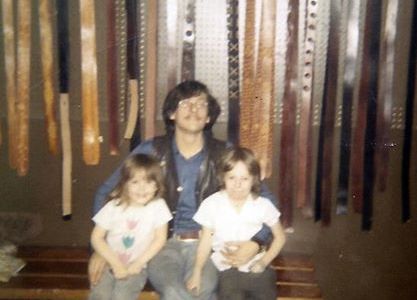
Poem for my Brother, 1966-1987

The Prankster

You’d just turned 21, bought us the Beck’s Beer
we sipped while we waited for the drop-off

at my place, listened to the Stones. You had
silky hair like Mick Jagger, wore a leather jacket

from Dad’s shoe repair shop, dingy white Pumas.
We laughed about our childhood, how you played

tricks on me, like saying you were adopted or
that the shell tasted better than the egg.

We planned to run Dad’s business until we died.
You left to buy one more six-pack, Ruby Tuesday

playing on the stereo, and I was happy to wait
for you. You patted my shoulder, said, I’ll be back,

three words that became a broken promise—
Hours later, after I guessed you’d caught up

with a buddy, forgot to call, our uncle phoned
to say they found you one block from the store,

motorcycle mangled, brain stem snapped in two,
you never felt a thing. Eighteen years old, grief

dropped over me like a veil. I took a cab to our
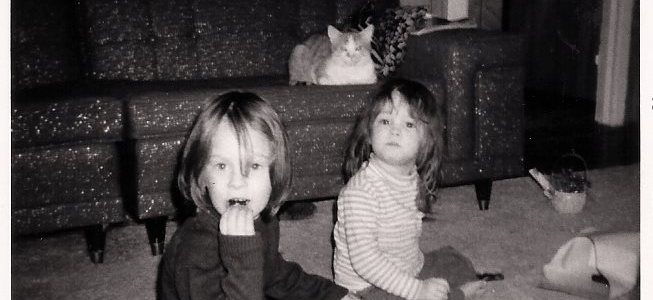
grandparents, thought of when we were kids:

you made a noose out of plastic, tied it around
your neck, pretended to hang yourself–head slumped,

eyes bugged–from the top bunk. When Dad came
in, he popped you on the head with his knuckle.

I sit at our grandparents, watching the door,
waiting for you to waltz in like so many other
times to tell me that this was all a joke.

What I Learned From My Hippie/Business Owner Father

My father was 22 when I was born. Soon after he opened The Leather Shoe Shop, a shoe and leather repair store in a plaza in upstate New York. My older brother Tony and I went to work with my father Monday through Saturday nine to nine. My mother had left us, and my father sought full custody. (Tony Danza has nothing on this guy.)

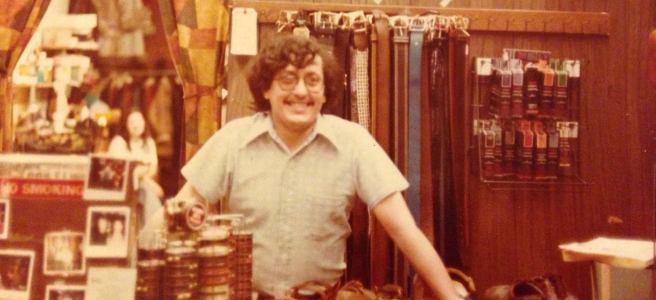
My father had shoulder-length black hair, and wore denim shirts, leather vests, flared pants, and leather zip-up boots. He smiled and laughed a lot, and was well-liked by his customers for his honesty and kindness. The Leather Shoe Shop stood among businesses, owned by 1st and 2nd generation immigrants like my father, places like Mario’s Pizza, Kaplan’s kosher deli, Haim’s barber shop, and the Gondola Restaurant, where food and services were traded for shoe repair, and deals were sealed with a handshake.

A set of wind chimes hung on the door to the shop, so my father always knew when a customer entered. He told me that was so he could worry less about shoplifters. When he sat in the workshop to take a bite of pizza, or toast dipped in coffee, or went to use the bathroom, the chimes went “brrrrring,” and he’d go running into the storefront. I tried to wait on customers for him, but I was a tomboy with ratty brown hair, and no adults took me seriously.

Mostly my brother and I hung out in the back, stamping wet hides with brass tools to make key chains and name plates. At the end of the night, my father took us to Sharkey’s Tavern where we ate fried clams or turkey on a stick, and drank Cokes to our hearts’ delight. Then, in our dingy apartment, my brother and I crawled into the bed we shared without bathing or brushing our teeth. In the morning, our father woke us up to do it all over again.

In those early days of the business, we were broke. We had a gas stove, and one month when my father couldn’t pay the bill, the company shut off the gas. My father called and told them he had two small kids at home, but they refused to turn it back on. So, he took a hibachi into our front yard, threw in some charcoal briquettes and started a small fire. Right there in the yard he put up a large sign that read, “Gas Strike.” My father cooked bacon and eggs on the hibachi. After a while, a rep from the gas company showed up in a work truck. “Take the sign down,” he said. My father told him to turn on the gas. The rep said, “No.” My father smiled and kept cooking. “Come on, buddy,” the rep said. “You can’t have that sign in the yard.” My father ignored him. By the end of the day, the gas company relented.

What I learned from my father was this: Family comes first. You work to support your family. Handshakes are as binding as legal documents. The written word can make change. Never be afraid to question authority.


One Way to Negotiate When You Lose a Dream

Dear readers: I have not fallen off the edge of the earth. I have been so busy at my day job, that I have not been able to work at what I love–creative writing. At least I can say I have a job in my field. But, I’d like to share why I work in marketing and communications instead of teaching, which was my dream.

When I received my MFA in creative writing 11 years ago, I was sure I would get a teaching job “just like that” mostly because I’d wanted to be a teacher since I was nine, and wasn’t that enough? I taught through my graduate programs, and took every teaching class that I could. And I was so passionate. I loved my students.

I did land a teaching job for a year, and I loved it. It was at a university, with 24 first-year students in English Composition and Rhetoric and Persuasive Writing. For one 17-week course, I designed the curriculum around gun control (pro or con) so the students could really delve into one issue. We watched Bowling for Columbine; they wrote annotated bibliographies; they presented their thesis statements before their classmates for critique; and we also watched Heathers.

One of my students vanished before the annotated bibs were due. “Missing Student” didn’t send me an email, she missed more than the allowed five classes, and I figured like so many others before her while I was a teaching assistant, she would simply fail. Let me interject: I hate to fail students. My heart is bigger than my red pen. When I first started teaching in 2000, I called students at home when they missed class. (Feel free to laugh.) By 2005, I’d learned that you can’t save every student, and you have to let them make their own decisions.

Fast forward to week 15. The rough draft of the term paper was due–an analysis of Bowling for Columbine in which each student took a stance for or against gun control and used scenes from the movie and other research as evidence. We were about to get started when in walked Missing Student. I shook my head and wanted to say, “I’m sorry. Why are you here?”

She asked to speak with me. She handed me a rough draft of her term paper: Stem Cell Research. Forget she’d missed the limit of classes, the annotated bib, and the thesis statement presentation. Missing Student started crying in front of the entire class, told me she’d been having a rough time and couldn’t I just let her come back. In 2000, I might have said yes. But in 2005, with the university policy hovering above my head, and my new convictions, I said no. And I gave her an F.

Weeks after the semester ended, my boss called me at home and said Missing Student’s mother phoned him, saying, “Why can’t my daughter receive a No Pass instead of an F?” My boss asked me to change the grade. I said no. I was following the university’s policy–any student with more than five absences and a zero in any other section of the course received an F. He said, “Come on.” I said, no.

The following fall, I walked into the bookstore to see what courses I was teaching. Zero. My knees buckled, and I almost started crying. I was told that “Enrollment was down.” But my peers from grad school still had their sections. And they also still teach at that same university now.

After working as a secretary for a year, I landed a job as a copy writer at another university. The pay was more than what I had been making as an adjunct, and I received full benefits. For nine years now, I’ve been working as a marketing and communications specialist. I write creative nonfiction and poetry in my spare time, and I’ve had a few teaching gigs at a community college. (Which I love!)

My father’s dream was to be an astronaut. But he had poor eyesight, asthma, allergies, and sought full custody of my brother and me after a bitter divorce. He apprenticed in shoe-repair and made a good living fixing shoes and crafting leather. Did he love it? No. But he smiled a lot, had a great sense of humor and was one hell of a good father. He’s often my inspiration to keep plugging along.
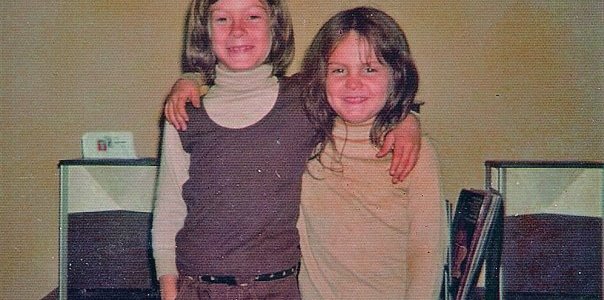
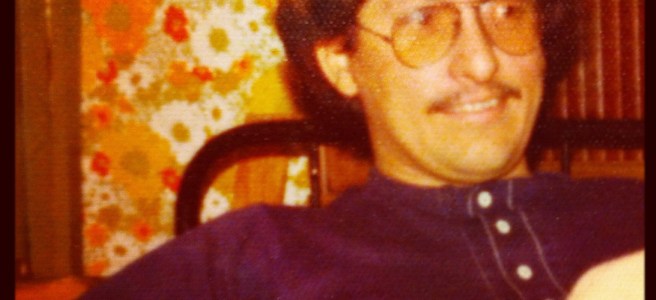
My Father Wondered Why I Was Precocious

My father was single, and he owned a shoe repair and leather crafting business when I was a girl. Besides the leather pants, vests and belts that filled the store, he sold water pipes, rolling papers and roach clips. As a five year old, I was surrounded by psychedelic posters, tie-dyed T-shirts and peace signs. And in the workshop, my father tacked Playboy calendars and posters of nude women on the walls.

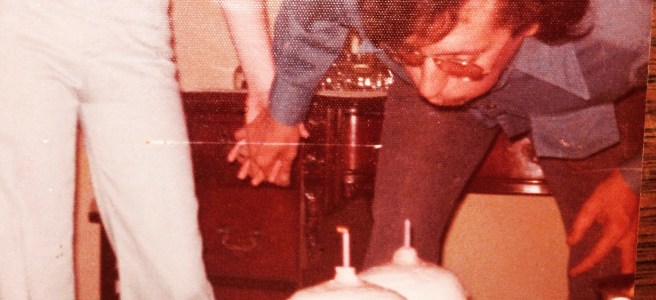
When my father turned 27, his very young girlfriend threw him a surprise party at our apartment. There were streamers, balloons and a cake made of breasts. I am grateful that photos exist from this party. I was too young to be invited, of course, and had been sent to bed. But when I look at the photos from the party, I see my father–his Tony Orlando hair, his denim work shirt, the thin beauty on his arm–personified.

I am happy my father was so young, 22, when I was born. Often he was more like an older brother than a father. He was patient and funny, and he wasn’t ashamed of anything. I asked tons of questions, which he always answered. When I asked questions about sex, he told me the truth–often with street slang. Anyone who wonders where I get my “to the point” method of communication can stop wondering. I am both grateful for this gift and have spent a lifetime trying to improve myself.

I miss my father. He was a great parent, mentor and friend.

My Kid’s Smarter Than Your Kid–Pondering Competition

My daughter Jessica was still crawling at 15 months. Because other toddlers I knew had already started taking their wobbly first steps, I called the pediatrician. He said, “If she doesn’t start walking by next month, bring her in. We’ll put braces on her legs.” Jessica started walking that week. And because I now know that she gets embarrassed over everything, I’m sure Jessica overheard the doctor and was afraid of looking like Forrest Gump.

In kindergarten, Jessica tested into a program called Enrichment–what some schools call “Gifted and Talented,” because she knew how to read. Jessica was not the type of student to push herself when she was bored, and I suspected this program would encourage that. I was feeling pretty good about myself and Jessica’s father–a meteorologist for the U.S. navy–that we had drawn the long straw. We had a smart kid.

When Jessica entered 4th grade, it was the first time I interacted with the parents of other “smart kids.” At the time, I was a 32-year-old grad student in English at the university in Bellingham, Washington. It was five p.m., and when I walked into the elementary school library for the parents’ meeting, Jessica holding one hand and my five-year-old daughter, Josie, the other, I felt like a kid. No other parents had brought their kids, and they all had gray hair and wrinkles. They were dressed in blazers and slacks. I was a grad student in a sweater and ripped jeans.

The atmosphere in the library bugged me–the sense of smugness in the air. Every couple sat with their noses held high, discussing the curriculum, talking about art programs their kids were involved in, or awards they’d received. They talked about math olympics, writing contests, music lessons, physics and future problem solvers of America. I kept quiet, thinking about how grateful I was simply to have Jessica in the program. These parents seemed to believe that their smart kids were a reflection of their own intelligence.

One of the reasons I was so pleased to see Jessica succeed academically was because I hadn’t. I wasn’t dumb, but education wasn’t valued in my childhood household. My father owned a shoe repair shop. He was funny, friendly and blessed with common sense. When I was in high school, my father told me: “Just get Cs, and I’ll be happy.” So I learned that I had to care about doing well for myself. I only put forth effort in the classes I liked: art, theatre and English. And I didn’t start college until I was 24.

Jessica quit the Gifted and Talented program in 7th grade–when it was no longer mandatory. I begged her to stay in. “I don’t want people to think I’m a geek,” she said. She wouldn’t believe me when I told her: “You can’t control what people think.” Within a year, her grades tanked. Boys and parties became much more important than solving America’s problems, writing poetry or competing in math. By this time, I had finished my graduate degree and was working as a writer. When Jessica failed freshman English, I figured she was rebelling against me.

My smart kid graduated from high school with a 1.67 GPA. Her father gave her his G.I. bill money so she could attend community college. She loved it, but failed out after a bad breakup during her third quarter. Jessica took a year off and is back in college, working part time as a waitress. Like a lot of us, she regrets not trying harder when she had the chance. She even says, “Mom, you should have pushed me harder. But when I was in those classes, I felt like the dumbest kid there.”

As a parent, you never know how well you are doing. At best, raising kids ebbs and flows as continuously as the tide. Jessica crawled for 15 months and I never worried until I noticed other kids “beating” her. Competition makes us crazy. A poetry teacher told me once: “Comparing yourself to others is deadly.” I say it’s also inevitable. Perhaps it keeps us ambitious. Aware. After all, competition made me call the doctor.

Ever wonder how I got my title The Cobbler’s Daughter?

The answer’s more involved than my father working as a shoe repair man. When I watched my father stand over the last, his face less than a foot from his work, he concentrated deeply. The shoes he fixed were perfect. He sewed leather with thick thread, pounded soles, buffed and polished.

This perfectionism carried over to me. It’s what got me in trouble in preschool when a kid stuck a felt eyebrow upside on the face we were making in class and I yelled, “He did it wrong.” The teacher put a finger to her lips and frowned in my direction. I was four–already an editor. As I came of age, I loved the exactitude of words spelled correctly, coloring inside the lines and memorizing nursery rhymes.

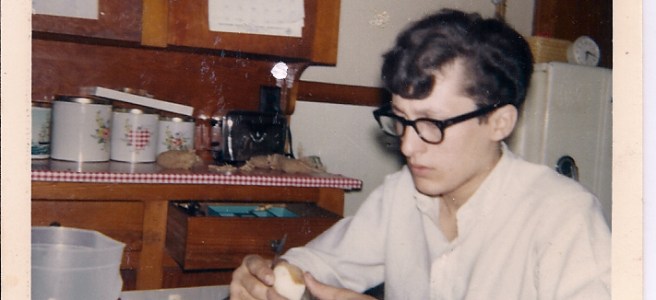
He toiled Monday through Saturday, 9 to 9 for the first several years he owned his business. And when I was five, I got my first job peeling boiled eggs at the Gondola Restaurant for three dollars a day. I am a cobbler’s daughter for my work ethic. I’ve been a door-to-door greeting card saleswoman, papergirl, babysitter, fast-food employee, lifeguard, diet aide, retail sales clerk, navy data technician, video store clerk, teacher, tech writer, the list goes on.

My father taught me “Work will see you through.” For this gift, I am most grateful.

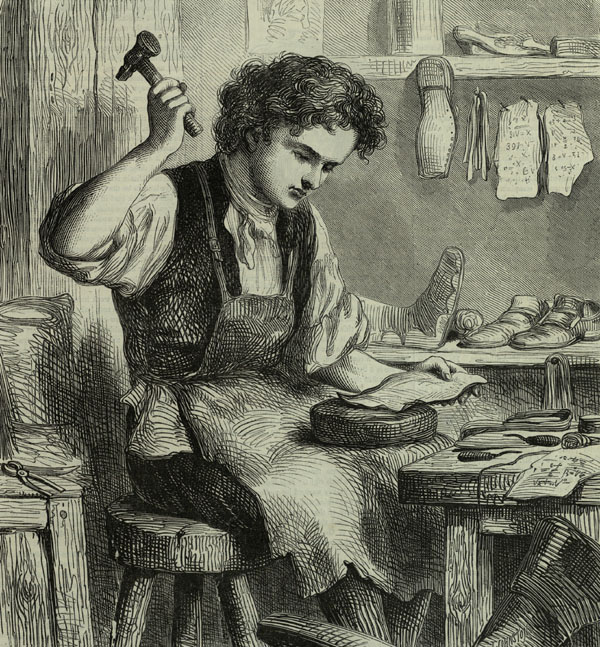
How a small boy became a great man, illustration

Sneak Peek Into My Work in Progress

HAZEL STREET – From Chapter One of the memoir The Cobbler’s Daughter

Click. I wake to the sound of the light switch. I sit up, look out the hallway windows and see it’s still dark.

“Come on, kids,” my father says, standing by our bed. His black hair is combed back from his face. “We’re going bowling.”

“What time is it?” my brother Tony asks, rubbing his eyes.

My father smiles. “What are you, a cop?”

Tony and I crawl out of bed. We pull on T-shirts and jeans. I don’t remember if we brush our teeth or wash our faces. I doubt we brush our hair.

We drive across town to Brandywine Bowl where a bunch of my father’s friends are already waiting. Inside the walls are cream-colored, the lanes are wood, and everything else is harvest gold. The carpet is a vast ocean of blue.

Before my father joins his friends, he hands Tony a wad of dollar bills and says “Go get something to eat.” We run to the snack shop. It’s like a dream: Wise potato chips, Slim Jims, City Chicken (Turkey on a Stick), French fries, Cokes. We even have enough left over for the pinball machine.

High on soda, Tony and I chase each other back and forth through the nearly empty building. If we bother my father, he throws us more money. We eat and play to our hearts’ delight. We stay until the Pepsi clock reads 1:00 a.m. My father hands back his shoes. Drops his ball in his bag and we leave.

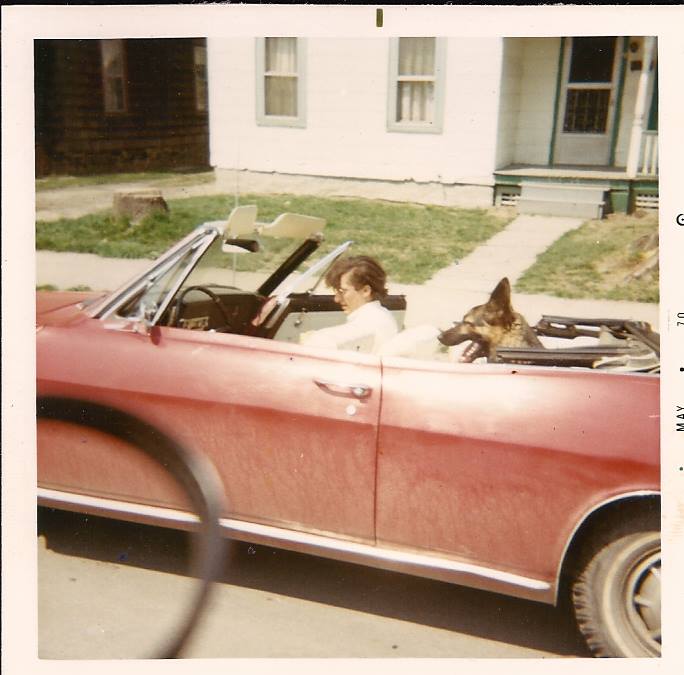
I squeeze in between him and Tony in the front seat of his 1965 red Chrysler Corvair convertible. My hair blows in the wind—free and loose.

995618_10152561361193187_3692029579514295638_n

Happy Anniversary–Suede: A Collection of Poetry

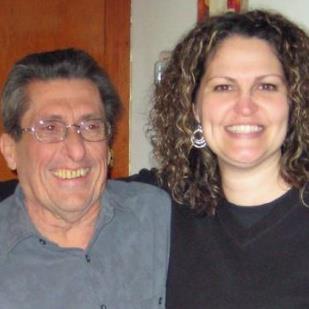
Nearly two years ago, my beloved father (and best friend) passed away from a severe lung infection. Had he not contracted TB from an employee in his early fifties, he might not be dead. This employee did not divulge her disease while she worked for him. He found out later. And my father’s TB stayed dormant for years. When it finally blew up, he almost died (but that’s another blog post). His entire life he’d battled asthma, and he used to joke, “These lungs are going to be the death of me.” It’s a shame that the careless act of an employee may have caused his death. Because of the scarring on his lungs caused by the TB, doctors said he could not survive the surgery needed to cure his lung infection. But I digress.

The book Suede: A Collection of Poetry is dedicated to my father because his death prompted me to dig out fifteen years’ worth of poems and finish the book. My older brother Tony, my father’s namesake, was killed in a motorcycle accident when I was eighteen. He is the subject of several poems. Loss has defined much of my life. And while many of the poems in Suede include loss, some talk about childhood, love, lust and sex, family, and some even discuss abuse. I write in simple, image-driven language, because that’s what I know. My father, with his high school education, read all my poetry and understood my poems. They are not lofty. I call myself a “blue-collar” poet. I published Suede for my father and my brother. Perhaps you or someone you know might like it. http://bit.ly/WE66YU

Birthday Poem–The Week My Father Was Dying

The Week My Father Was Dying

The week my father was dying, I fell in love with him—
again. When I was six, I’d proposed, scrawled
I love Daddy over the wood benches in the back
of his shoe repair shop, carved hearts into the
hard plastic of the sewing machine table. 

But the week my father was dying, shrunken frame
slouched in the fort of pillows and sheets on the giant
hospital bed in his living room, oxygen tank in the corner,
his black hair was combed straight, almond-shaped
eyes wide as a child’s, toothy smile yellow and straight.

I stood in the kitchen scooping chocolate ice cream
into a bowl, covered the mound in crushed pineapple.
I felt him staring, so looked over and waved. Up
to his neck in blankets, it took him forever to lift
his big old hand from beneath the fort to wave back. 

I have his hands, and feet. It’s enough to have his wiry
hair, scratchy voice, flat Italian nose, and stubborn streak—
but why the chimp-like hands and feet with every
toe the same size? I want to pluck them off with
the pincer pliers he used to rip the soles off shoes.

He once told me, “You couldn’t be more like me if you tried.”
I drink to excess, choose damaged lovers, live 3000 miles
away from family. But the week my father was dying, I sat
with him, said, Everything good about me came from you.

You’re my best friend, I said, and I love you.
Thank you, he said. Some kids don’t feel that way about their dads.
I laughed out loud, rested my arms around the declining
slopes of his shoulders. He felt so small.

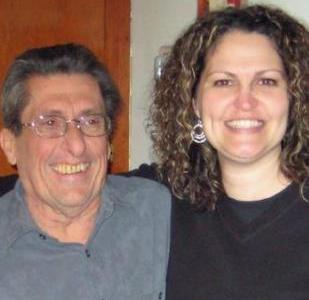
meandaddy

Moving My Blog to WordPress

Dad and two kids

Hello, friends:

For all of you who’ve stood by me since my blog Against All Odds, I am moving the Cobbler’s Daughter blog to WordPress. Stay tuned for more poetry, stories about the Leather Shoe Shop, my children, and whatever life hands me.

More to come!

Love you all.

Cindy

joevandal

← Back

Thank you for your response. ✨