Why I Say I Love You

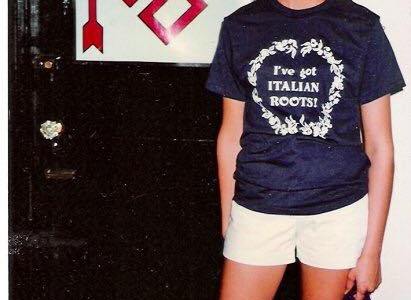
It was May of 1987. I was 18, and my brother Tony had just turned 21. We were hanging out with a few friends at my apartment. In my white stretch jeans and loose hanging sweatshirt, I stood in front of the small group telling them stories about my and Tony’s childhood in our father’s shoe repair shop. After 16 years, our father was preparing to retire and Tony was going to take over the family business. He said I could work at the shop with him.

 

inchwormDuring my make-shift stand-up routine, I talked about the time Tony and I got lost in the woods on a day-camp hike. We were both bawling and eventually found our way back because I remembered the InchWorm toy smiling in front of a run-off valve. I talked about the massive Easter egg hunts with our 12 cousins at our grandparents’ house. And, how we took scraps of leather, wet them under the tap, and stamped our names in the hide with brass tools.

I started to walk toward the kitchen to get another beer. In this particular apartment, you had to walk through the bedroom to get to the kitchen. Imagine! I hadn’t noticed my brother followed me. Tony had silky brown hair, bright green eyes, and freckles. He was wearing a brown leather jacket. “Hey,” he said, “you made me cry when you told those stories.”

I smiled. That made me so happy. Usually my main goal was to make him laugh, but if I moved him that much. Wow!

“You’re the most important woman in my life,” he said. “I love you.”

Gulp. I looked at my white leather elf boots. I felt so embarrassed. My brother had called me ugly the first nine years of my life. We used to fist fight in earnest during middle school. And, since he had been in the army for two years, we hadn’t been around each other that much. I barely eked out an “I love you too.”

“We are going to have so much fun working together in the shop,” he said. “We’ll be party buddies for the rest of our lives.”

* * *

Two days later, Tony and I had brunch at Friendly’s restaurant. We hung out for most of the day at his place, and then he drove me back to my apartment on his motorcycle. We had a couple beers and listened to Run DMC’s Raisin’ Hell. At around 8 p.m., Tony left on his motorcycle to go to the store. I fell asleep on the couch. Three hours later, I was awakened by the phone, and the soft voice of my uncle Joe saying, “Tony was killed on his motorcycle tonight.”

As you might imagine, my life was forever changed throught that experience. I went from being a carefree 18-year-old party girl to a full-on grieving woman. A woman who cried every time someone said the name Tony. A woman who threw up when she ate. A woman who jumped at the slightest noise. A woman who was certain the ghost of her dead brother would visit to tie up loose ends.

Why had I been so afraid to tell Tony I love you? He was my brother. My rock. My shield. The first boy I ever loved. And, he had invited me to work with him at our father’s shop!

So, today, if I love you, I tell you. Tony’s death was a precious lesson. He was 21. He would never grow old. That taught me how short life is. In 1987, I started to tell my family, my friends, and even acquaintances “I love you!” And you don’t even have to say it back.
59267313_10157113289398187_1808528200549007360_n

Can I Get a Witness?

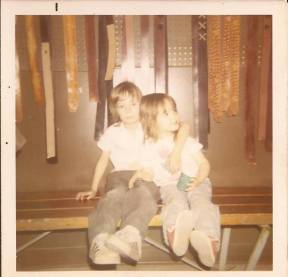
My older brother Tony turned 21 on May 1, 1987. He came to my apartment, and my roommate and I threw him a small party. We drank Michelobs, and I told stories about Tony and me from the old days when my father owned The Leather Shoe Shop.

One memory is of Tony and me, holding hands, watching a fight between our father and his girlfriend Cathy. She slaps Dad’s eyeglasses off his face. In another, Tony and I walk along the sidewalk at the Vestal Plaza amid a frighteningly loud thunderstorm. I’m bawling. Tony has his arm around me, and repeatedly pats my shoulder, saying, “It’s okay, Cindy.” And in another, I’m on my tricycle, and he nudges me down a steep hill. I remember nothing after the crash, but for a week, I had one hell of a shiner.

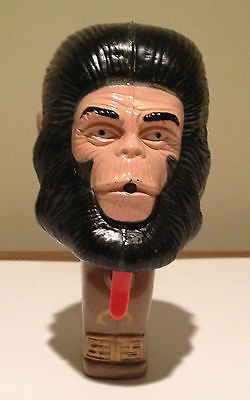
When I was four, Tony talked me into stealing a Planet of the Apes squirt gun from Grand Way department store. planet-apes-galen-water-gun-pistol_1_88852e60c2be6a48e133f52a290bfd7eOf course he didn’t say, “Steal.” He said, “Take.” We walked back to the shop where my father’s new girlfriend interrogated me and promptly dragged me back to the store to admit what I had done. The next time we visited Grand Way, Tony handed me a Magic 8 Ball, and said, “Slip this in your sleeve.” Without hesitating, I said, No.
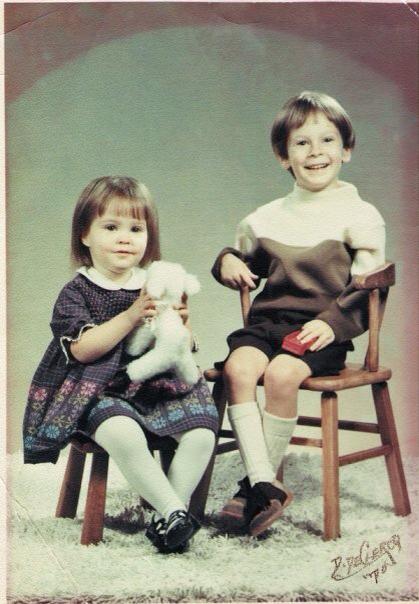
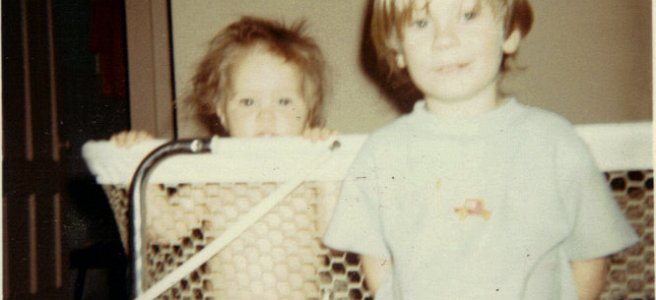
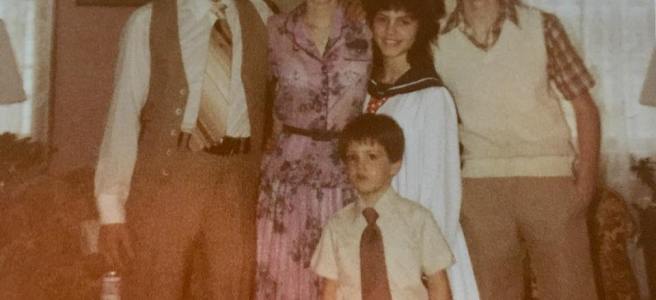
The stories made him laugh. Sometime during the party, he pulled me aside and said, “I love you. I’m looking forward to spending a lot of years hanging out together.”

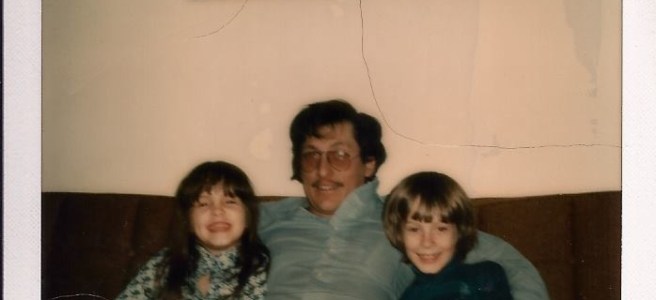
As kids, Tony was timid; I was hyper. When my father brought out the video camera, Tony hid and I danced around. When I complained to Tony about our stepmother’s abuse, he said, “Just keep quiet.” He never complained. Instead, he started smoking cigarettes and pot, and drinking at 12. When our stepmother slapped him, he stared her in the face and took her abuse. I screamed when she hit me, hoping the neighbors would hear and call the cops.

Tony and I rarely fought with each other, but when we did, it was about the dumbest things. I hid the remote so he couldn’t change the channel, and he punched me until I gave it back. I called him a “Buck-Toothed Beaver.” I punched him in the arm as hard as I could, and he stood motionless, then said, “Did a fly land on me?” But, if I wanted to send him into a rage, I sang “opera” at the top of my voice. I laughed so hard his punches were painless.

By the time Tony and I were in high school, there were no more fights. We became allies fighting against a common enemy. “If you don’t tell Dad you saw me smoking, I won’t tell him you were with a boy, and not at the movies.” Deal.

In 1983, after coming home drunk too many times, running away from home too many times, and getting kicked out of high school, Tony joined the army at the urging of my father and his wife. Tony earned his GED in the military and was relegated to being a cook. After two years, he was done. He moved to California, fell in love with an awesome young woman named Erika and came back to New York.

I was delighted. Tony planned to take over my father’s shoe-repair business, and he told me I could work there too. I could quit my job at McDonald’s and have a career. Tony and I were going to be together again! For the first time in years, our family spent Christmas together.

Two nights after Tony’s 21 birthday, my uncle Joe called and told me Tony was killed on his motorcycle. He’d been riding to the Great American grocery store on Main Street in Binghamton, our hometown, and was struck by a red Dodge Demon. Tony died instantly. My father and his wife were on an emergency flight back from Florida where they had been looking for a house.

Because I was 18, I had zero coping skills to manage my grief. All I could think was How could he do this to me? He was abandoning me. I would have to live without him and deal with my stepmother alone for the rest of my life. How would I get through this? I took a cab to my paternal grandparents’ house, so I could be with my family while we waited for everyone to get the news.

That night was a blur–falling asleep on my grandparents’ couch, crying, listening to the grief-stricken wails of my relatives, watching the EMTs fail at giving Tony CPR on the TV news. My father called from an airport and asked how I was feeling. All I could say was “What are we going to do?” He said, “It’s gonna be all right.” When he and his wife returned to Binghamton, I stayed at their house, and slept in the extra bed in my 11-year-old brother Jack’s room.

There was the wake, the funeral, and the burial. It was raining like hell that afternoon, and the cemetery was all mud. Beneath the sagging tent, my entire family gathered in folding chairs. I sat beside my father and held his hand. When they lowered Tony’s coffin into the ground, I started sobbing. He was my only witness to our abusive childhood. The truth about Dad’s wife and how she treated us was buried with him.10339581_10152373663143187_8140426827575809783_n

When I interact with people who have an acrimonious relationship with their sibling or siblings, I’m often surprised and sad. Tony was my best friend, and for 18 years I worshipped him. He’s been dead for almost 32 years, and I’d give anything for five more minutes with him. They say the strongest bonds are forged in fire. Our chaotic childhood bonded us for life. His impact on me was profound and lasting, and I still think about him every day.


On the Broken Family

My mother and father split up when I was six months old, so my experience with the broken family started early. My first memories include my father, my older brother Tony, and many members of my large extended family. We are Italian-Americans from upstate New York, and except for mafia ties, we live up to the copious stereotypes: loud, romantic, passionate, beautiful, dramatic.

In 1975, my father remarried. I was six and Tony was eight. It was a different time, and we were not invited to the wedding or reception. In fact, Tony stayed with a friend, and I stayed with a friend of my stepmother’s. And although I don’t remember the woman’s name, I do remember playing the piano, and incorporating “turd” into an impromptu song. She yelled, “Hey! We don’t use that kind of language in this house.”

Six months after the wedding, my father bought us a house on the west side of Binghamton. My stepmother was 19, Tony was 9, and I was 7. My baby brother was 9 months old. We were told he was a “preemie” — but he weighed six pounds, six ounces at birth. You do the math.

Tony and I started at a new school. Although I wasn’t sure how we were different from other families, I knew we were different. My father was a shoe-repair man who owned a cobbler shop. Instead of wearing a suit to work, he wore denim and leather. My stepmother was a stay-at-home mother who wore no bra beneath her T-shirts, had Farrah Fawcett hair, and marble blue eyes. One of the young men in our neighborhood asked her out.

Mine was not a peaceful childhood. There was a lot of fighting between my father and stepmother about Tony and me. She was intensely jealous of anyone stealing attention from her. She was a screamer. My father was slow to anger, but once he broke, look out. And while he was not quick with the belt, she was. Any small thing could set her off–pots and pans “shoved half-assed in the cupboards,” food splattered on the floor, a crass remark. And she hit in public.

Tony started running away from home at age 14. I hid in my bedroom with books, TeenBeat, and sketchpads. My younger brother was beaten so often that when I reached to touch him, he ducked. When my father was home, my stepmother never yelled or hit us, and spoke with a sickeningly sweet voice. When my father was gone, she was a ticking bomb ready to go off at the occurrence of spilt milk. To this day, when I meet a person who reminds me of my stepmother, my antennae lift in response. And I have a sincere distrust of people who bully children. A therapist I saw for a while told me, “You have strong feelers for a reason. Trust them.”

In 1998, my father divorced this wife, after two decades of her infidelity, fighting, and confession that she stuck around for the money. One day I asked him, “Why did you stay so long?” He shook his head. “Ah. When you and Tony were small, whenever I saw your messy hair and dirty faces, it broke my heart. I wanted you to have a mother.”

The decisions we make out of love, or what we think is love, are often ill-fated. Self-delusion has to be one of the most powerful tools of the mind. Think here of the spouse of the serial killer who says, “I never knew.”

My first pregnancy and marriage was at age 23. It took me less than two years to rip that apart and create what I loathed–a broken family–all because some guy said I was his true love. Luckily, my ex-husband Jeremy is not a grudge holder, and we are still friends. God bless that guy.

Something about turning 50 has made my brain go wonky. I keep having dreams about my two ex-husbands, and my late husband, and I spend a lot of time wishing I had done things differently. Perhaps made decisions based on logic instead of “love.” Regret, coulda, shoulda, woulda, etc. Because of childhood abuse, I have been in therapy most of my adult life, and I am still working through a lot of the muck.

The therapist I’m seeing now is helping me connect the pain of my current heartbreak over losing Eric and the chance to rebuild our family with the lingering issues from my childhood. It’s a scary process, however, I’m determined to reach a place of peace and happiness. It’s easier to run away–drink, have sex, ignore your kids, and pretend everything is great. But at this point, I’m way more interested in doing the hard work if that’s what it takes to become unbroken.


Secrets Cause Cancer

When I was 14, I told my younger brother that his mother was not my mother, and that we were half-siblings (we never have and still don’t use that term.) Within a day, I stood before my father, staring at my feet, listening to his diatribe about my stupid decision. He punctuated the lecture with a hand in the air, and said, “You gotta b–iiiii–g mouth!”

Even as I write these words, I’m not entirely sure why I told my brother the truth, and I still feel pangs of regret. However, if we look at the overall picture, how long would it have been before he figured the truth out himself? Our father was born in 1946. My stepmother was born in 1957. My older brother Tony was born in 1966. I was born in 1968. My stepmother moved in with my father, my older brother, and me in 1972. She was a 16-year-old sophomore at Binghamton Central High. And then, my younger brother was born in 1975.

The weird thing about getting yelled at for telling the truth is that my father detested being lied to. If he caught my older brother or me lying to him, the punishment was immediate and severe–my father had us open our hands, and he slapped them with his hand or a leather belt. In today’s “never harm a child” society, I realize this makes my father look bad. He hated lying.

There’s an episode of That 70’s Show when Red asks Eric to keep something to himself. Kitty, with her stiffly sprayed hair and infectious giggle, says, “Secrets cause cancer.” 276968f5a3b460c7c52492fbc73ad0d0--best-mom-kittyI believe wholeheartedly in this statement. My daughters, 26 and 22, and I, often recite this quote. And now, my 13-year-old son has come on board. One thing I love about my relationship with my kids is that we have very few secrets. There’s yelling and tears, and there’s hugging and laughs. So many laughs.

I have been criticized by people who practice more discretion with their children and families. My boundaries with my kids are as flimsy as boiled lasagna. I’m okay with that. And, I have a circle of true friends, a group whom I refer to as the “truth tellers” I can call on. There are too many to mention here, however, when I want the truth, I ask Andrea, Sandy, Aimee, Stacy, my daughters, and a few more. Someone once said, “Enemies stab you in the back. Friends stab you in the front.” I’m okay with that too.

Before I close, I have to give props to my father because he was the first person to insist I tell the truth. And, to be honest (hah!) he was one of the most honest people I knew. His honesty was hardly tactful, and he pissed off a lot of people. Then again, so have I. Not everyone likes to hear the truth. Phoebe from Friends once said, People will believe anything as long as it’s complimentary. I believe that is also true.


Unlucky in Love

My father was not the best at picking women. My biological mother who was “the most beautiful woman he had ever seen” became pregnant several months into their dating. They married, had my older brother, and fought all the time. I’ve heard both sides of the story and my interpretation is this: My father was a good-time Charlie, and my mother was a feminist. He liked the Doors; she liked the Beatles. Neither was flexible. She became pregnant with me to keep my father at home. When that didn’t work, she had an affair. He kicked her out of our house and our lives. (I didn’t meet her until I was 24, a story for another time.)

The woman my father should have married, a lovely artist named Angela, was brushed aside after my father met the woman who would become my stepmother for two decades. She was a bleach-blond hourglass and 10 years his junior. She quit high school, moved in and they got married. She cheated on my father during the first year of marriage, and though he stayed married to her, he later told me “I never forgave her.”

By age nine, I loathed my stepmother. That was the year I came to new awareness. She had borrowed five dollars from me and promised to pay it back. Days later, when we were at the store and I wanted to buy a toy, I asked for my money back. She said, “I took you to McDonald’s today. So, I figure I paid you back.” I stared at her in disbelief. What? Food is not cash. I want my goddamned money to buy a Magic Eight Ball.

Over the next 20 years, she cheated more, beat my brothers and me, called us names, picked my father’s pockets, and flew into rages for little more than a drop of food on her “nice clean floor.” And then, sometimes, during movies like Sound of Music, Oliver, and Terms of Endearment, she would sit on the couch, and weep like a little girl. She was a puzzle. In 1998, my father divorced my stepmother and when he called to tell me, I danced through my kitchen singing, “Happy days are here again.”

My father, bless his soul, had what one of his brother’s called, “Broken wing syndrome.” He liked to save the damsels in distress. Angela didn’t need saving. I am guessing my mother and stepmother did. Although you can see it as an altruistic method of operation, if you’ve ever tried to save someone, you know it just doesn’t work. If you’re lucky enough to find one person to love who supports you and you support them, hang on tight. When I shake the Magic Eight Ball and ask, “Will I find my prince?” It says, Ask again later.


The Nerd in Disguise

In the ’80s, when I was coming of age, MTV was everything–I loved the thrift-store fashions of Cyndi Lauper, the fluffy skirts, zip up boots, and torn stockings. She looked so cool. But I went to a catholic school where we had to follow a dress code: blouses, slacks and/or skirts (not too far above the knee), no stirrup pants, and dress shoes. The most rebellious I could get was popping my collar.

I had grown up as a tomboy, two years younger than my brother, and because we were not rich, my father dressed me in “Tony’s” hand-me-downs. Until I was about five, I believed I was a boy. My father let me walk around the house with no shirt on, Tony and I had fist-fights with kids on the playground, and I only wore pants.

My father remarried when I was six, and my stepmother introduced me to a hairbrush, ruffled panties, dresses, tights, and patent leather shoes. It was not a smooth transition. When she brushed my knotted hair, I wailed and she yelled. And when I hung upside down from a tree limb while wearing a dress, consequently showing my flowered underwear, she told me to get down.

Looking back, I realize my stepmother was a trend follower. She wore T-shirts with sayings on them, high-priced designer jeans, and used top-of-the-line makeup and hair products. She bought school clothes for my brother and me at the very uncool Sears store in the mall and sneakers from a place called Philadelphia Sales. Cheap!

Of course, in high school, I was desperate to fit in and begged my stepmother to buy me Izod polos, designer jeans, and elf boots. She took me to outlet malls where they had “slightly damaged” Izod clothing and I got my polos. I borrowed elf boots from my friend, and was grateful for being a cheerleader who got to look cool in my uniform on game days.

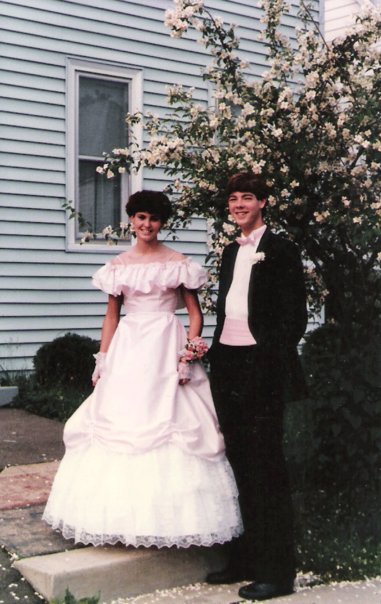
Luckily, my stepgrandmother bought me Forenza sweaters and wide wale corduroys from the Limited, and Gloria Vanderbilt designer jeans. And for my senior prom, my father gave me an unlimited price tag to buy any dress I wanted–a mauve Southern Belle dress and finger-less gloves.

10400218_46458813186_3064_n

One of the things I liked about 80s fashions were they were influenced by the late 50s and early 60s fashions–saddle shoes, penny loafers, poodle skirts and angora sweaters worn over a blouse with a Peter Pan collar. When the GoGos appeared on MTV with their short hair styles and blouses, my father thought they were a 50s band.

As a woman who will turn 50 this year (yay!) I wear what I like to call “classic” fashions. Collared blouses, slacks, and shoes that don’t go out of style. This is not necessarily to make a statement; I think it’s because growing up poor taught me to be thrifty. I want my clothes and shoes to last. I shop at Goodwill and second-hand stores. I visit Nordstrom Rack, not Nordstrom. And if I think a piece of clothing I buy won’t last at least a decade, I usually put it back on the rack.

Some people always seem to know which trends are coming. The messy bun, big sunglasses, eyelash extensions, yoga pants. If it weren’t for my grown daughters, I might never know what was “in style.” I work in a professional office, so I wear dress clothes, but I feel like a nerd in disguise. I’ll leave the trends to the people who have the time and energy to follow them.

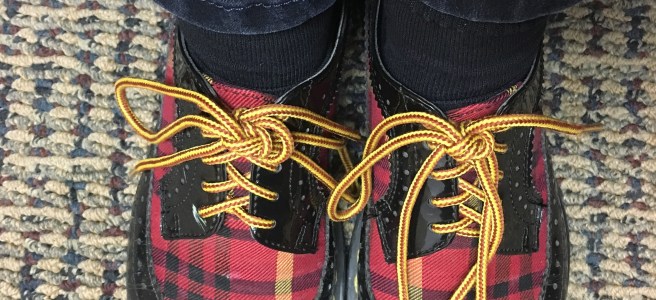
I’m deeply grateful that my father dressed me in boys’ clothes. I know I will never be a princess. Today I’m wearing a pair of Doc Marten saddle shoes I bought at a second-hand store for $35. I love telling people how inexpensive they were. I get many compliments on them. I once got a snide comment, but that woman and I hardly talk anymore.


The Truth Is Sometimes Painful

I grew up with a father who loathed dishonesty. I credit his Italian American pride, or perhaps growing up catholic, but nothing made my father angrier than learning he’d been lied to. He tended to be “brutally honest,” and the people who loved and admired him appreciated that. As his daughter, I feared his truth-telling when I was as a girl because I was extremely sensitive, but eventually I grew to admire the trait.

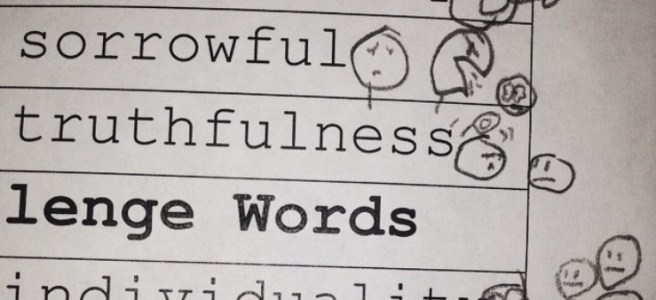
You have to be courageous, confident, and often live with regret when you are honest, because people rarely want to hear the truth. The image I’ve included in this post is a sketch from my son. In order to remember his spelling words, he sketched faces beside them expressing what he believed conveyed the word. When you look at the faces beside “truthfulness,” although one wears a halo, they both look anxious. Telling the truth is hard; hearing the truth is hard.

My father once told me, “You couldn’t be more like me if you tried.” Although I was sincerely flattered to hear that, I knew it meant I am also brutally honest, have a terrible poker face, and tend to alienate people because I struggle with being dishonest even in polite conversation when sometimes you should be. This is not to say I have never told a lie. I have. And some have caused irreparable damage in my life. It’s just that lying to people causes me great internal struggle, reddens my face, and fills me with crippling guilt.

Similar to most people, it’s also not easy for me to hear the truth. When people have told me I’m too analytical, sensitive, dramatic, or that I remember more negative details than positive, I stiffen with defensiveness. All of the preceding statements are true. I am also self-deprecating, affectionate, and loyal. The older I get the kinder I am to myself (and others), and I try to work with not against my human flaws.

One of my most irritating traits, I’m guessing because I’ve received a lot of flack for it, is my incurable need to discover the “why” behind just about everything. Why did my mother leave? Why did my stepmother beat me? Why do dishonest people seem to have more success than honest ones? Why did my brother get killed? Why did my husband die? Why do I have so much trouble sustaining a romantic relationship when others seem to just do it? Why are people mean? Why I did reject the man I believe is my true love?

On a positive note, once I process the Why in my head, through writing, art, or talking, I can usually let it go. In some cases, like with the death of my brother, I’ve had to make peace with not knowing why it happened. That has taken 30 years. I’m still struggling with the true love question. The other whys might be explained with psychology, self-help books, chats with friends, or talk therapy–of which I’m a huge advocate. But one important lesson I’ve learned is that in order to process these questions and heal, you have to be 100% truthful.

In the book, The Courage to Heal, which I highly recommend if you’ve suffered any personal trauma, the word courage is aptly used. It’s so much easier, and fun, to ignore our flawed humanness and not heal. For years, I was the party girl, loved getting drunk, being around people, being loud and obnoxious, all in an effort not to spend time alone and seek the truth within myself. I’d gone to therapy, but never engaged fully with the tenets. It took my loving someone other than myself to see how badly I needed help.

This person is still in my life, and because we’ve hurt each other, we have had to start rebuilding trust from the bottom up. Being honest takes courage, confidence, and working through regret to move forward when we hurt each other now. But, as you’ve probably heard or experienced, there is no greater reward than having an honest, open relationship with someone you love. And I want that.


Why Psychotherapy is like Kale

Psychotherapy is not easy, or fun. It’s good for me, even necessary, but I don’t love it. Psychotherapy is like kale: not nearly as tasty or enjoyable as homemade macaroni and cheese, or pizza, but sometimes, I have to force it down.

One of the biggest issues about not seeking help from a psychotherapist is that we rarely know why we display negative behaviors. Often, we react to stimuli based on a complex process of unresolved issues (or trauma) from childhood. Some behaviors are good, like holding a door for someone or not cheating on a test. But others include slamming the door in someone’s face, tearing up your husband’s baseball card when he stays out all night, or yelling at some unsuspecting cashier. Consistently negative behaviors harm us and can destroy relationships with people we love.

Before I turned 18, my birth mother ran out on us; my father remarried a physically and emotionally abusive woman; my step-uncle sexually abused me; my stepmother slept with one of my boyfriends; my older brother was killed in a motorcycle wreck; my younger brother was kicked out of every elementary school in our town; and I moved in with an abusive, cheating, drug-dealing boyfriend.

Phew. I realize there are millions of people who’ve suffered far worse tragedies than I did. I’m not searching for pity, only understanding, a willingness to see another perspective. A family member once said, “In my day, we didn’t go to therapy. We solved problems by ourselves.” Hmmm. This family member drank a six pack every night just so he could fall asleep. And he stayed in a marriage with a cheating spouse for 20 plus years.

At 21, I eloped with a man we’ll call Jon. This was one week after I admitted to my parents that I’d been sexually abused as a child. My father said, “You must have liked it because you never told us.” My stepmother said, “You’re just trying to cause problems.” Um, no. But before you hang these folks out to dry, I can assure you these are typical responses. (After my father divorced the nightmare, he spent the last 15  years of his life apologizing to me for the earlier response).

In the wake of Donald Trump’s accusers coming forward about his sexual misconduct, many people ask, “Why didn’t they come forward when it happened?” I echo comedian Seth Meyers’s response. For reasons that seem absurd, our society tends to blame the victims of sexual abuse. I was four when my uncle started abusing me and nine when I screamed, which sent him running from the room never to touch me again. If anyone says a four year old girl is asking for it, he or she should be flogged.

Often times, people who’ve been sexually abused as children become hyper sexual, engaging in risky behaviors like having unprotected sex with numerous people largely because their personal boundaries were destroyed. In addition, subconsciously, they’re scared of getting too close because others might get to know them and judge them for their “shameful” past.

For two decades, I moved guy to guy, always dumping a good one who loved me for someone who treated me like the piece of shit I thought I was. It was as if I were saying, “Don’t get close. I don’t want you to know the real me because I’m no good. I deserve to be with a piece of shit.” In recent years, science has offered new theories on addiction, drugs, sex, food, shopping, alcohol, saying it might have more to do with attachment disorder than genetics.

A theory is a theory, but it makes sense to me that someone who has lingering feelings of being discarded, neglected, and abandoned, might have serious problems with interpersonal relationships (lack of trust, PTSD, fear of authority). I have a solid circle of male and female friends, people I’ve known for years who love and support me. They appreciate my unfiltered speech, openness and honesty. But if you asked the men from my past what it was like to love me, you’d get another story.

After years of pushing good men away when they got too close, I ran out of luck. The man I shared a deep love and even deeper friendship with, the man I grew closer to than anyone in my life, drew a line in the sand. “If you don’t want me,” he said, “I’ll go.” It was the exact opposite of what I wanted and needed, but I was used to my past coping skills, so I let him go and moved on to the next guy. I also went into therapy.

In the year that followed, something happened. Through long discussions with a psychiatrist, talks with friends, and reading self-help books, I stopped. Instead of pointing my finger outward, I turned it on myself. I needed to excavate my painful childhood memories, unearth them, and examine them to set them free.

Over the past several months, I’ve been attending therapy once a week, including doing EMDR, which tastes like kale but is so good for me! Sometimes I break down bawling. Sometimes I just want to run. My therapist challenges me. I’ve processed one old memory and am working on a second. There are plenty more. But I feel more confident in my ability to move around in the world, to forgive myself and others, to recognize that the man I loved and lost did me a favor. He forced me to take stock of myself and see I am not my past, I can be better, but I need to do more work. It’s a long, long road, and at the end, I hope they have pizza.

On Marilyn Monroe and Childhood Sexual Abuse

Fifty four years ago today, Marilyn Monroe was found dead in her bedroom from an overdose of pills meant to treat her depression. (Her death was ruled a suicide, as you may know.) I remember the first time I saw an image of Marilyn Monroe: it was on the Child of the 50s comedy album by Robert Klein. At the time, I spent many afternoons in the bedroom with my step uncle “Reggie.” We’ll get to that in a minute.

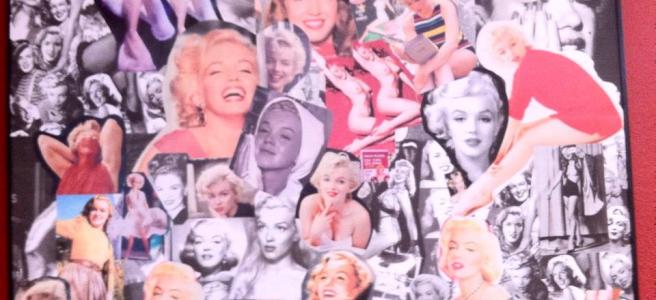
Reggie introduced me to Cheech and Chong, Robert Klein, Aerosmith, and Rush. During one afternoon while listening to Klein, I studied the album cover as he talked about putting a coin in a vending machine and getting a button with the now famous nude image of Marilyn Monroe. (If you look at my featured image, I’m talking about the two identical pictures just off center to the right in the collage.)

After I was made aware of Marilyn Monroe, I started to hear her name all the time and see images of her in cartoons, advertisements, magazines. There was even a pictorial of her in one of my father’s Playboys, which since I’m a child of the free-wheeling 70s, lay right on the coffee table in our living room.

I was struck dumb by the beauty Marilyn possessed. Sure, her hair was bleached and straightened, nose fixed, but even now, looking at the photos of her when she was simply Norma Jean, I found her breathtaking. My favorite film with her, Niagara, is worth a watch.

Fast forward to my early 20s. I had joined the navy after the death of my beloved older brother, left my hometown Binghamton, New York, and was lucky to get stationed at a weather center in Monterey, California. (Not far from Watsonville where Marilyn had once been named Miss Artichoke.) I visited Hollywood, saw Marilyn’s wax figure, and got the chills when I placed both hands in her hand-prints at Mann’s Chinese Theatre. I loved her.

I started reading books about Marilyn, biographies, anthologies, even an autobiography. She’d been abandoned by her birth mother, just like me. I’d never lived in an orphanage, but had a severely abusive stepmother. Marilyn was raped and sexually abused numerous times during her childhood. I’d never been raped, but Reggie started performing oral sex on me when I was four. His sister also molested me. The more I read about Marilyn and her problems with men, I started to wonder about myself–a woman terrified of commitment who eloped at 21 and dumped the guy three months later. In one book, Marilyn is said to have done the same thing in Mexico. (Some folks says it’s not true, but I believe it.)

Marilyn was unfaithful to every husband and lover. I’ve had many struggles with infidelity as well. The current psychology on childhood  sexual abuse tells us this type of behavior is not uncommon–the adult often tries to “work out” or repair what happened to them in the past, and that can lead to repeatedly looking for love in all the wrong places. A very smart writer I met once said, “A kid who’s been sexually abused is the world’s sex object.” The statement is both astute and heartbreaking.

If you’re lucky enough never to have endured sex abuse as a child, it might be difficult to have empathy for people who have. In my life this has been true. I’ve had family members say, “It was experimentation, get over it.” “That’s just an excuse because you were unfaithful.” One callous soul said, “You must have enjoyed it, because you never told your parents.”

Indulge me for a moment if you will. Imagine yourself at four. Or your child at four. (My uncle was 11 when he molested me. Chances are he was molested too, or at the very least exposed to inappropriate behavior.) Reggie bribed me with quarters so I would let him have his way in the bedroom. As I grew older, he gave me record albums or other presents. He said, “Don’t tell your Daddy because he’ll think you’re nasty.” Thank goodness, at age nine, I told him to stop. But the damage had been done.

Over the years, as I learned more about childhood abuse, I grew to feel empathy for Marilyn Monroe. She married for the first time at 16. Although marrying young was not uncommon at the time, I still see it as her getting the hell out of her current situation. In many of the books I’ve read about her, authors describe her as sexually frigid and a woman-child. When I hear “She slept her way to the top,” I prefer to see her not as a soulless woman using sex to get her way, but as a wounded child who believed the promises of men who offered her a better life.

Although I am in my late forties, I am still a hopeful child. Not long ago, I believed the promises of a man, even left my happy marriage. Now, I’m alone and missing my ex-husband and the amazing life we had. I’m grateful for the therapists I’ve had who’ve tried to help me heal from my past. I have a fabulous one now and we’re doing EMDR. It’s not over; and it’s not easy. Today, I wish to say, Rest in peace, Norma Jean. I’ll always be a fan. ❤


10 Signs You Were/Are a Middle Child

1. When pouring drinks for friends, you still kneel to get eye level with the glasses to be sure the liquid amount is even for fear of getting jabbed in the arm by your older brother.
2. You wore hand me downs until you hit puberty, and it no longer looked “okay” to wear your brother’s shirts.
3. When riding in cars with friends you still instinctively head for the back seat, because the oldest always gets the front.
4. In home movies from your childhood, you were always trying to get in front of the camera, only to be pushed out of the way by your father.
5. Your baby book is two pages long, while you confuse your siblings’ baby books with the King James’ bible.
6. You don’t have an entire wall (or room) dedicated to your accomplishments.
7. In adulthood, you try to outshine your siblings only to have your parents pat you on the head, and say, “Keep trying, honey.”
8. As a kid, you didn’t mind being called weird if it meant you stood out from the siblings.
9. If you played sports, you wore your brother’s old equipment even when the cleats were worn flat and the sneakers stank.
10. Your parents call you to brag about your siblings, but they never call the siblings, and often forget your name.