Writing About People Who Hurt Us

In 1997, I was a junior in Humanities at Lewis-Clark State College in Lewiston, Idaho. The journalism program was defunct, and since I had just become a 27-year-old widow with two young daughters, I switched to creative writing and enrolled in my first creative nonfiction class. I just wanted to learn how to write.

I wrote my first nonfiction piece when I was about five. It was a typed paragraph, and the paper I used ended up with a small coffee stain in the right corner. The text read something like, “I asked my father for money, but because we don’t have a lot, he said no. But at least I have a new mother, and I love her!!!!!” My father found and folded the letter, and hid it in his safe for years. In 1989, when I was in the navy, he sent me the letter with a sticky note that said, “I hope you still feel the same.”

At age 20, I did not feel the same. As a matter for fact, after my beloved older brother Tony was killed in a motorcycle accident in 1987, my father turned to his wife not me, to grieve. I blamed his wife for Tony’s death. She had been an abusive monster when we were growing up. My brother turned to drinking and drugs, I turned to men. The night my brother died, my grief trickled out into absolute hatred for my stepmother.

I mention the letter because it shows how long I’ve been in love with writing “the truth.” As I came of age, even when I wrote fiction, I used the first person “I” and described events from my actual life. Write what you know they say. As a teenager, I knew blackheads, bullying, and boys. If my stepmother had ever caught me writing negative things about her, she would have shown them to my father and I would have been punished. I was the “big mouth” who complained all the time.

When I was 13, a woman I babysat for gave me the memoir Mommie Dearest by Christina Crawford, actress Joan Crawford’s adopted daughter. My life was never the same. Mommie Dearest is an expose on child abuse. Christina’s biological mother had given her up (just as mine did) and she was being beaten, ridiculed, and shamed by her “new” mother. I had no idea that other kids suffered abuse. No one at school EVER talked about it, and when I told Tony our stepmother was mean,” he said, “Shut up. Dad doesn’t need to hear that shit.”

By the time I was in college, and had gone on to graduate school, writing my “truth” left some of my colleagues unsettled. “How can you write such nasty things about your family?” they asked. I wrote the truth, nasty or not. And since my father had divorced my stepmother in 1998 and she lived 3000 miles away, I felt somewhat safe. Writing about people who hurt us is no new debate. If you’ve read This Boy’s Life, The Liar’s Club, Hungry for the World, or Mommie Dearest, imagine the criticism those authors faced.

If anyone cares to know, writing nonfiction for me is telling the truth of my experience to the best of my memory. My father once paid me an enormous compliment after reading my work, and I keep that in mind when I write. He said, “I remember it differently, but those are your memories.” For a man with a high school education and shoe-repair man’s apprenticeship, I thought he sounded damned professorial.

And speaking of professors, my first writing teacher, who is also a dear friend and mentor, once said, “No one is all evil or all good. You have to show them as a rounded human being.” Believe it or not, rounding out my stepmother is not that difficult. Writing about my brother Tony, however, whom I worshipped until the day he died, that’s a whole other story. I was his patsy, his sidekick, Laurel to his Hardy. One day, I may sit down and write the truth of our story. But I’m still working on it —
 

Unlucky in Love

My father was not the best at picking women. My biological mother who was “the most beautiful woman he had ever seen” became pregnant several months into their dating. They married, had my older brother, and fought all the time. I’ve heard both sides of the story and my interpretation is this: My father was a good-time Charlie, and my mother was a feminist. He liked the Doors; she liked the Beatles. Neither was flexible. She became pregnant with me to keep my father at home. When that didn’t work, she had an affair. He kicked her out of our house and our lives. (I didn’t meet her until I was 24, a story for another time.)

The woman my father should have married, a lovely artist named Angela, was brushed aside after my father met the woman who would become my stepmother for two decades. She was a bleach-blond hourglass and 10 years his junior. She quit high school, moved in and they got married. She cheated on my father during the first year of marriage, and though he stayed married to her, he later told me “I never forgave her.”

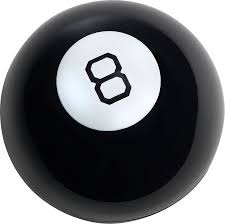
By age nine, I loathed my stepmother. That was the year I came to new awareness. She had borrowed five dollars from me and promised to pay it back. Days later, when we were at the store and I wanted to buy a toy, I asked for my money back. She said, “I took you to McDonald’s today. So, I figure I paid you back.” I stared at her in disbelief. What? Food is not cash. I want my goddamned money to buy a Magic Eight Ball.

Over the next 20 years, she cheated more, beat my brothers and me, called us names, picked my father’s pockets, and flew into rages for little more than a drop of food on her “nice clean floor.” And then, sometimes, during movies like Sound of Music, Oliver, and Terms of Endearment, she would sit on the couch, and weep like a little girl. She was a puzzle. In 1998, my father divorced my stepmother and when he called to tell me, I danced through my kitchen singing, “Happy days are here again.”

My father, bless his soul, had what one of his brother’s called, “Broken wing syndrome.” He liked to save the damsels in distress. Angela didn’t need saving. I am guessing my mother and stepmother did. Although you can see it as an altruistic method of operation, if you’ve ever tried to save someone, you know it just doesn’t work. If you’re lucky enough to find one person to love who supports you and you support them, hang on tight. When I shake the Magic Eight Ball and ask, “Will I find my prince?” It says, Ask again later.


Where Are You, Gen Xers?

My current job, working as the Senior Writer/Editor for a foundation at a land-grant university, involves sharing stories, Tweets, photos, and more on various social media. Most recently, on #GivingTuesday, I was checking out articles on LinkedIn, one of which mentioned “how to get Millennials to donate.” Since two of my children are Millennials in their early 20s, and I volunteer for another local foundation, I clicked on the link.

About 2/3 of the way into the article, I came across a paragraph that compared Millennial philanthropic trends with Baby Boomer trends. I kept reading, waiting to see how Gen Xers felt about philanthropy. Guess what? There was no mention of Gen Xers in the entire article. Zip. Zero. Zilch. So, I became curious. And like a Millennial, I went to Google and typed in Generation X.

Suddenly, a whole new world opened to me. I was born in 1968 and have always considered myself a Gen Xer. With a brother born in ’66 and one in ’75, I’m also the middle child. Coincidentally, Gen Xers are called the Neglected Middle Child, mostly because there are 70 million plus Boomers and 70 million plus Millennials, and there are only 50 million plus Gen Xers. Why the discrepancy? Well, lucky for us, even though the hippies were having a lot of sex, in the early 70s, birth control and legalized abortion helped them have fewer children.

After visiting a few more websites, I found conflicting information regarding the specific dates that designated a person as a Gen Xer. My theory holds at this: Gen Xers were born in between the early 60s and the early 80s. And, similar to astrology, if your birthdate straddles those years, you are said to be on the cusp, or a cusper. So, my uncle John, for instance, who was born in 1965, probably has Boomer and Gen Xer traits.

When I think about my being a Gen Xer, I think about being a child of divorced Boomer parents who needed to “find themselves,” walking everywhere by myself, and being raised on or by television. I often joke that my father (a single parent until I was six) used the TV as a babysitter. Through my research, I discovered I wasn’t alone. Many, if not most, Gen Xers were left home alone with little more than the TV and their siblings to keep them company. It’s probably why we love pop culture!

On a positive note, Gen Xers are independent, resilient, hard-working, and have a sardonic wit. I remember bristling, years ago, when I heard us called the “Slacker Generation.” WTF? When I was 12 I got a paper route. And from that moment on, my father gave me no more spending money. So then I worked as a babysitter. Then as a lifeguard. McDonald’s manager. Nursing home diet aid. Retail sales. Bakery cashier. Then, when I was 20, I joined the navy to get the G.I. Bill because my father wouldn’t help me pay for college.

I’m happy to report we are the generation responsible for creating Hip Hop and paving the way for ethnic diversity. When I think of my childhood, I think of Sesame Street, Captain Kangaroo, and the Electric Company, which we watched in second grade as part of our curriculum. Also, with my father, I watched shows like Good Times, What’s Happening, Laugh In, and the Sonny and Cher Show.

On a negative note, Gen Xers, because we were almost always left alone, referred to as the “latchkey” kids, and were often physically and sexually abused, have become the “most devoted parents in American history.” Some folks call us “helicopter parents.” Guilty as charged. Both of my adult daughters failed out of college, although they grew up watching me bust my butt to earn a BA, an MA, and an MFA, all in writing. I did that without parental support. My daughters have oodles of support. Have I killed their ability to stand on their own?

Anyway: this post is a plea. If you’re a Gen Xer, I want to hear from you! After all, peers are more important to us than parents. I plan to continue my research. If you want to share a story with me, please email me at cindyjoy68@gmail.com.

The Deep End of the Pool

When talking to people, I’m not interested in staying in the shallow end of the pool. Blame it on the writer in me, but I am intensely curious–fascinated–by other people’s lives. I also am happy to share experiences from my own life as a way to connect with others. From time to time, however, I have found that sharing my experiences, especially the less than pleasant ones, leaves people feeling uncomfortable and not knowing quite what to say. Recently, I was reminded of some phrases that get under my skin.

1.”I must be lucky because…” As in, I am not in the crappy personal situation that you confided in me, which sounds way worse than my own, which I might even be hiding from you because I don’t want to be judged, so instead I’ll say how blessed I am and not share anything.

If you’re a parent, you probably recognize number one. You can’t sit near other parents without hearing about how unique, amazing and intelligent their kids are. And if you say, “Wow, I wish Janie got along better with her kindergarten teacher,” or “Thomas hasn’t been bringing home his homework,” more than likely you’ll get, “I must be lucky because Arthur and Amy love all their teachers and have straight As.” Back to the shallow end

2.”You must be really strong…” As in, I could never survive if I lost my brother, or husband, or father. I would just kill myself. Gosh. How do you even wake up every day and laugh and smile?

Losing a loved one is not a choice. Telling someone, “I would kill myself,” is insulting at best. Don’t say it. Just hug your friend. Ask them if there’s anything you can do. And please, please, don’t say, “I must be lucky. I have never lost anyone close to me.”

3.”I don’t know how you do it…” As in, I could never be a single parent. My husband is wonderful, and I just couldn’t get by without him.

This is a kiss through a veil, a back-handed compliment. It’s as though the person making the comment is waving their Happily Married banner right in my face. And, just to be clear: my ex-husband and I share custody of our son, and just like a couple who are still together, we talk, negotiate and sometimes argue. We live five-minutes from each other. We attend basketball games and parent conferences together. And when things get tense between us (since our divorce was less than friendly) we call a time-out and discuss things in private. We may be single-parents, but we collaborate as a unit, because we can. We have a choice.

I think kindness goes a long way. And if you don’t know what to say to someone who makes you uncomfortable, why not admit it?


What I Learned From My Hippie/Business Owner Father

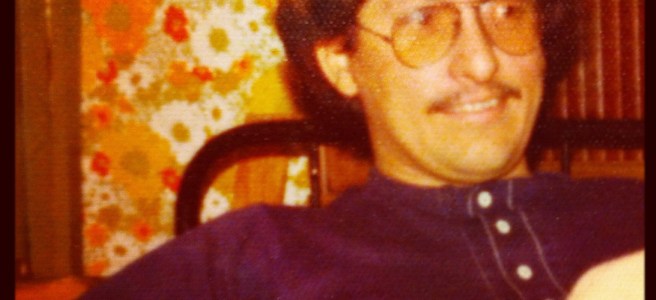
My father was 22 when I was born. Soon after he opened The Leather Shoe Shop, a shoe and leather repair store in a plaza in upstate New York. My older brother Tony and I went to work with my father Monday through Saturday nine to nine. My mother had left us, and my father sought full custody. (Tony Danza has nothing on this guy.)

My father had shoulder-length black hair, and wore denim shirts, leather vests, flared pants, and leather zip-up boots. He smiled and laughed a lot, and was well-liked by his customers for his honesty and kindness. The Leather Shoe Shop stood among businesses, owned by 1st and 2nd generation immigrants like my father, places like Mario’s Pizza, Kaplan’s kosher deli, Haim’s barber shop, and the Gondola Restaurant, where food and services were traded for shoe repair, and deals were sealed with a handshake.

A set of wind chimes hung on the door to the shop, so my father always knew when a customer entered. He told me that was so he could worry less about shoplifters. When he sat in the workshop to take a bite of pizza, or toast dipped in coffee, or went to use the bathroom, the chimes went “brrrrring,” and he’d go running into the storefront. I tried to wait on customers for him, but I was a tomboy with ratty brown hair, and no adults took me seriously.

Mostly my brother and I hung out in the back, stamping wet hides with brass tools to make key chains and name plates. At the end of the night, my father took us to Sharkey’s Tavern where we ate fried clams or turkey on a stick, and drank Cokes to our hearts’ delight. Then, in our dingy apartment, my brother and I crawled into the bed we shared without bathing or brushing our teeth. In the morning, our father woke us up to do it all over again.

In those early days of the business, we were broke. We had a gas stove, and one month when my father couldn’t pay the bill, the company shut off the gas. My father called and told them he had two small kids at home, but they refused to turn it back on. So, he took a hibachi into our front yard, threw in some charcoal briquettes and started a small fire. Right there in the yard he put up a large sign that read, “Gas Strike.” My father cooked bacon and eggs on the hibachi. After a while, a rep from the gas company showed up in a work truck. “Take the sign down,” he said. My father told him to turn on the gas. The rep said, “No.” My father smiled and kept cooking. “Come on, buddy,” the rep said. “You can’t have that sign in the yard.” My father ignored him. By the end of the day, the gas company relented.

What I learned from my father was this: Family comes first. You work to support your family. Handshakes are as binding as legal documents. The written word can make change. Never be afraid to question authority.


Which Writer Are You?

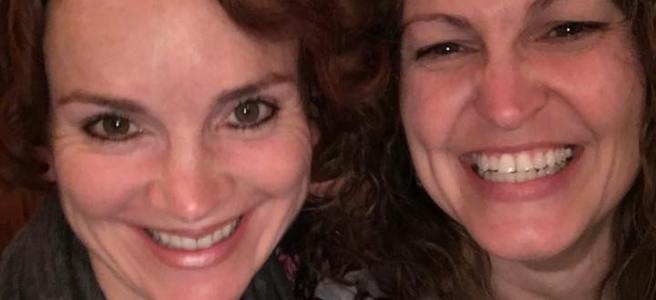
Recently, I attended the Centrum Writing Workshop in Port Townsend, Washington. Two of my good friends and former graduate school colleagues were also there for the weekend. The three of us shared a cabin, stories, tons of wine, and we laughed so much my stomach hurt Monday morning.

Kami and I were in the same M.A. program at Western Washington University in Bellingham. She writes fiction and poetry, and we are soul sisters. Jordan, who writes poetry, and I were in the same M.F.A. program at University of Idaho, and we know the show Friends line for line and confounded everyone by speaking in quotes from Chandler and Phoebe instead of our own voices.

After spending time reminiscing with my friends, I kept thinking about all the writers we’ve interacted with in our programs and over the years. I threw together this list. It’s all in fun, and I encourage you to add to the list.

The Starstruck Stalker– this writer has met 100 famous writers and can’t wait to tell you when and where. He or she has copious signed books and experiences galore from conferences, dinners, readings and workshops that they will be happy to share regardless of your disinterest. This writer may or may not have one iota of talent.

The Cliche– this writer fulfills the stereotype of a writer as a hot mess. He or she drinks or drugs to excess, is melodramatic, destroys their personal and professional relationships, all the while publishing brilliant works. Everyone puts up with their bullshit because of their genius.

The Trickster– this writer creates obtuse, abstract pieces of work that only he or she understands. And then, when other writers (often in the workshop setting) offer useful feedback, the Trickster says, “Oh. You weren’t supposed to get that. I wanted to trick you.” That’s when this writer says, “Good for you, Trickster. Now go find another workshop.” You suck.

The Enigma– this writer creates interesting and odd pieces that you would never think to write yourself. He or she is flippant, couldn’t care less if their work gets published and so it gets published all the time! You sit at home tearing your hair out wondering why you have a stack of rejection letters lining your bird cage and the Enigma calls and says, “The New Yorker accepted my short story!” You say, “Oh my gosh, congratulations.” And then you turn on the gas stove and stick your head inside.

The Humble Pie Writer– this writer does not call himself or herself a writer. If they teach, they call themselves a teacher. If they work as a postal clerk, they call themselves a clerk. He or she may have a handful or a boatload of publications, even a book or 10, but they don’t buy into the bullshit that comes with being a “Writer.” They love writing, they love words, they love the creative process. They dislike going to high-profile writing events where they might be ignored by self-important writers who look behind them to find someone “more famous” to speak with. These writers are usually talented but down to earth, and love to talk to budding writers.

I know which writer I am. But I will never tell.

Happy Halloween with a Throwback Photo

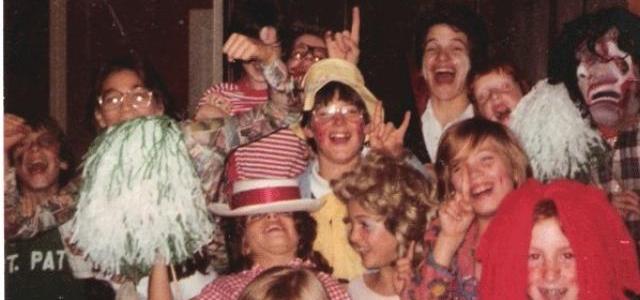
I will return with a blog post with real words after I return from my writing workshop in Port Townsend next week. But until then, enjoy this photo from my fifth grade Halloween Party with a bunch of really cool people. Dan Mollen, Bob Ferber, Sandy Wagner, Amy Coutant, Eve Wolyczyn, Ann O’Rourke, Diane Stetz, Paul Mahoney, Mark Coleman and me.

If I Had More Time I Might Be a Plumber

What compels the non writer to approach the writer and say things like “I’d write a book, too, if I had more time”? or “I should be a writer, but I don’t have the time.” What a flippant statement. It’s as though all writers work at dream jobs where they make oodles of money for dreaming.

When the plumber visits my home and lies on his back beneath my sink with tools I barely recognize, and twists pipes, pulls out hoses and gets dirty, I don’t say, “I would do that myself, but I’m too busy.”

A good friend of mine was taking a creating writing course as part of his political degree. He’s actually a great writer, especially memoir. He asked me to proofread and edit his personal essay. I was pleasantly envious of his piece called “Redwood Paddle.” He asked, “Why would you ever choose this as your career? It’s so hard.” I laughed, and said, “I didn’t. It chose me.”

Recently, a man I met kept inviting to his house. I said No repeatedly because I’m trying to finish my childhood memoir for a book contest. I told him, Writing is a matter of life and death for me. He said, “I wouldn’t say it’s a matter of life of death for me. I do it for work.” I wanted to say, “No shit.”

Writing is not a matter of life and death for the non writer. I don’t mean to sound snarky or elitist. But whatever your passion, whatever you do to get you through this thing called life–whether it be painting, farming, working with kids, quilting, cooking, social work, nursing, gardening, leather crafting, bead work, etc., Only you understand that love, that drive, that devotion, that calling, and why you desperately need to do it. I’ve been a writer since I was able to put letters on paper. Often I wish I was a plumber. But I just don’t have the time.

What’s More Important Than to Love and Be Loved?

My ex-husband Eric and I met 17 years ago at an airport bar in Lewiston, Idaho. He was the cutest man I had ever seen in my life. He asked me to dance to “Summer Lovin'” from Grease, and I said “No,” three times before I finally gave in. While we danced he kept smiling, wide and earnest, with a gap between his front teeth. Later he told me he kept falling out of his flip-flops.
While we chatted later that evening, we learned that I was 29 and Eric was 19. His fake I.D. said his name was Steve Williams (AKA Stone Cold Steve Austin) and his address was 316 Austin Street in Clarkston, Washington. Even though we kissed, and I saw skyrockets, I refused to give Eric my phone number or let him take me home, because I was sure he was going to be some immature “dude” who would use me, toss me aside and break my heart.
Long story short for the sake of the blog, I called Eric ten days later because I couldn’t stop thinking about that smile. We started dating, fell in love and got married in 2001. I already had two daughters from two previous marriages–one ended in divorce, and the other in widowhood.
After seven years together, Eric and I had a son. I can say without hesitation Eric was born to be a “Dad.” He was a pretty good husband, too, although my being an extreme extrovert and his being an extreme introvert may have helped lead to our demise, along with my fear of getting too close to anyone.
We have been divorced for three years, and I still think he’s the only guy for me. The older I get, the more I learn, is there anything better in the world than L-O-V-E?

Finding a Mother’s Day Card

Every May I sift through the glut of greeting cards
with their glowing notes: Thank you for raising me,
You’ve always been there, and To my best friend.
I look for the one that says, Enjoy your day,
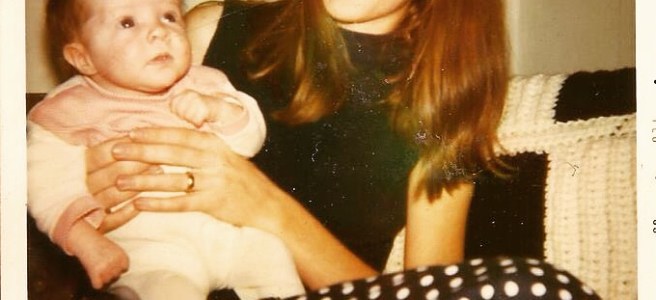
because Carla, as my mother signs letters to me,
was never a Mom. She and my father split up
when I was a baby, and Dad told her never to come back.
She went away to college, traveled the world,
let another woman feed me, bathe me, beat me
with leather belts. I see her in a black turtleneck and
blue jeans, svelte, five-ten, hair to her waist, bright green eyes,
cheek bones that could slice paper. She sips Scotch,
smokes Marlboro Reds, poses for art students, sketches
self-portraits. At 40, she walks down the aisle, again,
settles into a new life in New England, spends her days
in an art studio piecing magazine clippings into collage art,
teaching millionaires’ wives how to paint. We met once
in my hometown, hugged like strangers, dined on prime rib,
returned to our separate lives of sending letters
about the weather. Some friends say I owe her judgment,
others, respect. As every new spring brings
its buckets of rain, I wonder what we owe each other.