Yankee Swap Not for Everyone

Fifteen years ago at a family Christmas party, I played my first game of Yankee Swap, AKA, Dirty Santa, the White Elephant gift exchange, etc. You know, the game where you bring a gift already wrapped, pick a number, open a present and get your present stolen. This game has become a staple at holiday parties, and I’ll be darned if I can figure out how it embodies any type of holiday, generosity or giving spirit.

You may say, “Oh, it’s all in good fun,” or “Have a sense of humor,” but every time I’ve been to one of these parties, I’ve witnessed hurt feelings, under the breath comments, or out-right yelling. Now, that might be a regular ordeal at some holiday dinners with family, but family is crazy. We all know you can’t choose your relatives. But you can choose whether or not you wish to be involved in a game at Christmas time where you steal presents.

At my first Yankee Swap, I received an adorable Mikasa candy dish etched with snowmen. I was delighted, and I had no idea how the game worked. No poker face. My boyfriend’s mother “Lola” planned to steal my gift. When she reached for it, I held it tight and said, “Please don’t take this. I have so few nice things.” Lola laughed and made a remark about how she knew where my daughters got their whining from. Lola let me keep the Mikasa candy dish. I still have it, and I use it every Thanksgiving and Christmas to hold olives. I always think of Lola and her remark when I place the dish on my dinner table.

I married into a family where my sister-in-law, “Margie,” loved Yankee Swap, organized every Christmas gift exchange, with a $50 limit and a strict rule: no gag gifts. My last Yankee Swap with the family was a doozie. Of course, Margie ended up with number 1, which meant she got to inspect all the gifts at the end of the game and steal whichever one she wanted. I had received a beautiful wrought iron wall hanging. Margie stole it, which coincidentally meant I ended up with the gift I had brought. When I said that out loud, she leapt up in front of the crowded room and yelled, “I’m so tired of this bullshit!” She ran over to her husband and insisted he take her home. He refused. At the end of the long silent night, I left without the wall hanging. After the new year, when my husband’s grandmother called me to come get the wall hanging, I donated it to a silent auction for charity. That was last time I participated in Margie’s Magical Christmas gift exchange.

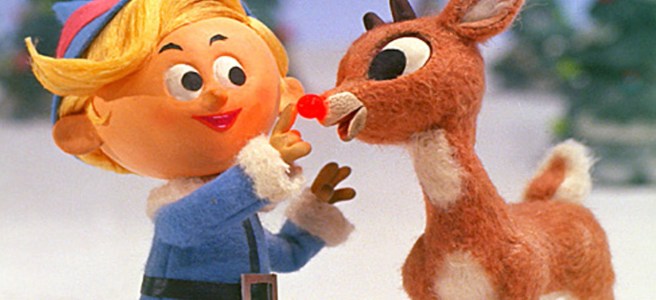
At my last Yankee Swap, there was a $20 max for the gifts. I brought a Rudolph the Red-Nosed Reindeer set of figurines: Hermie, the Bumble, even Cornelius, from the perennial show. The person who received it kept waving it in the air, saying, “Someone steal this, please.” I should have. One person brought in a bag full of used books that stunk like mildew. Every gift I received–wine, gift certificates, pewter trivet–was stolen. I tried desperately not to get attached. Incidentally, my best friend stole the trivet. All is fair during the war on Christmas I guess. Another friend asked me if I was the person who brought the hookah. Wow, I thought, what am I putting out there? I left the party with a note pad and water bottle.

When I looked up who invented Yankee Swap, I couldn’t find a particular person. But the rules emphasized that the game was light-hearted, just for fun, and whimsical. Isn’t stealing a bit greedy and mean-spirited? I see nothing wrong with the boring old Secret Santa, or making someone a gift just for them, or sending them a card that says I love you. But then again, I spend most of my money on books, vintage clothing and dog treats.
Which Writer Are You?

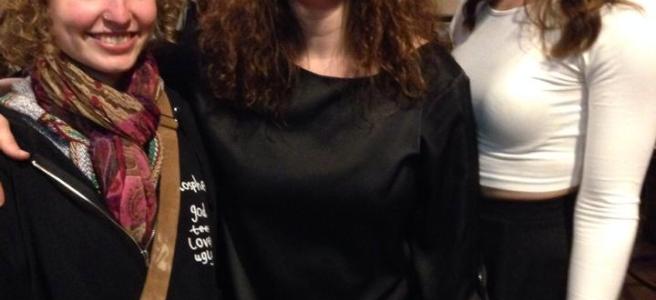
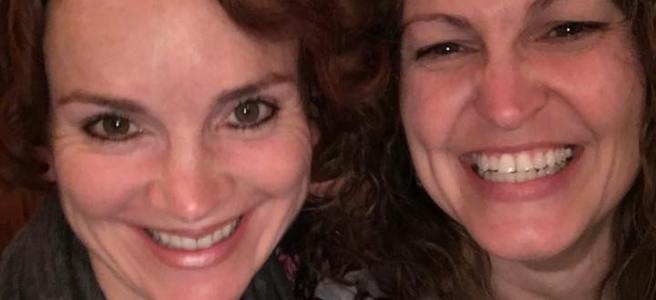
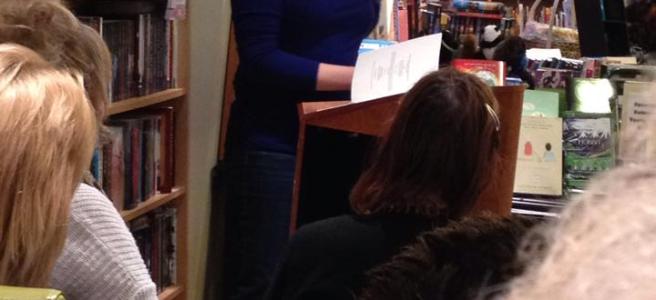
Recently, I attended the Centrum Writing Workshop in Port Townsend, Washington. Two of my good friends and former graduate school colleagues were also there for the weekend. The three of us shared a cabin, stories, tons of wine, and we laughed so much my stomach hurt Monday morning.

Kami and I were in the same M.A. program at Western Washington University in Bellingham. She writes fiction and poetry, and we are soul sisters. Jordan, who writes poetry, and I were in the same M.F.A. program at University of Idaho, and we know the show Friends line for line and confounded everyone by speaking in quotes from Chandler and Phoebe instead of our own voices.

After spending time reminiscing with my friends, I kept thinking about all the writers we’ve interacted with in our programs and over the years. I threw together this list. It’s all in fun, and I encourage you to add to the list.

The Starstruck Stalker– this writer has met 100 famous writers and can’t wait to tell you when and where. He or she has copious signed books and experiences galore from conferences, dinners, readings and workshops that they will be happy to share regardless of your disinterest. This writer may or may not have one iota of talent.

The Cliche– this writer fulfills the stereotype of a writer as a hot mess. He or she drinks or drugs to excess, is melodramatic, destroys their personal and professional relationships, all the while publishing brilliant works. Everyone puts up with their bullshit because of their genius.

The Trickster– this writer creates obtuse, abstract pieces of work that only he or she understands. And then, when other writers (often in the workshop setting) offer useful feedback, the Trickster says, “Oh. You weren’t supposed to get that. I wanted to trick you.” That’s when this writer says, “Good for you, Trickster. Now go find another workshop.” You suck.

The Enigma– this writer creates interesting and odd pieces that you would never think to write yourself. He or she is flippant, couldn’t care less if their work gets published and so it gets published all the time! You sit at home tearing your hair out wondering why you have a stack of rejection letters lining your bird cage and the Enigma calls and says, “The New Yorker accepted my short story!” You say, “Oh my gosh, congratulations.” And then you turn on the gas stove and stick your head inside.

The Humble Pie Writer– this writer does not call himself or herself a writer. If they teach, they call themselves a teacher. If they work as a postal clerk, they call themselves a clerk. He or she may have a handful or a boatload of publications, even a book or 10, but they don’t buy into the bullshit that comes with being a “Writer.” They love writing, they love words, they love the creative process. They dislike going to high-profile writing events where they might be ignored by self-important writers who look behind them to find someone “more famous” to speak with. These writers are usually talented but down to earth, and love to talk to budding writers.

I know which writer I am. But I will never tell.

If I Had More Time I Might Be a Plumber

What compels the non writer to approach the writer and say things like “I’d write a book, too, if I had more time”? or “I should be a writer, but I don’t have the time.” What a flippant statement. It’s as though all writers work at dream jobs where they make oodles of money for dreaming.

When the plumber visits my home and lies on his back beneath my sink with tools I barely recognize, and twists pipes, pulls out hoses and gets dirty, I don’t say, “I would do that myself, but I’m too busy.”

A good friend of mine was taking a creating writing course as part of his political degree. He’s actually a great writer, especially memoir. He asked me to proofread and edit his personal essay. I was pleasantly envious of his piece called “Redwood Paddle.” He asked, “Why would you ever choose this as your career? It’s so hard.” I laughed, and said, “I didn’t. It chose me.”

Recently, a man I met kept inviting to his house. I said No repeatedly because I’m trying to finish my childhood memoir for a book contest. I told him, Writing is a matter of life and death for me. He said, “I wouldn’t say it’s a matter of life of death for me. I do it for work.” I wanted to say, “No shit.”

Writing is not a matter of life and death for the non writer. I don’t mean to sound snarky or elitist. But whatever your passion, whatever you do to get you through this thing called life–whether it be painting, farming, working with kids, quilting, cooking, social work, nursing, gardening, leather crafting, bead work, etc., Only you understand that love, that drive, that devotion, that calling, and why you desperately need to do it. I’ve been a writer since I was able to put letters on paper. Often I wish I was a plumber. But I just don’t have the time.

One Way to Negotiate When You Lose a Dream

Dear readers: I have not fallen off the edge of the earth. I have been so busy at my day job, that I have not been able to work at what I love–creative writing. At least I can say I have a job in my field. But, I’d like to share why I work in marketing and communications instead of teaching, which was my dream.

When I received my MFA in creative writing 11 years ago, I was sure I would get a teaching job “just like that” mostly because I’d wanted to be a teacher since I was nine, and wasn’t that enough? I taught through my graduate programs, and took every teaching class that I could. And I was so passionate. I loved my students.

I did land a teaching job for a year, and I loved it. It was at a university, with 24 first-year students in English Composition and Rhetoric and Persuasive Writing. For one 17-week course, I designed the curriculum around gun control (pro or con) so the students could really delve into one issue. We watched Bowling for Columbine; they wrote annotated bibliographies; they presented their thesis statements before their classmates for critique; and we also watched Heathers.

One of my students vanished before the annotated bibs were due. “Missing Student” didn’t send me an email, she missed more than the allowed five classes, and I figured like so many others before her while I was a teaching assistant, she would simply fail. Let me interject: I hate to fail students. My heart is bigger than my red pen. When I first started teaching in 2000, I called students at home when they missed class. (Feel free to laugh.) By 2005, I’d learned that you can’t save every student, and you have to let them make their own decisions.

Fast forward to week 15. The rough draft of the term paper was due–an analysis of Bowling for Columbine in which each student took a stance for or against gun control and used scenes from the movie and other research as evidence. We were about to get started when in walked Missing Student. I shook my head and wanted to say, “I’m sorry. Why are you here?”

She asked to speak with me. She handed me a rough draft of her term paper: Stem Cell Research. Forget she’d missed the limit of classes, the annotated bib, and the thesis statement presentation. Missing Student started crying in front of the entire class, told me she’d been having a rough time and couldn’t I just let her come back. In 2000, I might have said yes. But in 2005, with the university policy hovering above my head, and my new convictions, I said no. And I gave her an F.

Weeks after the semester ended, my boss called me at home and said Missing Student’s mother phoned him, saying, “Why can’t my daughter receive a No Pass instead of an F?” My boss asked me to change the grade. I said no. I was following the university’s policy–any student with more than five absences and a zero in any other section of the course received an F. He said, “Come on.” I said, no.

The following fall, I walked into the bookstore to see what courses I was teaching. Zero. My knees buckled, and I almost started crying. I was told that “Enrollment was down.” But my peers from grad school still had their sections. And they also still teach at that same university now.

After working as a secretary for a year, I landed a job as a copy writer at another university. The pay was more than what I had been making as an adjunct, and I received full benefits. For nine years now, I’ve been working as a marketing and communications specialist. I write creative nonfiction and poetry in my spare time, and I’ve had a few teaching gigs at a community college. (Which I love!)

My father’s dream was to be an astronaut. But he had poor eyesight, asthma, allergies, and sought full custody of my brother and me after a bitter divorce. He apprenticed in shoe-repair and made a good living fixing shoes and crafting leather. Did he love it? No. But he smiled a lot, had a great sense of humor and was one hell of a good father. He’s often my inspiration to keep plugging along.

Ever Play A Scary Childhood Game?

Food Contest

It was more of a game that you half-invented–
half-stole from a show called Wonderama.
You blind-folded me, told me to hold my nose
at the breakfast bar in the kitchen, and guess
which food you’d shoved into my mouth. You were my
older brother, my first friend, and I would have
followed you right over a bluff into murky water
infested with piranha. . . I still played after the hot
pepper brought me to tears, the spoonful of baking
soda left me gagging over the kitchen sink,
the cucumber slice so thick with salt that my lips
puckered like an ass. But even I had to quit
after you laid the used match from dad’s ashtray
full of cigarette butts right on my tongue.

Funeral Dinner

For my brother Tony: May 1, 1966 to May 3, 1987

Dad and I sat next to each other at the cemetery,
folding chairs cold and hard on that spring
afternoon. He and I were holding hands, but
his wife slid her chilly fingers in between and
how quickly I pulled away, watched the men
lower your body into the mud-soaked ground.

At the funeral dinner, Dad heard me mouthing off,
“I’m never calling her Mom again.” He grabbed
my hand, dragged me upstairs and locked us
in a tiny bathroom. “Your real mother was
an egg donor,” he said. “That woman downstairs
is your mother.” He wiped his nose on his white
handkerchief, stuffed it back in his pocket.

He left me to stare at my reflection, black rivulets
down my cheeks, hazel eyes like his, curly hair.
You looked just like our mother: light skin, bright
green eyes, full lips. And now, just like her,
you had betrayed me: here one day, then gone.

Smoking With My Brother

You left us at 21—brown leather jacket and
blue jeans, feathered hair parted down the middle,
freckles, the bright green eyes you got from
our mother. I never wondered if her leaving
broke you, smoking and drinking by 12,
popping pills by 13, dealing drugs in your
Windsor knot and dress pants to the stoners
at our catholic school just down the block
from home. You worshiped the Doors,
danced with the gangly arms and wild heart
of a rock star, and Dad imagined you’d run off
to join a band and never come back—like her.

After your wreck on that rainy night, we found
your box of poems, foretelling a life that would
end before you aged. “Never trust anyone over
30,” the hippies once chanted, and you would
have raised your fist right alongside them.

Dear brother, this year you would be 49, far
too old to trust—and yet, I would still follow
your hunched shoulders all the way down
to the creek slithering behind Grandma’s,
pack of lifted Winston 100s and box of matches,
I’d perch beside you on a flat rock, light
the cigs against the wind, and not yet knowing
how to inhale, but so you’d think I was as cool
as I believed you to be, hold the smoke in my mouth
as long as I could stand, the stale taste of tobacco,
cotton and paper mixing on my tongue, pretend.

I’ve Been Away Too Long–So, Here’s a Poem

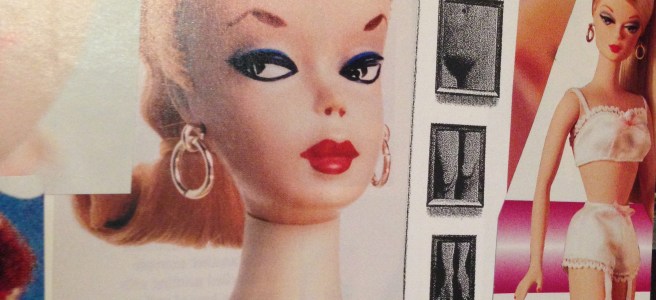
Barbie Dolls on Drugs

I was twelve and you were six, and we spent
every Tuesday night together for a year.
Your mother at Weight Watchers, your
father driving truck, we watched the Wizard of Oz
so often we knew the script by heart, and when
we tired of TV, we invented games. You had
a huge playroom with the Barbie Townhouse,
and a whole town of Barbies. One was the mother,
and one the daughter who stayed out all night,
came home naked, platinum blond hair
a tangled wreck. Mama Barbie screamed,
“Where have you been?” Daughter said,
“I don’t even know what’s going on.”
They slapped faces with right-angled arms,
and Daughter pulled on a sparkly gown
and hopped away with her plastic suitcase.

Days later, your mother asked to talk
to me, said, “No more Barbies on Drugs,
please.” If she would have been nosier, she
might have discovered I got the idea from
the live show I watched at home, starring
my teenage brother and young stepmother,
sparring, yelling, my brother’s frequent
vanishing acts. But I know now your mother
was trying to keep your dad from disappearing.

All these years later, you and I are still
best friends, and I’m both sad and grateful
for my youthful ignorance–your house was an escape
from my own, where I dropped in a video tape,
air-popped some popcorn, and sat with you
to watch a young girl find her way back home.

What Some People Think About People On Welfare

There have been a few times in my life I have received public assistance or “welfare.” When my father was a single parent taking care of my brother Tony and me, we were on food stamps, though I don’t remember.

In 1994, when I quit working a grueling grocery store job to attend community college full-time, I received public assistance, which was $400 a month, $300 in food stamps, a Pell Grant, and $600 a month from the U.S. Navy G.I. Bill for my four years of service. At the time, I was a single mother with one child.

I felt no guilt for receiving the government benefits. I’d had a paper route at age 12, babysat at 13, worked as a lifeguard at 15, McDonald’s from 16 – 18, nursing home from 18 – 20, then joined the navy. Those benefits were a way for me to move up from being a blue collar worker to a college instructor. My American Dream.

Imagine my dismay when I came out of the dentist in a small town in eastern WA, in some pain after having had a filling, and hearing what I am about to share. (It should be noted that I’d had a root canal in high school from chewing too much Big Red, but I learned my lesson. And in the navy, the dentists re-did my root canal–twice.) I was told I had to have a crown. So, on my way out of the office, I asked the admin assistant how much a crown cost. She scowled at me and said, “Welfare doesn’t cover crowns!” I never went to that dentist again.

Fast forward to three years later: my 27-year old husband Harly had a genetic liver disorder. He couldn’t work. I was a junior in college with a five-year-old daughter and brand new baby girl. We applied for food stamps and Medicaid, but because my car was worth $5K, we were denied. I asked the woman behind the desk, “Are we supposed to eat the tires?” Eventually, Harly was able to get disability.

Fast forward a few more years. I was talking to the sister of a friend. The sister’s name was Maggie. She worked as the gestapo at a low-income housing complex and boasted about how she never gave people who left their full deposit back. She said that when she walked into their homes, the places “smelled like welfare.” Maggie told me, “Only single moms get Pell Grants,” and that “She’d never been poor, so she just couldn’t identify with those kind of people.” It took all my strength not to slap her freckled face.

It’s a shame that welfare recipients as a whole get such a bad rap. Statistics show again and again that only a minority abuse the system. I have taught at my Alma mater, Walla Walla Community College, for eight years, and every time I teach a new class I tell the students my story. I was a welfare mother who went to college and eventually earned two graduate degrees. If I could it, so could they. As long as what they are doing is in good faith, there is no reason to be ashamed to ask for help.

My Father Wondered Why I Was Precocious

My father was single, and he owned a shoe repair and leather crafting business when I was a girl. Besides the leather pants, vests and belts that filled the store, he sold water pipes, rolling papers and roach clips. As a five year old, I was surrounded by psychedelic posters, tie-dyed T-shirts and peace signs. And in the workshop, my father tacked Playboy calendars and posters of nude women on the walls.

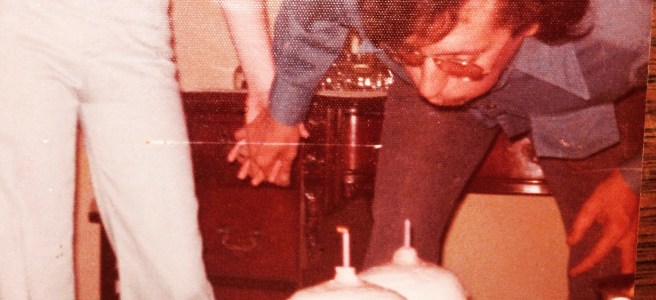
When my father turned 27, his very young girlfriend threw him a surprise party at our apartment. There were streamers, balloons and a cake made of breasts. I am grateful that photos exist from this party. I was too young to be invited, of course, and had been sent to bed. But when I look at the photos from the party, I see my father–his Tony Orlando hair, his denim work shirt, the thin beauty on his arm–personified.

I am happy my father was so young, 22, when I was born. Often he was more like an older brother than a father. He was patient and funny, and he wasn’t ashamed of anything. I asked tons of questions, which he always answered. When I asked questions about sex, he told me the truth–often with street slang. Anyone who wonders where I get my “to the point” method of communication can stop wondering. I am both grateful for this gift and have spent a lifetime trying to improve myself.

I miss my father. He was a great parent, mentor and friend.