Lust Kills Your B.S. Detector.

My father opened a shoe-repair business when I was two, and I spent a lot of time around adults. There was Joyce, the woman who made tie-dyes and sewed leather; Bob, my father’s buddy who fixed shoes; and the array of business men (it was the 70s and they were mostly men) who wore fedoras and suit jackets, and called me Chooch. Spending time around adults helped me cultivate a decent b.s. detector.

My memories from this period, before age four, are idyllic. My father had divorced my and my brother’s mother, and the three of us lived in a modest apartment. We were poor in money but rich in love, and we went everywhere together–the shoe-repair shop, the bowling alley, the bar. We ate TV dinners in front of the black and white console, mostly Laugh-In and The Sonny and Cher Show, or scarfed fried clam strips down the street at Sharkey’s Tavern.

After my father started dating “Vickie,” a high-school dropout with wavy bleached hair and freckles, my life changed. Although Vickie dressed my brother and me in nice clothes, and kept us clean, she also whipped us with leather belts and called us names. Her brother molested me when I was four. And, Vickie was a serial cheater. My father married her in 1975, and six months later my younger brother was born. He caught Vickie the first time when my brother was less than one.

My father and Vickie stayed together for 23 years. Living with her until I was 18 (I moved out on my birthday) taught me injustice, to keep silent, and to cower in the presence of a bully. Her brother had said to me, “Don’t tell your daddy what we did. He’ll think you’re nasty.” Vickie said to me, “If you tell your father I hit you, you’ll get it worse.” And when I told other family members or adults about what was happening in our home, I got a pat on the head, and a, “Oh, you’re just being dramatic.”

It may not surprise you that when I married, I fell for a male version of Vickie and left my relationship. More than once. Several people waved warning flags in my face, which I ignored. It wasn’t until the love of my life divorced me that I saw I was the problem. It took ten months for me to see through my male Vickie’s bullshit. Now, I’m single and am trying to make up for my mistakes through reading, self-reflection and therapy.

My father divorced Vickie in 1998, and he passed away in 2012. Vickie remarried and from what I hear, is cheating. I wish she would have sought help for whatever childhood haunts keep her in that self-destructive cycle. To make matters worse, I now have a good friend who’s been hoodwinked by his own version of Vickie. Did I warn him? Yup. Did he yell at me and cast me aside? Yup. It’s as if I’m reliving my childhood, watching my friend instead of my father, heading for a fall.

My hope for my friend, who usually has a keen bullshit dectector, is that he will wake up before too much damage has been done. But, similar to Vickie, his enchantress is pretty, fit, and an amazing liar. Friends tell me, “Don’t worry. She’ll hang herself. And then you can say, ‘I told you so.'” Problem is, I’m not going to say I told you so. I’m going to be there for my friend if he feels had can confide in me. Keep your fingers crossed.
 

The Truth Is Sometimes Painful

I grew up with a father who loathed dishonesty. I credit his Italian American pride, or perhaps growing up catholic, but nothing made my father angrier than learning he’d been lied to. He tended to be “brutally honest,” and the people who loved and admired him appreciated that. As his daughter, I feared his truth-telling when I was as a girl because I was extremely sensitive, but eventually I grew to admire the trait.

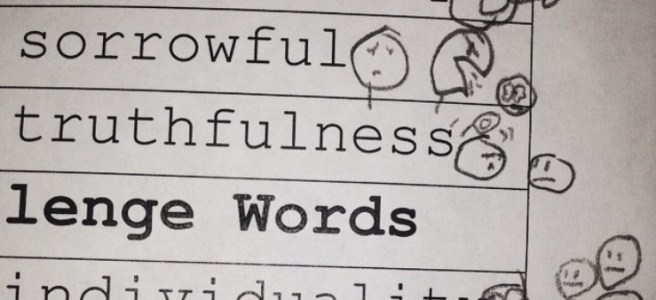
You have to be courageous, confident, and often live with regret when you are honest, because people rarely want to hear the truth. The image I’ve included in this post is a sketch from my son. In order to remember his spelling words, he sketched faces beside them expressing what he believed conveyed the word. When you look at the faces beside “truthfulness,” although one wears a halo, they both look anxious. Telling the truth is hard; hearing the truth is hard.

My father once told me, “You couldn’t be more like me if you tried.” Although I was sincerely flattered to hear that, I knew it meant I am also brutally honest, have a terrible poker face, and tend to alienate people because I struggle with being dishonest even in polite conversation when sometimes you should be. This is not to say I have never told a lie. I have. And some have caused irreparable damage in my life. It’s just that lying to people causes me great internal struggle, reddens my face, and fills me with crippling guilt.

Similar to most people, it’s also not easy for me to hear the truth. When people have told me I’m too analytical, sensitive, dramatic, or that I remember more negative details than positive, I stiffen with defensiveness. All of the preceding statements are true. I am also self-deprecating, affectionate, and loyal. The older I get the kinder I am to myself (and others), and I try to work with not against my human flaws.

One of my most irritating traits, I’m guessing because I’ve received a lot of flack for it, is my incurable need to discover the “why” behind just about everything. Why did my mother leave? Why did my stepmother beat me? Why do dishonest people seem to have more success than honest ones? Why did my brother get killed? Why did my husband die? Why do I have so much trouble sustaining a romantic relationship when others seem to just do it? Why are people mean? Why I did reject the man I believe is my true love?

On a positive note, once I process the Why in my head, through writing, art, or talking, I can usually let it go. In some cases, like with the death of my brother, I’ve had to make peace with not knowing why it happened. That has taken 30 years. I’m still struggling with the true love question. The other whys might be explained with psychology, self-help books, chats with friends, or talk therapy–of which I’m a huge advocate. But one important lesson I’ve learned is that in order to process these questions and heal, you have to be 100% truthful.

In the book, The Courage to Heal, which I highly recommend if you’ve suffered any personal trauma, the word courage is aptly used. It’s so much easier, and fun, to ignore our flawed humanness and not heal. For years, I was the party girl, loved getting drunk, being around people, being loud and obnoxious, all in an effort not to spend time alone and seek the truth within myself. I’d gone to therapy, but never engaged fully with the tenets. It took my loving someone other than myself to see how badly I needed help.

This person is still in my life, and because we’ve hurt each other, we have had to start rebuilding trust from the bottom up. Being honest takes courage, confidence, and working through regret to move forward when we hurt each other now. But, as you’ve probably heard or experienced, there is no greater reward than having an honest, open relationship with someone you love. And I want that.


Navigating Different Communication Styles

Over the past 18 months, I’ve been meeting with a behavioral therapist, as often as once a week. When I started, I had been sitting in a pit of despair after realizing too late what a special and rewarding relationship I had with my husband of nine years. I had turned 40 in 2008 and sort of lost my mind over the next two years. The collateral damage incurred by us and our sweet family post-split still nags at all of us. We are healing, albeit slowly.

Through my therapy I’ve learned that one of the issues “Eric” and I dealt with during our marriage and divorce involves our vastly different communication styles. We are similar in that we’re both passionate, quick-tempered and stubborn. However, I am a moving-toward quick-processing extrovert (MTQPE), and he is a moving-away slow-processing introvert (MASPI). Night and day. Black and white. Scorpio and Taurus.

Defining the styles. Moving-toward means I’m the woman who talks to strangers and wants to save the world even when it’s inconvenient for me. Moving-away Eric hangs in the background and observes the scene before he makes a move. The night we met, I walked up to his adorable self at Little Harry’s Airport Bar in Lewiston, Idaho, and said, “Hi. I’m Cindy. Wanna buy me a drink?”

Eric likes to listen and assess, and he’s good at both. I like to chat, on and on, and recharge when I’m around people. Eric recharges by spending time alone. Quick-processor me can call him on a Monday at 8:00 a.m. and say, “Wanna take the kids to the theme park this Friday? Do ya? Huh? I’ll drive. I’ll buy the tickets. What do you think? Huh?” Slow-processor Eric would probably take a minute to answer: “I don’t know. Let me check and get back to you.”

When you’re in love with someone, these differences seem minor. But after years of mistaken assumptions and misinterpreted silence, they can wear on a person, even destroy an unexamined relationship. And then, when you’re in the middle of a breakup, these differences cause real arguments.

Being aware and strategic. Eric lives in his head much of the time (he’s amazing at self-reflection) but I process my life out loud, through talking. If you are a MASPI, like Eric, I would drive you bonkers. If he has anything on his plate, work issues, personal stuff, bills, he would prefer to slide the theme park to the bottom of the stack until he was ready to tackle it simply to avoid feeling overwhelmed. Meanwhile, I’m doing aerobics, playing paddle ball with one hand and whirling a figdget spinner in the other.

Eric and I have been divorced six long years. In the past ten months, we have been scheduling monthly “conversations” where we talk about the kids, our lives, and manage our different communication styles. One of the most important things I’ve learned relies on the premise that my style is no better than his style. They are simply different. In this post-therapy stage we’re in, Eric and I work hard to treat each other with dignity, and examine and respect the styles.

Being versus foreseeing. Being an MTQPE, I would love to know exactly when I’m going to see and talk to Eric. I recharge when I’m around him. But, when a moving-toward person moves too quickly or too often, a moving-away person tends to get his energy zapped and needs more space. That is a style, not necessarily a strategy.

Eric is content just being. He doesn’t need to plan every movement of his day or his life. I, on the other hand, want to see into my future. When will we meet again? When we will talk again? Forward, forward, forward. One of the things my therapist helps with is my feeling comfortable in the not knowing. (Eric tries to meet me halfway by communicating more.)

We are less than a year into this process of trying to communicate effectively. We stumble. We piss each other off. We spend hours laughing. It’s an unpredictable way of living. But, I am slowly gaining comfort and working to make him feel safe in my presence. The closer we can come to meeting in the middle, the better off we’ll be.

The Swap

I lob my heart over to your side of the fence,
play five games of paddle-heart simultaneously,
try to keep busy, wait- wait- wait for you
to toss yours over. You catch the bloody mess
and try to hang on, crimson liquid trickling
down your arm. You observe the irregular
shape, study its pulsing blue veins, wonder,
perhaps, why I pitched it to you in the first place—
was it love? Or was I trying to fool you,
let the form fuse itself to your body, only to
snatch it away because your grip gave me
goose pimples. At one time, I might have said,
Hello-ooo. When the hell do you plan to finish
the swap? But I’ve learned that when I wait,
you surprise me, eventually climb over the fence,
deliver your heart in person, rest it in my hand,
remind me that wonderful things happen when I keep
quiet the beast clawing its way out of my chest.

Where Are You, Gen Xers?

My current job, working as the Senior Writer/Editor for a foundation at a land-grant university, involves sharing stories, Tweets, photos, and more on various social media. Most recently, on #GivingTuesday, I was checking out articles on LinkedIn, one of which mentioned “how to get Millennials to donate.” Since two of my children are Millennials in their early 20s, and I volunteer for another local foundation, I clicked on the link.

About 2/3 of the way into the article, I came across a paragraph that compared Millennial philanthropic trends with Baby Boomer trends. I kept reading, waiting to see how Gen Xers felt about philanthropy. Guess what? There was no mention of Gen Xers in the entire article. Zip. Zero. Zilch. So, I became curious. And like a Millennial, I went to Google and typed in Generation X.

Suddenly, a whole new world opened to me. I was born in 1968 and have always considered myself a Gen Xer. With a brother born in ’66 and one in ’75, I’m also the middle child. Coincidentally, Gen Xers are called the Neglected Middle Child, mostly because there are 70 million plus Boomers and 70 million plus Millennials, and there are only 50 million plus Gen Xers. Why the discrepancy? Well, lucky for us, even though the hippies were having a lot of sex, in the early 70s, birth control and legalized abortion helped them have fewer children.

After visiting a few more websites, I found conflicting information regarding the specific dates that designated a person as a Gen Xer. My theory holds at this: Gen Xers were born in between the early 60s and the early 80s. And, similar to astrology, if your birthdate straddles those years, you are said to be on the cusp, or a cusper. So, my uncle John, for instance, who was born in 1965, probably has Boomer and Gen Xer traits.

When I think about my being a Gen Xer, I think about being a child of divorced Boomer parents who needed to “find themselves,” walking everywhere by myself, and being raised on or by television. I often joke that my father (a single parent until I was six) used the TV as a babysitter. Through my research, I discovered I wasn’t alone. Many, if not most, Gen Xers were left home alone with little more than the TV and their siblings to keep them company. It’s probably why we love pop culture!

On a positive note, Gen Xers are independent, resilient, hard-working, and have a sardonic wit. I remember bristling, years ago, when I heard us called the “Slacker Generation.” WTF? When I was 12 I got a paper route. And from that moment on, my father gave me no more spending money. So then I worked as a babysitter. Then as a lifeguard. McDonald’s manager. Nursing home diet aid. Retail sales. Bakery cashier. Then, when I was 20, I joined the navy to get the G.I. Bill because my father wouldn’t help me pay for college.

I’m happy to report we are the generation responsible for creating Hip Hop and paving the way for ethnic diversity. When I think of my childhood, I think of Sesame Street, Captain Kangaroo, and the Electric Company, which we watched in second grade as part of our curriculum. Also, with my father, I watched shows like Good Times, What’s Happening, Laugh In, and the Sonny and Cher Show.

On a negative note, Gen Xers, because we were almost always left alone, referred to as the “latchkey” kids, and were often physically and sexually abused, have become the “most devoted parents in American history.” Some folks call us “helicopter parents.” Guilty as charged. Both of my adult daughters failed out of college, although they grew up watching me bust my butt to earn a BA, an MA, and an MFA, all in writing. I did that without parental support. My daughters have oodles of support. Have I killed their ability to stand on their own?

Anyway: this post is a plea. If you’re a Gen Xer, I want to hear from you! After all, peers are more important to us than parents. I plan to continue my research. If you want to share a story with me, please email me at cindyjoy68@gmail.com.

Happy Veterans Day from Nancy Navy

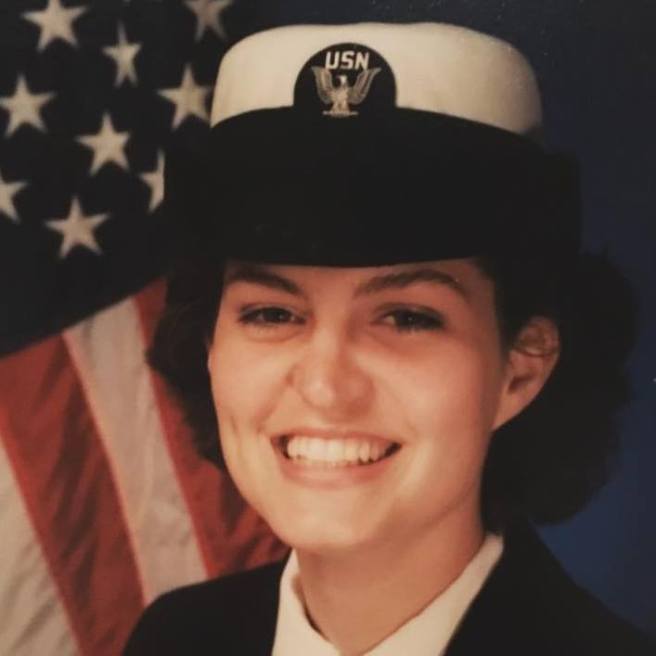
Yes, I served in the U.S. Navy from 1989 to 1993. It was one of the best decisions I ever made. The chance to go to college and leave my town of little opportunity was too great to pass up. I went to boot camp in Orlando, Florida, Apprenticeship School in San Diego, California, and worked as a data processor at a weather center in Monterey,  California for four years. I also attended Monterey Peninsula College, tutored elementary school children in reading, and participated in fund raisers.

After the navy, I moved to the Pacific Northwest. I attended Walla Walla Community College in Clarkston, Washington, and Lewis-Clark State College in Lewiston, Idaho. The G.I. Bill helped fund my bachelor’s degree. After earning my B.A. in English and Creative Writing, I went on to earn an M.A. in English from Western Washington University in Bellingham, Washington, and an M.F.A. in creative writing from University of Idaho in Moscow, Idaho.

I have lived in Moscow, Idaho for 14 years. My career post navy has consisted of food service, bank teller, writing tutor, and then writing (technical, creative, speeches), editing, and teaching writing and other courses. My current position as Senior Development Writer/Editor for the Washington State University Foundation is my dream job. I know the navy made all of this possible.

I feel incredibly grateful for making the decision to join the navy. Thank you to everyone who served in the military, especially overseas and during wartime. We are blessed.

15056457_10154653988028187_2336432202794438476_n

Why Psychotherapy is like Kale

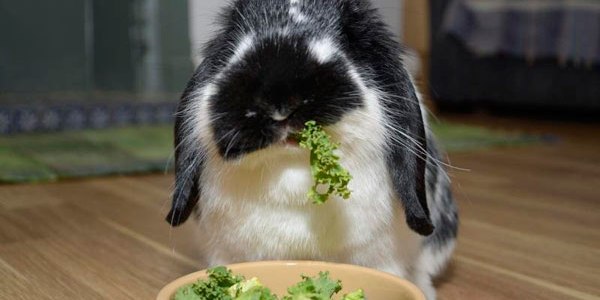
Psychotherapy is not easy, or fun. It’s good for me, even necessary, but I don’t love it. Psychotherapy is like kale: not nearly as tasty or enjoyable as homemade macaroni and cheese, or pizza, but sometimes, I have to force it down.

One of the biggest issues about not seeking help from a psychotherapist is that we rarely know why we display negative behaviors. Often, we react to stimuli based on a complex process of unresolved issues (or trauma) from childhood. Some behaviors are good, like holding a door for someone or not cheating on a test. But others include slamming the door in someone’s face, tearing up your husband’s baseball card when he stays out all night, or yelling at some unsuspecting cashier. Consistently negative behaviors harm us and can destroy relationships with people we love.

Before I turned 18, my birth mother ran out on us; my father remarried a physically and emotionally abusive woman; my step-uncle sexually abused me; my stepmother slept with one of my boyfriends; my older brother was killed in a motorcycle wreck; my younger brother was kicked out of every elementary school in our town; and I moved in with an abusive, cheating, drug-dealing boyfriend.

Phew. I realize there are millions of people who’ve suffered far worse tragedies than I did. I’m not searching for pity, only understanding, a willingness to see another perspective. A family member once said, “In my day, we didn’t go to therapy. We solved problems by ourselves.” Hmmm. This family member drank a six pack every night just so he could fall asleep. And he stayed in a marriage with a cheating spouse for 20 plus years.

At 21, I eloped with a man we’ll call Jon. This was one week after I admitted to my parents that I’d been sexually abused as a child. My father said, “You must have liked it because you never told us.” My stepmother said, “You’re just trying to cause problems.” Um, no. But before you hang these folks out to dry, I can assure you these are typical responses. (After my father divorced the nightmare, he spent the last 15  years of his life apologizing to me for the earlier response).

In the wake of Donald Trump’s accusers coming forward about his sexual misconduct, many people ask, “Why didn’t they come forward when it happened?” I echo comedian Seth Meyers’s response. For reasons that seem absurd, our society tends to blame the victims of sexual abuse. I was four when my uncle started abusing me and nine when I screamed, which sent him running from the room never to touch me again. If anyone says a four year old girl is asking for it, he or she should be flogged.

Often times, people who’ve been sexually abused as children become hyper sexual, engaging in risky behaviors like having unprotected sex with numerous people largely because their personal boundaries were destroyed. In addition, subconsciously, they’re scared of getting too close because others might get to know them and judge them for their “shameful” past.

For two decades, I moved guy to guy, always dumping a good one who loved me for someone who treated me like the piece of shit I thought I was. It was as if I were saying, “Don’t get close. I don’t want you to know the real me because I’m no good. I deserve to be with a piece of shit.” In recent years, science has offered new theories on addiction, drugs, sex, food, shopping, alcohol, saying it might have more to do with attachment disorder than genetics.

A theory is a theory, but it makes sense to me that someone who has lingering feelings of being discarded, neglected, and abandoned, might have serious problems with interpersonal relationships (lack of trust, PTSD, fear of authority). I have a solid circle of male and female friends, people I’ve known for years who love and support me. They appreciate my unfiltered speech, openness and honesty. But if you asked the men from my past what it was like to love me, you’d get another story.

After years of pushing good men away when they got too close, I ran out of luck. The man I shared a deep love and even deeper friendship with, the man I grew closer to than anyone in my life, drew a line in the sand. “If you don’t want me,” he said, “I’ll go.” It was the exact opposite of what I wanted and needed, but I was used to my past coping skills, so I let him go and moved on to the next guy. I also went into therapy.

In the year that followed, something happened. Through long discussions with a psychiatrist, talks with friends, and reading self-help books, I stopped. Instead of pointing my finger outward, I turned it on myself. I needed to excavate my painful childhood memories, unearth them, and examine them to set them free.

Over the past several months, I’ve been attending therapy once a week, including doing EMDR, which tastes like kale but is so good for me! Sometimes I break down bawling. Sometimes I just want to run. My therapist challenges me. I’ve processed one old memory and am working on a second. There are plenty more. But I feel more confident in my ability to move around in the world, to forgive myself and others, to recognize that the man I loved and lost did me a favor. He forced me to take stock of myself and see I am not my past, I can be better, but I need to do more work. It’s a long, long road, and at the end, I hope they have pizza.

Complicated Co-parenting

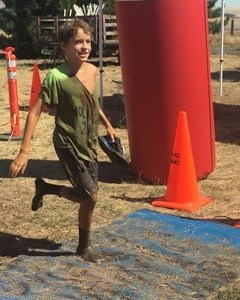
This is a photo of my son Vinny crossing the finish line at the Down and Dirty Mud Run in Lewiston, Idaho. Vinny is 11, and I had accidentally signed him up for the 4.5 mile race that includes several obstacles, instead of the Mini Mud, which was a four-hour open event where he could simply participate in obstacles. Oops.

A few of my reasons for registering for the event were selfish: I love running, and I wanted to do the 4.5 miler. But mostly, Vinny’s father, whom I’ve been divorced from for five long years works for the group that sponsored the race. I knew Eric would be there, and I wanted to see him. I’m pretty sure he didn’t want to see me. It was Eric who filed for divorce after I admitted to having an affair, a mistake that made him feel tossed aside, insignificant.

Looking back, I thifinishednk I had the affair because I had been feeling tossed aside and insignificant in the marriage, but didn’t have the skills or faith in Eric to tell him. So, instead, I lit a fire underneath our relationship, which sent him running. I even dated the guy with whom I’d had the affair (it was a disaster), adding insult to Eric’s injury.

It’s only been in the last year that Eric and I have started talking about our breakup. He’s shown me his wounds, and I’ve acknowledged them. I’ve told him numerous times how much I regret the affair, the break up, and that I want him back. He won’t relent.


Eric has said although he’s not ready to be friends, that’s what we should be working toward. Friends. How strange that word sounds. We were friends. Best friends, for twelve years. And yet, we destroyed the foundation on which all good marriages are built. For, if you’re not friends, how can you expect to be lovers? Partners? Soul mates?

A few good sources tell me I should be grateful Eric wants to be friends. I know they’re right. But I feel anxious. Friends to me means no kissing. No intimate hugging. No love making. Ever. And Eric and I were great at those things. We were also great friends who shared secrets, gossip, and personal stories. Still, something in our dynamic made me unwilling to go to him when this guy at work started bugging me. And while I kept the guy at bay for weeks, he finally broke through to the vulnerable, overworked, underappreciated mother who devoured his attention, flirting, and dirty talk. After it was too late, I knew I was headed for disaster.

What keeps me sane right now is that adorable boy in the photo. He’s honest, funny, and cares deeply for everyone in his family, even his circle of friends. Eric and I conceived that boy when we were deeply in love. And though we may not be now, we work  hard to get along because we so love him.

I have no idea what the future holds, and it scares me to my core. My sources say I need to live one day at a time. Move the mountain one stone at a time. Breathe. Keep running, one foot in front of the other. Live in the present.

Childhood Injuries: Who Hurts More?

When I was 13, while skipping stones before a lake with a dozen of my classmates, I bent over to pick up a rock when someone accidentally hit me in the face with a boulder. My left front tooth broke in half, which hurt like the dickens. I started bawling and ran back to the cabin where we were all hanging out for the afternoon. The dentist fixed my tooth, and many years later my father told me, “When I saw your fat lip and tooth hanging, I started crying.”

When my daughter Jessie was four, she was bitten by a white German Shepherd. I rushed her to the E/R where she had to get four stitches on her lip. That night, I pored over the pages of her baby book. As I stared at her beautiful photos, all chubby cheeked and pig tailed, I cried. What a terrible mother I was–leaving Jessie alone with my mother-in-law and that crazy untrained dog. Of course it bit her! I didn’t deserve such a beautiful daughter.

My second daughter, Josie, is a bit more self-destructive. My husband, daughters, and I were all living in Bellingham, Washington, when Josie ran into our duplex and said, “I just stepped on a nail.” I’m a Gen Xer, okay. So, all I could think was, tetanus shot!!! One of my grad school buddies said “calling the fire fighters was cheaper than calling 9-1-1-” so we called the fire station. Turns out it’s not the rusty nail that causes infection, it’s the bacteria from the bottom of the shoe going into the skin. But later Josie told us, “I wanted to see what it would do.”

Nothing comes close to Kid #3, my son, whom I love to the moon. He’s allergic to tree nuts. In the last ten years of his life, he’s been to the E/R five times.

1: Age one- Grandma makes cookies with walnuts. Vinny eats one and then pukes. Breaks out into hives. Left side of his face swells. Dad gives epi-pen because of peanut allergy. Takes Vinny to the E/R.
2. Age five- Teacher gives Vinny cookie from grandma of classmate. Vinny pukes. Breaks out into hives. Dad gives epi-pen. Takes him to E/R.
3. Age six- Vinny eats toffee with almonds. Lies to family and says allergy was caused from COOP bread. Mother throws fit at the COOP and threatens to notify the local media. Gets them to install allergy signs on all foods. (yay)
4. Age eight- Vinny’s best friend makes him a sandwich with “nutty bread” containing “almonds, hazelnuts, walnuts and Brazil nuts.” After Vinny complains of a burning sensation on his tongue, Eric comes and injects Vinny with epi-pen, but Vinny spends the night in ICU and needs a ventilator. His entire body is covered with hives.
5. Age ten- Vinny’s home from school because of a cough. He makes a frozen dinner with vegetarian ravioli, not knowing it contains walnuts. He takes one bite, says, “I have that nut feeling.” After we read the ingredients, mother gives him epi-pen and rushes him to the E/R.

I called in at work, spent most of the day in the E/R and ICU watching Vinny get poked and injected full of Benedryl. He says his vision is blurry and that he feels weird. All I can think of is what his life will be like as an adult–when his father and I am not around. When he’s negotiating his own life–no mother or father policing his decisions, looking for dangerous foods. I start to cry.

Good Grief-What a Month I’m Having!

I don’t know about you, but I couldn’t wait to say buh-bye to 2015. It was another year of being single, working my butt off in production more so than writing, and selling the home I had lived in for almost a decade with my former husband and our kids. I spent some time free-lance writing and even submitted work to journals. In April I participated in the poem-a-day movement, and in November, I spent a wonderful weekend with two of my best friends at a writing workshop in Port Townsend. But as Christmas songs played in the dentist office, gas stations and department stores, my optimism fell like a snowflake.

New Year’s Eve was spent with my ten-year-old son Vinny and another best friend, my sister from another mister, Aimee. I’d had a daughter disappointment right before the New Year, which I’d rather not disclose, but believed that 2016 would be a better year! But not long after my holiday vacation ended, I had a personal disappointment. Normally I don’t let life get me down; but when it rains, it pours, and I have lost my umbrella.

Suffice it to say, a blog is a safe space to share. But part of me thinks no one wants to hear my problems. And others tell me that I am the only person who can control my life. I need to make changes. I need to read self-help books. I need to let things go. I need to be honest about my needs. Saying those things and doing them are as different as heat and cold.

And I don’t want to be negative. I want to offer life-affirming tips for dealing with everyday disappointments. But right now, all I have is advice from others. I write to understand my life, so I’ve been working on an “after the divorce” essay and several poems. I’ve been talking to every friend who will listen. I’m sure I’m a real treat.

Last week, after hearing of my so-called disappointments, I turned into a Peanuts character, walking along the street with my head down. While kicking a stone, the toe of my boot stuck to the sidewalk and I fell face-first on the concrete. I cracked the glass on the front of my iPhone and my ego. It was the perfect end to a perfect week.

On a bright note, I finished a book called What Shamu Taught Me About Life, Love and Marriage by Amy Sutherland. What a pleasure it was to read. Sutherland talks about positive reinforcement and rewarding behavior–stuff from psych 101, but with real life examples. She observed aspiring animal trainers that work with predators, ones that can tear arms off or kill people with a bite to the neck.

Basically I learned to ignore bad behavior, a daughter screaming in my face, or a client criticizing my brochure, and reward good behavior: Thank you for picking up your dirty socks, Daughter, and Thank you, Client, for your feedback. I’m writing this in its simplest form, but feel free to check it out yourself. I’m going to reread the book.

My plan moving ahead, and you know I have one, is to dress for success, support, not enable, my daughters, and build character in my son. I will breathe deeply before walking into a difficult situation, smile when I don’t feel like smiling, and write as much as possible. Let’s hope February is a better month.