It’s All My Fault

I’ve been thinking a lot about responsibility over the past couple of days. For as long as I can remember, I have felt “responsible” for other people’s feelings — their happiness, anger, sadness, hunger, well-being, etc., etc. Some of it, I believe, comes from being an older sibling. I was seven when my brother Jack was born, and from the moment I saw his pursed lips and downy hair, inhaled the baby scent from the top of his head, I wanted to protect him. It was both understood and stated, with my father’s tireless refrain: “Watch your brother. Watch your brother. Watch your brother.” I adored Jack, and enjoyed feeding him, changing his diapers, and cuddling with him on the couch.

The responsibility thing really hit home during Christmas 1977. I brought home an ornament I’d made at school: green construction paper, red yarn, and silver glitter. Although I don’t remember, I must have left it on the dining room table where my stepmother was displaying all of her Princess House crystal. I was at school when Jack pulled on the table cloth and hundreds of dollars of crystal crashed to the floor. When I arrived home that evening, my stepmother screamed and screamed. Since Jack was only a toddler, and was trying to get my ornament, the broken crystal was all my fault.

Years later, when I started dating, I took responsibility for the feelings of my boyfriends, and anyone else who came along. If X had a bad day, it was up to me to cook him a nice meal and let him relax so he cheered up. If X wanted to go to dinner, I chose the restaurant, and if he disliked the meal it was because I had made a bad choice. If X’s family didn’t like me, it was because I was too sensitive and analytical, so I tried really hard to be amazing and wonderful.

Most recently, I’ve been reflecting on how I felt responsible for my father’s happiness. His wife was an incurable cheater, and I never told him, until 1988, when he received an anonymous letter saying “Your wife is sleeping with my brother. He’s married and has five kids.” My father confronted my stepmother, and of course, she said it wasn’t true. So, he hid a tape recorder in his bedroom. Confronted with the evidence, she said, “How dare you spy on me.”

My stepmother was a special kind of crazy, both unpredictable and prone to violent outbursts, the kind of crazy I couldn’t manage as a 20 year old. But, I figured since my father had confided in me, and was planning to divorce her, I should take him out for a drink and spill my guts. We went to the No. 5 in Binghamton, New York, and drank late into the evening. I told him everything I knew about her cheating, starting from when I was four until the present day. My father showed no emotion. The following day, he filed divorce papers and sent them to his mother in law’s house where his wife was staying.

A couple of weeks later, my father invited me to dinner at his house with Jack. On the drive over, he said, “I’m gonna take her back.” I started bawling. All those stories! All of her lies! “How could you?” I asked. My father said when he brought over the papers, she fell to the floor and started kissing his feet. She promised over and over to stay faithful. “I don’t approve,” I said. “But you’re a grown man.” He smiled, and answered, “You’re absolutely right. You’re so protective. Just like grandpa.” Damn straight.

There have a been a couple more times in my adult life where I have had the opportunity to let a person I care about know they were being cheated on. Both times, after telling, it blew up in my face. So, if you’re keeping track, that’s three strikes. I’m out.

It really sucks to see someone you love getting hurt by someone else simply because they are a good liar. However, if you out a cheater, that falls right in line with shooting the messenger. You’re going to get hurt unless the person you tell has an enormous amount of self awareness, and believes you, not the cheater. At the same time, if you’re like me and have a visceral reaction to seeing your loved ones getting screwed over, perhaps you can explore those feelings in a blog post.

P.S. My father and his wife renewed their wedding vows in 1988, moved to Florida the following year, and bought a business. Ten years later, he filed for divorce and they went through an acrimonious process. My father moved back to Binghamton.
Can I Get a Witness?

My older brother Tony turned 21 on May 1, 1987. He came to my apartment, and my roommate and I threw him a small party. We drank Michelobs, and I told stories about Tony and me from the old days when my father owned The Leather Shoe Shop.

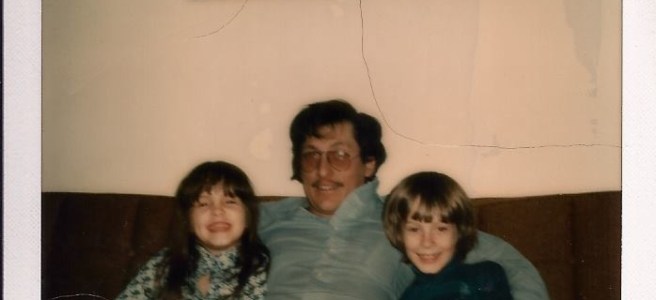
One memory is of Tony and me, holding hands, watching a fight between our father and his girlfriend Cathy. She slaps Dad’s eyeglasses off his face. In another, Tony and I walk along the sidewalk at the Vestal Plaza amid a frighteningly loud thunderstorm. I’m bawling. Tony has his arm around me, and repeatedly pats my shoulder, saying, “It’s okay, Cindy.” And in another, I’m on my tricycle, and he nudges me down a steep hill. I remember nothing after the crash, but for a week, I had one hell of a shiner.

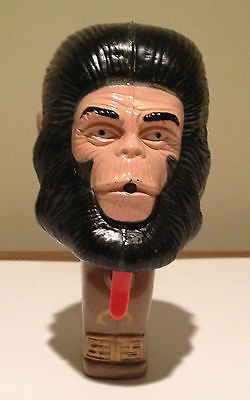
When I was four, Tony talked me into stealing a Planet of the Apes squirt gun from Grand Way department store. planet-apes-galen-water-gun-pistol_1_88852e60c2be6a48e133f52a290bfd7eOf course he didn’t say, “Steal.” He said, “Take.” We walked back to the shop where my father’s new girlfriend interrogated me and promptly dragged me back to the store to admit what I had done. The next time we visited Grand Way, Tony handed me a Magic 8 Ball, and said, “Slip this in your sleeve.” Without hesitating, I said, No.
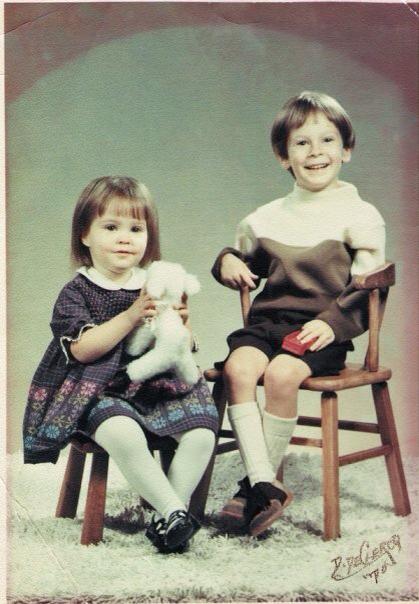
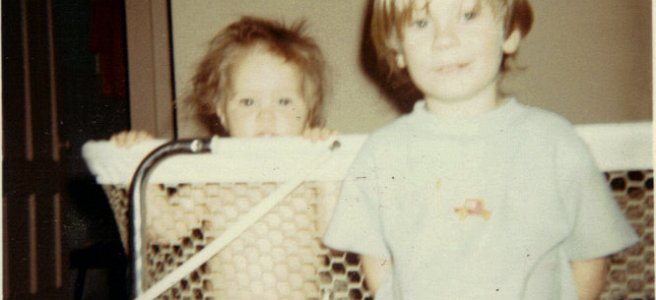
The stories made him laugh. Sometime during the party, he pulled me aside and said, “I love you. I’m looking forward to spending a lot of years hanging out together.”

As kids, Tony was timid; I was hyper. When my father brought out the video camera, Tony hid and I danced around. When I complained to Tony about our stepmother’s abuse, he said, “Just keep quiet.” He never complained. Instead, he started smoking cigarettes and pot, and drinking at 12. When our stepmother slapped him, he stared her in the face and took her abuse. I screamed when she hit me, hoping the neighbors would hear and call the cops.

Tony and I rarely fought with each other, but when we did, it was about the dumbest things. I hid the remote so he couldn’t change the channel, and he punched me until I gave it back. I called him a “Buck-Toothed Beaver.” I punched him in the arm as hard as I could, and he stood motionless, then said, “Did a fly land on me?” But, if I wanted to send him into a rage, I sang “opera” at the top of my voice. I laughed so hard his punches were painless.

By the time Tony and I were in high school, there were no more fights. We became allies fighting against a common enemy. “If you don’t tell Dad you saw me smoking, I won’t tell him you were with a boy, and not at the movies.” Deal.

In 1983, after coming home drunk too many times, running away from home too many times, and getting kicked out of high school, Tony joined the army at the urging of my father and his wife. Tony earned his GED in the military and was relegated to being a cook. After two years, he was done. He moved to California, fell in love with an awesome young woman named Erika and came back to New York.

I was delighted. Tony planned to take over my father’s shoe-repair business, and he told me I could work there too. I could quit my job at McDonald’s and have a career. Tony and I were going to be together again! For the first time in years, our family spent Christmas together.

Two nights after Tony’s 21 birthday, my uncle Joe called and told me Tony was killed on his motorcycle. He’d been riding to the Great American grocery store on Main Street in Binghamton, our hometown, and was struck by a red Dodge Demon. Tony died instantly. My father and his wife were on an emergency flight back from Florida where they had been looking for a house.

Because I was 18, I had zero coping skills to manage my grief. All I could think was How could he do this to me? He was abandoning me. I would have to live without him and deal with my stepmother alone for the rest of my life. How would I get through this? I took a cab to my paternal grandparents’ house, so I could be with my family while we waited for everyone to get the news.

That night was a blur–falling asleep on my grandparents’ couch, crying, listening to the grief-stricken wails of my relatives, watching the EMTs fail at giving Tony CPR on the TV news. My father called from an airport and asked how I was feeling. All I could say was “What are we going to do?” He said, “It’s gonna be all right.” When he and his wife returned to Binghamton, I stayed at their house, and slept in the extra bed in my 11-year-old brother Jack’s room.

There was the wake, the funeral, and the burial. It was raining like hell that afternoon, and the cemetery was all mud. Beneath the sagging tent, my entire family gathered in folding chairs. I sat beside my father and held his hand. When they lowered Tony’s coffin into the ground, I started sobbing. He was my only witness to our abusive childhood. The truth about Dad’s wife and how she treated us was buried with him.10339581_10152373663143187_8140426827575809783_n

When I interact with people who have an acrimonious relationship with their sibling or siblings, I’m often surprised and sad. Tony was my best friend, and for 18 years I worshipped him. He’s been dead for almost 32 years, and I’d give anything for five more minutes with him. They say the strongest bonds are forged in fire. Our chaotic childhood bonded us for life. His impact on me was profound and lasting, and I still think about him every day.


On the Broken Family

My mother and father split up when I was six months old, so my experience with the broken family started early. My first memories include my father, my older brother Tony, and many members of my large extended family. We are Italian-Americans from upstate New York, and except for mafia ties, we live up to the copious stereotypes: loud, romantic, passionate, beautiful, dramatic.

In 1975, my father remarried. I was six and Tony was eight. It was a different time, and we were not invited to the wedding or reception. In fact, Tony stayed with a friend, and I stayed with a friend of my stepmother’s. And although I don’t remember the woman’s name, I do remember playing the piano, and incorporating “turd” into an impromptu song. She yelled, “Hey! We don’t use that kind of language in this house.”

Six months after the wedding, my father bought us a house on the west side of Binghamton. My stepmother was 19, Tony was 9, and I was 7. My baby brother was 9 months old. We were told he was a “preemie” — but he weighed six pounds, six ounces at birth. You do the math.

Tony and I started at a new school. Although I wasn’t sure how we were different from other families, I knew we were different. My father was a shoe-repair man who owned a cobbler shop. Instead of wearing a suit to work, he wore denim and leather. My stepmother was a stay-at-home mother who wore no bra beneath her T-shirts, had Farrah Fawcett hair, and marble blue eyes. One of the young men in our neighborhood asked her out.

Mine was not a peaceful childhood. There was a lot of fighting between my father and stepmother about Tony and me. She was intensely jealous of anyone stealing attention from her. She was a screamer. My father was slow to anger, but once he broke, look out. And while he was not quick with the belt, she was. Any small thing could set her off–pots and pans “shoved half-assed in the cupboards,” food splattered on the floor, a crass remark. And she hit in public.

Tony started running away from home at age 14. I hid in my bedroom with books, TeenBeat, and sketchpads. My younger brother was beaten so often that when I reached to touch him, he ducked. When my father was home, my stepmother never yelled or hit us, and spoke with a sickeningly sweet voice. When my father was gone, she was a ticking bomb ready to go off at the occurrence of spilt milk. To this day, when I meet a person who reminds me of my stepmother, my antennae lift in response. And I have a sincere distrust of people who bully children. A therapist I saw for a while told me, “You have strong feelers for a reason. Trust them.”

In 1998, my father divorced this wife, after two decades of her infidelity, fighting, and confession that she stuck around for the money. One day I asked him, “Why did you stay so long?” He shook his head. “Ah. When you and Tony were small, whenever I saw your messy hair and dirty faces, it broke my heart. I wanted you to have a mother.”

The decisions we make out of love, or what we think is love, are often ill-fated. Self-delusion has to be one of the most powerful tools of the mind. Think here of the spouse of the serial killer who says, “I never knew.”

My first pregnancy and marriage was at age 23. It took me less than two years to rip that apart and create what I loathed–a broken family–all because some guy said I was his true love. Luckily, my ex-husband Jeremy is not a grudge holder, and we are still friends. God bless that guy.

Something about turning 50 has made my brain go wonky. I keep having dreams about my two ex-husbands, and my late husband, and I spend a lot of time wishing I had done things differently. Perhaps made decisions based on logic instead of “love.” Regret, coulda, shoulda, woulda, etc. Because of childhood abuse, I have been in therapy most of my adult life, and I am still working through a lot of the muck.

The therapist I’m seeing now is helping me connect the pain of my current heartbreak over losing Eric and the chance to rebuild our family with the lingering issues from my childhood. It’s a scary process, however, I’m determined to reach a place of peace and happiness. It’s easier to run away–drink, have sex, ignore your kids, and pretend everything is great. But at this point, I’m way more interested in doing the hard work if that’s what it takes to become unbroken.


In Defense of Rudolph

141204135426-01-holiday-tv-and-movies-story-topRecently I heard about the kerfuffle regarding Rudolph the Red-Nosed Reindeer, the stop motion animation movie from 1964. In case you’re unaware, the movie has been criticized very recently for being pro-bully. (And just to be clear, this movie came out a few years before I was born, and I’m here to tell you, it’s been critiqued for decades).
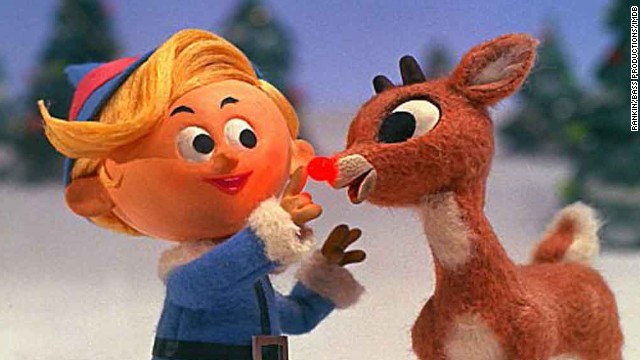
My kids grew up watching this movie, just as I did with my parents, and it has been a source of laughter around the dinner table and a conversation starter. We love the scene, for example, when the elves call “lunch break” and Hermey’s angry boss looks at him and says, “Not for you!”

Is there yelling and teasing in the movie? Yes. My kids and I find humor in the erratic behavior. Not because we are cold-blooded or evil, but because we can relate to Rudolph and Hermey. It isn’t just bullies who tease people who are “different.” In his awesome book Behave, Robert Sapolsky tells us it’s an innate human quality to malign difference, and we have to learn not do it.  It’s also a innate animal behavior (which, if I am correct, humans are animals.) Think here: chickens pecking each other.

One aspect of meanness no one mentioned is when Hermey and Rudolph ask to stay at the Island of Misfit Toys and the lion says “No. But you can do something for me.” It is so outrageously rude that my kids and I have to laugh, whether out of sheer disbelief of discomfort. How dare he deny them a place to stay and then ask for a favor.

Frankly, I have bullied and I have been bullied. I am not proud to admit bullying a girl from Lebanon in third grade. Two years later I received my comeuppance from a boy I loved who called me Ugly, Monkey Face, and Grape Ape from fifth grade to twelfth. Also, very recently I’ve been ghosted, snubbed, and triangulated by a couple of bullies.

I am not pro-bully. I am pro “let’s talk about the bullying in this movie.” Can you believe Santa was so mean to Donner and Rudolph? Can you believe the whole town shunned Rudolph until he became useful? Can you believe characters in the movie apologized to Hermey and Rudolph for being mean to them?

Bullies are never going away. Look at our President! And, if you don’t believe that, I’ll show you reindeer who can fly. I don’t have a solid answer for how to deal with a bully, because they are all different. But the ones I am dealing with now — I avoid them like last year’s fruitcake.

Here I Go Again

Four years ago, I started seeing an excellent therapist. I had been divorced for three years, and after two unsuccessful attempts at dating, and my ex-husband’s flat refusal to work things out, I said, “Okay. It’s time for you to get over Eric.”

Eric and I had met in 1998, fell in love, got married, and built an amazing family and friendship over the next 12 years. We both earned degrees, went to grad school, worked, and shared the responsibility of my two daughters. Eric wanted a baby of his own, so we had a son together.

While Eric was finishing grad school, I started to feel like he was turning away. I was overwhelmed with work and the kids, and I’m sure he felt the same–except he internalizes his problems and I externalize mine. So, while he was in his own world and a male coworker tempted me with a “free-wheeling affair with no responsibilities,” I took the bait.

Three weeks later, said coworker dumped me. I fell into a pit of despair. I had betrayed my best friend, and he was the one person I couldn’t tell. Surely, Eric would leave me. He would freak out. Was there anyway he could forgive me?

The short answer is no. Six months after I confessed, he filed for divorce. I gained fifty pounds over the next year, and when my dad died in 2012, I realized what an idiot I was for letting Eric go. He and I talked here and there, shared custody of our son, and even attempted a few reconciliations up until 2013, when he cut that off.

Over the next year, I only saw Eric when something went awry with the kids. He was a great dad. Very involved. We attended school events together and kept things cordial. I started seeing a grief therapist, who recommended a woman who did EMDR–a technique that helps patients process painful memories. I was doing well.

In 2016, Eric said he wanted to try to become friends again. I was so happy. We were talking openly about my affair and the divorce. We started hanging out together, having beers, and spending time as a family with the kids. Eric initiated an intimate relationship with me, and I was thrilled. My therapist encouraged us to talk about our break up and continue communicating honestly. Our friendship was fragile at best.

August 2017, Eric attended his high school reunion. The next day, when I asked if he had fun, he offered NO details about his hanging out until dawn with the cheerleader who had rebuffed his advances back in the day. We still hung out, but there was nothing physical.

In late September, Eric told me he was “dating” said cheerleader who lived six hours away, had three kids under 10, and was in the midst of an ugly divorce from her husband of 17 years, who was a millionaire. (I learned later it was because of her cheating, pathological lying, and abusive behavior.) She told Eric “you’re the love of my life.”

What happened next? Stay tuned for my next post, where I will share how I reacted to all of this. It’s not pretty.


The Grief that Keeps on Giving

Stop me if you’ve heard this. Ten years ago, I was a happily married woman with three kids. On my 40th birthday, I looked out of the picture window of my living room and thought, “I’ve never been so happy.” My husband was an introvert, and I’m an extrovert, and we complemented each other just about perfectly. We really dug each other physically, spiritually, and intellectually. We’d been together 11 years.

Over the next several months, while my husband was earning his graduate degree, I felt overwhelmed with work and the kids, and I perceived my husband’s turning inward as turning away. I also thought he loved the one child we had together more than he loved me. For whatever reason, I was afraid to confront him with this information and figured things would simply work out as they always had before.

A guy at work with whom I’d been collaborating closely started inviting me to coffee, talking about his miserable marriage, and started flirting with me via text message. I was so in love with my husband, I didn’t think twice about any of this until it was too late. The guy chased me until I relented. We had a  three week affair and then he dumped me. To say I was devastated barely covers it–for the next several months, I hid in my room, drank alone, and dreaded seeing my husband’s family.

When I finally came clean about the affair, my husband was sad. He had to see the guy at work. My husband and I went to marriage counseling. We took weekend trips to try and reconnect. But because the “guy” was still around, it became too much for my husband. He put a GPS tracker on my phone, looked up the number of text messages through ATT, and insisted I quit my job. I put up with all of this until he turned violent. I had to kick him out of the house. He filed for divorce almost immediately.

My soon to be ex husband and I kept a cordial coparenting relationship for the kids. We sat together at Christmas concerts, sporting events, and graduations. He never really forgave me for the affair, but at least we could be in the same room. Then, in November 2016, five years after our divorce was final, my ex husband and I started hanging out together as friends. He said, “I’d like to rebuild the deep friendship we had when we were married.” We had monthly conversations, went out for beers, watched TV, and hung out with our son.

From February 2017 to July 2017, my ex husband and I casually dated. He kept saying he didn’t want a commitment with anyone, and we would see where this would go. I thought it was the least I could do since he had convinced me I single handedly ruined our marriage. Aug 12, 2017. My ex husband went to his high school reunion. The next afternoon, he shared funny stories with me.

He had been becoming more distant since July, and I figured he was still gun shy. We still went on a few dates, however, he made no moves beyond a platonic relationship. One time, he even asked me for recommendations on bed sheets. Sep 22, I told my ex I wanted to spend more time with him. He said, “I reconnected with someone at the reunion, and we’ve been seeing each other.” I said, “When you said you didn’t want a commitment, you just meant with me.”

Do you think the woman was unfettered? Nothing like me? A fresh start for my ex hubby? Think again. “Jill” was in the midst of an acrimonious divorce, had three kids, and had been dumped by her husband for …wait for it… having a 15 month affair with a man who lived in Europe, several fake FB accounts, drunken violence, and a secret trip abroad.”

Jill was a mean girl in high school who wouldn’t give my ex the time of day back then, when he was chubby and obnoxious. He adored her, however, and felt all “those feelings come flooding back.” When they reconnected at the reunion, my ex was the ONLY single guy there. Jill, depressed and rejected, somehow convinced him that they were “star crossed lovers” who were destined to be together. Then the love bombing began. Letters. Cards. Photos. Collages. All in the first few weeks of dating, proclaiming ever lasting love.

Although Jill lived seven hours away with her husband and kids in a million dollar home, she drove to our hometown about ten times over a month and a half to put her hooks into my ex. When he told me who it was, I said, “Ew. The girl with the fake eyelashes who gave me the dead fish handshake when we met? She’s such a bitch.” Her husband finally kicked her out of the family house in October.

Today: my ex and I no longer have a relationship. Jill has made sure of that. I have no idea what lies she has told him, but I’m guessing they are about her millionare husband who always took care of the kids, and didn’t make her work outside the home more than 15 hours a week. They guy who bought her three cars and took her back after the first affair. What an asshole.

My ex defends her to the death. He has spent weeks away from our son, doesn’t care about anything but her, and when he got fired from his job, instead of looking for another one, he drove to her new place (3200 dollars a month and funded by the estranged husband) and stayed for days at a time, sometimes without telling me or our son. It’s the perfect fantasy. For them.

When I asked my ex how he could be dating someone who cheated on her husband twice, he said, “She didn’t cheat on me.” Everyone keeps telling me what a jerk he is and what losers they both are, and to put them out of my mind. However, when you come so close to rebuilding your family and watch it get ripped apart because of two people in a mid life crisis, it’s hard to watch it disappear without feeling a huge sense of loss.

Lust Kills Your B.S. Detector.

My father opened a shoe-repair business when I was two, and I spent a lot of time around adults. There was Joyce, the woman who made tie-dyes and sewed leather; Bob, my father’s buddy who fixed shoes; and the array of business men (it was the 70s and they were mostly men) who wore fedoras and suit jackets, and called me Chooch. Spending time around adults helped me cultivate a decent b.s. detector.

My memories from this period, before age four, are idyllic. My father had divorced my and my brother’s mother, and the three of us lived in a modest apartment. We were poor in money but rich in love, and we went everywhere together–the shoe-repair shop, the bowling alley, the bar. We ate TV dinners in front of the black and white console, mostly Laugh-In and The Sonny and Cher Show, or scarfed fried clam strips down the street at Sharkey’s Tavern.

After my father started dating “Vickie,” a high-school dropout with wavy bleached hair and freckles, my life changed. Although Vickie dressed my brother and me in nice clothes, and kept us clean, she also whipped us with leather belts and called us names. Her brother molested me when I was four. And, Vickie was a serial cheater. My father married her in 1975, and six months later my younger brother was born. He caught Vickie the first time when my brother was less than one.

My father and Vickie stayed together for 23 years. Living with her until I was 18 (I moved out on my birthday) taught me injustice, to keep silent, and to cower in the presence of a bully. Her brother had said to me, “Don’t tell your daddy what we did. He’ll think you’re nasty.” Vickie said to me, “If you tell your father I hit you, you’ll get it worse.” And when I told other family members or adults about what was happening in our home, I got a pat on the head, and a, “Oh, you’re just being dramatic.”

It may not surprise you that when I married, I fell for a male version of Vickie and left my relationship. More than once. Several people waved warning flags in my face, which I ignored. It wasn’t until the love of my life divorced me that I saw I was the problem. It took ten months for me to see through my male Vickie’s bullshit. Now, I’m single and am trying to make up for my mistakes through reading, self-reflection and therapy.

My father divorced Vickie in 1998, and he passed away in 2012. Vickie remarried and from what I hear, is cheating. I wish she would have sought help for whatever childhood haunts keep her in that self-destructive cycle. To make matters worse, I now have a good friend who’s been hoodwinked by his own version of Vickie. Did I warn him? Yup. Did he yell at me and cast me aside? Yup. It’s as if I’m reliving my childhood, watching my friend instead of my father, heading for a fall.

My hope for my friend, who usually has a keen bullshit dectector, is that he will wake up before too much damage has been done. But, similar to Vickie, his enchantress is pretty, fit, and an amazing liar. Friends tell me, “Don’t worry. She’ll hang herself. And then you can say, ‘I told you so.'” Problem is, I’m not going to say I told you so. I’m going to be there for my friend if he feels had can confide in me. Keep your fingers crossed.


The Truth Is Sometimes Painful

I grew up with a father who loathed dishonesty. I credit his Italian American pride, or perhaps growing up catholic, but nothing made my father angrier than learning he’d been lied to. He tended to be “brutally honest,” and the people who loved and admired him appreciated that. As his daughter, I feared his truth-telling when I was as a girl because I was extremely sensitive, but eventually I grew to admire the trait.

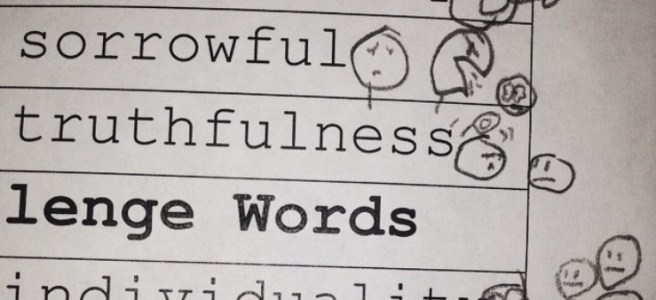
You have to be courageous, confident, and often live with regret when you are honest, because people rarely want to hear the truth. The image I’ve included in this post is a sketch from my son. In order to remember his spelling words, he sketched faces beside them expressing what he believed conveyed the word. When you look at the faces beside “truthfulness,” although one wears a halo, they both look anxious. Telling the truth is hard; hearing the truth is hard.

My father once told me, “You couldn’t be more like me if you tried.” Although I was sincerely flattered to hear that, I knew it meant I am also brutally honest, have a terrible poker face, and tend to alienate people because I struggle with being dishonest even in polite conversation when sometimes you should be. This is not to say I have never told a lie. I have. And some have caused irreparable damage in my life. It’s just that lying to people causes me great internal struggle, reddens my face, and fills me with crippling guilt.

Similar to most people, it’s also not easy for me to hear the truth. When people have told me I’m too analytical, sensitive, dramatic, or that I remember more negative details than positive, I stiffen with defensiveness. All of the preceding statements are true. I am also self-deprecating, affectionate, and loyal. The older I get the kinder I am to myself (and others), and I try to work with not against my human flaws.

One of my most irritating traits, I’m guessing because I’ve received a lot of flack for it, is my incurable need to discover the “why” behind just about everything. Why did my mother leave? Why did my stepmother beat me? Why do dishonest people seem to have more success than honest ones? Why did my brother get killed? Why did my husband die? Why do I have so much trouble sustaining a romantic relationship when others seem to just do it? Why are people mean? Why I did reject the man I believe is my true love?

On a positive note, once I process the Why in my head, through writing, art, or talking, I can usually let it go. In some cases, like with the death of my brother, I’ve had to make peace with not knowing why it happened. That has taken 30 years. I’m still struggling with the true love question. The other whys might be explained with psychology, self-help books, chats with friends, or talk therapy–of which I’m a huge advocate. But one important lesson I’ve learned is that in order to process these questions and heal, you have to be 100% truthful.

In the book, The Courage to Heal, which I highly recommend if you’ve suffered any personal trauma, the word courage is aptly used. It’s so much easier, and fun, to ignore our flawed humanness and not heal. For years, I was the party girl, loved getting drunk, being around people, being loud and obnoxious, all in an effort not to spend time alone and seek the truth within myself. I’d gone to therapy, but never engaged fully with the tenets. It took my loving someone other than myself to see how badly I needed help.

This person is still in my life, and because we’ve hurt each other, we have had to start rebuilding trust from the bottom up. Being honest takes courage, confidence, and working through regret to move forward when we hurt each other now. But, as you’ve probably heard or experienced, there is no greater reward than having an honest, open relationship with someone you love. And I want that.


Where Are You, Gen Xers?

My current job, working as the Senior Writer/Editor for a foundation at a land-grant university, involves sharing stories, Tweets, photos, and more on various social media. Most recently, on #GivingTuesday, I was checking out articles on LinkedIn, one of which mentioned “how to get Millennials to donate.” Since two of my children are Millennials in their early 20s, and I volunteer for another local foundation, I clicked on the link.

About 2/3 of the way into the article, I came across a paragraph that compared Millennial philanthropic trends with Baby Boomer trends. I kept reading, waiting to see how Gen Xers felt about philanthropy. Guess what? There was no mention of Gen Xers in the entire article. Zip. Zero. Zilch. So, I became curious. And like a Millennial, I went to Google and typed in Generation X.

Suddenly, a whole new world opened to me. I was born in 1968 and have always considered myself a Gen Xer. With a brother born in ’66 and one in ’75, I’m also the middle child. Coincidentally, Gen Xers are called the Neglected Middle Child, mostly because there are 70 million plus Boomers and 70 million plus Millennials, and there are only 50 million plus Gen Xers. Why the discrepancy? Well, lucky for us, even though the hippies were having a lot of sex, in the early 70s, birth control and legalized abortion helped them have fewer children.

After visiting a few more websites, I found conflicting information regarding the specific dates that designated a person as a Gen Xer. My theory holds at this: Gen Xers were born in between the early 60s and the early 80s. And, similar to astrology, if your birthdate straddles those years, you are said to be on the cusp, or a cusper. So, my uncle John, for instance, who was born in 1965, probably has Boomer and Gen Xer traits.

When I think about my being a Gen Xer, I think about being a child of divorced Boomer parents who needed to “find themselves,” walking everywhere by myself, and being raised on or by television. I often joke that my father (a single parent until I was six) used the TV as a babysitter. Through my research, I discovered I wasn’t alone. Many, if not most, Gen Xers were left home alone with little more than the TV and their siblings to keep them company. It’s probably why we love pop culture!

On a positive note, Gen Xers are independent, resilient, hard-working, and have a sardonic wit. I remember bristling, years ago, when I heard us called the “Slacker Generation.” WTF? When I was 12 I got a paper route. And from that moment on, my father gave me no more spending money. So then I worked as a babysitter. Then as a lifeguard. McDonald’s manager. Nursing home diet aid. Retail sales. Bakery cashier. Then, when I was 20, I joined the navy to get the G.I. Bill because my father wouldn’t help me pay for college.

I’m happy to report we are the generation responsible for creating Hip Hop and paving the way for ethnic diversity. When I think of my childhood, I think of Sesame Street, Captain Kangaroo, and the Electric Company, which we watched in second grade as part of our curriculum. Also, with my father, I watched shows like Good Times, What’s Happening, Laugh In, and the Sonny and Cher Show.

On a negative note, Gen Xers, because we were almost always left alone, referred to as the “latchkey” kids, and were often physically and sexually abused, have become the “most devoted parents in American history.” Some folks call us “helicopter parents.” Guilty as charged. Both of my adult daughters failed out of college, although they grew up watching me bust my butt to earn a BA, an MA, and an MFA, all in writing. I did that without parental support. My daughters have oodles of support. Have I killed their ability to stand on their own?

Anyway: this post is a plea. If you’re a Gen Xer, I want to hear from you! After all, peers are more important to us than parents. I plan to continue my research. If you want to share a story with me, please email me at cindyjoy68@gmail.com.

Why Psychotherapy is like Kale

Psychotherapy is not easy, or fun. It’s good for me, even necessary, but I don’t love it. Psychotherapy is like kale: not nearly as tasty or enjoyable as homemade macaroni and cheese, or pizza, but sometimes, I have to force it down.

One of the biggest issues about not seeking help from a psychotherapist is that we rarely know why we display negative behaviors. Often, we react to stimuli based on a complex process of unresolved issues (or trauma) from childhood. Some behaviors are good, like holding a door for someone or not cheating on a test. But others include slamming the door in someone’s face, tearing up your husband’s baseball card when he stays out all night, or yelling at some unsuspecting cashier. Consistently negative behaviors harm us and can destroy relationships with people we love.

Before I turned 18, my birth mother ran out on us; my father remarried a physically and emotionally abusive woman; my step-uncle sexually abused me; my stepmother slept with one of my boyfriends; my older brother was killed in a motorcycle wreck; my younger brother was kicked out of every elementary school in our town; and I moved in with an abusive, cheating, drug-dealing boyfriend.

Phew. I realize there are millions of people who’ve suffered far worse tragedies than I did. I’m not searching for pity, only understanding, a willingness to see another perspective. A family member once said, “In my day, we didn’t go to therapy. We solved problems by ourselves.” Hmmm. This family member drank a six pack every night just so he could fall asleep. And he stayed in a marriage with a cheating spouse for 20 plus years.

At 21, I eloped with a man we’ll call Jon. This was one week after I admitted to my parents that I’d been sexually abused as a child. My father said, “You must have liked it because you never told us.” My stepmother said, “You’re just trying to cause problems.” Um, no. But before you hang these folks out to dry, I can assure you these are typical responses. (After my father divorced the nightmare, he spent the last 15  years of his life apologizing to me for the earlier response).

In the wake of Donald Trump’s accusers coming forward about his sexual misconduct, many people ask, “Why didn’t they come forward when it happened?” I echo comedian Seth Meyers’s response. For reasons that seem absurd, our society tends to blame the victims of sexual abuse. I was four when my uncle started abusing me and nine when I screamed, which sent him running from the room never to touch me again. If anyone says a four year old girl is asking for it, he or she should be flogged.

Often times, people who’ve been sexually abused as children become hyper sexual, engaging in risky behaviors like having unprotected sex with numerous people largely because their personal boundaries were destroyed. In addition, subconsciously, they’re scared of getting too close because others might get to know them and judge them for their “shameful” past.

For two decades, I moved guy to guy, always dumping a good one who loved me for someone who treated me like the piece of shit I thought I was. It was as if I were saying, “Don’t get close. I don’t want you to know the real me because I’m no good. I deserve to be with a piece of shit.” In recent years, science has offered new theories on addiction, drugs, sex, food, shopping, alcohol, saying it might have more to do with attachment disorder than genetics.

A theory is a theory, but it makes sense to me that someone who has lingering feelings of being discarded, neglected, and abandoned, might have serious problems with interpersonal relationships (lack of trust, PTSD, fear of authority). I have a solid circle of male and female friends, people I’ve known for years who love and support me. They appreciate my unfiltered speech, openness and honesty. But if you asked the men from my past what it was like to love me, you’d get another story.

After years of pushing good men away when they got too close, I ran out of luck. The man I shared a deep love and even deeper friendship with, the man I grew closer to than anyone in my life, drew a line in the sand. “If you don’t want me,” he said, “I’ll go.” It was the exact opposite of what I wanted and needed, but I was used to my past coping skills, so I let him go and moved on to the next guy. I also went into therapy.

In the year that followed, something happened. Through long discussions with a psychiatrist, talks with friends, and reading self-help books, I stopped. Instead of pointing my finger outward, I turned it on myself. I needed to excavate my painful childhood memories, unearth them, and examine them to set them free.

Over the past several months, I’ve been attending therapy once a week, including doing EMDR, which tastes like kale but is so good for me! Sometimes I break down bawling. Sometimes I just want to run. My therapist challenges me. I’ve processed one old memory and am working on a second. There are plenty more. But I feel more confident in my ability to move around in the world, to forgive myself and others, to recognize that the man I loved and lost did me a favor. He forced me to take stock of myself and see I am not my past, I can be better, but I need to do more work. It’s a long, long road, and at the end, I hope they have pizza.