If I Had More Time I Might Be a Plumber

What compels the non writer to approach the writer and say things like “I’d write a book, too, if I had more time”? or “I should be a writer, but I don’t have the time.” What a flippant statement. It’s as though all writers work at dream jobs where they make oodles of money for dreaming.

When the plumber visits my home and lies on his back beneath my sink with tools I barely recognize, and twists pipes, pulls out hoses and gets dirty, I don’t say, “I would do that myself, but I’m too busy.”

A good friend of mine was taking a creating writing course as part of his political degree. He’s actually a great writer, especially memoir. He asked me to proofread and edit his personal essay. I was pleasantly envious of his piece called “Redwood Paddle.” He asked, “Why would you ever choose this as your career? It’s so hard.” I laughed, and said, “I didn’t. It chose me.”

Recently, a man I met kept inviting to his house. I said No repeatedly because I’m trying to finish my childhood memoir for a book contest. I told him, Writing is a matter of life and death for me. He said, “I wouldn’t say it’s a matter of life of death for me. I do it for work.” I wanted to say, “No shit.”

Writing is not a matter of life and death for the non writer. I don’t mean to sound snarky or elitist. But whatever your passion, whatever you do to get you through this thing called life–whether it be painting, farming, working with kids, quilting, cooking, social work, nursing, gardening, leather crafting, bead work, etc., Only you understand that love, that drive, that devotion, that calling, and why you desperately need to do it. I’ve been a writer since I was able to put letters on paper. Often I wish I was a plumber. But I just don’t have the time.

One Way to Negotiate When You Lose a Dream

Dear readers: I have not fallen off the edge of the earth. I have been so busy at my day job, that I have not been able to work at what I love–creative writing. At least I can say I have a job in my field. But, I’d like to share why I work in marketing and communications instead of teaching, which was my dream.

When I received my MFA in creative writing 11 years ago, I was sure I would get a teaching job “just like that” mostly because I’d wanted to be a teacher since I was nine, and wasn’t that enough? I taught through my graduate programs, and took every teaching class that I could. And I was so passionate. I loved my students.

I did land a teaching job for a year, and I loved it. It was at a university, with 24 first-year students in English Composition and Rhetoric and Persuasive Writing. For one 17-week course, I designed the curriculum around gun control (pro or con) so the students could really delve into one issue. We watched Bowling for Columbine; they wrote annotated bibliographies; they presented their thesis statements before their classmates for critique; and we also watched Heathers.

One of my students vanished before the annotated bibs were due. “Missing Student” didn’t send me an email, she missed more than the allowed five classes, and I figured like so many others before her while I was a teaching assistant, she would simply fail. Let me interject: I hate to fail students. My heart is bigger than my red pen. When I first started teaching in 2000, I called students at home when they missed class. (Feel free to laugh.) By 2005, I’d learned that you can’t save every student, and you have to let them make their own decisions.

Fast forward to week 15. The rough draft of the term paper was due–an analysis of Bowling for Columbine in which each student took a stance for or against gun control and used scenes from the movie and other research as evidence. We were about to get started when in walked Missing Student. I shook my head and wanted to say, “I’m sorry. Why are you here?”

She asked to speak with me. She handed me a rough draft of her term paper: Stem Cell Research. Forget she’d missed the limit of classes, the annotated bib, and the thesis statement presentation. Missing Student started crying in front of the entire class, told me she’d been having a rough time and couldn’t I just let her come back. In 2000, I might have said yes. But in 2005, with the university policy hovering above my head, and my new convictions, I said no. And I gave her an F.

Weeks after the semester ended, my boss called me at home and said Missing Student’s mother phoned him, saying, “Why can’t my daughter receive a No Pass instead of an F?” My boss asked me to change the grade. I said no. I was following the university’s policy–any student with more than five absences and a zero in any other section of the course received an F. He said, “Come on.” I said, no.

The following fall, I walked into the bookstore to see what courses I was teaching. Zero. My knees buckled, and I almost started crying. I was told that “Enrollment was down.” But my peers from grad school still had their sections. And they also still teach at that same university now.

After working as a secretary for a year, I landed a job as a copy writer at another university. The pay was more than what I had been making as an adjunct, and I received full benefits. For nine years now, I’ve been working as a marketing and communications specialist. I write creative nonfiction and poetry in my spare time, and I’ve had a few teaching gigs at a community college. (Which I love!)

My father’s dream was to be an astronaut. But he had poor eyesight, asthma, allergies, and sought full custody of my brother and me after a bitter divorce. He apprenticed in shoe-repair and made a good living fixing shoes and crafting leather. Did he love it? No. But he smiled a lot, had a great sense of humor and was one hell of a good father. He’s often my inspiration to keep plugging along.
Ever Play A Scary Childhood Game?

Food Contest

It was more of a game that you half-invented–
half-stole from a show called Wonderama.
You blind-folded me, told me to hold my nose
at the breakfast bar in the kitchen, and guess
which food you’d shoved into my mouth. You were my
older brother, my first friend, and I would have
followed you right over a bluff into murky water
infested with piranha. . . I still played after the hot
pepper brought me to tears, the spoonful of baking
soda left me gagging over the kitchen sink,
the cucumber slice so thick with salt that my lips
puckered like an ass. But even I had to quit
after you laid the used match from dad’s ashtray
full of cigarette butts right on my tongue.

What’s More Important Than to Love and Be Loved?

My ex-husband Eric and I met 17 years ago at an airport bar in Lewiston, Idaho. He was the cutest man I had ever seen in my life. He asked me to dance to “Summer Lovin'” from Grease, and I said “No,” three times before I finally gave in. While we danced he kept smiling, wide and earnest, with a gap between his front teeth. Later he told me he kept falling out of his flip-flops.
While we chatted later that evening, we learned that I was 29 and Eric was 19. His fake I.D. said his name was Steve Williams (AKA Stone Cold Steve Austin) and his address was 316 Austin Street in Clarkston, Washington. Even though we kissed, and I saw skyrockets, I refused to give Eric my phone number or let him take me home, because I was sure he was going to be some immature “dude” who would use me, toss me aside and break my heart.
Long story short for the sake of the blog, I called Eric ten days later because I couldn’t stop thinking about that smile. We started dating, fell in love and got married in 2001. I already had two daughters from two previous marriages–one ended in divorce, and the other in widowhood.
After seven years together, Eric and I had a son. I can say without hesitation Eric was born to be a “Dad.” He was a pretty good husband, too, although my being an extreme extrovert and his being an extreme introvert may have helped lead to our demise, along with my fear of getting too close to anyone.
We have been divorced for three years, and I still think he’s the only guy for me. The older I get, the more I learn, is there anything better in the world than L-O-V-E?

May Was the Cruellest Month (So Far)

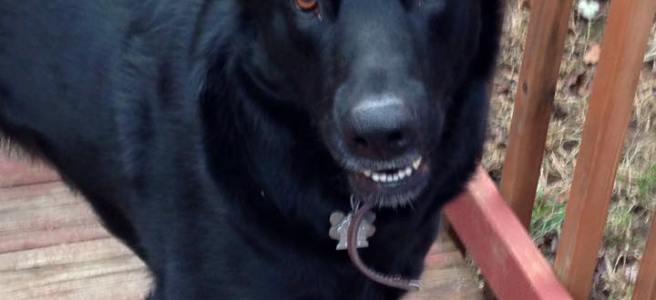
a dog standing on a deck

May Day is my brother Tony’s birthday. He was born in 1966. He died on May 3, 1987, in a motorcycle wreck. So every year at about mid April, I get the blues. On his birthday, I usually post a collage on Facebook with the message, “Miss ya, Tony.”

My brother-in-law Wes was born on May 12, 1970. He died in August of 1997 during a car accident. So every year, on his birthday, I post a photo and message on Facebook saying, “Miss ya, buddy.”

My husband Harly was born on May 17, 1969. He died in October of 1997 from a genetic liver disorder. So every year, I post a collage on Facebook with the message, “Miss ya, Har.”

Once I am passed those three rough days, I feel better. But this year, on Harly’s birthday, I got a bonus. While I was pulling weeds in my backyard, my 95 pound black lab/Newfoundland Gus was chasing my pitbull Ginger and I got in the way. Gus came running at me top speed and hit me just about head-on. It felt like a flying brick. I yelled, “Ow, ow, ow,” and wobbled into the house to get some ice.

After looking up concussion symptoms on the web and seeing that I was going to be OK, I took it easy the rest of the night. But the next morning, when I looked in the mirror my jaw hung open: I had two black eyes. I worked from home the entire week. On May 22, I took the skills test for my Certified Nursing Assistant with two black eyes. The rater, who was a nurse, raised her eyebrows and said, “Your dog did that?”

I can’t ignore the looks I’ve been getting for the last three weeks. I wonder how many people think I am in a domestically abusive relationship. Part of me feels like a movie star, skulking around my small town in sunglasses all the time. Even today, I have two thin marks left, two purple reminders of Gus’s faux pas.

Boy, am I glad June has arrived. May, you can kiss my *ss.

Smoking With My Brother

You left us at 21—brown leather jacket and
blue jeans, feathered hair parted down the middle,
freckles, the bright green eyes you got from
our mother. I never wondered if her leaving
broke you, smoking and drinking by 12,
popping pills by 13, dealing drugs in your
Windsor knot and dress pants to the stoners
at our catholic school just down the block
from home. You worshiped the Doors,
danced with the gangly arms and wild heart
of a rock star, and Dad imagined you’d run off
to join a band and never come back—like her.

After your wreck on that rainy night, we found
your box of poems, foretelling a life that would
end before you aged. “Never trust anyone over
30,” the hippies once chanted, and you would
have raised your fist right alongside them.

Dear brother, this year you would be 49, far
too old to trust—and yet, I would still follow
your hunched shoulders all the way down
to the creek slithering behind Grandma’s,
pack of lifted Winston 100s and box of matches,
I’d perch beside you on a flat rock, light
the cigs against the wind, and not yet knowing
how to inhale, but so you’d think I was as cool
as I believed you to be, hold the smoke in my mouth
as long as I could stand, the stale taste of tobacco,
cotton and paper mixing on my tongue, pretend.

Finding a Mother’s Day Card

Every May I sift through the glut of greeting cards
with their glowing notes: Thank you for raising me,
You’ve always been there, and To my best friend.
I look for the one that says, Enjoy your day,
because Carla, as my mother signs letters to me,
was never a Mom. She and my father split up
when I was a baby, and Dad told her never to come back.
She went away to college, traveled the world,
let another woman feed me, bathe me, beat me
with leather belts. I see her in a black turtleneck and
blue jeans, svelte, five-ten, hair to her waist, bright green eyes,
cheek bones that could slice paper. She sips Scotch,
smokes Marlboro Reds, poses for art students, sketches
self-portraits. At 40, she walks down the aisle, again,
settles into a new life in New England, spends her days
in an art studio piecing magazine clippings into collage art,
teaching millionaires’ wives how to paint. We met once
in my hometown, hugged like strangers, dined on prime rib,
returned to our separate lives of sending letters
about the weather. Some friends say I owe her judgment,
others, respect. As every new spring brings
its buckets of rain, I wonder what we owe each other.

Exile — Poem from Suede: A Collection of Poetry

Exile

As soon as I showed signs of rebellion—

drinking, missing curfew, talking back—

my parents sequestered me to my

second story room where, in winter,

I could see my breath. It was an exile I came to love:

four windows, the moon peering like a voyeur

through pink floral curtains—so far—

yet close enough that I could steal its light to sketch.

In summer, a small window fan chopped my friends’

voices from the streets below, drew up that second flight,

a light breeze, so I could breathe.

When the smell of dinner wafted up the stairs,

I trudged to the kitchen where my stepmother,

sipping tea, said, No one wants you here.

Back in my room, I sketched John Lennon—

imagined that he’d written “Mother

just for me—and Marilyn Monroe,

another girl left by her mother who made me think,

someday, I might see my name across

a marquee. But at sixteen, freedom

and fame were as distant as the stars.

So, I stole a Valium—yellow and round—

from my stepmother’s jewel box, held my breath

and swallowed it down, then lay across

my bed spread, drawing the moon.

What Some People Think About People On Welfare

There have been a few times in my life I have received public assistance or “welfare.” When my father was a single parent taking care of my brother Tony and me, we were on food stamps, though I don’t remember.

In 1994, when I quit working a grueling grocery store job to attend community college full-time, I received public assistance, which was $400 a month, $300 in food stamps, a Pell Grant, and $600 a month from the U.S. Navy G.I. Bill for my four years of service. At the time, I was a single mother with one child.

I felt no guilt for receiving the government benefits. I’d had a paper route at age 12, babysat at 13, worked as a lifeguard at 15, McDonald’s from 16 – 18, nursing home from 18 – 20, then joined the navy. Those benefits were a way for me to move up from being a blue collar worker to a college instructor. My American Dream.

Imagine my dismay when I came out of the dentist in a small town in eastern WA, in some pain after having had a filling, and hearing what I am about to share. (It should be noted that I’d had a root canal in high school from chewing too much Big Red, but I learned my lesson. And in the navy, the dentists re-did my root canal–twice.) I was told I had to have a crown. So, on my way out of the office, I asked the admin assistant how much a crown cost. She scowled at me and said, “Welfare doesn’t cover crowns!” I never went to that dentist again.

Fast forward to three years later: my 27-year old husband Harly had a genetic liver disorder. He couldn’t work. I was a junior in college with a five-year-old daughter and brand new baby girl. We applied for food stamps and Medicaid, but because my car was worth $5K, we were denied. I asked the woman behind the desk, “Are we supposed to eat the tires?” Eventually, Harly was able to get disability.

Fast forward a few more years. I was talking to the sister of a friend. The sister’s name was Maggie. She worked as the gestapo at a low-income housing complex and boasted about how she never gave people who left their full deposit back. She said that when she walked into their homes, the places “smelled like welfare.” Maggie told me, “Only single moms get Pell Grants,” and that “She’d never been poor, so she just couldn’t identify with those kind of people.” It took all my strength not to slap her freckled face.

It’s a shame that welfare recipients as a whole get such a bad rap. Statistics show again and again that only a minority abuse the system. I have taught at my Alma mater, Walla Walla Community College, for eight years, and every time I teach a new class I tell the students my story. I was a welfare mother who went to college and eventually earned two graduate degrees. If I could it, so could they. As long as what they are doing is in good faith, there is no reason to be ashamed to ask for help.

My Father Wondered Why I Was Precocious

My father was single, and he owned a shoe repair and leather crafting business when I was a girl. Besides the leather pants, vests and belts that filled the store, he sold water pipes, rolling papers and roach clips. As a five year old, I was surrounded by psychedelic posters, tie-dyed T-shirts and peace signs. And in the workshop, my father tacked Playboy calendars and posters of nude women on the walls.

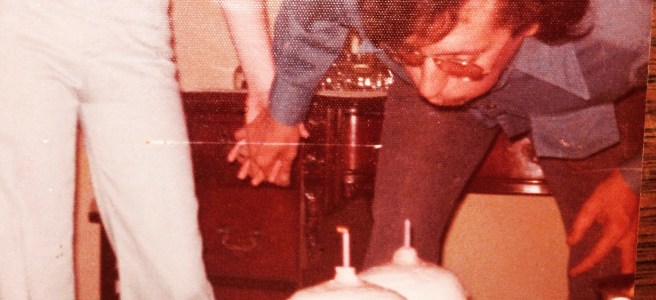
When my father turned 27, his very young girlfriend threw him a surprise party at our apartment. There were streamers, balloons and a cake made of breasts. I am grateful that photos exist from this party. I was too young to be invited, of course, and had been sent to bed. But when I look at the photos from the party, I see my father–his Tony Orlando hair, his denim work shirt, the thin beauty on his arm–personified.

I am happy my father was so young, 22, when I was born. Often he was more like an older brother than a father. He was patient and funny, and he wasn’t ashamed of anything. I asked tons of questions, which he always answered. When I asked questions about sex, he told me the truth–often with street slang. Anyone who wonders where I get my “to the point” method of communication can stop wondering. I am both grateful for this gift and have spent a lifetime trying to improve myself.

I miss my father. He was a great parent, mentor and friend.