Dump the Narc — Keep the Dogs

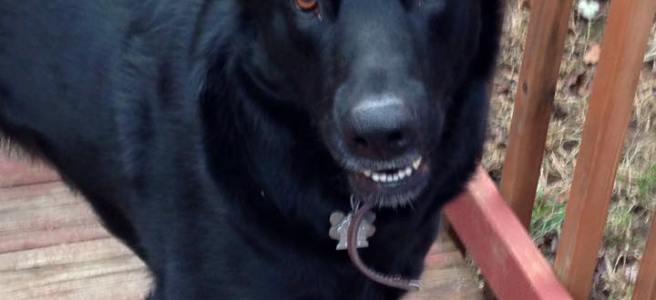
If you’ve ever dated a narcissist, you will identify with this post. If you haven’t ever dated a narcissist, you’re damn lucky. Few experiences make you question your self-worth, sanity, and reason to live more than being “loved” then dumped by a narcissist. I say dumped because they are people who dispose of things and people once they are used up. The first time the narc came to my house, my black lab chewed up his phone charger. Smart dog.

“Narcs” love vulnerable people. You know, widows, the broken-hearted, the poor bastard going through a mid life crisis. And the worst part is they are exactly whom you were looking for. The rescuer. The comedian. The princess. The prince. This is because they are chameleons, changing shades and personalities to be everything you had ever hoped for. Love live music? So do they. Love politics? So do they. And if you like hiding from the rest of the world, they love that best. You will find yourself saying “I can’t believe how alike we are.”

However, the moment you begin to show a sense of self outside the narc’s view, beware. The narc is king and you are merely a subject. Avoid telling truth to power if you want to stay in the narc’s good graces. Otherwise, you will be out on your can. And don’t ever criticize–you will be extracted from their life.

One narc I dated drew me in with promises of intimacy and closeness. We had a long distance relationship, consisting of FaceTime, text messages, and emails. When we did interact in person, we were electric. He was sarcastic and cute, and I really liked him. However, his decades long pot habit had given him the memory of an errant puppy, and when I called him on it he flew into a rage.

The narc often told me to wait in the car when he stopped by a friend’s house, or the store. I thought, What the hell? Is this the 50s? He once turned to me and said, “There’s stuff in the fridge. Go make us a couple of sandwiches.” I started laughing hysterically. He said, “What’s so funny?” I thought he was joking. And yes, I made the sandwiches.

One morning after breakfast in a diner, the narc introduced me to his friend who was thinking of joining the army. I talked to this young man about my stint in the navy and how I went to college and grad school. The narc interrupted and said, “She also sells crack to kids.” On the walk to the car, I said, “Why did you do that?” The narc went bananas! “Can’t you take a fucking joke?” The narc had never finished high school.

I knew we were over when the narc barked an order at me and I said, jokingly, “Quit telling me what to do.” Right there, mid vacation, (we had three days left) he said, “I think we’d be better off as friends.” This from the guy who said we belonged together forever. I walked to the bedroom and started crying.

Over the next three days, the narc and I acted like roommates. He went back to his town, and during a long phone conversation in which we truly broke up, the narc said “Tell everyone this break up was mutual. Don’t put that shit on FB. You will look like an immature drama queen.” Would you believe I listened to him?

Luckily, the narc and I only dated a few months, and yet, I was reeling. I started running long distances and imagined his lying face beneath my right foot every time it hit the pavement. Ahhhh. Ahhh. Ahhh. I spent a lot of time crying that December.

After our mutual friends learned about the break up, they told me, “He’s a huge loser. We couldn’t figure out why you were with him.” I rolled my eyes. I fell for him because I had lost my father and the narc came to his funeral. I was so tuuched. We started texting, he called me “Baby” (puke), and the rest is history.

The red flags were abundant and waving. I should have known the minute Gus chewed his phone cord that the narc was not accepted by my very smart dog. Looking back, I see this as a wonderful learning experience. My antenna are up, and I have taken a haitus from dating. Until then, I will hang with my dogs.
The Truth Is Sometimes Painful

I grew up with a father who loathed dishonesty. I credit his Italian American pride, or perhaps growing up catholic, but nothing made my father angrier than learning he’d been lied to. He tended to be “brutally honest,” and the people who loved and admired him appreciated that. As his daughter, I feared his truth-telling when I was as a girl because I was extremely sensitive, but eventually I grew to admire the trait.

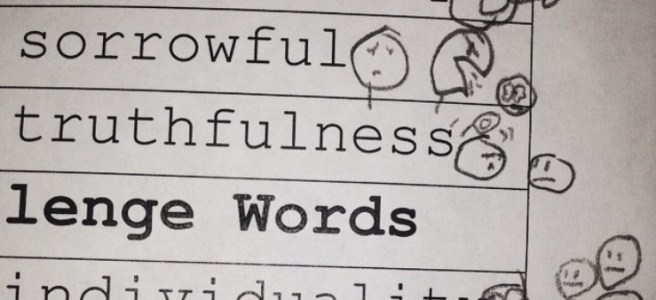
You have to be courageous, confident, and often live with regret when you are honest, because people rarely want to hear the truth. The image I’ve included in this post is a sketch from my son. In order to remember his spelling words, he sketched faces beside them expressing what he believed conveyed the word. When you look at the faces beside “truthfulness,” although one wears a halo, they both look anxious. Telling the truth is hard; hearing the truth is hard.

My father once told me, “You couldn’t be more like me if you tried.” Although I was sincerely flattered to hear that, I knew it meant I am also brutally honest, have a terrible poker face, and tend to alienate people because I struggle with being dishonest even in polite conversation when sometimes you should be. This is not to say I have never told a lie. I have. And some have caused irreparable damage in my life. It’s just that lying to people causes me great internal struggle, reddens my face, and fills me with crippling guilt.

Similar to most people, it’s also not easy for me to hear the truth. When people have told me I’m too analytical, sensitive, dramatic, or that I remember more negative details than positive, I stiffen with defensiveness. All of the preceding statements are true. I am also self-deprecating, affectionate, and loyal. The older I get the kinder I am to myself (and others), and I try to work with not against my human flaws.

One of my most irritating traits, I’m guessing because I’ve received a lot of flack for it, is my incurable need to discover the “why” behind just about everything. Why did my mother leave? Why did my stepmother beat me? Why do dishonest people seem to have more success than honest ones? Why did my brother get killed? Why did my husband die? Why do I have so much trouble sustaining a romantic relationship when others seem to just do it? Why are people mean? Why I did reject the man I believe is my true love?

On a positive note, once I process the Why in my head, through writing, art, or talking, I can usually let it go. In some cases, like with the death of my brother, I’ve had to make peace with not knowing why it happened. That has taken 30 years. I’m still struggling with the true love question. The other whys might be explained with psychology, self-help books, chats with friends, or talk therapy–of which I’m a huge advocate. But one important lesson I’ve learned is that in order to process these questions and heal, you have to be 100% truthful.

In the book, The Courage to Heal, which I highly recommend if you’ve suffered any personal trauma, the word courage is aptly used. It’s so much easier, and fun, to ignore our flawed humanness and not heal. For years, I was the party girl, loved getting drunk, being around people, being loud and obnoxious, all in an effort not to spend time alone and seek the truth within myself. I’d gone to therapy, but never engaged fully with the tenets. It took my loving someone other than myself to see how badly I needed help.

This person is still in my life, and because we’ve hurt each other, we have had to start rebuilding trust from the bottom up. Being honest takes courage, confidence, and working through regret to move forward when we hurt each other now. But, as you’ve probably heard or experienced, there is no greater reward than having an honest, open relationship with someone you love. And I want that.


What’s More Important Than to Love and Be Loved?

My ex-husband Eric and I met 17 years ago at an airport bar in Lewiston, Idaho. He was the cutest man I had ever seen in my life. He asked me to dance to “Summer Lovin'” from Grease, and I said “No,” three times before I finally gave in. While we danced he kept smiling, wide and earnest, with a gap between his front teeth. Later he told me he kept falling out of his flip-flops.
While we chatted later that evening, we learned that I was 29 and Eric was 19. His fake I.D. said his name was Steve Williams (AKA Stone Cold Steve Austin) and his address was 316 Austin Street in Clarkston, Washington. Even though we kissed, and I saw skyrockets, I refused to give Eric my phone number or let him take me home, because I was sure he was going to be some immature “dude” who would use me, toss me aside and break my heart.
Long story short for the sake of the blog, I called Eric ten days later because I couldn’t stop thinking about that smile. We started dating, fell in love and got married in 2001. I already had two daughters from two previous marriages–one ended in divorce, and the other in widowhood.
After seven years together, Eric and I had a son. I can say without hesitation Eric was born to be a “Dad.” He was a pretty good husband, too, although my being an extreme extrovert and his being an extreme introvert may have helped lead to our demise, along with my fear of getting too close to anyone.
We have been divorced for three years, and I still think he’s the only guy for me. The older I get, the more I learn, is there anything better in the world than L-O-V-E?

May Was the Cruellest Month (So Far)

a dog standing on a deck

May Day is my brother Tony’s birthday. He was born in 1966. He died on May 3, 1987, in a motorcycle wreck. So every year at about mid April, I get the blues. On his birthday, I usually post a collage on Facebook with the message, “Miss ya, Tony.”

My brother-in-law Wes was born on May 12, 1970. He died in August of 1997 during a car accident. So every year, on his birthday, I post a photo and message on Facebook saying, “Miss ya, buddy.”

My husband Harly was born on May 17, 1969. He died in October of 1997 from a genetic liver disorder. So every year, I post a collage on Facebook with the message, “Miss ya, Har.”

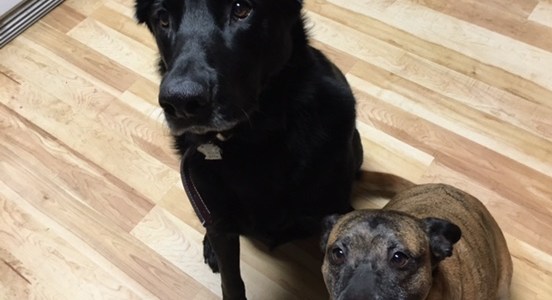
Once I am passed those three rough days, I feel better. But this year, on Harly’s birthday, I got a bonus. While I was pulling weeds in my backyard, my 95 pound black lab/Newfoundland Gus was chasing my pitbull Ginger and I got in the way. Gus came running at me top speed and hit me just about head-on. It felt like a flying brick. I yelled, “Ow, ow, ow,” and wobbled into the house to get some ice.

After looking up concussion symptoms on the web and seeing that I was going to be OK, I took it easy the rest of the night. But the next morning, when I looked in the mirror my jaw hung open: I had two black eyes. I worked from home the entire week. On May 22, I took the skills test for my Certified Nursing Assistant with two black eyes. The rater, who was a nurse, raised her eyebrows and said, “Your dog did that?”

I can’t ignore the looks I’ve been getting for the last three weeks. I wonder how many people think I am in a domestically abusive relationship. Part of me feels like a movie star, skulking around my small town in sunglasses all the time. Even today, I have two thin marks left, two purple reminders of Gus’s faux pas.

Boy, am I glad June has arrived. May, you can kiss my *ss.

What Not to Say After a Funeral

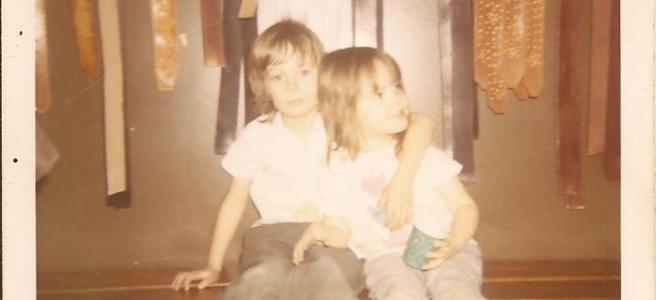
Brother and sister

When I was a senior in high school, I took a class called On Death and Dying. During one particular class period, the teacher, Mr. Jones, asked, “Who in here has had someone close to them die?” A few people raised their hands. I was
not one of them. At 17, I still had both parents, grandparents, siblings, and had never lost anyone. Within a year, all that would change.

In May 1987, my 21 year old brother Tony was killed in a motorcycle accident. I was 18. Suddenly, all that abstract information about Elisabeth Kubler-Ross and the Five Stages of Grief came flooding back. Mr. Jones showed up at Tony’s funeral, and I remember thanking him for the class. I told him I would be a wreck (as if I weren’t) without having all that knowledge.

The aftermath of Tony’s death was far more painful. My father leaned on his wife for strength, and my younger brother was 11. So, I felt as though I had no one to turn to who understood the depth of my pain at losing my beloved brother. Tony would have been the person I leaned on had our father or grandfather or younger brother passed. I’d heard the word “Sorry” from hundreds of people, hundreds of times, so it became empty. And I became angry that everyone else was able to return to their everyday lives.

Over the next several years, when I talked about Tony’s death to people who had never experienced the loss of a loved one, I was stunned by some of the responses I heard. “You must be strong. If my sibling died, I’d kill myself,” or “Everyone dies. You need to get over it,” or “I know just how you feel. I once lost a cat.” I listened to these comments in silence, judging these ninnies in my head.

Exactly ten years after my brother was killed, I lost my young husband to a genetic liver disorder. I wrote “Harly’s” eulogy, and invited two of his cousins and one of his best friends to speak at the funeral. I played a couple of his favorite songs from the 80s. During the eulogy, I tried hard to keep from crying as I relayed the last six months of his life in his struggle against Wilson’s Disease. I did the best send off I could to honor my 27 year old husband. Tony’s death a decade earlier probably helped me emotionally when dealing with Harly’s death and the grieving that followed.

Once again, however, I was ill-prepared for the comments that would come after the funeral. “Wow. My husband and I have had our problems. But I’m so lucky to have him,” and “Your eulogy sure was negative,” and “Why did you have an open casket. We didn’t need to see him,” and “You must be strong. If I lost my husband, I would kill myself.”

Now, in the defense of these folks, no one knows what to say if they’ve never been through this, right? So, looking back, and it’s been 27 and 17 years, respectively, I can say, no one meant to come right out and pour Tabasco sauce into my open sore. At the same, I like to hold on to a statement said to me as I stood outside the funeral home talking to friends. Reed Herres, a long time friend of Harly’s, walked over to me, and said, “I don’t know what to say. So I’m not going to say anything.” And then he hugged me.

You might think because I’ve been through the death of a sibling, and a husband, and now my father, that when I attend a funeral I know just what to say to the grieving. Nope. I find myself at a loss for words just like so many others. Every person grieves differently, and every loss is a new experience. Depending on how well I know the person, I tend to follow Reed’s example and offer a hug. Then I lean forward and ask, “Is there anything I can do for you?”