Breaking Bad (Behavior)

Back in the summer of 2009 I started seeing a therapist because my childhood haunts were interfering in my eight-year marriage in a very real way. I was blissfully married, and I was afraid I was about to destroy everything. But why?

My therapist “Bruce” was (and is) one of the coolest people I’ve ever met. His face is careworn, and his hair hangs to his shoulders in thin white strands. He looked sort of like Bill Murray, and we joked about how much we loved the movie What About Bob?

Bruce was old enough to have been in practice during the I’m OK; You’re OK phenomenom of the 1970s. However, Bruce developed his own version of the mantra: “I’m fucked up; you’re fucked up.” That saying felt so much more real and relatable. And, after I left my sessions with Bruce, I felt sane and normal.

Bruce and I discussed childhood abuse of all types, and the lingering effects. I was sure those “effects” were leading me to think Eric was going to dump me. Other than his being extemely introverted and pensive, there were no real signs. And with the gift of hindsight, it may have been better to talk to Eric instead of the therapist.

Regardless, another topic Bruce and I talked about was breaking the cycle of abuse. He said the statistics show only about 1 in 5 people is able to succeed. I wondered about myself. By this time, I had a 17-year-old daughter, a 13-year-old daughter, and 4-year-old son. I had given them spankings on occasion, and did my fair share of yelling. But abuse?

When I had my first baby, Jessica, she was so beautiful and precious with the most perfect little fingers, I could NEVER imagine hurting her. Her father and I agreed there would be no spankings. Then he left to serve on a navy meteorological team in Japan, and I stayed state-side with his parents and Jessica.

After Jessica learned to walk, like most toddlers, she ventured around and got into things she shouldn’t touch. One day, I tried repeatedly to keep her from sticking her hand into the kitchen garbage. After numerous unsuccessful attempts, I took her right hand and lightly slapped it. She started crying. My chest ached, but she never touched the garbage again.

When compared to the “spankings” I received as a kid, I would say my kids got off easy. I never used any weapons, like leather belts, wooden spoons, or knuckles or diamond rings to the head. Slaps across the face were also a no-no. I’m aware people have strong opinions about physically punishing children, and as for me, because of the severity of the beatings my brothers and I endured, I dislike anyone hurting someone smaller and weaker than they are.

Now that my daughters are grown, they blast me for being a fiery-tempered smart mouth when they were young more than inflicting physical punishments. I was 23 when Jessica was born. I divorced her father when she was two. I remarried when Jessica was four. Nine months after that wedding Josie was born. Then her father died when she was 18 months old. That’s a lot of chaos for two young girls and one woman to endure.

Although I’m resilient and loving, I am also brutally honest–like my father. He wasn’t always tactful, and he sometimes called me names like “goddamned dummy” or “nutcase.” At the same time, he was slow to anger. So, if he punished me physically, I had to have done something really wrong, like when I accidentally set a fire behind the Vestal Plaza in New York and got the belt. That only happened once.

There are definitely times I have snapped at the girls, yelled, or made a huge deal out of nothing. And, when I catch myself sounding like the icy voice of my former stepmother, I clam up. Fortunately, I apologize to my daughters when I’ve done something wrong. With my son, it’s so different. I was 36 when he was born, and although I’d like to say I have mellowed, to be honest, I was just plain tired.

My son was wild as a toddler. He had blond curly hair and a crooked smile. When he ran out onto the volleyball court midgame, then turned and grinned at me I wanted to thrash him. But he was so freaking cute, how could I? When his father and I eventually separated (my prediction of wrecking the marriage came true), Vinny was five.

Now, Vinny is a chill teenager. I couldn’t tell you the last time I spanked him or yelled at him. And over the past 18 months, with his sisters out of the house, and his father extremely busy with his new life, my son and I have spent an enormous amount of time together. We spent 8 days in New York, took two roads trips to Portland, OR, and many road trips to Coeur d’Alene, Idaho. In the car, we don’t listen to music; we talk. We talk about anything and everything. No subject is forbidden.

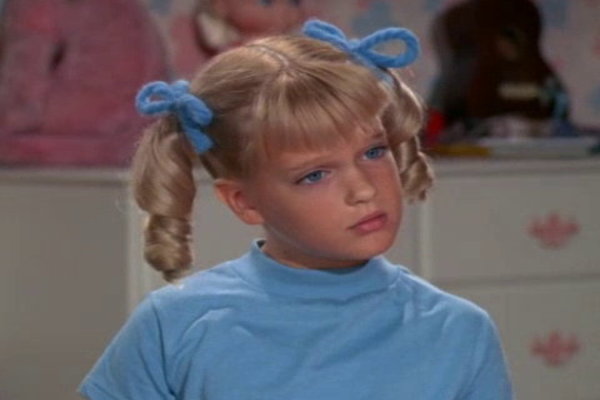
In my childhood home, there was no talking about feelings, no apologizing. There was no, “How was your day?” or “Do you want to talk about something?” When I watched the Brady Bunch, I was so envious when the mom or dad knocked on the kids’ door and asked to talk. Especially since there was a character named “Cindy.” If only my parents had come into my room with a soft voice, and said, “Cindy. Are you okay?”60354929
One of my favorite things about my relationship with my kids is our inability to keep secrets. I have always talked to them as if they were adults in training (because they are). And, as much as I loathe when they gang up on me, make fun of me for mispronouncing current band names or rappers, or pointedly argue with me — that is how their father(s) and I raised them. They need to advocate for themselves even if it pisses someone off.

My oldest daughter once said I was too easy on her growing up. My middle daughter says I was abusive. My son may be too young to look at me reflectively, but right now, we are as close as siblings. There are three things I have taken away from my father’s parenting: 1. Never be afraid to act silly in front of and with your kids. The humility will go a long way. 2. Tell the truth. 3. Don’t be afraid to apologize for your bad behavior. In that way, you teach forgiveness. I had to learn that one in spite of my father. I’m fucked up; he’s fucked up. We’re all works in progress, eh?
On the Broken Family

My mother and father split up when I was six months old, so my experience with the broken family started early. My first memories include my father, my older brother Tony, and many members of my large extended family. We are Italian-Americans from upstate New York, and except for mafia ties, we live up to the copious stereotypes: loud, romantic, passionate, beautiful, dramatic.

In 1975, my father remarried. I was six and Tony was eight. It was a different time, and we were not invited to the wedding or reception. In fact, Tony stayed with a friend, and I stayed with a friend of my stepmother’s. And although I don’t remember the woman’s name, I do remember playing the piano, and incorporating “turd” into an impromptu song. She yelled, “Hey! We don’t use that kind of language in this house.”

Six months after the wedding, my father bought us a house on the west side of Binghamton. My stepmother was 19, Tony was 9, and I was 7. My baby brother was 9 months old. We were told he was a “preemie” — but he weighed six pounds, six ounces at birth. You do the math.

Tony and I started at a new school. Although I wasn’t sure how we were different from other families, I knew we were different. My father was a shoe-repair man who owned a cobbler shop. Instead of wearing a suit to work, he wore denim and leather. My stepmother was a stay-at-home mother who wore no bra beneath her T-shirts, had Farrah Fawcett hair, and marble blue eyes. One of the young men in our neighborhood asked her out.

Mine was not a peaceful childhood. There was a lot of fighting between my father and stepmother about Tony and me. She was intensely jealous of anyone stealing attention from her. She was a screamer. My father was slow to anger, but once he broke, look out. And while he was not quick with the belt, she was. Any small thing could set her off–pots and pans “shoved half-assed in the cupboards,” food splattered on the floor, a crass remark. And she hit in public.

Tony started running away from home at age 14. I hid in my bedroom with books, TeenBeat, and sketchpads. My younger brother was beaten so often that when I reached to touch him, he ducked. When my father was home, my stepmother never yelled or hit us, and spoke with a sickeningly sweet voice. When my father was gone, she was a ticking bomb ready to go off at the occurrence of spilt milk. To this day, when I meet a person who reminds me of my stepmother, my antennae lift in response. And I have a sincere distrust of people who bully children. A therapist I saw for a while told me, “You have strong feelers for a reason. Trust them.”

In 1998, my father divorced this wife, after two decades of her infidelity, fighting, and confession that she stuck around for the money. One day I asked him, “Why did you stay so long?” He shook his head. “Ah. When you and Tony were small, whenever I saw your messy hair and dirty faces, it broke my heart. I wanted you to have a mother.”

The decisions we make out of love, or what we think is love, are often ill-fated. Self-delusion has to be one of the most powerful tools of the mind. Think here of the spouse of the serial killer who says, “I never knew.”

My first pregnancy and marriage was at age 23. It took me less than two years to rip that apart and create what I loathed–a broken family–all because some guy said I was his true love. Luckily, my ex-husband Jeremy is not a grudge holder, and we are still friends. God bless that guy.

Something about turning 50 has made my brain go wonky. I keep having dreams about my two ex-husbands, and my late husband, and I spend a lot of time wishing I had done things differently. Perhaps made decisions based on logic instead of “love.” Regret, coulda, shoulda, woulda, etc. Because of childhood abuse, I have been in therapy most of my adult life, and I am still working through a lot of the muck.

The therapist I’m seeing now is helping me connect the pain of my current heartbreak over losing Eric and the chance to rebuild our family with the lingering issues from my childhood. It’s a scary process, however, I’m determined to reach a place of peace and happiness. It’s easier to run away–drink, have sex, ignore your kids, and pretend everything is great. But at this point, I’m way more interested in doing the hard work if that’s what it takes to become unbroken.


Lust Kills Your B.S. Detector.

My father opened a shoe-repair business when I was two, and I spent a lot of time around adults. There was Joyce, the woman who made tie-dyes and sewed leather; Bob, my father’s buddy who fixed shoes; and the array of business men (it was the 70s and they were mostly men) who wore fedoras and suit jackets, and called me Chooch. Spending time around adults helped me cultivate a decent b.s. detector.

My memories from this period, before age four, are idyllic. My father had divorced my and my brother’s mother, and the three of us lived in a modest apartment. We were poor in money but rich in love, and we went everywhere together–the shoe-repair shop, the bowling alley, the bar. We ate TV dinners in front of the black and white console, mostly Laugh-In and The Sonny and Cher Show, or scarfed fried clam strips down the street at Sharkey’s Tavern.

After my father started dating “Vickie,” a high-school dropout with wavy bleached hair and freckles, my life changed. Although Vickie dressed my brother and me in nice clothes, and kept us clean, she also whipped us with leather belts and called us names. Her brother molested me when I was four. And, Vickie was a serial cheater. My father married her in 1975, and six months later my younger brother was born. He caught Vickie the first time when my brother was less than one.

My father and Vickie stayed together for 23 years. Living with her until I was 18 (I moved out on my birthday) taught me injustice, to keep silent, and to cower in the presence of a bully. Her brother had said to me, “Don’t tell your daddy what we did. He’ll think you’re nasty.” Vickie said to me, “If you tell your father I hit you, you’ll get it worse.” And when I told other family members or adults about what was happening in our home, I got a pat on the head, and a, “Oh, you’re just being dramatic.”

It may not surprise you that when I married, I fell for a male version of Vickie and left my relationship. More than once. Several people waved warning flags in my face, which I ignored. It wasn’t until the love of my life divorced me that I saw I was the problem. It took ten months for me to see through my male Vickie’s bullshit. Now, I’m single and am trying to make up for my mistakes through reading, self-reflection and therapy.

My father divorced Vickie in 1998, and he passed away in 2012. Vickie remarried and from what I hear, is cheating. I wish she would have sought help for whatever childhood haunts keep her in that self-destructive cycle. To make matters worse, I now have a good friend who’s been hoodwinked by his own version of Vickie. Did I warn him? Yup. Did he yell at me and cast me aside? Yup. It’s as if I’m reliving my childhood, watching my friend instead of my father, heading for a fall.

My hope for my friend, who usually has a keen bullshit dectector, is that he will wake up before too much damage has been done. But, similar to Vickie, his enchantress is pretty, fit, and an amazing liar. Friends tell me, “Don’t worry. She’ll hang herself. And then you can say, ‘I told you so.'” Problem is, I’m not going to say I told you so. I’m going to be there for my friend if he feels had can confide in me. Keep your fingers crossed.


The Truth Is Sometimes Painful

I grew up with a father who loathed dishonesty. I credit his Italian American pride, or perhaps growing up catholic, but nothing made my father angrier than learning he’d been lied to. He tended to be “brutally honest,” and the people who loved and admired him appreciated that. As his daughter, I feared his truth-telling when I was as a girl because I was extremely sensitive, but eventually I grew to admire the trait.

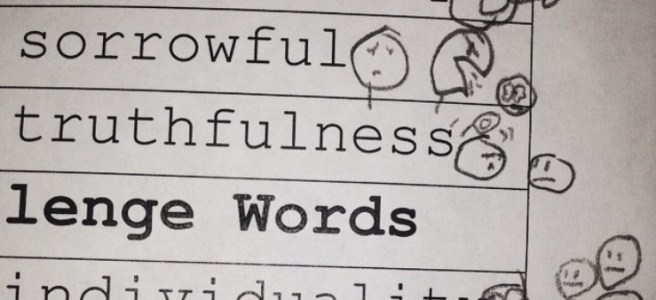
You have to be courageous, confident, and often live with regret when you are honest, because people rarely want to hear the truth. The image I’ve included in this post is a sketch from my son. In order to remember his spelling words, he sketched faces beside them expressing what he believed conveyed the word. When you look at the faces beside “truthfulness,” although one wears a halo, they both look anxious. Telling the truth is hard; hearing the truth is hard.

My father once told me, “You couldn’t be more like me if you tried.” Although I was sincerely flattered to hear that, I knew it meant I am also brutally honest, have a terrible poker face, and tend to alienate people because I struggle with being dishonest even in polite conversation when sometimes you should be. This is not to say I have never told a lie. I have. And some have caused irreparable damage in my life. It’s just that lying to people causes me great internal struggle, reddens my face, and fills me with crippling guilt.

Similar to most people, it’s also not easy for me to hear the truth. When people have told me I’m too analytical, sensitive, dramatic, or that I remember more negative details than positive, I stiffen with defensiveness. All of the preceding statements are true. I am also self-deprecating, affectionate, and loyal. The older I get the kinder I am to myself (and others), and I try to work with not against my human flaws.

One of my most irritating traits, I’m guessing because I’ve received a lot of flack for it, is my incurable need to discover the “why” behind just about everything. Why did my mother leave? Why did my stepmother beat me? Why do dishonest people seem to have more success than honest ones? Why did my brother get killed? Why did my husband die? Why do I have so much trouble sustaining a romantic relationship when others seem to just do it? Why are people mean? Why I did reject the man I believe is my true love?

On a positive note, once I process the Why in my head, through writing, art, or talking, I can usually let it go. In some cases, like with the death of my brother, I’ve had to make peace with not knowing why it happened. That has taken 30 years. I’m still struggling with the true love question. The other whys might be explained with psychology, self-help books, chats with friends, or talk therapy–of which I’m a huge advocate. But one important lesson I’ve learned is that in order to process these questions and heal, you have to be 100% truthful.

In the book, The Courage to Heal, which I highly recommend if you’ve suffered any personal trauma, the word courage is aptly used. It’s so much easier, and fun, to ignore our flawed humanness and not heal. For years, I was the party girl, loved getting drunk, being around people, being loud and obnoxious, all in an effort not to spend time alone and seek the truth within myself. I’d gone to therapy, but never engaged fully with the tenets. It took my loving someone other than myself to see how badly I needed help.

This person is still in my life, and because we’ve hurt each other, we have had to start rebuilding trust from the bottom up. Being honest takes courage, confidence, and working through regret to move forward when we hurt each other now. But, as you’ve probably heard or experienced, there is no greater reward than having an honest, open relationship with someone you love. And I want that.


Where Are You, Gen Xers?

My current job, working as the Senior Writer/Editor for a foundation at a land-grant university, involves sharing stories, Tweets, photos, and more on various social media. Most recently, on #GivingTuesday, I was checking out articles on LinkedIn, one of which mentioned “how to get Millennials to donate.” Since two of my children are Millennials in their early 20s, and I volunteer for another local foundation, I clicked on the link.

About 2/3 of the way into the article, I came across a paragraph that compared Millennial philanthropic trends with Baby Boomer trends. I kept reading, waiting to see how Gen Xers felt about philanthropy. Guess what? There was no mention of Gen Xers in the entire article. Zip. Zero. Zilch. So, I became curious. And like a Millennial, I went to Google and typed in Generation X.

Suddenly, a whole new world opened to me. I was born in 1968 and have always considered myself a Gen Xer. With a brother born in ’66 and one in ’75, I’m also the middle child. Coincidentally, Gen Xers are called the Neglected Middle Child, mostly because there are 70 million plus Boomers and 70 million plus Millennials, and there are only 50 million plus Gen Xers. Why the discrepancy? Well, lucky for us, even though the hippies were having a lot of sex, in the early 70s, birth control and legalized abortion helped them have fewer children.

After visiting a few more websites, I found conflicting information regarding the specific dates that designated a person as a Gen Xer. My theory holds at this: Gen Xers were born in between the early 60s and the early 80s. And, similar to astrology, if your birthdate straddles those years, you are said to be on the cusp, or a cusper. So, my uncle John, for instance, who was born in 1965, probably has Boomer and Gen Xer traits.

When I think about my being a Gen Xer, I think about being a child of divorced Boomer parents who needed to “find themselves,” walking everywhere by myself, and being raised on or by television. I often joke that my father (a single parent until I was six) used the TV as a babysitter. Through my research, I discovered I wasn’t alone. Many, if not most, Gen Xers were left home alone with little more than the TV and their siblings to keep them company. It’s probably why we love pop culture!

On a positive note, Gen Xers are independent, resilient, hard-working, and have a sardonic wit. I remember bristling, years ago, when I heard us called the “Slacker Generation.” WTF? When I was 12 I got a paper route. And from that moment on, my father gave me no more spending money. So then I worked as a babysitter. Then as a lifeguard. McDonald’s manager. Nursing home diet aid. Retail sales. Bakery cashier. Then, when I was 20, I joined the navy to get the G.I. Bill because my father wouldn’t help me pay for college.

I’m happy to report we are the generation responsible for creating Hip Hop and paving the way for ethnic diversity. When I think of my childhood, I think of Sesame Street, Captain Kangaroo, and the Electric Company, which we watched in second grade as part of our curriculum. Also, with my father, I watched shows like Good Times, What’s Happening, Laugh In, and the Sonny and Cher Show.

On a negative note, Gen Xers, because we were almost always left alone, referred to as the “latchkey” kids, and were often physically and sexually abused, have become the “most devoted parents in American history.” Some folks call us “helicopter parents.” Guilty as charged. Both of my adult daughters failed out of college, although they grew up watching me bust my butt to earn a BA, an MA, and an MFA, all in writing. I did that without parental support. My daughters have oodles of support. Have I killed their ability to stand on their own?

Anyway: this post is a plea. If you’re a Gen Xer, I want to hear from you! After all, peers are more important to us than parents. I plan to continue my research. If you want to share a story with me, please email me at cindyjoy68@gmail.com.

Why Psychotherapy is like Kale

Psychotherapy is not easy, or fun. It’s good for me, even necessary, but I don’t love it. Psychotherapy is like kale: not nearly as tasty or enjoyable as homemade macaroni and cheese, or pizza, but sometimes, I have to force it down.

One of the biggest issues about not seeking help from a psychotherapist is that we rarely know why we display negative behaviors. Often, we react to stimuli based on a complex process of unresolved issues (or trauma) from childhood. Some behaviors are good, like holding a door for someone or not cheating on a test. But others include slamming the door in someone’s face, tearing up your husband’s baseball card when he stays out all night, or yelling at some unsuspecting cashier. Consistently negative behaviors harm us and can destroy relationships with people we love.

Before I turned 18, my birth mother ran out on us; my father remarried a physically and emotionally abusive woman; my step-uncle sexually abused me; my stepmother slept with one of my boyfriends; my older brother was killed in a motorcycle wreck; my younger brother was kicked out of every elementary school in our town; and I moved in with an abusive, cheating, drug-dealing boyfriend.

Phew. I realize there are millions of people who’ve suffered far worse tragedies than I did. I’m not searching for pity, only understanding, a willingness to see another perspective. A family member once said, “In my day, we didn’t go to therapy. We solved problems by ourselves.” Hmmm. This family member drank a six pack every night just so he could fall asleep. And he stayed in a marriage with a cheating spouse for 20 plus years.

At 21, I eloped with a man we’ll call Jon. This was one week after I admitted to my parents that I’d been sexually abused as a child. My father said, “You must have liked it because you never told us.” My stepmother said, “You’re just trying to cause problems.” Um, no. But before you hang these folks out to dry, I can assure you these are typical responses. (After my father divorced the nightmare, he spent the last 15  years of his life apologizing to me for the earlier response).

In the wake of Donald Trump’s accusers coming forward about his sexual misconduct, many people ask, “Why didn’t they come forward when it happened?” I echo comedian Seth Meyers’s response. For reasons that seem absurd, our society tends to blame the victims of sexual abuse. I was four when my uncle started abusing me and nine when I screamed, which sent him running from the room never to touch me again. If anyone says a four year old girl is asking for it, he or she should be flogged.

Often times, people who’ve been sexually abused as children become hyper sexual, engaging in risky behaviors like having unprotected sex with numerous people largely because their personal boundaries were destroyed. In addition, subconsciously, they’re scared of getting too close because others might get to know them and judge them for their “shameful” past.

For two decades, I moved guy to guy, always dumping a good one who loved me for someone who treated me like the piece of shit I thought I was. It was as if I were saying, “Don’t get close. I don’t want you to know the real me because I’m no good. I deserve to be with a piece of shit.” In recent years, science has offered new theories on addiction, drugs, sex, food, shopping, alcohol, saying it might have more to do with attachment disorder than genetics.

A theory is a theory, but it makes sense to me that someone who has lingering feelings of being discarded, neglected, and abandoned, might have serious problems with interpersonal relationships (lack of trust, PTSD, fear of authority). I have a solid circle of male and female friends, people I’ve known for years who love and support me. They appreciate my unfiltered speech, openness and honesty. But if you asked the men from my past what it was like to love me, you’d get another story.

After years of pushing good men away when they got too close, I ran out of luck. The man I shared a deep love and even deeper friendship with, the man I grew closer to than anyone in my life, drew a line in the sand. “If you don’t want me,” he said, “I’ll go.” It was the exact opposite of what I wanted and needed, but I was used to my past coping skills, so I let him go and moved on to the next guy. I also went into therapy.

In the year that followed, something happened. Through long discussions with a psychiatrist, talks with friends, and reading self-help books, I stopped. Instead of pointing my finger outward, I turned it on myself. I needed to excavate my painful childhood memories, unearth them, and examine them to set them free.

Over the past several months, I’ve been attending therapy once a week, including doing EMDR, which tastes like kale but is so good for me! Sometimes I break down bawling. Sometimes I just want to run. My therapist challenges me. I’ve processed one old memory and am working on a second. There are plenty more. But I feel more confident in my ability to move around in the world, to forgive myself and others, to recognize that the man I loved and lost did me a favor. He forced me to take stock of myself and see I am not my past, I can be better, but I need to do more work. It’s a long, long road, and at the end, I hope they have pizza.

On Marilyn Monroe and Childhood Sexual Abuse

Fifty four years ago today, Marilyn Monroe was found dead in her bedroom from an overdose of pills meant to treat her depression. (Her death was ruled a suicide, as you may know.) I remember the first time I saw an image of Marilyn Monroe: it was on the Child of the 50s comedy album by Robert Klein. At the time, I spent many afternoons in the bedroom with my step uncle “Reggie.” We’ll get to that in a minute.

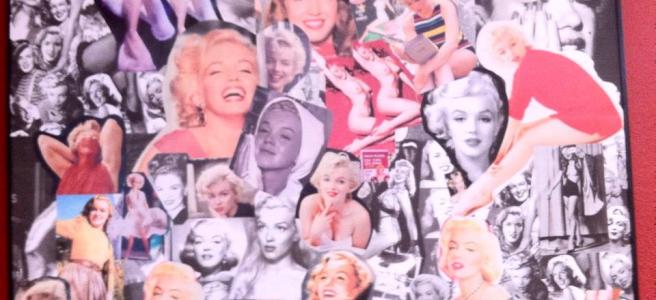
Reggie introduced me to Cheech and Chong, Robert Klein, Aerosmith, and Rush. During one afternoon while listening to Klein, I studied the album cover as he talked about putting a coin in a vending machine and getting a button with the now famous nude image of Marilyn Monroe. (If you look at my featured image, I’m talking about the two identical pictures just off center to the right in the collage.)

After I was made aware of Marilyn Monroe, I started to hear her name all the time and see images of her in cartoons, advertisements, magazines. There was even a pictorial of her in one of my father’s Playboys, which since I’m a child of the free-wheeling 70s, lay right on the coffee table in our living room.

I was struck dumb by the beauty Marilyn possessed. Sure, her hair was bleached and straightened, nose fixed, but even now, looking at the photos of her when she was simply Norma Jean, I found her breathtaking. My favorite film with her, Niagara, is worth a watch.

Fast forward to my early 20s. I had joined the navy after the death of my beloved older brother, left my hometown Binghamton, New York, and was lucky to get stationed at a weather center in Monterey, California. (Not far from Watsonville where Marilyn had once been named Miss Artichoke.) I visited Hollywood, saw Marilyn’s wax figure, and got the chills when I placed both hands in her hand-prints at Mann’s Chinese Theatre. I loved her.

I started reading books about Marilyn, biographies, anthologies, even an autobiography. She’d been abandoned by her birth mother, just like me. I’d never lived in an orphanage, but had a severely abusive stepmother. Marilyn was raped and sexually abused numerous times during her childhood. I’d never been raped, but Reggie started performing oral sex on me when I was four. His sister also molested me. The more I read about Marilyn and her problems with men, I started to wonder about myself–a woman terrified of commitment who eloped at 21 and dumped the guy three months later. In one book, Marilyn is said to have done the same thing in Mexico. (Some folks says it’s not true, but I believe it.)

Marilyn was unfaithful to every husband and lover. I’ve had many struggles with infidelity as well. The current psychology on childhood  sexual abuse tells us this type of behavior is not uncommon–the adult often tries to “work out” or repair what happened to them in the past, and that can lead to repeatedly looking for love in all the wrong places. A very smart writer I met once said, “A kid who’s been sexually abused is the world’s sex object.” The statement is both astute and heartbreaking.

If you’re lucky enough never to have endured sex abuse as a child, it might be difficult to have empathy for people who have. In my life this has been true. I’ve had family members say, “It was experimentation, get over it.” “That’s just an excuse because you were unfaithful.” One callous soul said, “You must have enjoyed it, because you never told your parents.”

Indulge me for a moment if you will. Imagine yourself at four. Or your child at four. (My uncle was 11 when he molested me. Chances are he was molested too, or at the very least exposed to inappropriate behavior.) Reggie bribed me with quarters so I would let him have his way in the bedroom. As I grew older, he gave me record albums or other presents. He said, “Don’t tell your Daddy because he’ll think you’re nasty.” Thank goodness, at age nine, I told him to stop. But the damage had been done.

Over the years, as I learned more about childhood abuse, I grew to feel empathy for Marilyn Monroe. She married for the first time at 16. Although marrying young was not uncommon at the time, I still see it as her getting the hell out of her current situation. In many of the books I’ve read about her, authors describe her as sexually frigid and a woman-child. When I hear “She slept her way to the top,” I prefer to see her not as a soulless woman using sex to get her way, but as a wounded child who believed the promises of men who offered her a better life.

Although I am in my late forties, I am still a hopeful child. Not long ago, I believed the promises of a man, even left my happy marriage. Now, I’m alone and missing my ex-husband and the amazing life we had. I’m grateful for the therapists I’ve had who’ve tried to help me heal from my past. I have a fabulous one now and we’re doing EMDR. It’s not over; and it’s not easy. Today, I wish to say, Rest in peace, Norma Jean. I’ll always be a fan. ❤


My House is Haunted and I Have to Sell It

Eight years ago, my husband Eric and I bought a house. He wanted the perfect place in the package, already put together. I wanted the old place with potential that we could create. Because he was too busy finishing college, I looked at homes with the Realtor. When I walked into the harvest gold living room with hard wood floors on 870 Orchard Ave, I attempted my best poker face. This would be our house. There was no garage, and it had an itty, bitty tiny kitchen, but we had off-street parking and a pantry in a great neighborhood.

Our son turned one in this house, and we had a huge party with family and friends. Eric and I painted the rooms the way we wanted, fixed up the basement room, put a compost barrel in the backyard, and even got TP’d one year. We took gorgeous photos of our three kids backdropped by trees, held Easter egg hunts and trick-or-treated in our neighborhood. I found a great job, and Eric started graduate school. We were well on our way to living what many call the American Dream.

Eric and I had been together nine years, and he had seen me through my bouts of depression stemming from childhood abuse: emotional, physical and sexual. Talk therapy was a huge part of my life. I believe Eric didn’t understand what I went through daily, but he listened and hugged me. After I had our son, my postpartum depression lasted more than a year, and I went on antidepressants, which helped enormously. A few years later, when I turned the big 4-0, I thought, I had never felt happier. But danger loomed on the horizon.

By our son’s fifth birthday, I confessed to Eric that I’d had a three-week affair with a coworker months earlier. It took me five months to confess. Some friends say it was a selfish choice to tell him, but I assure you, no marriage counselor would see me unless I did. I wanted to work things out, not split up. And I guessed the affair was a symptom of my past abuse rearing its ugliness into my wonderful present as it had done before. Never with Eric, but in other healthy relationships. Eric saw my explanation as an excuse for me to “have fun” with my coworker “Leif.”

Eric called Leif’s wife and told her about the affair. Then in a drunken rant, he told our daughters. And the next thing I knew, my life spiraled into complete pandemonium. A state of disarray that my therapists warned I was a master at creating. People who grow up in chaotic environments need to learn to like the quiet.

Within six months, I asked Eric to leave our house because he was drinking and being abusive. He filed for divorce on the grounds of infidelity. He destroyed me financially. I quit my job. I tried to seek comfort from Leif, but realized he was only interested in the forbidden wife. My elder daughter lost respect for me. My middle daughter, who was going through puberty, started cutting. And my son said he wished Mommy and Daddy would stop fighting.

My daughters are grown. I am living alone in this huge house, my son coming half time. Leif is a dirty word. I am so guilt ridden about the affair that I cannot have a normal conversation with Eric. He is still angry, and it’s been five years. Our divorce has been final for two and neither one of us can move on. Me, because no one holds a candle to my ex-husband, whom I am still in love with. And him, because he’s bitter. He has a new home, a job he likes. We live blocks from each other. Our son is nine and is well adjusted and tender-hearted.

Tonight, I am signing papers to put our house on the market. I cried for the first two weeks after I realized I had to sell it. I can’t look anywhere without seeing Eric and the kids. Eric playing X-box in the living room. The girls playing Rock Band. All of us having dinner in the sun room. Drinking coffee in the itty, bitty tiny little kitchen. Raking leaves in the back yard. Tearing down the toilet paper in the front yard.

Many of my friends ask, Why are you and Eric not back together? It all depends on how you look at it.

Why I Killed My Step-Uncle In a Poem

From ages four to nine I was sexually abused by my step-uncle “Reggie” who was seven years older. He paid me in quarters and record albums, including Cheech and Chong’s Big Bambu and Toys in the Attic by Aerosmith. I had no idea that the abuse was wrong and blocked the memory until I turned 18.

When I told my father and stepmother about the abuse, they said, “Why didn’t you tell us then?” I was four. And of course, my stepmother accused me of trying to get her brother Reggie in trouble and cause problems between her and my father.
(as if they didn’t have enough on their own) Now I know this response is typical of a family in denial.

I’ve spent decades in therapy working through the after effects of the abuse, which includes mistrust of men and authority figures, fear of commitment, control issues, and a penchant for the melodramatic. I have left good relationships for terrible ones, including my last marriage. I don’t want to be alone but keep making that happen. The truth is, I don’t know what the hell I’m doing.

In a poetry class years ago, I had a teacher who was a victim of childhood sexual abuse and not afraid to talk about it. He really understood the damage it causes to the human psyche. Through discussion, he helped me get my writing to a place where I could articulate what I wanted with the following poem. He read The Coin Collector and said, “You killed ‘im off, eh?” I didn’t mean to, but the poem took me there. And so be it.

The Coin Collector

You look tranquil in nickel-plate, uncle,
shark skin suit, black tie, eyeglasses.
They’ve done great work with your makeup,
brushed your hair back as you would
have worn for a wedding or wake. Your mother
offers kind words, says that as a child
you saved every penny you found. Your sister
talks about your thumbs, how they bent nearly
flat from the indent of so many coins.

I remember the Lincoln Cent collection book
you gave me, your taking me to antique shops
when I was thirteen, our private talks
of my high school lovers, all of which
you were dying to hear. These days, I carry
grief in my pockets like the coins you collected,
handled so often they’ve lost their brilliance.

I think of the young girl from a family
where no hands reached, how she welcomed
your affection year after year, afternoons
in your bedroom, a quarter a trip, your arms
linked through her legs, her fingers
tugging your blond hair, the pleasant ache
she felt between her legs then—and now—
when she hears them say your name, runs
her finger along the ribbed edge of a quarter,
sees the coffin close over your face.