Finding a Mother’s Day Card

Every May I sift through the glut of greeting cards
with their glowing notes: Thank you for raising me,
You’ve always been there, and To my best friend.
I look for the one that says, Enjoy your day,
because Carla, as my mother signs letters to me,
was never a Mom. She and my father split up
when I was a baby, and Dad told her never to come back.
She went away to college, traveled the world,
let another woman feed me, bathe me, beat me
with leather belts. I see her in a black turtleneck and
blue jeans, svelte, five-ten, hair to her waist, bright green eyes,
cheek bones that could slice paper. She sips Scotch,
smokes Marlboro Reds, poses for art students, sketches
self-portraits. At 40, she walks down the aisle, again,
settles into a new life in New England, spends her days
in an art studio piecing magazine clippings into collage art,
teaching millionaires’ wives how to paint. We met once
in my hometown, hugged like strangers, dined on prime rib,
returned to our separate lives of sending letters
about the weather. Some friends say I owe her judgment,
others, respect. As every new spring brings
its buckets of rain, I wonder what we owe each other.

I’ve Been Away Too Long–So, Here’s a Poem

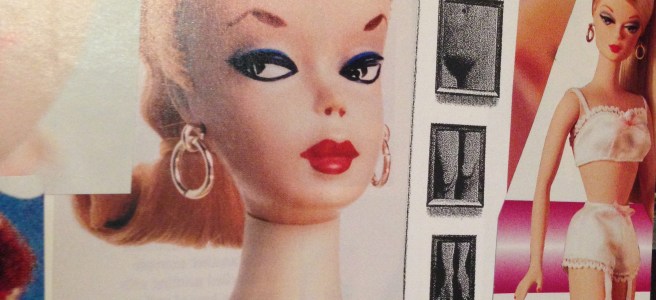
Barbie Dolls on Drugs

I was twelve and you were six, and we spent
every Tuesday night together for a year.
Your mother at Weight Watchers, your
father driving truck, we watched the Wizard of Oz
so often we knew the script by heart, and when
we tired of TV, we invented games. You had
a huge playroom with the Barbie Townhouse,
and a whole town of Barbies. One was the mother,
and one the daughter who stayed out all night,
came home naked, platinum blond hair
a tangled wreck. Mama Barbie screamed,
“Where have you been?” Daughter said,
“I don’t even know what’s going on.”
They slapped faces with right-angled arms,
and Daughter pulled on a sparkly gown
and hopped away with her plastic suitcase.

Days later, your mother asked to talk
to me, said, “No more Barbies on Drugs,
please.” If she would have been nosier, she
might have discovered I got the idea from
the live show I watched at home, starring
my teenage brother and young stepmother,
sparring, yelling, my brother’s frequent
vanishing acts. But I know now your mother
was trying to keep your dad from disappearing.

All these years later, you and I are still
best friends, and I’m both sad and grateful
for my youthful ignorance–your house was an escape
from my own, where I dropped in a video tape,
air-popped some popcorn, and sat with you
to watch a young girl find her way back home.

Exile — Poem from Suede: A Collection of Poetry

Exile

As soon as I showed signs of rebellion—

drinking, missing curfew, talking back—

my parents sequestered me to my

second story room where, in winter,

I could see my breath. It was an exile I came to love:

four windows, the moon peering like a voyeur

through pink floral curtains—so far—

yet close enough that I could steal its light to sketch.

In summer, a small window fan chopped my friends’

voices from the streets below, drew up that second flight,

a light breeze, so I could breathe.

When the smell of dinner wafted up the stairs,

I trudged to the kitchen where my stepmother,

sipping tea, said, No one wants you here.

Back in my room, I sketched John Lennon—

imagined that he’d written “Mother

just for me—and Marilyn Monroe,

another girl left by her mother who made me think,

someday, I might see my name across

a marquee. But at sixteen, freedom

and fame were as distant as the stars.

So, I stole a Valium—yellow and round—

from my stepmother’s jewel box, held my breath

and swallowed it down, then lay across

my bed spread, drawing the moon.

My Father Wondered Why I Was Precocious

My father was single, and he owned a shoe repair and leather crafting business when I was a girl. Besides the leather pants, vests and belts that filled the store, he sold water pipes, rolling papers and roach clips. As a five year old, I was surrounded by psychedelic posters, tie-dyed T-shirts and peace signs. And in the workshop, my father tacked Playboy calendars and posters of nude women on the walls.

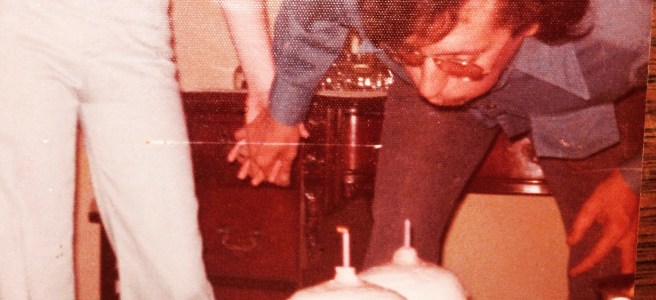
When my father turned 27, his very young girlfriend threw him a surprise party at our apartment. There were streamers, balloons and a cake made of breasts. I am grateful that photos exist from this party. I was too young to be invited, of course, and had been sent to bed. But when I look at the photos from the party, I see my father–his Tony Orlando hair, his denim work shirt, the thin beauty on his arm–personified.

I am happy my father was so young, 22, when I was born. Often he was more like an older brother than a father. He was patient and funny, and he wasn’t ashamed of anything. I asked tons of questions, which he always answered. When I asked questions about sex, he told me the truth–often with street slang. Anyone who wonders where I get my “to the point” method of communication can stop wondering. I am both grateful for this gift and have spent a lifetime trying to improve myself.

I miss my father. He was a great parent, mentor and friend.

A Glimpse Into Wilson’s Disease

The Assumption

My husband Harly thought he had the flu,
felt lethargic and never wanted to eat.
I just thought he was lazy. After hauling
bags of grass seed all day at the local plant,
he’d flop down on our couch, slather Vicks
on his chest, cuddle with our baby girl
and watch Barney. He stayed up late into
the night playing TechnoBowl, chest pains,
tingling in his joints, then fell asleep, TV
blaring, lamps aglow. He never left the house
except to work, and when he pressed his calves,
he left fingerprints. After his stools lost color,
we saw doctors who dosed him, told him eat less,
walk more. It was a nurse who noticed
the golden hue of his eyes and skin, insisted
on a blood test that showed a liver gone bad.

I drove us back to our modest home in our town
of a thousand. Harly sat in the passenger seat,
sniffing—a twenty-seven-year-old man
who would need a specialist, tests, a transplant.
But right then, all he needed was to hear
the radio play Tom Petty, to rest his head
on my chest. He smelled of sweat and soap.
I’d never seen him cry in the time we’d been
together, but over the next six months,
as he watched his baby girl scream through
her own blood tests, his brother lose his life
to the same disease, his own body wither
from broad-chested and strong to brittle
and thin, I’d wipe them away, one by one,
as they blended into his yellowed cheeks.

My House is Haunted and I Have to Sell It

Eight years ago, my husband Eric and I bought a house. He wanted the perfect place in the package, already put together. I wanted the old place with potential that we could create. Because he was too busy finishing college, I looked at homes with the Realtor. When I walked into the harvest gold living room with hard wood floors on 870 Orchard Ave, I attempted my best poker face. This would be our house. There was no garage, and it had an itty, bitty tiny kitchen, but we had off-street parking and a pantry in a great neighborhood.

Our son turned one in this house, and we had a huge party with family and friends. Eric and I painted the rooms the way we wanted, fixed up the basement room, put a compost barrel in the backyard, and even got TP’d one year. We took gorgeous photos of our three kids backdropped by trees, held Easter egg hunts and trick-or-treated in our neighborhood. I found a great job, and Eric started graduate school. We were well on our way to living what many call the American Dream.

Eric and I had been together nine years, and he had seen me through my bouts of depression stemming from childhood abuse: emotional, physical and sexual. Talk therapy was a huge part of my life. I believe Eric didn’t understand what I went through daily, but he listened and hugged me. After I had our son, my postpartum depression lasted more than a year, and I went on antidepressants, which helped enormously. A few years later, when I turned the big 4-0, I thought, I had never felt happier. But danger loomed on the horizon.

By our son’s fifth birthday, I confessed to Eric that I’d had a three-week affair with a coworker months earlier. It took me five months to confess. Some friends say it was a selfish choice to tell him, but I assure you, no marriage counselor would see me unless I did. I wanted to work things out, not split up. And I guessed the affair was a symptom of my past abuse rearing its ugliness into my wonderful present as it had done before. Never with Eric, but in other healthy relationships. Eric saw my explanation as an excuse for me to “have fun” with my coworker “Leif.”

Eric called Leif’s wife and told her about the affair. Then in a drunken rant, he told our daughters. And the next thing I knew, my life spiraled into complete pandemonium. A state of disarray that my therapists warned I was a master at creating. People who grow up in chaotic environments need to learn to like the quiet.

Within six months, I asked Eric to leave our house because he was drinking and being abusive. He filed for divorce on the grounds of infidelity. He destroyed me financially. I quit my job. I tried to seek comfort from Leif, but realized he was only interested in the forbidden wife. My elder daughter lost respect for me. My middle daughter, who was going through puberty, started cutting. And my son said he wished Mommy and Daddy would stop fighting.

My daughters are grown. I am living alone in this huge house, my son coming half time. Leif is a dirty word. I am so guilt ridden about the affair that I cannot have a normal conversation with Eric. He is still angry, and it’s been five years. Our divorce has been final for two and neither one of us can move on. Me, because no one holds a candle to my ex-husband, whom I am still in love with. And him, because he’s bitter. He has a new home, a job he likes. We live blocks from each other. Our son is nine and is well adjusted and tender-hearted.

Tonight, I am signing papers to put our house on the market. I cried for the first two weeks after I realized I had to sell it. I can’t look anywhere without seeing Eric and the kids. Eric playing X-box in the living room. The girls playing Rock Band. All of us having dinner in the sun room. Drinking coffee in the itty, bitty tiny little kitchen. Raking leaves in the back yard. Tearing down the toilet paper in the front yard.

Many of my friends ask, Why are you and Eric not back together? It all depends on how you look at it.
How Young Do Kids Learn Empathy?

Salt dough

My daddy died, says the four-year-old girl—
squishing and smashing lilac salt dough
into sea stars and snowmen at the daycare
craft table. She licks her fingers. Don’t eat the dough,
the caregiver says. A boy in a blue and green
striped shirt stacks blocks. The girl eyes
other kids’ paintings of mommies, daddies,
kids and dogs. My daddy died, she repeats,
looking around. The boy turns his stringy-haired
head her way, eyes her from her wavy bangs
to her purple fingers. I don’t have a dad, he offers.
Never met him. The caregiver tilts her head,
half-smiles. The boy rests the last block on the stack,
watches the tower weave before it falls to the table
with a boom and clack. He runs to the boy’s room.

The girl lifts a rounded mound of salt dough,
makes sure no one is watching, takes a bite.

Why I Killed My Step-Uncle In a Poem

From ages four to nine I was sexually abused by my step-uncle “Reggie” who was seven years older. He paid me in quarters and record albums, including Cheech and Chong’s Big Bambu and Toys in the Attic by Aerosmith. I had no idea that the abuse was wrong and blocked the memory until I turned 18.

When I told my father and stepmother about the abuse, they said, “Why didn’t you tell us then?” I was four. And of course, my stepmother accused me of trying to get her brother Reggie in trouble and cause problems between her and my father.
(as if they didn’t have enough on their own) Now I know this response is typical of a family in denial.

I’ve spent decades in therapy working through the after effects of the abuse, which includes mistrust of men and authority figures, fear of commitment, control issues, and a penchant for the melodramatic. I have left good relationships for terrible ones, including my last marriage. I don’t want to be alone but keep making that happen. The truth is, I don’t know what the hell I’m doing.

In a poetry class years ago, I had a teacher who was a victim of childhood sexual abuse and not afraid to talk about it. He really understood the damage it causes to the human psyche. Through discussion, he helped me get my writing to a place where I could articulate what I wanted with the following poem. He read The Coin Collector and said, “You killed ‘im off, eh?” I didn’t mean to, but the poem took me there. And so be it.

The Coin Collector

You look tranquil in nickel-plate, uncle,
shark skin suit, black tie, eyeglasses.
They’ve done great work with your makeup,
brushed your hair back as you would
have worn for a wedding or wake. Your mother
offers kind words, says that as a child
you saved every penny you found. Your sister
talks about your thumbs, how they bent nearly
flat from the indent of so many coins.

I remember the Lincoln Cent collection book
you gave me, your taking me to antique shops
when I was thirteen, our private talks
of my high school lovers, all of which
you were dying to hear. These days, I carry
grief in my pockets like the coins you collected,
handled so often they’ve lost their brilliance.

I think of the young girl from a family
where no hands reached, how she welcomed
your affection year after year, afternoons
in your bedroom, a quarter a trip, your arms
linked through her legs, her fingers
tugging your blond hair, the pleasant ache
she felt between her legs then—and now—
when she hears them say your name, runs
her finger along the ribbed edge of a quarter,
sees the coffin close over your face.

Happy Anniversary–Suede: A Collection of Poetry

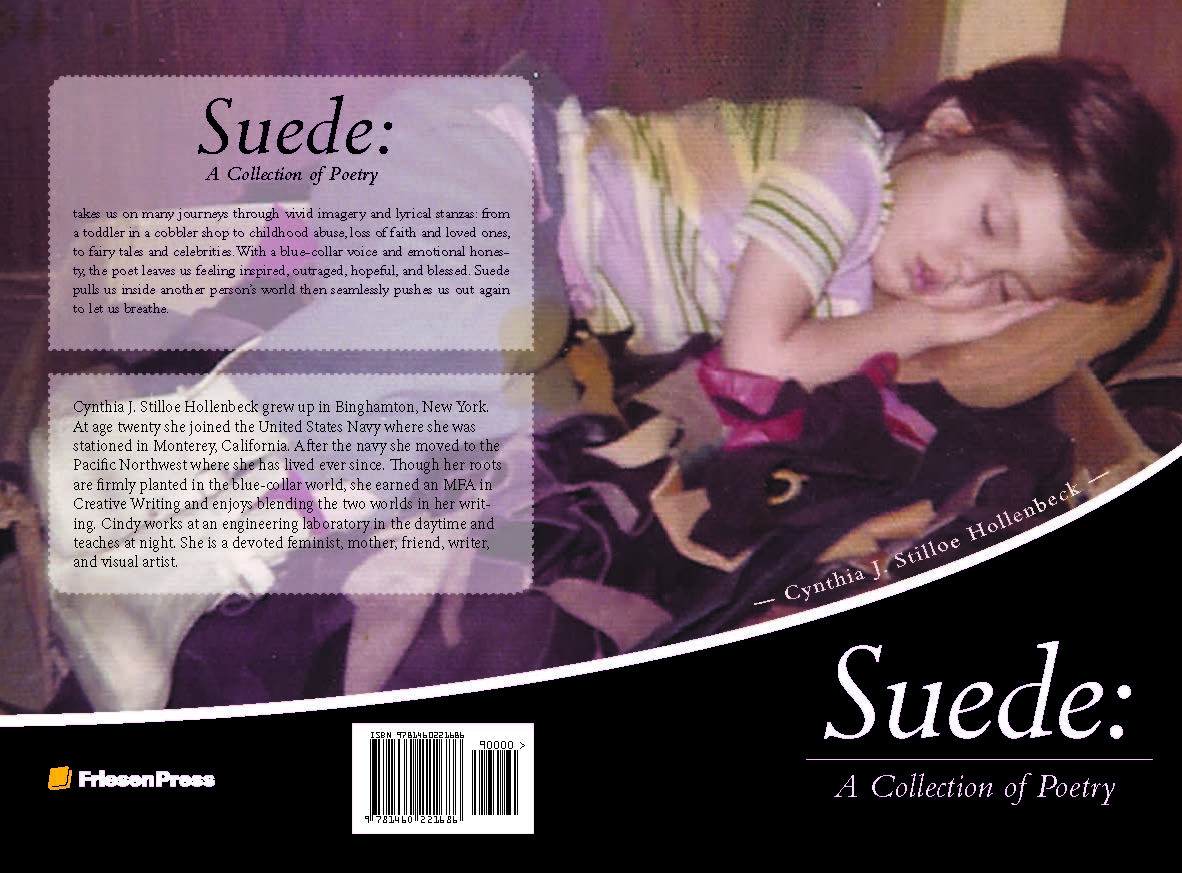
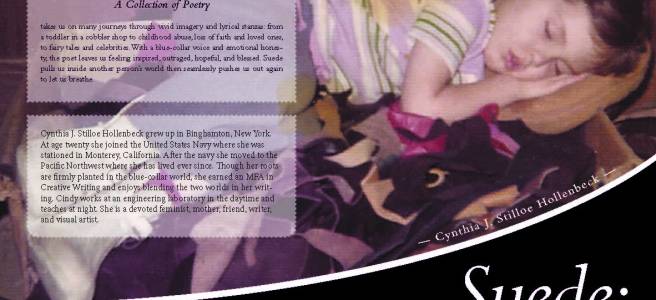
Nearly two years ago, my beloved father (and best friend) passed away from a severe lung infection. Had he not contracted TB from an employee in his early fifties, he might not be dead. This employee did not divulge her disease while she worked for him. He found out later. And my father’s TB stayed dormant for years. When it finally blew up, he almost died (but that’s another blog post). His entire life he’d battled asthma, and he used to joke, “These lungs are going to be the death of me.” It’s a shame that the careless act of an employee may have caused his death. Because of the scarring on his lungs caused by the TB, doctors said he could not survive the surgery needed to cure his lung infection. But I digress.

The book Suede: A Collection of Poetry is dedicated to my father because his death prompted me to dig out fifteen years’ worth of poems and finish the book. My older brother Tony, my father’s namesake, was killed in a motorcycle accident when I was eighteen. He is the subject of several poems. Loss has defined much of my life. And while many of the poems in Suede include loss, some talk about childhood, love, lust and sex, family, and some even discuss abuse. I write in simple, image-driven language, because that’s what I know. My father, with his high school education, read all my poetry and understood my poems. They are not lofty. I call myself a “blue-collar” poet. I published Suede for my father and my brother. Perhaps you or someone you know might like it. http://bit.ly/WE66YU