The Grief that Keeps on Giving

Stop me if you’ve heard this. Ten years ago, I was a happily married woman with three kids. On my 40th birthday, I looked out of the picture window of my living room and thought, “I’ve never been so happy.” My husband was an introvert, and I’m an extrovert, and we complemented each other just about perfectly. We really dug each other physically, spiritually, and intellectually. We’d been together 11 years.

Over the next several months, while my husband was earning his graduate degree, I felt overwhelmed with work and the kids, and I perceived my husband’s turning inward as turning away. I also thought he loved the one child we had together more than he loved me. For whatever reason, I was afraid to confront him with this information and figured things would simply work out as they always had before.

A guy at work with whom I’d been collaborating closely started inviting me to coffee, talking about his miserable marriage, and started flirting with me via text message. I was so in love with my husband, I didn’t think twice about any of this until it was too late. The guy chased me until I relented. We had a  three week affair and then he dumped me. To say I was devastated barely covers it–for the next several months, I hid in my room, drank alone, and dreaded seeing my husband’s family.

When I finally came clean about the affair, my husband was sad. He had to see the guy at work. My husband and I went to marriage counseling. We took weekend trips to try and reconnect. But because the “guy” was still around, it became too much for my husband. He put a GPS tracker on my phone, looked up the number of text messages through ATT, and insisted I quit my job. I put up with all of this until he turned violent. I had to kick him out of the house. He filed for divorce almost immediately.

My soon to be ex husband and I kept a cordial coparenting relationship for the kids. We sat together at Christmas concerts, sporting events, and graduations. He never really forgave me for the affair, but at least we could be in the same room. Then, in November 2016, five years after our divorce was final, my ex husband and I started hanging out together as friends. He said, “I’d like to rebuild the deep friendship we had when we were married.” We had monthly conversations, went out for beers, watched TV, and hung out with our son.

From February 2017 to July 2017, my ex husband and I casually dated. He kept saying he didn’t want a commitment with anyone, and we would see where this would go. I thought it was the least I could do since he had convinced me I single handedly ruined our marriage. Aug 12, 2017. My ex husband went to his high school reunion. The next afternoon, he shared funny stories with me.

He had been becoming more distant since July, and I figured he was still gun shy. We still went on a few dates, however, he made no moves beyond a platonic relationship. One time, he even asked me for recommendations on bed sheets. Sep 22, I told my ex I wanted to spend more time with him. He said, “I reconnected with someone at the reunion, and we’ve been seeing each other.” I said, “When you said you didn’t want a commitment, you just meant with me.”

Do you think the woman was unfettered? Nothing like me? A fresh start for my ex hubby? Think again. “Jill” was in the midst of an acrimonious divorce, had three kids, and had been dumped by her husband for …wait for it… having a 15 month affair with a man who lived in Europe, several fake FB accounts, drunken violence, and a secret trip abroad.”

Jill was a mean girl in high school who wouldn’t give my ex the time of day back then, when he was chubby and obnoxious. He adored her, however, and felt all “those feelings come flooding back.” When they reconnected at the reunion, my ex was the ONLY single guy there. Jill, depressed and rejected, somehow convinced him that they were “star crossed lovers” who were destined to be together. Then the love bombing began. Letters. Cards. Photos. Collages. All in the first few weeks of dating, proclaiming ever lasting love.

Although Jill lived seven hours away with her husband and kids in a million dollar home, she drove to our hometown about ten times over a month and a half to put her hooks into my ex. When he told me who it was, I said, “Ew. The girl with the fake eyelashes who gave me the dead fish handshake when we met? She’s such a bitch.” Her husband finally kicked her out of the family house in October.

Today: my ex and I no longer have a relationship. Jill has made sure of that. I have no idea what lies she has told him, but I’m guessing they are about her millionare husband who always took care of the kids, and didn’t make her work outside the home more than 15 hours a week. They guy who bought her three cars and took her back after the first affair. What an asshole.

My ex defends her to the death. He has spent weeks away from our son, doesn’t care about anything but her, and when he got fired from his job, instead of looking for another one, he drove to her new place (3200 dollars a month and funded by the estranged husband) and stayed for days at a time, sometimes without telling me or our son. It’s the perfect fantasy. For them.

When I asked my ex how he could be dating someone who cheated on her husband twice, he said, “She didn’t cheat on me.” Everyone keeps telling me what a jerk he is and what losers they both are, and to put them out of my mind. However, when you come so close to rebuilding your family and watch it get ripped apart because of two people in a mid life crisis, it’s hard to watch it disappear without feeling a huge sense of loss.
Dump the Narc — Keep the Dogs

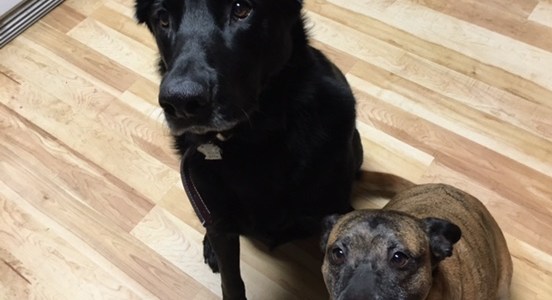
If you’ve ever dated a narcissist, you will identify with this post. If you haven’t ever dated a narcissist, you’re damn lucky. Few experiences make you question your self-worth, sanity, and reason to live more than being “loved” then dumped by a narcissist. I say dumped because they are people who dispose of things and people once they are used up. The first time the narc came to my house, my black lab chewed up his phone charger. Smart dog.

“Narcs” love vulnerable people. You know, widows, the broken-hearted, the poor bastard going through a mid life crisis. And the worst part is they are exactly whom you were looking for. The rescuer. The comedian. The princess. The prince. This is because they are chameleons, changing shades and personalities to be everything you had ever hoped for. Love live music? So do they. Love politics? So do they. And if you like hiding from the rest of the world, they love that best. You will find yourself saying “I can’t believe how alike we are.”

However, the moment you begin to show a sense of self outside the narc’s view, beware. The narc is king and you are merely a subject. Avoid telling truth to power if you want to stay in the narc’s good graces. Otherwise, you will be out on your can. And don’t ever criticize–you will be extracted from their life.

One narc I dated drew me in with promises of intimacy and closeness. We had a long distance relationship, consisting of FaceTime, text messages, and emails. When we did interact in person, we were electric. He was sarcastic and cute, and I really liked him. However, his decades long pot habit had given him the memory of an errant puppy, and when I called him on it he flew into a rage.

The narc often told me to wait in the car when he stopped by a friend’s house, or the store. I thought, What the hell? Is this the 50s? He once turned to me and said, “There’s stuff in the fridge. Go make us a couple of sandwiches.” I started laughing hysterically. He said, “What’s so funny?” I thought he was joking. And yes, I made the sandwiches.

One morning after breakfast in a diner, the narc introduced me to his friend who was thinking of joining the army. I talked to this young man about my stint in the navy and how I went to college and grad school. The narc interrupted and said, “She also sells crack to kids.” On the walk to the car, I said, “Why did you do that?” The narc went bananas! “Can’t you take a fucking joke?” The narc had never finished high school.

I knew we were over when the narc barked an order at me and I said, jokingly, “Quit telling me what to do.” Right there, mid vacation, (we had three days left) he said, “I think we’d be better off as friends.” This from the guy who said we belonged together forever. I walked to the bedroom and started crying.

Over the next three days, the narc and I acted like roommates. He went back to his town, and during a long phone conversation in which we truly broke up, the narc said “Tell everyone this break up was mutual. Don’t put that shit on FB. You will look like an immature drama queen.” Would you believe I listened to him?

Luckily, the narc and I only dated a few months, and yet, I was reeling. I started running long distances and imagined his lying face beneath my right foot every time it hit the pavement. Ahhhh. Ahhh. Ahhh. I spent a lot of time crying that December.

After our mutual friends learned about the break up, they told me, “He’s a huge loser. We couldn’t figure out why you were with him.” I rolled my eyes. I fell for him because I had lost my father and the narc came to his funeral. I was so tuuched. We started texting, he called me “Baby” (puke), and the rest is history.

The red flags were abundant and waving. I should have known the minute Gus chewed his phone cord that the narc was not accepted by my very smart dog. Looking back, I see this as a wonderful learning experience. My antenna are up, and I have taken a haitus from dating. Until then, I will hang with my dogs.

Lust Kills Your B.S. Detector.

My father opened a shoe-repair business when I was two, and I spent a lot of time around adults. There was Joyce, the woman who made tie-dyes and sewed leather; Bob, my father’s buddy who fixed shoes; and the array of business men (it was the 70s and they were mostly men) who wore fedoras and suit jackets, and called me Chooch. Spending time around adults helped me cultivate a decent b.s. detector.

My memories from this period, before age four, are idyllic. My father had divorced my and my brother’s mother, and the three of us lived in a modest apartment. We were poor in money but rich in love, and we went everywhere together–the shoe-repair shop, the bowling alley, the bar. We ate TV dinners in front of the black and white console, mostly Laugh-In and The Sonny and Cher Show, or scarfed fried clam strips down the street at Sharkey’s Tavern.

After my father started dating “Vickie,” a high-school dropout with wavy bleached hair and freckles, my life changed. Although Vickie dressed my brother and me in nice clothes, and kept us clean, she also whipped us with leather belts and called us names. Her brother molested me when I was four. And, Vickie was a serial cheater. My father married her in 1975, and six months later my younger brother was born. He caught Vickie the first time when my brother was less than one.

My father and Vickie stayed together for 23 years. Living with her until I was 18 (I moved out on my birthday) taught me injustice, to keep silent, and to cower in the presence of a bully. Her brother had said to me, “Don’t tell your daddy what we did. He’ll think you’re nasty.” Vickie said to me, “If you tell your father I hit you, you’ll get it worse.” And when I told other family members or adults about what was happening in our home, I got a pat on the head, and a, “Oh, you’re just being dramatic.”

It may not surprise you that when I married, I fell for a male version of Vickie and left my relationship. More than once. Several people waved warning flags in my face, which I ignored. It wasn’t until the love of my life divorced me that I saw I was the problem. It took ten months for me to see through my male Vickie’s bullshit. Now, I’m single and am trying to make up for my mistakes through reading, self-reflection and therapy.

My father divorced Vickie in 1998, and he passed away in 2012. Vickie remarried and from what I hear, is cheating. I wish she would have sought help for whatever childhood haunts keep her in that self-destructive cycle. To make matters worse, I now have a good friend who’s been hoodwinked by his own version of Vickie. Did I warn him? Yup. Did he yell at me and cast me aside? Yup. It’s as if I’m reliving my childhood, watching my friend instead of my father, heading for a fall.

My hope for my friend, who usually has a keen bullshit dectector, is that he will wake up before too much damage has been done. But, similar to Vickie, his enchantress is pretty, fit, and an amazing liar. Friends tell me, “Don’t worry. She’ll hang herself. And then you can say, ‘I told you so.'” Problem is, I’m not going to say I told you so. I’m going to be there for my friend if he feels had can confide in me. Keep your fingers crossed.


The Truth Is Sometimes Painful

I grew up with a father who loathed dishonesty. I credit his Italian American pride, or perhaps growing up catholic, but nothing made my father angrier than learning he’d been lied to. He tended to be “brutally honest,” and the people who loved and admired him appreciated that. As his daughter, I feared his truth-telling when I was as a girl because I was extremely sensitive, but eventually I grew to admire the trait.

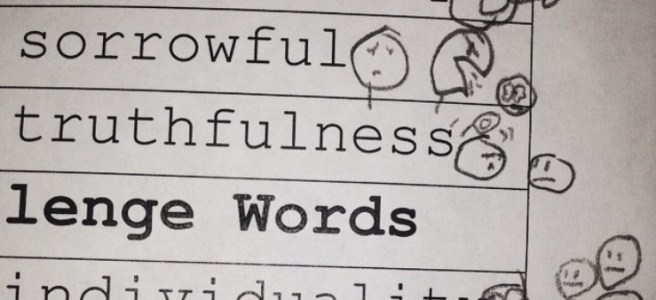
You have to be courageous, confident, and often live with regret when you are honest, because people rarely want to hear the truth. The image I’ve included in this post is a sketch from my son. In order to remember his spelling words, he sketched faces beside them expressing what he believed conveyed the word. When you look at the faces beside “truthfulness,” although one wears a halo, they both look anxious. Telling the truth is hard; hearing the truth is hard.

My father once told me, “You couldn’t be more like me if you tried.” Although I was sincerely flattered to hear that, I knew it meant I am also brutally honest, have a terrible poker face, and tend to alienate people because I struggle with being dishonest even in polite conversation when sometimes you should be. This is not to say I have never told a lie. I have. And some have caused irreparable damage in my life. It’s just that lying to people causes me great internal struggle, reddens my face, and fills me with crippling guilt.

Similar to most people, it’s also not easy for me to hear the truth. When people have told me I’m too analytical, sensitive, dramatic, or that I remember more negative details than positive, I stiffen with defensiveness. All of the preceding statements are true. I am also self-deprecating, affectionate, and loyal. The older I get the kinder I am to myself (and others), and I try to work with not against my human flaws.

One of my most irritating traits, I’m guessing because I’ve received a lot of flack for it, is my incurable need to discover the “why” behind just about everything. Why did my mother leave? Why did my stepmother beat me? Why do dishonest people seem to have more success than honest ones? Why did my brother get killed? Why did my husband die? Why do I have so much trouble sustaining a romantic relationship when others seem to just do it? Why are people mean? Why I did reject the man I believe is my true love?

On a positive note, once I process the Why in my head, through writing, art, or talking, I can usually let it go. In some cases, like with the death of my brother, I’ve had to make peace with not knowing why it happened. That has taken 30 years. I’m still struggling with the true love question. The other whys might be explained with psychology, self-help books, chats with friends, or talk therapy–of which I’m a huge advocate. But one important lesson I’ve learned is that in order to process these questions and heal, you have to be 100% truthful.

In the book, The Courage to Heal, which I highly recommend if you’ve suffered any personal trauma, the word courage is aptly used. It’s so much easier, and fun, to ignore our flawed humanness and not heal. For years, I was the party girl, loved getting drunk, being around people, being loud and obnoxious, all in an effort not to spend time alone and seek the truth within myself. I’d gone to therapy, but never engaged fully with the tenets. It took my loving someone other than myself to see how badly I needed help.

This person is still in my life, and because we’ve hurt each other, we have had to start rebuilding trust from the bottom up. Being honest takes courage, confidence, and working through regret to move forward when we hurt each other now. But, as you’ve probably heard or experienced, there is no greater reward than having an honest, open relationship with someone you love. And I want that.


Navigating Different Communication Styles

Over the past 18 months, I’ve been meeting with a behavioral therapist, as often as once a week. When I started, I had been sitting in a pit of despair after realizing too late what a special and rewarding relationship I had with my husband of nine years. I had turned 40 in 2008 and sort of lost my mind over the next two years. The collateral damage incurred by us and our sweet family post-split still nags at all of us. We are healing, albeit slowly.

Through my therapy I’ve learned that one of the issues “Eric” and I dealt with during our marriage and divorce involves our vastly different communication styles. We are similar in that we’re both passionate, quick-tempered and stubborn. However, I am a moving-toward quick-processing extrovert (MTQPE), and he is a moving-away slow-processing introvert (MASPI). Night and day. Black and white. Scorpio and Taurus.

Defining the styles. Moving-toward means I’m the woman who talks to strangers and wants to save the world even when it’s inconvenient for me. Moving-away Eric hangs in the background and observes the scene before he makes a move. The night we met, I walked up to his adorable self at Little Harry’s Airport Bar in Lewiston, Idaho, and said, “Hi. I’m Cindy. Wanna buy me a drink?”

Eric likes to listen and assess, and he’s good at both. I like to chat, on and on, and recharge when I’m around people. Eric recharges by spending time alone. Quick-processor me can call him on a Monday at 8:00 a.m. and say, “Wanna take the kids to the theme park this Friday? Do ya? Huh? I’ll drive. I’ll buy the tickets. What do you think? Huh?” Slow-processor Eric would probably take a minute to answer: “I don’t know. Let me check and get back to you.”

When you’re in love with someone, these differences seem minor. But after years of mistaken assumptions and misinterpreted silence, they can wear on a person, even destroy an unexamined relationship. And then, when you’re in the middle of a breakup, these differences cause real arguments.

Being aware and strategic. Eric lives in his head much of the time (he’s amazing at self-reflection) but I process my life out loud, through talking. If you are a MASPI, like Eric, I would drive you bonkers. If he has anything on his plate, work issues, personal stuff, bills, he would prefer to slide the theme park to the bottom of the stack until he was ready to tackle it simply to avoid feeling overwhelmed. Meanwhile, I’m doing aerobics, playing paddle ball with one hand and whirling a figdget spinner in the other.

Eric and I have been divorced six long years. In the past ten months, we have been scheduling monthly “conversations” where we talk about the kids, our lives, and manage our different communication styles. One of the most important things I’ve learned relies on the premise that my style is no better than his style. They are simply different. In this post-therapy stage we’re in, Eric and I work hard to treat each other with dignity, and examine and respect the styles.

Being versus foreseeing. Being an MTQPE, I would love to know exactly when I’m going to see and talk to Eric. I recharge when I’m around him. But, when a moving-toward person moves too quickly or too often, a moving-away person tends to get his energy zapped and needs more space. That is a style, not necessarily a strategy.

Eric is content just being. He doesn’t need to plan every movement of his day or his life. I, on the other hand, want to see into my future. When will we meet again? When we will talk again? Forward, forward, forward. One of the things my therapist helps with is my feeling comfortable in the not knowing. (Eric tries to meet me halfway by communicating more.)

We are less than a year into this process of trying to communicate effectively. We stumble. We piss each other off. We spend hours laughing. It’s an unpredictable way of living. But, I am slowly gaining comfort and working to make him feel safe in my presence. The closer we can come to meeting in the middle, the better off we’ll be.

The Swap

I lob my heart over to your side of the fence,
play five games of paddle-heart simultaneously,
try to keep busy, wait- wait- wait for you
to toss yours over. You catch the bloody mess
and try to hang on, crimson liquid trickling
down your arm. You observe the irregular
shape, study its pulsing blue veins, wonder,
perhaps, why I pitched it to you in the first place—
was it love? Or was I trying to fool you,
let the form fuse itself to your body, only to
snatch it away because your grip gave me
goose pimples. At one time, I might have said,
Hello-ooo. When the hell do you plan to finish
the swap? But I’ve learned that when I wait,
you surprise me, eventually climb over the fence,
deliver your heart in person, rest it in my hand,
remind me that wonderful things happen when I keep
quiet the beast clawing its way out of my chest.

Why Psychotherapy is like Kale

Psychotherapy is not easy, or fun. It’s good for me, even necessary, but I don’t love it. Psychotherapy is like kale: not nearly as tasty or enjoyable as homemade macaroni and cheese, or pizza, but sometimes, I have to force it down.

One of the biggest issues about not seeking help from a psychotherapist is that we rarely know why we display negative behaviors. Often, we react to stimuli based on a complex process of unresolved issues (or trauma) from childhood. Some behaviors are good, like holding a door for someone or not cheating on a test. But others include slamming the door in someone’s face, tearing up your husband’s baseball card when he stays out all night, or yelling at some unsuspecting cashier. Consistently negative behaviors harm us and can destroy relationships with people we love.

Before I turned 18, my birth mother ran out on us; my father remarried a physically and emotionally abusive woman; my step-uncle sexually abused me; my stepmother slept with one of my boyfriends; my older brother was killed in a motorcycle wreck; my younger brother was kicked out of every elementary school in our town; and I moved in with an abusive, cheating, drug-dealing boyfriend.

Phew. I realize there are millions of people who’ve suffered far worse tragedies than I did. I’m not searching for pity, only understanding, a willingness to see another perspective. A family member once said, “In my day, we didn’t go to therapy. We solved problems by ourselves.” Hmmm. This family member drank a six pack every night just so he could fall asleep. And he stayed in a marriage with a cheating spouse for 20 plus years.

At 21, I eloped with a man we’ll call Jon. This was one week after I admitted to my parents that I’d been sexually abused as a child. My father said, “You must have liked it because you never told us.” My stepmother said, “You’re just trying to cause problems.” Um, no. But before you hang these folks out to dry, I can assure you these are typical responses. (After my father divorced the nightmare, he spent the last 15  years of his life apologizing to me for the earlier response).

In the wake of Donald Trump’s accusers coming forward about his sexual misconduct, many people ask, “Why didn’t they come forward when it happened?” I echo comedian Seth Meyers’s response. For reasons that seem absurd, our society tends to blame the victims of sexual abuse. I was four when my uncle started abusing me and nine when I screamed, which sent him running from the room never to touch me again. If anyone says a four year old girl is asking for it, he or she should be flogged.

Often times, people who’ve been sexually abused as children become hyper sexual, engaging in risky behaviors like having unprotected sex with numerous people largely because their personal boundaries were destroyed. In addition, subconsciously, they’re scared of getting too close because others might get to know them and judge them for their “shameful” past.

For two decades, I moved guy to guy, always dumping a good one who loved me for someone who treated me like the piece of shit I thought I was. It was as if I were saying, “Don’t get close. I don’t want you to know the real me because I’m no good. I deserve to be with a piece of shit.” In recent years, science has offered new theories on addiction, drugs, sex, food, shopping, alcohol, saying it might have more to do with attachment disorder than genetics.

A theory is a theory, but it makes sense to me that someone who has lingering feelings of being discarded, neglected, and abandoned, might have serious problems with interpersonal relationships (lack of trust, PTSD, fear of authority). I have a solid circle of male and female friends, people I’ve known for years who love and support me. They appreciate my unfiltered speech, openness and honesty. But if you asked the men from my past what it was like to love me, you’d get another story.

After years of pushing good men away when they got too close, I ran out of luck. The man I shared a deep love and even deeper friendship with, the man I grew closer to than anyone in my life, drew a line in the sand. “If you don’t want me,” he said, “I’ll go.” It was the exact opposite of what I wanted and needed, but I was used to my past coping skills, so I let him go and moved on to the next guy. I also went into therapy.

In the year that followed, something happened. Through long discussions with a psychiatrist, talks with friends, and reading self-help books, I stopped. Instead of pointing my finger outward, I turned it on myself. I needed to excavate my painful childhood memories, unearth them, and examine them to set them free.

Over the past several months, I’ve been attending therapy once a week, including doing EMDR, which tastes like kale but is so good for me! Sometimes I break down bawling. Sometimes I just want to run. My therapist challenges me. I’ve processed one old memory and am working on a second. There are plenty more. But I feel more confident in my ability to move around in the world, to forgive myself and others, to recognize that the man I loved and lost did me a favor. He forced me to take stock of myself and see I am not my past, I can be better, but I need to do more work. It’s a long, long road, and at the end, I hope they have pizza.

Complicated Co-parenting

This is a photo of my son Vinny crossing the finish line at the Down and Dirty Mud Run in Lewiston, Idaho. Vinny is 11, and I had accidentally signed him up for the 4.5 mile race that includes several obstacles, instead of the Mini Mud, which was a four-hour open event where he could simply participate in obstacles. Oops.

A few of my reasons for registering for the event were selfish: I love running, and I wanted to do the 4.5 miler. But mostly, Vinny’s father, whom I’ve been divorced from for five long years works for the group that sponsored the race. I knew Eric would be there, and I wanted to see him. I’m pretty sure he didn’t want to see me. It was Eric who filed for divorce after I admitted to having an affair, a mistake that made him feel tossed aside, insignificant.

Looking back, I thifinishednk I had the affair because I had been feeling tossed aside and insignificant in the marriage, but didn’t have the skills or faith in Eric to tell him. So, instead, I lit a fire underneath our relationship, which sent him running. I even dated the guy with whom I’d had the affair (it was a disaster), adding insult to Eric’s injury.

It’s only been in the last year that Eric and I have started talking about our breakup. He’s shown me his wounds, and I’ve acknowledged them. I’ve told him numerous times how much I regret the affair, the break up, and that I want him back. He won’t relent.


Eric has said although he’s not ready to be friends, that’s what we should be working toward. Friends. How strange that word sounds. We were friends. Best friends, for twelve years. And yet, we destroyed the foundation on which all good marriages are built. For, if you’re not friends, how can you expect to be lovers? Partners? Soul mates?

A few good sources tell me I should be grateful Eric wants to be friends. I know they’re right. But I feel anxious. Friends to me means no kissing. No intimate hugging. No love making. Ever. And Eric and I were great at those things. We were also great friends who shared secrets, gossip, and personal stories. Still, something in our dynamic made me unwilling to go to him when this guy at work started bugging me. And while I kept the guy at bay for weeks, he finally broke through to the vulnerable, overworked, underappreciated mother who devoured his attention, flirting, and dirty talk. After it was too late, I knew I was headed for disaster.

What keeps me sane right now is that adorable boy in the photo. He’s honest, funny, and cares deeply for everyone in his family, even his circle of friends. Eric and I conceived that boy when we were deeply in love. And though we may not be now, we work  hard to get along because we so love him.

I have no idea what the future holds, and it scares me to my core. My sources say I need to live one day at a time. Move the mountain one stone at a time. Breathe. Keep running, one foot in front of the other. Live in the present.

I Miss My Best Friend

Four years ago I was dealt two devastating blows. In April 2012, my divorce became final. Eric, my best friend of 11 years and I could not get over my affair. His anger and my guilt had made communicating nothing but shouting matches. We tried counseling, but whenever the counselor called my cheating partner a “predator,” I got upset. When the counselor asked what I’d gotten from said predator, I answered, “He talked to me. He flirted with me.” Eric said, “If he did it, I won’t.” We were at an impasse.

The worst part was that I never wanted to lose Eric. Some ridiculous part of me believed I could tell him about the affair, he would understand that something had been missing from our marriage, and we would talk it out and fix it together. How arrogant and naive! Eric’s deep hurt came out in anger, and because I couldn’t deal with his emotions or even empathize I turned to the Predator. Big surprise: the union did not last.

Later that year, in October, my father passed away after a sudden illness. I traveled back and forth from my home in Idaho to his in New York to settle his estate. After I returned home for good, Eric came to my house and gave me a hug. (My dad loved him too.) But, it was too late. I’d lost two best friends within six months. 2012 was a bad year.

Here we are in 2016 and guess where I am? Right in the middle of the 5 stages of grief. But it’s not for my father. Of course, I miss him. I loved his angry, sensitive and complicated self. But I’m stuck in the bargaining phase over my other best friend–the one I thought I’d be with forever. “If you take me back, I will never hurt you again.” “You’re the only man I ever loved.” “If we could just work it out, our love will be stronger.”

Big surprise: none of these tactics work. Eric says he’s moved on. I stabbed him in the back. He owes me nothing. He’d rather be alone for the rest of his life than endure that much pain again. Sigh. So, I’m in therapy–trying to stay sane and navigate my life without the love of my life, my best friend. To further complicate matters, Eric and I share an 11 year old son who’s gorgeous, witty, and sensitive. So, there’s no moving away, not seeing Eric, or hiding in my house.

What have I learned? Plenty. But probably the most important lesson is to be honest. Instead of going outside the marriage, I should have turned to Eric and said, “We have some issues. Can we talk about them?” But that would have taken courage. What if he rejected me? Ironic. Perhaps, only perhaps, if I would have taken a leap of faith six years ago and told Eric what I needed. . . Who knows?