What I Learned From My Hippie/Business Owner Father

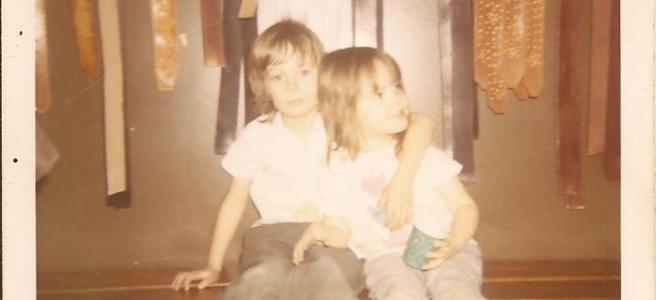
My father was 22 when I was born. Soon after he opened The Leather Shoe Shop, a shoe and leather repair store in a plaza in upstate New York. My older brother Tony and I went to work with my father Monday through Saturday nine to nine. My mother had left us, and my father sought full custody. (Tony Danza has nothing on this guy.)

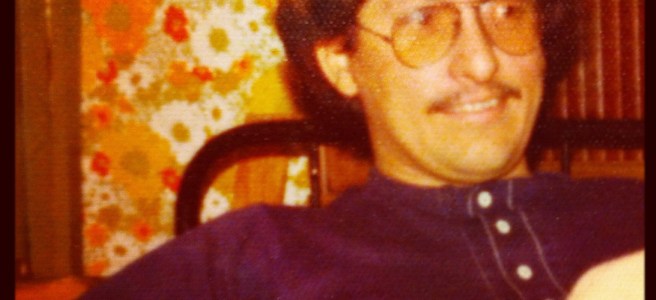
My father had shoulder-length black hair, and wore denim shirts, leather vests, flared pants, and leather zip-up boots. He smiled and laughed a lot, and was well-liked by his customers for his honesty and kindness. The Leather Shoe Shop stood among businesses, owned by 1st and 2nd generation immigrants like my father, places like Mario’s Pizza, Kaplan’s kosher deli, Haim’s barber shop, and the Gondola Restaurant, where food and services were traded for shoe repair, and deals were sealed with a handshake.

A set of wind chimes hung on the door to the shop, so my father always knew when a customer entered. He told me that was so he could worry less about shoplifters. When he sat in the workshop to take a bite of pizza, or toast dipped in coffee, or went to use the bathroom, the chimes went “brrrrring,” and he’d go running into the storefront. I tried to wait on customers for him, but I was a tomboy with ratty brown hair, and no adults took me seriously.

Mostly my brother and I hung out in the back, stamping wet hides with brass tools to make key chains and name plates. At the end of the night, my father took us to Sharkey’s Tavern where we ate fried clams or turkey on a stick, and drank Cokes to our hearts’ delight. Then, in our dingy apartment, my brother and I crawled into the bed we shared without bathing or brushing our teeth. In the morning, our father woke us up to do it all over again.

In those early days of the business, we were broke. We had a gas stove, and one month when my father couldn’t pay the bill, the company shut off the gas. My father called and told them he had two small kids at home, but they refused to turn it back on. So, he took a hibachi into our front yard, threw in some charcoal briquettes and started a small fire. Right there in the yard he put up a large sign that read, “Gas Strike.” My father cooked bacon and eggs on the hibachi. After a while, a rep from the gas company showed up in a work truck. “Take the sign down,” he said. My father told him to turn on the gas. The rep said, “No.” My father smiled and kept cooking. “Come on, buddy,” the rep said. “You can’t have that sign in the yard.” My father ignored him. By the end of the day, the gas company relented.

What I learned from my father was this: Family comes first. You work to support your family. Handshakes are as binding as legal documents. The written word can make change. Never be afraid to question authority.
 

Good Grief-What a Month I’m Having!

I don’t know about you, but I couldn’t wait to say buh-bye to 2015. It was another year of being single, working my butt off in production more so than writing, and selling the home I had lived in for almost a decade with my former husband and our kids. I spent some time free-lance writing and even submitted work to journals. In April I participated in the poem-a-day movement, and in November, I spent a wonderful weekend with two of my best friends at a writing workshop in Port Townsend. But as Christmas songs played in the dentist office, gas stations and department stores, my optimism fell like a snowflake.

New Year’s Eve was spent with my ten-year-old son Vinny and another best friend, my sister from another mister, Aimee. I’d had a daughter disappointment right before the New Year, which I’d rather not disclose, but believed that 2016 would be a better year! But not long after my holiday vacation ended, I had a personal disappointment. Normally I don’t let life get me down; but when it rains, it pours, and I have lost my umbrella.

Suffice it to say, a blog is a safe space to share. But part of me thinks no one wants to hear my problems. And others tell me that I am the only person who can control my life. I need to make changes. I need to read self-help books. I need to let things go. I need to be honest about my needs. Saying those things and doing them are as different as heat and cold.

And I don’t want to be negative. I want to offer life-affirming tips for dealing with everyday disappointments. But right now, all I have is advice from others. I write to understand my life, so I’ve been working on an “after the divorce” essay and several poems. I’ve been talking to every friend who will listen. I’m sure I’m a real treat.

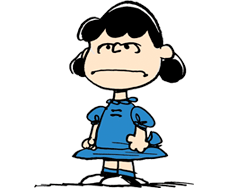
Last week, after hearing of my so-called disappointments, I turned into a Peanuts character, walking along the street with my head down. While kicking a stone, the toe of my boot stuck to the sidewalk and I fell face-first on the concrete. I cracked the glass on the front of my iPhone and my ego. It was the perfect end to a perfect week.

On a bright note, I finished a book called What Shamu Taught Me About Life, Love and Marriage by Amy Sutherland. What a pleasure it was to read. Sutherland talks about positive reinforcement and rewarding behavior–stuff from psych 101, but with real life examples. She observed aspiring animal trainers that work with predators, ones that can tear arms off or kill people with a bite to the neck.

Basically I learned to ignore bad behavior, a daughter screaming in my face, or a client criticizing my brochure, and reward good behavior: Thank you for picking up your dirty socks, Daughter, and Thank you, Client, for your feedback. I’m writing this in its simplest form, but feel free to check it out yourself. I’m going to reread the book.

My plan moving ahead, and you know I have one, is to dress for success, support, not enable, my daughters, and build character in my son. I will breathe deeply before walking into a difficult situation, smile when I don’t feel like smiling, and write as much as possible. Let’s hope February is a better month.


Yankee Swap Not for Everyone

Fifteen years ago at a family Christmas party, I played my first game of Yankee Swap, AKA, Dirty Santa, the White Elephant gift exchange, etc. You know, the game where you bring a gift already wrapped, pick a number, open a present and get your present stolen. This game has become a staple at holiday parties, and I’ll be darned if I can figure out how it embodies any type of holiday, generosity or giving spirit.

You may say, “Oh, it’s all in good fun,” or “Have a sense of humor,” but every time I’ve been to one of these parties, I’ve witnessed hurt feelings, under the breath comments, or out-right yelling. Now, that might be a regular ordeal at some holiday dinners with family, but family is crazy. We all know you can’t choose your relatives. But you can choose whether or not you wish to be involved in a game at Christmas time where you steal presents.

At my first Yankee Swap, I received an adorable Mikasa candy dish etched with snowmen. I was delighted, and I had no idea how the game worked. No poker face. My boyfriend’s mother “Lola” planned to steal my gift. When she reached for it, I held it tight and said, “Please don’t take this. I have so few nice things.” Lola laughed and made a remark about how she knew where my daughters got their whining from. Lola let me keep the Mikasa candy dish. I still have it, and I use it every Thanksgiving and Christmas to hold olives. I always think of Lola and her remark when I place the dish on my dinner table.

I married into a family where my sister-in-law, “Margie,” loved Yankee Swap, organized every Christmas gift exchange, with a $50 limit and a strict rule: no gag gifts. My last Yankee Swap with the family was a doozie. Of course, Margie ended up with number 1, which meant she got to inspect all the gifts at the end of the game and steal whichever one she wanted. I had received a beautiful wrought iron wall hanging. Margie stole it, which coincidentally meant I ended up with the gift I had brought. When I said that out loud, she leapt up in front of the crowded room and yelled, “I’m so tired of this bullshit!” She ran over to her husband and insisted he take her home. He refused. At the end of the long silent night, I left without the wall hanging. After the new year, when my husband’s grandmother called me to come get the wall hanging, I donated it to a silent auction for charity. That was last time I participated in Margie’s Magical Christmas gift exchange.

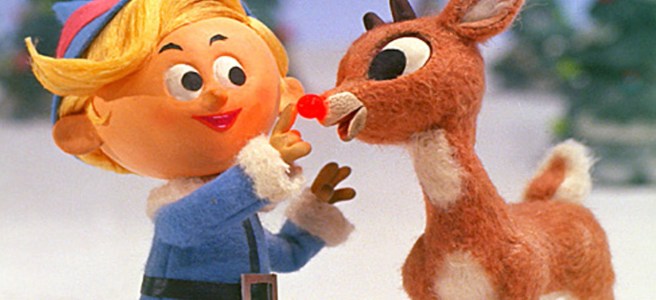
At my last Yankee Swap, there was a $20 max for the gifts. I brought a Rudolph the Red-Nosed Reindeer set of figurines: Hermie, the Bumble, even Cornelius, from the perennial show. The person who received it kept waving it in the air, saying, “Someone steal this, please.” I should have. One person brought in a bag full of used books that stunk like mildew. Every gift I received–wine, gift certificates, pewter trivet–was stolen. I tried desperately not to get attached. Incidentally, my best friend stole the trivet. All is fair during the war on Christmas I guess. Another friend asked me if I was the person who brought the hookah. Wow, I thought, what am I putting out there? I left the party with a note pad and water bottle.

When I looked up who invented Yankee Swap, I couldn’t find a particular person. But the rules emphasized that the game was light-hearted, just for fun, and whimsical. Isn’t stealing a bit greedy and mean-spirited? I see nothing wrong with the boring old Secret Santa, or making someone a gift just for them, or sending them a card that says I love you. But then again, I spend most of my money on books, vintage clothing and dog treats.

Which Writer Are You?

Recently, I attended the Centrum Writing Workshop in Port Townsend, Washington. Two of my good friends and former graduate school colleagues were also there for the weekend. The three of us shared a cabin, stories, tons of wine, and we laughed so much my stomach hurt Monday morning.

Kami and I were in the same M.A. program at Western Washington University in Bellingham. She writes fiction and poetry, and we are soul sisters. Jordan, who writes poetry, and I were in the same M.F.A. program at University of Idaho, and we know the show Friends line for line and confounded everyone by speaking in quotes from Chandler and Phoebe instead of our own voices.

After spending time reminiscing with my friends, I kept thinking about all the writers we’ve interacted with in our programs and over the years. I threw together this list. It’s all in fun, and I encourage you to add to the list.

The Starstruck Stalker– this writer has met 100 famous writers and can’t wait to tell you when and where. He or she has copious signed books and experiences galore from conferences, dinners, readings and workshops that they will be happy to share regardless of your disinterest. This writer may or may not have one iota of talent.

The Cliche– this writer fulfills the stereotype of a writer as a hot mess. He or she drinks or drugs to excess, is melodramatic, destroys their personal and professional relationships, all the while publishing brilliant works. Everyone puts up with their bullshit because of their genius.

The Trickster– this writer creates obtuse, abstract pieces of work that only he or she understands. And then, when other writers (often in the workshop setting) offer useful feedback, the Trickster says, “Oh. You weren’t supposed to get that. I wanted to trick you.” That’s when this writer says, “Good for you, Trickster. Now go find another workshop.” You suck.

The Enigma– this writer creates interesting and odd pieces that you would never think to write yourself. He or she is flippant, couldn’t care less if their work gets published and so it gets published all the time! You sit at home tearing your hair out wondering why you have a stack of rejection letters lining your bird cage and the Enigma calls and says, “The New Yorker accepted my short story!” You say, “Oh my gosh, congratulations.” And then you turn on the gas stove and stick your head inside.

The Humble Pie Writer– this writer does not call himself or herself a writer. If they teach, they call themselves a teacher. If they work as a postal clerk, they call themselves a clerk. He or she may have a handful or a boatload of publications, even a book or 10, but they don’t buy into the bullshit that comes with being a “Writer.” They love writing, they love words, they love the creative process. They dislike going to high-profile writing events where they might be ignored by self-important writers who look behind them to find someone “more famous” to speak with. These writers are usually talented but down to earth, and love to talk to budding writers.

I know which writer I am. But I will never tell.

If I Had More Time I Might Be a Plumber

What compels the non writer to approach the writer and say things like “I’d write a book, too, if I had more time”? or “I should be a writer, but I don’t have the time.” What a flippant statement. It’s as though all writers work at dream jobs where they make oodles of money for dreaming.

When the plumber visits my home and lies on his back beneath my sink with tools I barely recognize, and twists pipes, pulls out hoses and gets dirty, I don’t say, “I would do that myself, but I’m too busy.”

A good friend of mine was taking a creating writing course as part of his political degree. He’s actually a great writer, especially memoir. He asked me to proofread and edit his personal essay. I was pleasantly envious of his piece called “Redwood Paddle.” He asked, “Why would you ever choose this as your career? It’s so hard.” I laughed, and said, “I didn’t. It chose me.”

Recently, a man I met kept inviting to his house. I said No repeatedly because I’m trying to finish my childhood memoir for a book contest. I told him, Writing is a matter of life and death for me. He said, “I wouldn’t say it’s a matter of life of death for me. I do it for work.” I wanted to say, “No shit.”

Writing is not a matter of life and death for the non writer. I don’t mean to sound snarky or elitist. But whatever your passion, whatever you do to get you through this thing called life–whether it be painting, farming, working with kids, quilting, cooking, social work, nursing, gardening, leather crafting, bead work, etc., Only you understand that love, that drive, that devotion, that calling, and why you desperately need to do it. I’ve been a writer since I was able to put letters on paper. Often I wish I was a plumber. But I just don’t have the time.

What Not to Say After a Funeral

Brother and sister

When I was a senior in high school, I took a class called On Death and Dying. During one particular class period, the teacher, Mr. Jones, asked, “Who in here has had someone close to them die?” A few people raised their hands. I was
not one of them. At 17, I still had both parents, grandparents, siblings, and had never lost anyone. Within a year, all that would change.

In May 1987, my 21 year old brother Tony was killed in a motorcycle accident. I was 18. Suddenly, all that abstract information about Elisabeth Kubler-Ross and the Five Stages of Grief came flooding back. Mr. Jones showed up at Tony’s funeral, and I remember thanking him for the class. I told him I would be a wreck (as if I weren’t) without having all that knowledge.

The aftermath of Tony’s death was far more painful. My father leaned on his wife for strength, and my younger brother was 11. So, I felt as though I had no one to turn to who understood the depth of my pain at losing my beloved brother. Tony would have been the person I leaned on had our father or grandfather or younger brother passed. I’d heard the word “Sorry” from hundreds of people, hundreds of times, so it became empty. And I became angry that everyone else was able to return to their everyday lives.

Over the next several years, when I talked about Tony’s death to people who had never experienced the loss of a loved one, I was stunned by some of the responses I heard. “You must be strong. If my sibling died, I’d kill myself,” or “Everyone dies. You need to get over it,” or “I know just how you feel. I once lost a cat.” I listened to these comments in silence, judging these ninnies in my head.

Exactly ten years after my brother was killed, I lost my young husband to a genetic liver disorder. I wrote “Harly’s” eulogy, and invited two of his cousins and one of his best friends to speak at the funeral. I played a couple of his favorite songs from the 80s. During the eulogy, I tried hard to keep from crying as I relayed the last six months of his life in his struggle against Wilson’s Disease. I did the best send off I could to honor my 27 year old husband. Tony’s death a decade earlier probably helped me emotionally when dealing with Harly’s death and the grieving that followed.

Once again, however, I was ill-prepared for the comments that would come after the funeral. “Wow. My husband and I have had our problems. But I’m so lucky to have him,” and “Your eulogy sure was negative,” and “Why did you have an open casket. We didn’t need to see him,” and “You must be strong. If I lost my husband, I would kill myself.”

Now, in the defense of these folks, no one knows what to say if they’ve never been through this, right? So, looking back, and it’s been 27 and 17 years, respectively, I can say, no one meant to come right out and pour Tabasco sauce into my open sore. At the same, I like to hold on to a statement said to me as I stood outside the funeral home talking to friends. Reed Herres, a long time friend of Harly’s, walked over to me, and said, “I don’t know what to say. So I’m not going to say anything.” And then he hugged me.

You might think because I’ve been through the death of a sibling, and a husband, and now my father, that when I attend a funeral I know just what to say to the grieving. Nope. I find myself at a loss for words just like so many others. Every person grieves differently, and every loss is a new experience. Depending on how well I know the person, I tend to follow Reed’s example and offer a hug. Then I lean forward and ask, “Is there anything I can do for you?”