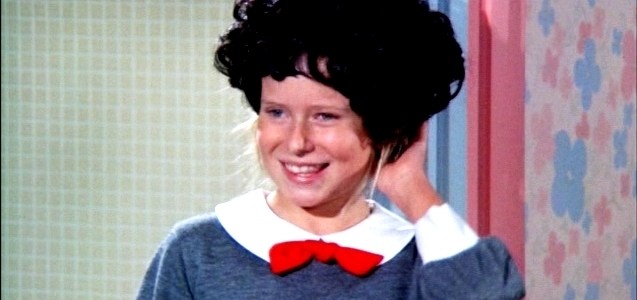
Red Flags Schmed Flags

When I was 32, I attended graduate school in Bellingham, Washington, at Western Washington University. Go Vikings! Part of my graduate program included working as an English Composition Instructor. It was one of the best jobs I have ever had, and I truly enjoyed interacting with first year college students. Part of my responsibilities included meeting with students one-on-one to talk about their assignments, college, and the writing process.

By this time in my life, I’d been married, divorced and widowed, and had two daughters. I still believed in love and everything, however, sometimes I had to check myself when I met with students who were 18 and had unbridled hope regarding the world that awaited them. One young woman I’ll never forget was talking to me about her plans after college. “I’m going to marry my boyfriend, and we’re going to live happily ever after.” My gut told me to say, “Gimme a break! Whatever!” but luckily, my best self butted in and warned me to, “Shut up and smile.”

The benefit of youth is having ignorance of what could go wrong. The benefit of experience is having insight into what could go wrong. They are both liabilities as well. However, whether we are young and naive or old and weathered, we still fall for people who will hurt us no matter how many red flags wave in our faces. With as many episodes of Forensic Files, true crime documentaries, and murder mysteries I watch, I feel adept at sniffing out scary people. But in real life, I’m just as hopeful and romantic as my former college student.

Since it is not my goal to out any specific people from my past that turned out to be a dud, I’m simply going to provide a list red flags I ignored (at first) because I believed in the hope of a budding relationship. I hope you find these humorous and relatable. Also, try to remember that I’m in a good place now and share these because I have learned, and gained distance, from them. Enjoy!

  1. On a date, my boyfriend kept staring at the door and repeatedly hiding his face behind his menu.
  2. My boyfriend told a mutual friend, “Cindy’s not very pretty, but I’m going out with her anyway.”
  3. While driving through Seattle, my boyfriend was unable to find the tattoo parlor where he planned to get a belly button wring (yes, I know) and threw a frightening temper tantrum.
  4. My “sober for two decades” boyfriend smoked weed all day long.
  5. My live-in boyfriend “had” to stay at his mother’s house every time he got sick because I did not take good care of him.
  6. Although I was married, a young man kept telling me that “we were soul mates,” “we were destined to be together,” “I was too good for my husband,” “that I deserved better,” and that “he was my true love.” Barf.
  7. My boyfriend’s sister pulled me aside a few weeks into our relationship and said, “I don’t know what kind of show he’s putting on. He’s not a nice person.”
  8. My boyfriend said my son was weird. (you’re outta here!)
  9. Last but not least, my boyfriend freaked out when I asked why he was on Tinder.

I hope you laughed at these as much I as did while writing them. No doubt there is a guy or two out there talking about the red flags he ignored at first when he was dating me. Best wishes to all.

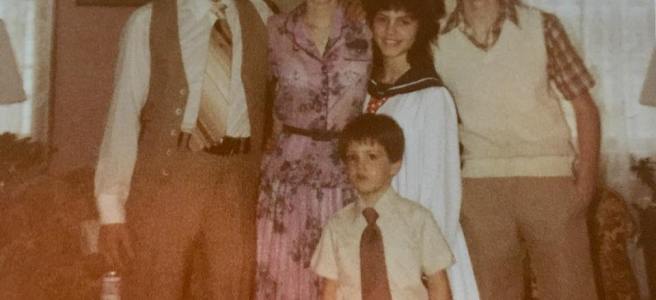
It’s All My Fault

I’ve been thinking a lot about responsibility over the past couple of days. For as long as I can remember, I have felt “responsible” for other people’s feelings — their happiness, anger, sadness, hunger, well-being, etc., etc. Some of it, I believe, comes from being an older sibling. I was seven when my brother Jack was born, and from the moment I saw his pursed lips and downy hair, inhaled the baby scent from the top of his head, I wanted to protect him. It was both understood and stated, with my father’s tireless refrain: “Watch your brother. Watch your brother. Watch your brother.” I adored Jack, and enjoyed feeding him, changing his diapers, and cuddling with him on the couch.

The responsibility thing really hit home during Christmas 1977. I brought home an ornament I’d made at school: green construction paper, red yarn, and silver glitter. Although I don’t remember, I must have left it on the dining room table where my stepmother was displaying all of her Princess House crystal. I was at school when Jack pulled on the table cloth and hundreds of dollars of crystal crashed to the floor. When I arrived home that evening, my stepmother screamed and screamed. Since Jack was only a toddler, and was trying to get my ornament, the broken crystal was all my fault.

Years later, when I started dating, I took responsibility for the feelings of my boyfriends, and anyone else who came along. If X had a bad day, it was up to me to cook him a nice meal and let him relax so he cheered up. If X wanted to go to dinner, I chose the restaurant, and if he disliked the meal it was because I had made a bad choice. If X’s family didn’t like me, it was because I was too sensitive and analytical, so I tried really hard to be amazing and wonderful.

Most recently, I’ve been reflecting on how I felt responsible for my father’s happiness. His wife was an incurable cheater, and I never told him, until 1988, when he received an anonymous letter saying “Your wife is sleeping with my brother. He’s married and has five kids.” My father confronted my stepmother, and of course, she said it wasn’t true. So, he hid a tape recorder in his bedroom. Confronted with the evidence, she said, “How dare you spy on me.”

My stepmother was a special kind of crazy, both unpredictable and prone to violent outbursts, the kind of crazy I couldn’t manage as a 20 year old. But, I figured since my father had confided in me, and was planning to divorce her, I should take him out for a drink and spill my guts. We went to the No. 5 in Binghamton, New York, and drank late into the evening. I told him everything I knew about her cheating, starting from when I was four until the present day. My father showed no emotion. The following day, he filed divorce papers and sent them to his mother in law’s house where his wife was staying.

A couple of weeks later, my father invited me to dinner at his house with Jack. On the drive over, he said, “I’m gonna take her back.” I started bawling. All those stories! All of her lies! “How could you?” I asked. My father said when he brought over the papers, she fell to the floor and started kissing his feet. She promised over and over to stay faithful. “I don’t approve,” I said. “But you’re a grown man.” He smiled, and answered, “You’re absolutely right. You’re so protective. Just like grandpa.” Damn straight.

There have a been a couple more times in my adult life where I have had the opportunity to let a person I care about know they were being cheated on. Both times, after telling, it blew up in my face. So, if you’re keeping track, that’s three strikes. I’m out.

It really sucks to see someone you love getting hurt by someone else simply because they are a good liar. However, if you out a cheater, that falls right in line with shooting the messenger. You’re going to get hurt unless the person you tell has an enormous amount of self awareness, and believes you, not the cheater. At the same time, if you’re like me and have a visceral reaction to seeing your loved ones getting screwed over, perhaps you can explore those feelings in a blog post.

P.S. My father and his wife renewed their wedding vows in 1988, moved to Florida the following year, and bought a business. Ten years later, he filed for divorce and they went through an acrimonious process. My father moved back to Binghamton.

Secrets Cause Cancer

When I was 14, I told my younger brother that his mother was not my mother, and that we were half-siblings (we never have and still don’t use that term.) Within a day, I stood before my father, staring at my feet, listening to his diatribe about my stupid decision. He punctuated the lecture with a hand in the air, and said, “You gotta b–iiiii–g mouth!”

Even as I write these words, I’m not entirely sure why I told my brother the truth, and I still feel pangs of regret. However, if we look at the overall picture, how long would it have been before he figured the truth out himself? Our father was born in 1946. My stepmother was born in 1957. My older brother Tony was born in 1966. I was born in 1968. My stepmother moved in with my father, my older brother, and me in 1972. She was a 16-year-old sophomore at Binghamton Central High. And then, my younger brother was born in 1975.

The weird thing about getting yelled at for telling the truth is that my father detested being lied to. If he caught my older brother or me lying to him, the punishment was immediate and severe–my father had us open our hands, and he slapped them with his hand or a leather belt. In today’s “never harm a child” society, I realize this makes my father look bad. He hated lying.

There’s an episode of That 70’s Show when Red asks Eric to keep something to himself. Kitty, with her stiffly sprayed hair and infectious giggle, says, “Secrets cause cancer.” 276968f5a3b460c7c52492fbc73ad0d0--best-mom-kittyI believe wholeheartedly in this statement. My daughters, 26 and 22, and I, often recite this quote. And now, my 13-year-old son has come on board. One thing I love about my relationship with my kids is that we have very few secrets. There’s yelling and tears, and there’s hugging and laughs. So many laughs.
I have been criticized by people who practice more discretion with their children and families. My boundaries with my kids are as flimsy as boiled lasagna. I’m okay with that. And, I have a circle of true friends, a group whom I refer to as the “truth tellers” I can call on. There are too many to mention here, however, when I want the truth, I ask Andrea, Sandy, Aimee, Stacy, my daughters, and a few more. Someone once said, “Enemies stab you in the back. Friends stab you in the front.” I’m okay with that too.

Before I close, I have to give props to my father because he was the first person to insist I tell the truth. And, to be honest (hah!) he was one of the most honest people I knew. His honesty was hardly tactful, and he pissed off a lot of people. Then again, so have I. Not everyone likes to hear the truth. Phoebe from Friends once said, People will believe anything as long as it’s complimentary. I believe that is also true.


Unlucky in Love

My father was not the best at picking women. My biological mother who was “the most beautiful woman he had ever seen” became pregnant several months into their dating. They married, had my older brother, and fought all the time. I’ve heard both sides of the story and my interpretation is this: My father was a good-time Charlie, and my mother was a feminist. He liked the Doors; she liked the Beatles. Neither was flexible. She became pregnant with me to keep my father at home. When that didn’t work, she had an affair. He kicked her out of our house and our lives. (I didn’t meet her until I was 24, a story for another time.)

The woman my father should have married, a lovely artist named Angela, was brushed aside after my father met the woman who would become my stepmother for two decades. She was a bleach-blond hourglass and 10 years his junior. She quit high school, moved in and they got married. She cheated on my father during the first year of marriage, and though he stayed married to her, he later told me “I never forgave her.”

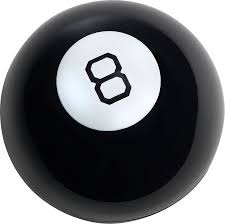
By age nine, I loathed my stepmother. That was the year I came to new awareness. She had borrowed five dollars from me and promised to pay it back. Days later, when we were at the store and I wanted to buy a toy, I asked for my money back. She said, “I took you to McDonald’s today. So, I figure I paid you back.” I stared at her in disbelief. What? Food is not cash. I want my goddamned money to buy a Magic Eight Ball.

Over the next 20 years, she cheated more, beat my brothers and me, called us names, picked my father’s pockets, and flew into rages for little more than a drop of food on her “nice clean floor.” And then, sometimes, during movies like Sound of Music, Oliver, and Terms of Endearment, she would sit on the couch, and weep like a little girl. She was a puzzle. In 1998, my father divorced my stepmother and when he called to tell me, I danced through my kitchen singing, “Happy days are here again.”

My father, bless his soul, had what one of his brother’s called, “Broken wing syndrome.” He liked to save the damsels in distress. Angela didn’t need saving. I am guessing my mother and stepmother did. Although you can see it as an altruistic method of operation, if you’ve ever tried to save someone, you know it just doesn’t work. If you’re lucky enough to find one person to love who supports you and you support them, hang on tight. When I shake the Magic Eight Ball and ask, “Will I find my prince?” It says, Ask again later.


In Defense of Rudolph

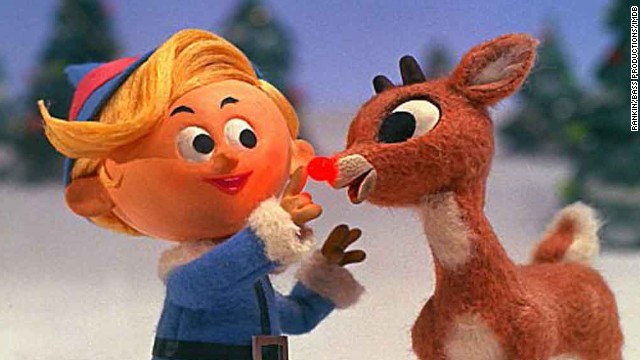
141204135426-01-holiday-tv-and-movies-story-topRecently I heard about the kerfuffle regarding Rudolph the Red-Nosed Reindeer, the stop motion animation movie from 1964. In case you’re unaware, the movie has been criticized very recently for being pro-bully. (And just to be clear, this movie came out a few years before I was born, and I’m here to tell you, it’s been critiqued for decades).
My kids grew up watching this movie, just as I did with my parents, and it has been a source of laughter around the dinner table and a conversation starter. We love the scene, for example, when the elves call “lunch break” and Hermey’s angry boss looks at him and says, “Not for you!”

Is there yelling and teasing in the movie? Yes. My kids and I find humor in the erratic behavior. Not because we are cold-blooded or evil, but because we can relate to Rudolph and Hermey. It isn’t just bullies who tease people who are “different.” In his awesome book Behave, Robert Sapolsky tells us it’s an innate human quality to malign difference, and we have to learn not do it.  It’s also a innate animal behavior (which, if I am correct, humans are animals.) Think here: chickens pecking each other.

One aspect of meanness no one mentioned is when Hermey and Rudolph ask to stay at the Island of Misfit Toys and the lion says “No. But you can do something for me.” It is so outrageously rude that my kids and I have to laugh, whether out of sheer disbelief of discomfort. How dare he deny them a place to stay and then ask for a favor.

Frankly, I have bullied and I have been bullied. I am not proud to admit bullying a girl from Lebanon in third grade. Two years later I received my comeuppance from a boy I loved who called me Ugly, Monkey Face, and Grape Ape from fifth grade to twelfth. Also, very recently I’ve been ghosted, snubbed, and triangulated by a couple of bullies.

I am not pro-bully. I am pro “let’s talk about the bullying in this movie.” Can you believe Santa was so mean to Donner and Rudolph? Can you believe the whole town shunned Rudolph until he became useful? Can you believe characters in the movie apologized to Hermey and Rudolph for being mean to them?

Bullies are never going away. Look at our President! And, if you don’t believe that, I’ll show you reindeer who can fly. I don’t have a solid answer for how to deal with a bully, because they are all different. But the ones I am dealing with now — I avoid them like last year’s fruitcake.

This is not about you.

Sometimes it feels so good to be pissed off. When I’m angry, I feel powerful, eager to blast whoever offended me, cut me off in traffic, or amputated me out of his life. And yet, sometimes the anger makes me feel out of control. What did I say? What did I do? Why did I react that way? It’s exhausting. While the screaming and sarcasm feels cathartic at the time, afterward I’m left feeling downtrodden.

They say all arguments begin and end with ourselves. I believe it, and yet, I have relationships with people who can ignite me and burn me to ash in a moment. Sometimes it’s hard for me to remember I must control my behavior, especially when I’m highly emotional. How I feel and act is about me. And, your feelings and your behavior is about you.

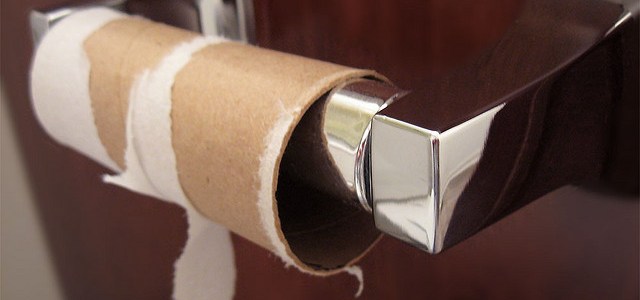
Think about a day when you woke in a bad mood. You stubbed your toe on the door to the bathroom. There’s a nearly bare toilet paper left on the roll, which you didn’t notice before you went. Someone used most of the hot water, so your shower was about luke warm. And when you poured milk into your coffee, curdles floated to the top.

So, you drive to your favorite coffee place and order breakfast. The server asks, “How’s your morning?” and you answer “Fine,” when you want to say, “It has sucked so far.” She gives you the right coffee order but the wrong breakfast sandwich. Sausage? I wanted bacon. The world is your enemy.

Think about a day when you woke feeling light. Your dog rolled over in bed and invited you to rub his belly. Your shower was just the right temperature. Your son told you he loved you three times before you left for work. You did food prep over the weekend, so you have overnight oats for breakfast and lunches for the week. When you drive to your favorite coffee place, the person ahead of you pays for your beverage. The world is your oyster. (If you like oysters, and I do.)

It’s important to hang onto those good days, relish them. Smile as often as you can. Realize that the friend who ignores you is mad at himself. The person who cut you off while driving is oblivious. Everyone is living in their own little world, stubbing their toes and running out of toilet paper. That has nothing to do with you.


Navigating Different Communication Styles

Over the past 18 months, I’ve been meeting with a behavioral therapist, as often as once a week. When I started, I had been sitting in a pit of despair after realizing too late what a special and rewarding relationship I had with my husband of nine years. I had turned 40 in 2008 and sort of lost my mind over the next two years. The collateral damage incurred by us and our sweet family post-split still nags at all of us. We are healing, albeit slowly.

Through my therapy I’ve learned that one of the issues “Eric” and I dealt with during our marriage and divorce involves our vastly different communication styles. We are similar in that we’re both passionate, quick-tempered and stubborn. However, I am a moving-toward quick-processing extrovert (MTQPE), and he is a moving-away slow-processing introvert (MASPI). Night and day. Black and white. Scorpio and Taurus.

Defining the styles. Moving-toward means I’m the woman who talks to strangers and wants to save the world even when it’s inconvenient for me. Moving-away Eric hangs in the background and observes the scene before he makes a move. The night we met, I walked up to his adorable self at Little Harry’s Airport Bar in Lewiston, Idaho, and said, “Hi. I’m Cindy. Wanna buy me a drink?”

Eric likes to listen and assess, and he’s good at both. I like to chat, on and on, and recharge when I’m around people. Eric recharges by spending time alone. Quick-processor me can call him on a Monday at 8:00 a.m. and say, “Wanna take the kids to the theme park this Friday? Do ya? Huh? I’ll drive. I’ll buy the tickets. What do you think? Huh?” Slow-processor Eric would probably take a minute to answer: “I don’t know. Let me check and get back to you.”

When you’re in love with someone, these differences seem minor. But after years of mistaken assumptions and misinterpreted silence, they can wear on a person, even destroy an unexamined relationship. And then, when you’re in the middle of a breakup, these differences cause real arguments.

Being aware and strategic. Eric lives in his head much of the time (he’s amazing at self-reflection) but I process my life out loud, through talking. If you are a MASPI, like Eric, I would drive you bonkers. If he has anything on his plate, work issues, personal stuff, bills, he would prefer to slide the theme park to the bottom of the stack until he was ready to tackle it simply to avoid feeling overwhelmed. Meanwhile, I’m doing aerobics, playing paddle ball with one hand and whirling a figdget spinner in the other.

Eric and I have been divorced six long years. In the past ten months, we have been scheduling monthly “conversations” where we talk about the kids, our lives, and manage our different communication styles. One of the most important things I’ve learned relies on the premise that my style is no better than his style. They are simply different. In this post-therapy stage we’re in, Eric and I work hard to treat each other with dignity, and examine and respect the styles.

Being versus foreseeing. Being an MTQPE, I would love to know exactly when I’m going to see and talk to Eric. I recharge when I’m around him. But, when a moving-toward person moves too quickly or too often, a moving-away person tends to get his energy zapped and needs more space. That is a style, not necessarily a strategy.

Eric is content just being. He doesn’t need to plan every movement of his day or his life. I, on the other hand, want to see into my future. When will we meet again? When we will talk again? Forward, forward, forward. One of the things my therapist helps with is my feeling comfortable in the not knowing. (Eric tries to meet me halfway by communicating more.)

We are less than a year into this process of trying to communicate effectively. We stumble. We piss each other off. We spend hours laughing. It’s an unpredictable way of living. But, I am slowly gaining comfort and working to make him feel safe in my presence. The closer we can come to meeting in the middle, the better off we’ll be.

Loose Lips Can Float Ships

For the first two days of 7th grade, my friends (with whom I’d been thick for three years) ignored me. They literally did not speak to or interact with me for two school days. Confused by the treatment, but afraid to ask why they were snubbing me, I pretended not to care and sat with others in the cafeteria, while my former friends looked on.

During lunch on the third day of 7th grade, my friends invited me to their table. One said, “We weren’t going to talk to you this year.” I nodded as though I understood but wondered how they might ignore me for an entire year. Studies on human behavior show that being shunned is a universal fear. We all want to be accepted by our peers. Middle school seems to be the place where we experience both.

Over the next two years, I shunned and was shunned, bullied and was bullied, made some friends for life, and gossiped incessantly. (Perhaps that’s why my friends shunned me.) Looking back, I see my gossiping as a way to get attention and gain friends. Instead, it made people avoid me or want to kick my ass. As I came of age, even into my 20s, my loose lips continued to get me into trouble. I had to take a good look at myself and see my fingers were pointing in the wrong direction.

As I got into writing, and made friends with other writers, I discovered we are a gossiping bunch. We love to get to “the truth,” find out what goes on behind-the-scenes, and tell stories, which are good things. What I’ve learned, however, is that it’s safer and often more powerful to tell stories about myself and the dumb things I do. Some of my favorite comedic writers, Margaret Cho, Dave Chapelle, John Mulaney, and Conan O’Brien, make fun of themselves. Laughing at our humanity brings us together.

The older I get, the more I want to preserve my friendships. I try to share positive gossip. Who got a job? Who got married? What’s going on in town? I also try to think before I start yammering on. I’m far from perfect but am commited to working on this part of my personality. If we can’t invite others to our table and make connections, why are we even here?


10 Signs You Were/Are a Middle Child

1. When pouring drinks for friends, you still kneel to get eye level with the glasses to be sure the liquid amount is even for fear of getting jabbed in the arm by your older brother.
2. You wore hand me downs until you hit puberty, and it no longer looked “okay” to wear your brother’s shirts.
3. When riding in cars with friends you still instinctively head for the back seat, because the oldest always gets the front.
4. In home movies from your childhood, you were always trying to get in front of the camera, only to be pushed out of the way by your father.
5. Your baby book is two pages long, while you confuse your siblings’ baby books with the King James’ bible.
6. You don’t have an entire wall (or room) dedicated to your accomplishments.
7. In adulthood, you try to outshine your siblings only to have your parents pat you on the head, and say, “Keep trying, honey.”
8. As a kid, you didn’t mind being called weird if it meant you stood out from the siblings.
9. If you played sports, you wore your brother’s old equipment even when the cleats were worn flat and the sneakers stank.
10. Your parents call you to brag about your siblings, but they never call the siblings, and often forget your name.

The Deep End of the Pool

When talking to people, I’m not interested in staying in the shallow end of the pool. Blame it on the writer in me, but I am intensely curious–fascinated–by other people’s lives. I also am happy to share experiences from my own life as a way to connect with others. From time to time, however, I have found that sharing my experiences, especially the less than pleasant ones, leaves people feeling uncomfortable and not knowing quite what to say. Recently, I was reminded of some phrases that get under my skin.

1.”I must be lucky because…” As in, I am not in the crappy personal situation that you confided in me, which sounds way worse than my own, which I might even be hiding from you because I don’t want to be judged, so instead I’ll say how blessed I am and not share anything.

If you’re a parent, you probably recognize number one. You can’t sit near other parents without hearing about how unique, amazing and intelligent their kids are. And if you say, “Wow, I wish Janie got along better with her kindergarten teacher,” or “Thomas hasn’t been bringing home his homework,” more than likely you’ll get, “I must be lucky because Arthur and Amy love all their teachers and have straight As.” Back to the shallow end

2.”You must be really strong…” As in, I could never survive if I lost my brother, or husband, or father. I would just kill myself. Gosh. How do you even wake up every day and laugh and smile?

Losing a loved one is not a choice. Telling someone, “I would kill myself,” is insulting at best. Don’t say it. Just hug your friend. Ask them if there’s anything you can do. And please, please, don’t say, “I must be lucky. I have never lost anyone close to me.”

3.”I don’t know how you do it…” As in, I could never be a single parent. My husband is wonderful, and I just couldn’t get by without him.

This is a kiss through a veil, a back-handed compliment. It’s as though the person making the comment is waving their Happily Married banner right in my face. And, just to be clear: my ex-husband and I share custody of our son, and just like a couple who are still together, we talk, negotiate and sometimes argue. We live five-minutes from each other. We attend basketball games and parent conferences together. And when things get tense between us (since our divorce was less than friendly) we call a time-out and discuss things in private. We may be single-parents, but we collaborate as a unit, because we can. We have a choice.

I think kindness goes a long way. And if you don’t know what to say to someone who makes you uncomfortable, why not admit it?