Which Writer Are You?

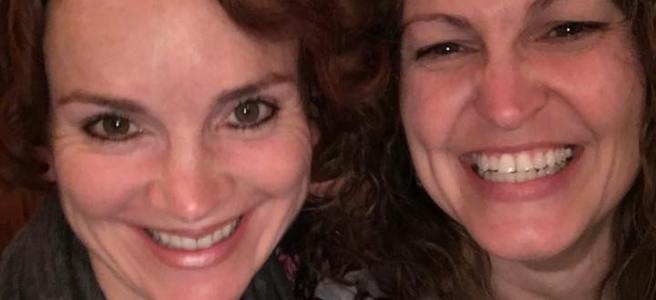
Recently, I attended the Centrum Writing Workshop in Port Townsend, Washington. Two of my good friends and former graduate school colleagues were also there for the weekend. The three of us shared a cabin, stories, tons of wine, and we laughed so much my stomach hurt Monday morning.

Kami and I were in the same M.A. program at Western Washington University in Bellingham. She writes fiction and poetry, and we are soul sisters. Jordan, who writes poetry, and I were in the same M.F.A. program at University of Idaho, and we know the show Friends line for line and confounded everyone by speaking in quotes from Chandler and Phoebe instead of our own voices.

After spending time reminiscing with my friends, I kept thinking about all the writers we’ve interacted with in our programs and over the years. I threw together this list. It’s all in fun, and I encourage you to add to the list.

The Starstruck Stalker– this writer has met 100 famous writers and can’t wait to tell you when and where. He or she has copious signed books and experiences galore from conferences, dinners, readings and workshops that they will be happy to share regardless of your disinterest. This writer may or may not have one iota of talent.

The Cliche– this writer fulfills the stereotype of a writer as a hot mess. He or she drinks or drugs to excess, is melodramatic, destroys their personal and professional relationships, all the while publishing brilliant works. Everyone puts up with their bullshit because of their genius.

The Trickster– this writer creates obtuse, abstract pieces of work that only he or she understands. And then, when other writers (often in the workshop setting) offer useful feedback, the Trickster says, “Oh. You weren’t supposed to get that. I wanted to trick you.” That’s when this writer says, “Good for you, Trickster. Now go find another workshop.” You suck.

The Enigma– this writer creates interesting and odd pieces that you would never think to write yourself. He or she is flippant, couldn’t care less if their work gets published and so it gets published all the time! You sit at home tearing your hair out wondering why you have a stack of rejection letters lining your bird cage and the Enigma calls and says, “The New Yorker accepted my short story!” You say, “Oh my gosh, congratulations.” And then you turn on the gas stove and stick your head inside.

The Humble Pie Writer– this writer does not call himself or herself a writer. If they teach, they call themselves a teacher. If they work as a postal clerk, they call themselves a clerk. He or she may have a handful or a boatload of publications, even a book or 10, but they don’t buy into the bullshit that comes with being a “Writer.” They love writing, they love words, they love the creative process. They dislike going to high-profile writing events where they might be ignored by self-important writers who look behind them to find someone “more famous” to speak with. These writers are usually talented but down to earth, and love to talk to budding writers.

I know which writer I am. But I will never tell.
If I Had More Time I Might Be a Plumber

What compels the non writer to approach the writer and say things like “I’d write a book, too, if I had more time”? or “I should be a writer, but I don’t have the time.” What a flippant statement. It’s as though all writers work at dream jobs where they make oodles of money for dreaming.

When the plumber visits my home and lies on his back beneath my sink with tools I barely recognize, and twists pipes, pulls out hoses and gets dirty, I don’t say, “I would do that myself, but I’m too busy.”

A good friend of mine was taking a creating writing course as part of his political degree. He’s actually a great writer, especially memoir. He asked me to proofread and edit his personal essay. I was pleasantly envious of his piece called “Redwood Paddle.” He asked, “Why would you ever choose this as your career? It’s so hard.” I laughed, and said, “I didn’t. It chose me.”

Recently, a man I met kept inviting to his house. I said No repeatedly because I’m trying to finish my childhood memoir for a book contest. I told him, Writing is a matter of life and death for me. He said, “I wouldn’t say it’s a matter of life of death for me. I do it for work.” I wanted to say, “No shit.”

Writing is not a matter of life and death for the non writer. I don’t mean to sound snarky or elitist. But whatever your passion, whatever you do to get you through this thing called life–whether it be painting, farming, working with kids, quilting, cooking, social work, nursing, gardening, leather crafting, bead work, etc., Only you understand that love, that drive, that devotion, that calling, and why you desperately need to do it. I’ve been a writer since I was able to put letters on paper. Often I wish I was a plumber. But I just don’t have the time.

One Way to Negotiate When You Lose a Dream

Dear readers: I have not fallen off the edge of the earth. I have been so busy at my day job, that I have not been able to work at what I love–creative writing. At least I can say I have a job in my field. But, I’d like to share why I work in marketing and communications instead of teaching, which was my dream.

When I received my MFA in creative writing 11 years ago, I was sure I would get a teaching job “just like that” mostly because I’d wanted to be a teacher since I was nine, and wasn’t that enough? I taught through my graduate programs, and took every teaching class that I could. And I was so passionate. I loved my students.

I did land a teaching job for a year, and I loved it. It was at a university, with 24 first-year students in English Composition and Rhetoric and Persuasive Writing. For one 17-week course, I designed the curriculum around gun control (pro or con) so the students could really delve into one issue. We watched Bowling for Columbine; they wrote annotated bibliographies; they presented their thesis statements before their classmates for critique; and we also watched Heathers.

One of my students vanished before the annotated bibs were due. “Missing Student” didn’t send me an email, she missed more than the allowed five classes, and I figured like so many others before her while I was a teaching assistant, she would simply fail. Let me interject: I hate to fail students. My heart is bigger than my red pen. When I first started teaching in 2000, I called students at home when they missed class. (Feel free to laugh.) By 2005, I’d learned that you can’t save every student, and you have to let them make their own decisions.

Fast forward to week 15. The rough draft of the term paper was due–an analysis of Bowling for Columbine in which each student took a stance for or against gun control and used scenes from the movie and other research as evidence. We were about to get started when in walked Missing Student. I shook my head and wanted to say, “I’m sorry. Why are you here?”

She asked to speak with me. She handed me a rough draft of her term paper: Stem Cell Research. Forget she’d missed the limit of classes, the annotated bib, and the thesis statement presentation. Missing Student started crying in front of the entire class, told me she’d been having a rough time and couldn’t I just let her come back. In 2000, I might have said yes. But in 2005, with the university policy hovering above my head, and my new convictions, I said no. And I gave her an F.

Weeks after the semester ended, my boss called me at home and said Missing Student’s mother phoned him, saying, “Why can’t my daughter receive a No Pass instead of an F?” My boss asked me to change the grade. I said no. I was following the university’s policy–any student with more than five absences and a zero in any other section of the course received an F. He said, “Come on.” I said, no.

The following fall, I walked into the bookstore to see what courses I was teaching. Zero. My knees buckled, and I almost started crying. I was told that “Enrollment was down.” But my peers from grad school still had their sections. And they also still teach at that same university now.

After working as a secretary for a year, I landed a job as a copy writer at another university. The pay was more than what I had been making as an adjunct, and I received full benefits. For nine years now, I’ve been working as a marketing and communications specialist. I write creative nonfiction and poetry in my spare time, and I’ve had a few teaching gigs at a community college. (Which I love!)

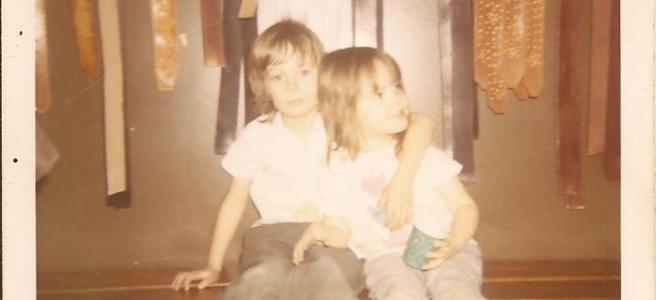
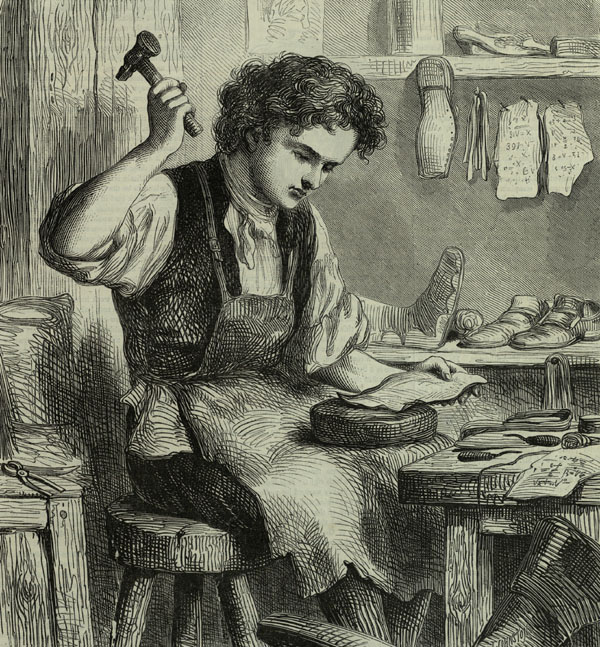
My father’s dream was to be an astronaut. But he had poor eyesight, asthma, allergies, and sought full custody of my brother and me after a bitter divorce. He apprenticed in shoe-repair and made a good living fixing shoes and crafting leather. Did he love it? No. But he smiled a lot, had a great sense of humor and was one hell of a good father. He’s often my inspiration to keep plugging along.

Ever Play A Scary Childhood Game?

Food Contest

It was more of a game that you half-invented–
half-stole from a show called Wonderama.
You blind-folded me, told me to hold my nose
at the breakfast bar in the kitchen, and guess
which food you’d shoved into my mouth. You were my
older brother, my first friend, and I would have
followed you right over a bluff into murky water
infested with piranha. . . I still played after the hot
pepper brought me to tears, the spoonful of baking
soda left me gagging over the kitchen sink,
the cucumber slice so thick with salt that my lips
puckered like an ass. But even I had to quit
after you laid the used match from dad’s ashtray
full of cigarette butts right on my tongue.

Smoking With My Brother

You left us at 21—brown leather jacket and
blue jeans, feathered hair parted down the middle,
freckles, the bright green eyes you got from
our mother. I never wondered if her leaving
broke you, smoking and drinking by 12,
popping pills by 13, dealing drugs in your
Windsor knot and dress pants to the stoners
at our catholic school just down the block
from home. You worshiped the Doors,
danced with the gangly arms and wild heart
of a rock star, and Dad imagined you’d run off
to join a band and never come back—like her.

After your wreck on that rainy night, we found
your box of poems, foretelling a life that would
end before you aged. “Never trust anyone over
30,” the hippies once chanted, and you would
have raised your fist right alongside them.

Dear brother, this year you would be 49, far
too old to trust—and yet, I would still follow
your hunched shoulders all the way down
to the creek slithering behind Grandma’s,
pack of lifted Winston 100s and box of matches,
I’d perch beside you on a flat rock, light
the cigs against the wind, and not yet knowing
how to inhale, but so you’d think I was as cool
as I believed you to be, hold the smoke in my mouth
as long as I could stand, the stale taste of tobacco,
cotton and paper mixing on my tongue, pretend.

A Glimpse Into Wilson’s Disease

The Assumption

My husband Harly thought he had the flu,
felt lethargic and never wanted to eat.
I just thought he was lazy. After hauling
bags of grass seed all day at the local plant,
he’d flop down on our couch, slather Vicks
on his chest, cuddle with our baby girl
and watch Barney. He stayed up late into
the night playing TechnoBowl, chest pains,
tingling in his joints, then fell asleep, TV
blaring, lamps aglow. He never left the house
except to work, and when he pressed his calves,
he left fingerprints. After his stools lost color,
we saw doctors who dosed him, told him eat less,
walk more. It was a nurse who noticed
the golden hue of his eyes and skin, insisted
on a blood test that showed a liver gone bad.

I drove us back to our modest home in our town
of a thousand. Harly sat in the passenger seat,
sniffing—a twenty-seven-year-old man
who would need a specialist, tests, a transplant.
But right then, all he needed was to hear
the radio play Tom Petty, to rest his head
on my chest. He smelled of sweat and soap.
I’d never seen him cry in the time we’d been
together, but over the next six months,
as he watched his baby girl scream through
her own blood tests, his brother lose his life
to the same disease, his own body wither
from broad-chested and strong to brittle
and thin, I’d wipe them away, one by one,
as they blended into his yellowed cheeks.

What Not to Say After a Funeral

Brother and sister

When I was a senior in high school, I took a class called On Death and Dying. During one particular class period, the teacher, Mr. Jones, asked, “Who in here has had someone close to them die?” A few people raised their hands. I was
not one of them. At 17, I still had both parents, grandparents, siblings, and had never lost anyone. Within a year, all that would change.

In May 1987, my 21 year old brother Tony was killed in a motorcycle accident. I was 18. Suddenly, all that abstract information about Elisabeth Kubler-Ross and the Five Stages of Grief came flooding back. Mr. Jones showed up at Tony’s funeral, and I remember thanking him for the class. I told him I would be a wreck (as if I weren’t) without having all that knowledge.

The aftermath of Tony’s death was far more painful. My father leaned on his wife for strength, and my younger brother was 11. So, I felt as though I had no one to turn to who understood the depth of my pain at losing my beloved brother. Tony would have been the person I leaned on had our father or grandfather or younger brother passed. I’d heard the word “Sorry” from hundreds of people, hundreds of times, so it became empty. And I became angry that everyone else was able to return to their everyday lives.

Over the next several years, when I talked about Tony’s death to people who had never experienced the loss of a loved one, I was stunned by some of the responses I heard. “You must be strong. If my sibling died, I’d kill myself,” or “Everyone dies. You need to get over it,” or “I know just how you feel. I once lost a cat.” I listened to these comments in silence, judging these ninnies in my head.

Exactly ten years after my brother was killed, I lost my young husband to a genetic liver disorder. I wrote “Harly’s” eulogy, and invited two of his cousins and one of his best friends to speak at the funeral. I played a couple of his favorite songs from the 80s. During the eulogy, I tried hard to keep from crying as I relayed the last six months of his life in his struggle against Wilson’s Disease. I did the best send off I could to honor my 27 year old husband. Tony’s death a decade earlier probably helped me emotionally when dealing with Harly’s death and the grieving that followed.

Once again, however, I was ill-prepared for the comments that would come after the funeral. “Wow. My husband and I have had our problems. But I’m so lucky to have him,” and “Your eulogy sure was negative,” and “Why did you have an open casket. We didn’t need to see him,” and “You must be strong. If I lost my husband, I would kill myself.”

Now, in the defense of these folks, no one knows what to say if they’ve never been through this, right? So, looking back, and it’s been 27 and 17 years, respectively, I can say, no one meant to come right out and pour Tabasco sauce into my open sore. At the same, I like to hold on to a statement said to me as I stood outside the funeral home talking to friends. Reed Herres, a long time friend of Harly’s, walked over to me, and said, “I don’t know what to say. So I’m not going to say anything.” And then he hugged me.

You might think because I’ve been through the death of a sibling, and a husband, and now my father, that when I attend a funeral I know just what to say to the grieving. Nope. I find myself at a loss for words just like so many others. Every person grieves differently, and every loss is a new experience. Depending on how well I know the person, I tend to follow Reed’s example and offer a hug. Then I lean forward and ask, “Is there anything I can do for you?”

My Kid’s Smarter Than Your Kid–Pondering Competition

My daughter Jessica was still crawling at 15 months. Because other toddlers I knew had already started taking their wobbly first steps, I called the pediatrician. He said, “If she doesn’t start walking by next month, bring her in. We’ll put braces on her legs.” Jessica started walking that week. And because I now know that she gets embarrassed over everything, I’m sure Jessica overheard the doctor and was afraid of looking like Forrest Gump.

In kindergarten, Jessica tested into a program called Enrichment–what some schools call “Gifted and Talented,” because she knew how to read. Jessica was not the type of student to push herself when she was bored, and I suspected this program would encourage that. I was feeling pretty good about myself and Jessica’s father–a meteorologist for the U.S. navy–that we had drawn the long straw. We had a smart kid.

When Jessica entered 4th grade, it was the first time I interacted with the parents of other “smart kids.” At the time, I was a 32-year-old grad student in English at the university in Bellingham, Washington. It was five p.m., and when I walked into the elementary school library for the parents’ meeting, Jessica holding one hand and my five-year-old daughter, Josie, the other, I felt like a kid. No other parents had brought their kids, and they all had gray hair and wrinkles. They were dressed in blazers and slacks. I was a grad student in a sweater and ripped jeans.

The atmosphere in the library bugged me–the sense of smugness in the air. Every couple sat with their noses held high, discussing the curriculum, talking about art programs their kids were involved in, or awards they’d received. They talked about math olympics, writing contests, music lessons, physics and future problem solvers of America. I kept quiet, thinking about how grateful I was simply to have Jessica in the program. These parents seemed to believe that their smart kids were a reflection of their own intelligence.

One of the reasons I was so pleased to see Jessica succeed academically was because I hadn’t. I wasn’t dumb, but education wasn’t valued in my childhood household. My father owned a shoe repair shop. He was funny, friendly and blessed with common sense. When I was in high school, my father told me: “Just get Cs, and I’ll be happy.” So I learned that I had to care about doing well for myself. I only put forth effort in the classes I liked: art, theatre and English. And I didn’t start college until I was 24.

Jessica quit the Gifted and Talented program in 7th grade–when it was no longer mandatory. I begged her to stay in. “I don’t want people to think I’m a geek,” she said. She wouldn’t believe me when I told her: “You can’t control what people think.” Within a year, her grades tanked. Boys and parties became much more important than solving America’s problems, writing poetry or competing in math. By this time, I had finished my graduate degree and was working as a writer. When Jessica failed freshman English, I figured she was rebelling against me.

My smart kid graduated from high school with a 1.67 GPA. Her father gave her his G.I. bill money so she could attend community college. She loved it, but failed out after a bad breakup during her third quarter. Jessica took a year off and is back in college, working part time as a waitress. Like a lot of us, she regrets not trying harder when she had the chance. She even says, “Mom, you should have pushed me harder. But when I was in those classes, I felt like the dumbest kid there.”

As a parent, you never know how well you are doing. At best, raising kids ebbs and flows as continuously as the tide. Jessica crawled for 15 months and I never worried until I noticed other kids “beating” her. Competition makes us crazy. A poetry teacher told me once: “Comparing yourself to others is deadly.” I say it’s also inevitable. Perhaps it keeps us ambitious. Aware. After all, competition made me call the doctor.

Just One Bite–Pondering Serious Food Allergies

With my father, just one bite of fresh fish, and he said he felt his throat closing. With my younger brother, just one bite of a walnut cookie, and he said he felt like he had worms on his tongue. And now, with my son Vinny, just one bite of some nutty bread, and he said, “My mouth started burning.”

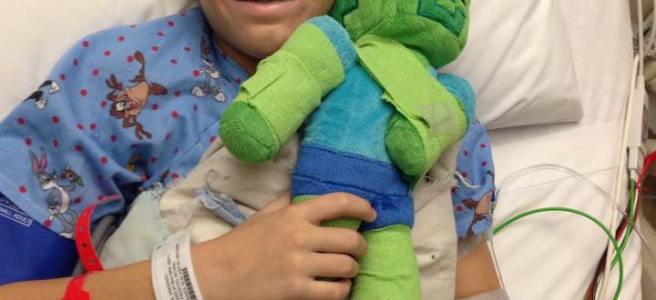
Within twenty minutes, Vinny was covered in hives. The babysitter called Vinny’s father Eric who rushed to the house and read the bread’s ingredients: walnuts, almonds, pecans. He injected Vinny with the Epi-Pen and drove him to the ER, calling me on the way. When I showed up, Vinny was still awake, high on the epinephrine, playing with the hospital’s Ipad. I called the babysitter’s parents, who are Vinny’s godparents. They came right over.

The doctor gave Vinny an IV of Benadryl, also put him on oxygen, because he’s a mouth breather, and gave him the nebulizer. Soon Vinny passed out. His entire body, even his head, was covered in hives. For us, it was two-plus hours of hand wringing before he woke back up, looked better, and was “out of the woods.” His godparents stayed with Eric and me the entire day, their eyes wide, their repeated phrase, “We never knew it was this serious.”

Vinny was admitted over night just in case. He is nine, and this was his fourth trip to the ER.

1. At one year old, Vinny’s grandmother fed him a chocolate chip cookie with walnuts. He threw up, broke out into hives, and Eric rushed him to the ER. That’s when we learned he was allergic to tree nuts.

2. In kindergarten, even though we told the teacher Vinny couldn’t eat food brought from other peoples’ homes, during a holiday party, he ate a chocolate chip cookie. It was right before Eric came to get him. Vinny threw up and broke out into hives. Eric gave him the Epi-Pen on the way to the ER. The next day I went to the school and raised a little hell with the teacher.

3. For Christmas when Vinny was 7, a friend bought me a basket full of candy, nuts and other treats. I threw just about everything away, save two pieces of toffee, which I had no idea contained almonds. Vinny ate a piece of toffee. He almost died that time, and Eric said it was all my fault. I suppose it was.

Each time Vinny goes into anaphylactic shock, the reaction becomes quicker and more severe. This last time I started thinking about his future. Eric and I can’t hover around our son his entire life. The doctor recommended that Vinny learn to give himself the Epi-Pen shot. He knows how. But would you want to stick a needle in your leg and hold it for ten seconds?

Only 1 percent of the population is allergic to tree nuts. My father, my brother, my son. Not me, Eric, my daughters. Being a parent is stressful enough without the added worry of a life-threatening allergy. Vinny’s godparents now understand the gravity of his nut allergy. They are kind and intelligent people. They even offered to pay part of the hospital bill.

Eric and I will continue to watch over our son as long as we can and encourage him to be an active participant in his own health. We keep telling him to read the labels, only eat food that comes from a package with legible ingredients, and no strange bread. Not even one bite.

Ever wonder how I got my title The Cobbler’s Daughter?

The answer’s more involved than my father working as a shoe repair man. When I watched my father stand over the last, his face less than a foot from his work, he concentrated deeply. The shoes he fixed were perfect. He sewed leather with thick thread, pounded soles, buffed and polished.

This perfectionism carried over to me. It’s what got me in trouble in preschool when a kid stuck a felt eyebrow upside on the face we were making in class and I yelled, “He did it wrong.” The teacher put a finger to her lips and frowned in my direction. I was four–already an editor. As I came of age, I loved the exactitude of words spelled correctly, coloring inside the lines and memorizing nursery rhymes.

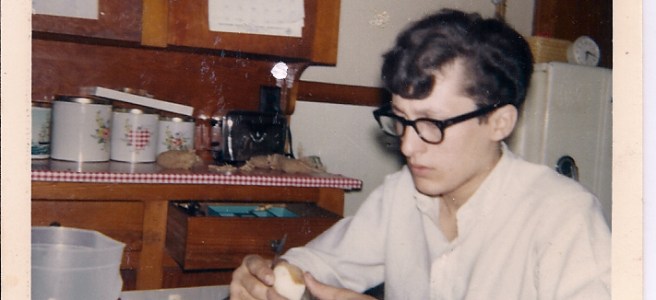
He toiled Monday through Saturday, 9 to 9 for the first several years he owned his business. And when I was five, I got my first job peeling boiled eggs at the Gondola Restaurant for three dollars a day. I am a cobbler’s daughter for my work ethic. I’ve been a door-to-door greeting card saleswoman, papergirl, babysitter, fast-food employee, lifeguard, diet aide, retail sales clerk, navy data technician, video store clerk, teacher, tech writer, the list goes on.

My father taught me “Work will see you through.” For this gift, I am most grateful.

How a small boy became a great man, illustration